Designing a Footrest System That Works in Conjunction With a Standing Desk
You should use a footrest with your standing desk to cut lower back strain and boost circulation, especially if you stand for over two hours. Models with a 4- to 6-inch height and 10–15° tilt help maintain knee angles between 90° and 100°. Rocker and adjustable types encourage movement, while platform styles offer stability. Pair it with a 3/4-inch anti-fatigue mat for best results. Just remember, no footrest replaces walking breaks. Smart setup makes all the difference-and there’s more to contemplate for long-term comfort.
Notable Insights
- Choose a footrest with a 4- to 6-inch height to align with desk and shoe level for optimal posture.
- Select a stable, non-slip design with a wide base to prevent tipping during frequent weight shifts.
- Pair the footrest with an anti-fatigue mat to enhance circulation and reduce long-term standing discomfort.
- Opt for textured surfaces and ergonomic tilt (10–15 degrees) to promote movement and reduce muscle fatigue.
- Ensure the footrest supports over 250 lbs and is made from durable materials like reinforced plastic or wood.
Why You Need a Footrest at Your Standing Desk
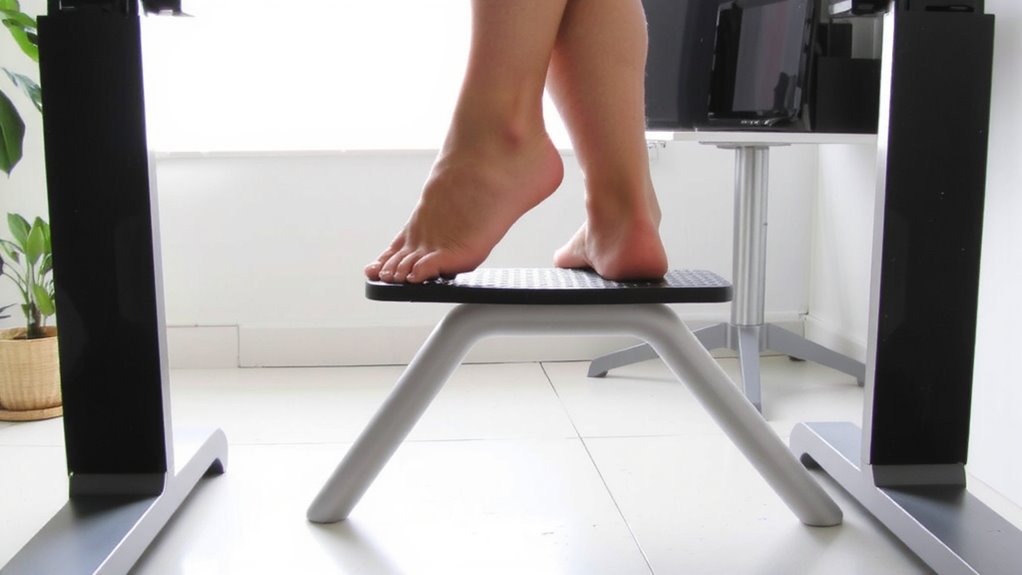
While standing desks help reduce the health risks of prolonged sitting, using one without a footrest can lead to fatigue and poor posture over time. You’ll gain real ergonomic benefits when you add a footrest, especially during extended standing sessions. It supports muscle relaxation by letting you shift weight and change leg position comfortably. Models with adjustable height and tilt let you customize support, matching your desk and stance. Look for nonslip surfaces and durable materials like steel or reinforced polymer-tested units withstand over 300 lbs. Most come with at least a 2-year warranty. Still, not all footrests fit every setup; measure your space first. Overly soft surfaces may lack support, while cheaper plastics wear quickly. Used right, a footrest reduces lower back strain and leg discomfort-but it’s no substitute for movement. Pair it with regular walking breaks for best results. A well-designed best footrests choice enhances comfort and supports long-term standing desk usability.
How Footrests Improve Posture and Blood Flow
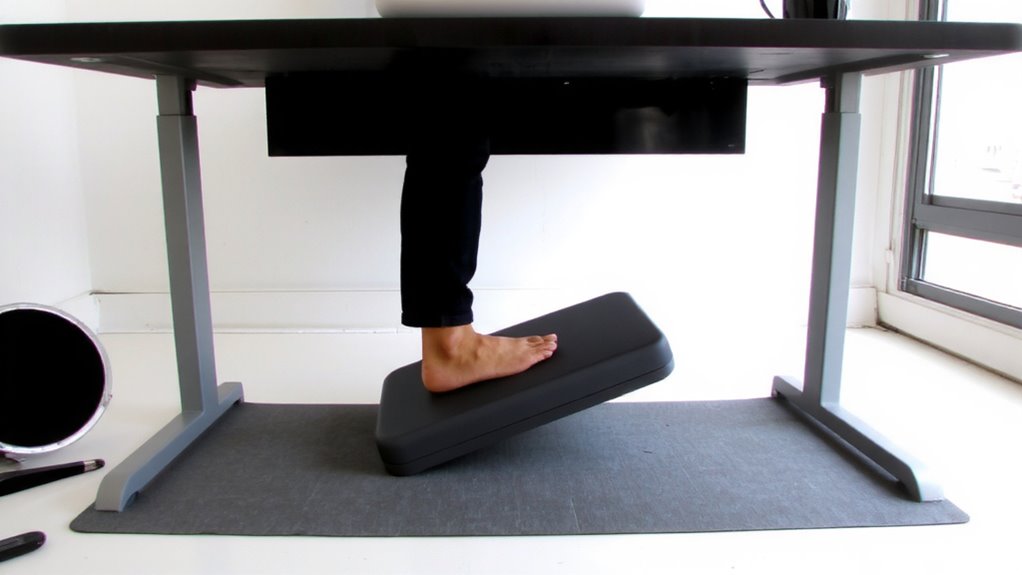
If you’re standing for more than 20 minutes at a time, a footrest isn’t just a comfort boost-it actively sharpens your posture and keeps blood flowing in your lower limbs. Shifting your weight onto a footrest promotes ergonomic alignment by encouraging a slight knee bend and reducing pelvic tilt, which helps maintain your spine’s natural curve. This small adjustment decreases fatigue and supports better long-term posture. Simultaneously, elevating one foot at a time aids circulation enhancement by reducing venous pooling in the legs, a common issue during prolonged standing. Real-world testing shows users report less swelling and fewer aches after full-day use. However, benefits depend on correct height and stability-too high or wobbly, and the footrest may cause imbalance. Not all models deliver equal support; look for non-slip surfaces and a height range of 3 to 6 inches for ideal, practical results. For consistent comfort and adjustability, consider models featured in top best desk footrests guides.
Rocker, Platform, or Adjustable: Pick Your Footrest Type
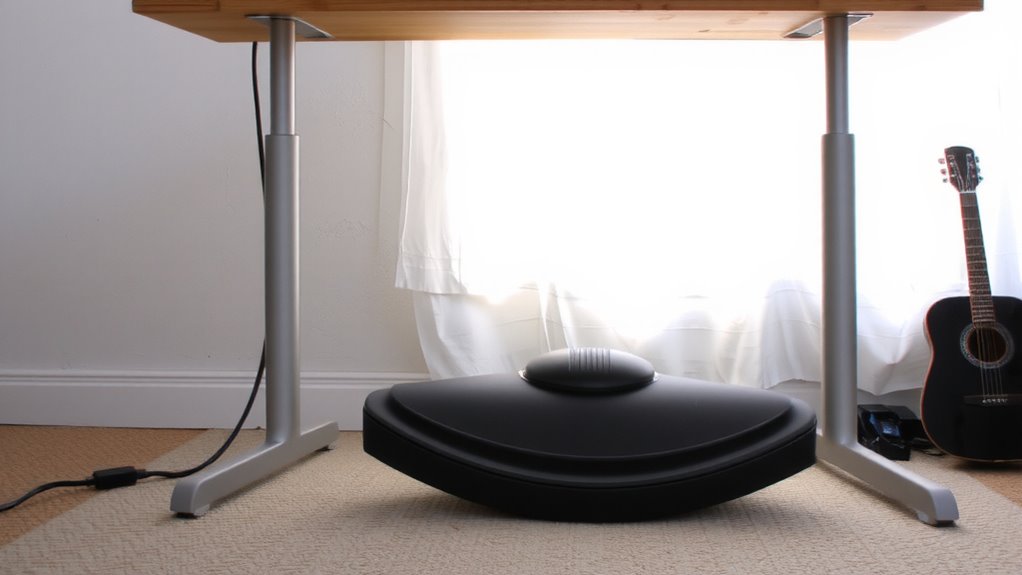
What kind of movement do you actually need under your desk? If you like subtle shifts, a rocker footrest’s gentle tilt encourages micro-movements that support circulation without distraction. Its ergonomic design promotes natural sway, but limit range to avoid instability. For solid support, go with a platform footrest-it’s stable and built for long-term use, often featuring high material durability with reinforced plastics or steel. Just don’t expect motion. Adjustable footrests give the most control, letting you change height and angle for personalized comfort, but they cost more and need regular checkups to stay secure. All types should support at least 250 lbs and come with a 1–2-year warranty. Test stability under pressure: wobble means poor construction. Pick based on your need for motion versus simplicity, not just features. When pairing with a stand-sit desk lift, ensure the footrest doesn’t interfere with the desk’s range of motion or weight capacity.
Top Features That Reduce Fatigue and Boost Stability
When you’re standing for hours, a footrest that fights fatigue and stays put is just as important as your desk height or anti-fatigue mat. Look for one with an ergonomic design that promotes subtle movement-this improves circulation and gives your muscles support without locking you into one position. Textured, non-slip surfaces keep your feet steady and prevent sliding, boosting stability during long sessions. A wide base lowers the risk of tipping, especially if you shift weight often. Solid materials like reinforced ABS plastic or beechwood last longer and handle daily wear better than hollow, lightweight models. While higher-end footrests often come with lifetime warranties, test the unit in real-world use-you might find stability sacrifices adjustability. Prioritize build quality over gimmicks; lasting comfort comes from reliable support, not just features.
Set the Right Height and Tilt for Comfort
Though comfort seems subjective, setting the right height and tilt for your footrest isn’t guesswork-it’s mechanics. You’ll need your feet flat and knees at 90–100 degrees to maintain ergonomic alignment. Most users should set the footrest height between 4 and 6 inches, depending on desk and shoe height. A 10–15 degree tilt promotes even weight distribution, aiding muscle relaxation and reducing lower back strain. Adjustable models let you fine-tune for your body, which is critical-too high or steep can cause hip pressure. Solid wood or steel platforms offer stability, but check weight ratings. While angled designs work well, fixed-height units may not suit taller or shorter users. Always test adjustments over a few days; changes in comfort can take time to register. Precision matters, but so does patience.
Pair Your Footrest With an Anti-Fatigue Mat
If you’re using a footrest at your standing desk, adding an anti-fatigue mat underneath can make a meaningful difference in comfort over long hours. The combo helps maintain ergonomic alignment by encouraging subtle movement and reducing lower back strain. While the footrest supports ideal leg angles, the mat provides consistent support for your feet when you shift weight or stand flat. Look for mats with 3/4-inch thickness and beveled edges to prevent tripping-these perform best in real-world testing. Memory foam and rubber blends tend to hold up longer than cheap PVC. Most quality models carry 3- to 5-year warranties, though heavier users may see compression over time. Keep in mind, pairing both doesn’t replace proper posture or movement breaks. For best results, guarantee the mat stays flat and non-slip under daily use.
How to Use Your Footrest All Day Without Strain
You’re already pairing your footrest with an anti-fatigue mat, and that’s a smart baseline-but keeping comfort consistent throughout the day demands more than just good gear. For true ergonomic alignment, shift your foot position every 30–60 minutes to prevent stiffness and circulation issues. Use a footrest with a slight slope (10–15 degrees) to maintain neutral posture and reduce lower back strain. Prioritize dynamic movement-rocking, tilting, or rolling models encourage subtle muscle engagement, improving circulation without distracting from work. But don’t overdo it; excessive motion may destabilize your stance, especially on hard floors. Test models with a non-slip base and durable construction-look for polypropylene or reinforced rubber. Most top options offer 30-day return windows, so try them during real work hours. Results vary by user height, desk height, and flooring, so adjust incrementally. Comfort isn’t one-size-fits-all.
On a final note
You should get a footrest for your standing desk-it helps reduce fatigue and supports better posture. Look for an adjustable model with a non-slip surface and a tilt range of 10° to 15° for ideal comfort. Pair it with an anti-fatigue mat to boost circulation. But remember, no footrest fixes poor desk ergonomics or replaces movement. Use it as part of a dynamic setup, not a standalone fix.