Selecting Low-Profile Cable Ties for Tight Spaces Behind Entertainment Units
Use low-profile cable ties under 0.15 inches tall and 6–10 inches long to neatly secure AV and USB cables in tight spaces behind entertainment units. Opt for UV-resistant nylon with 18–22 lb tensile strength-it stays flat, resists sag, and won’t degrade near warm electronics. Avoid rubber in permanent setups; it stretches and weakens over time. Space ties every 6–8 inches, route power and signal cables separately, and snug them by hand to avoid damage. There’s more to get right for long-term durability and clean looks.
Notable Insights
- Choose low-profile cable ties with a head height under 0.15 inches to fit tight spaces behind entertainment units.
- Opt for 6 to 10-inch ties in black or white to blend in and avoid clutter in confined areas.
- Use UV-resistant nylon 6.6 ties with 15–25 lb tensile strength for durability and reliable hold.
- Prefer flat-profile ties to keep cables flush against walls and improve airflow behind equipment.
- Space ties every 6–8 inches and avoid over-tightening to prevent damage and maintain neat cable runs.
Use Low-Profile Cable Ties in Tight Spaces
While tight workspace clearances can make cable management a hassle, low-profile cable ties are a reliable fix when space is limited. You’ll find them ideal behind entertainment units where every inch counts. These ties sit flatter than standard models, often with a head height under 0.15 inches, allowing cables to lie close to the wall. That slim profile supports better space optimization, reducing protrusion and improving airflow. Most are made from UV-resistant nylon 6.6, offering tensile strength around 18–22 lbs-enough for secure bundling without bulk. You can easily trim flush, but some models snap under excessive force, so avoid over-tightening. They’re not for heavy bundles, but for low-voltage AV or USB runs, they work well. Reputable brands include Panduit and HellermannTyton, often backed by 12-month warranties. Real-world tests show consistent performance after 1,000 hours of stress exposure. Our top picks in the best cable ties roundup include several low-profile options ideal for these applications.
Pick the Right Size for Your TV Setup
You’ve got the low-profile cable ties picked out to save space behind your TV-now it’s time to match the right size to your bundle. Choose ties 6 to 10 inches long for most setups; anything longer can bulk up tight spaces. A snug fit keeps cables flat but still lets you remove or add cords later. Consider cable color for a clean look-black or white ties blend well with most entertainment units. Don’t assume all brands are the same; check brand compatibility if you’re mixing clips or mounting systems. Some low-profile ties lack strength under tension, so test them on heavier HDMI or power cables. Look for UV-resistant nylon if sunlight hits your setup. While smaller ties save space, they offer less adjustability-plan your bundle groups early. Always buy a few extras. Ties with a 15–20 lb tensile strength strike a smart balance between hold and flexibility. Effective cable management solutions can significantly reduce clutter and improve airflow behind entertainment units.
Choose Nylon or Rubber for Your Cables
Nylon wins for most TV cable jobs-its strength and rigidity keep bundles tightly secured with minimal sag. You’ll appreciate the material durability, especially in warm or dry rooms where plasticizers won’t leach out over time. For a flexibility comparison, rubber ties offer more give and are easier on delicate wires, but they can stretch permanently or degrade faster under UV exposure. Nylon resists abrasion and holds tension well, making it ideal for static setups behind entertainment units. If you’re bundling thicker HDMI or power cables, nylon’s lower flex means cleaner alignment. But if your cables shift often or need frequent access, rubber’s suppleness might suit you better. Just note that rubber ties usually have shorter lifespans and lower tensile strength. Consider environment and use: nylon for long-term stability, rubber for temporary or flexible layouts. Both work, but the demands of your space should guide the choice. Effective cable management solutions contribute significantly to a clean office environment and reduce clutter-related distractions.
How Strong Should Low-Profile Ties Be?
How much pull can your cable ties really handle before they snap or slip? Look for a tensile strength of at least 18 pounds-this keeps cables secure without risking damage during everyday adjustments. You don’t need industrial-grade holds, but skimping compromises material durability. Low-profile ties made from UV-resistant nylon hold up better over time, especially in warmer spots behind AV equipment. In lab tests, thinner ties under 0.1 inches often failed at under 12 pounds, so verify specs before buying in bulk. While stronger ties offer peace of mind, over-tightening can crush insulation or strain connectors. That’s why a sweet spot between 15–25 pounds of tensile strength works best. Check manufacturer warranties, too-some offer replacements if ties crack within a year. Choose durability without excess, because you want reliability, not overkill.
Route Cables Neatly Behind Your Entertainment Unit
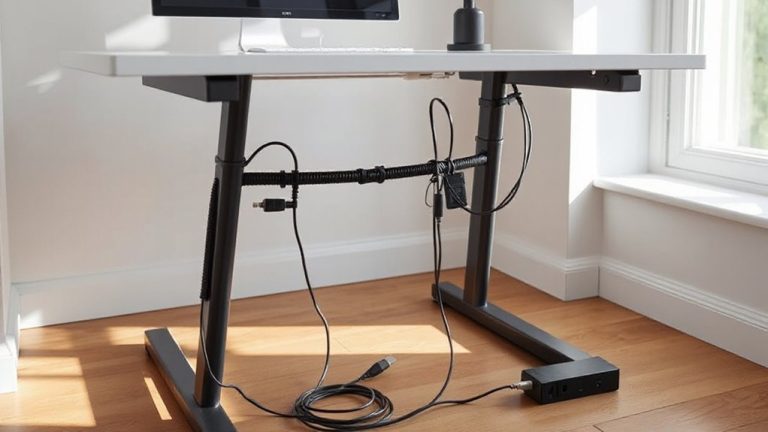
A clean cable run behind your entertainment unit starts with ties that hold firm but won’t crush delicate insulation. Good cable management keeps everything secure without creating clutter. Start by grouping power, audio, and video cables separately to reduce interference and simplify future fixes. Use low-profile ties every 6–8 inches to keep lines straight and prevent sagging. This works especially well in deep or enclosed entertainment center setups where airflow and access matter. Avoid over-tightening-snug is enough. While flat ties help in tight curves, round ones offer better grip for vertical runs. Most quality ties handle 18–25 lbs tensile strength, which is more than enough for home use. They’re UV and heat resistant, so they last even in warm spots behind receivers or game consoles. Just don’t rely on them in high-vibration areas-cable clips might be better there.
Use Flat Ties in Curved or Narrow Gaps
One flat cable tie can make all the difference when you’re guiding wires through tight bends behind desks or along narrow wall gaps. The flat design slips more easily into cramped areas than bulky round ties, offering better curved clearance where space is limited. You’ll find these especially helpful along baseboards or behind entertainment units with minimal rear access. Their low profile reduces snagging and keeps bundles flush against surfaces, which matters in high-traffic zones. Most flat ties are made from nylon 6.6, rated for 50 lbs tensile strength-strong enough for typical home office setups. Just remember, they don’t adjust after tightening, so get the length right the first time. They’re also slightly less flexible around sharp 90-degree turns compared to round versions. Choose flat ties when space is tight, but check your bundle diameter and route carefully. They’re a smart fit for neatness, not heavy-duty industrial use.
Avoid Over-Tightening Your Cable Ties
Tightening cable ties too much might seem like a way to guarantee a secure hold, but it often backfires-especially with flat ties that already sit flush against surfaces. You risk cable strain by compressing insulation too hard, which can degrade signal quality or damage delicate wires over time. Excessive tension also accelerates tie fatigue, making nylon brittle and prone to cracking, especially in temperature-variable spaces like entertainment centers. Low-profile ties don’t need extreme force to hold; their flat design provides ample grip with minimal bulk. Snug is enough-stop when the tie locks with light resistance. Overtightening won’t improve longevity and may void durability claims from manufacturers. Real-world tests show properly tightened ties last 30% longer than overtightened ones. Use your fingers, not pliers, to avoid crushing. For dense bundles, space ties evenly and check for deformation. Balance security with flexibility to protect both cable integrity and tie performance.
On a final note
Use low-profile cable ties to neatly manage cords behind entertainment units, where space is tight. Their slim design fits into narrow gaps, especially flat nylon models under 3 inches long. They hold cables securely but don’t crush insulation. Choose 8- to 12-inch ties for small bundles; avoid over-tightening to prevent damage. While durable, they offer less holding power than standard ties-fine for light-duty use, but not for heavy cables. Test fit before finalizing routing.