Designing a Standing Desk Setup That Prevents Foot Fatigue Over Time
You’ll reduce foot fatigue by pairing a ¾-inch anti-fatigue mat with supportive shoes featuring arch support and cushioned soles. Stand on a non-slip gel mat that promotes subtle movement to aid circulation, while keeping your desk at elbow height and spine neutral. Shift weight every 10–15 minutes to stay active without joint strain. Cheap foam mats collapse over time, so choose durable materials with at least a 3-year warranty-your feet will respond better with consistent, informed adjustments.
Notable Insights
- Use an anti-fatigue mat with gel cushioning and a textured surface to improve circulation and reduce foot pressure.
- Choose supportive footwear with arch support and cushioned soles to minimize strain on hard standing surfaces.
- Adjust desk height so elbows bend at 90° and maintain a neutral spine to reduce overall postural stress.
- Shift weight or perform micro-movements like calf raises every 10–15 minutes to prevent blood pooling and swelling.
- Ensure proper stance with feet flat and knees slightly bent to promote balanced weight distribution and joint health.
Why Your Feet Hurt When You Stand to Work
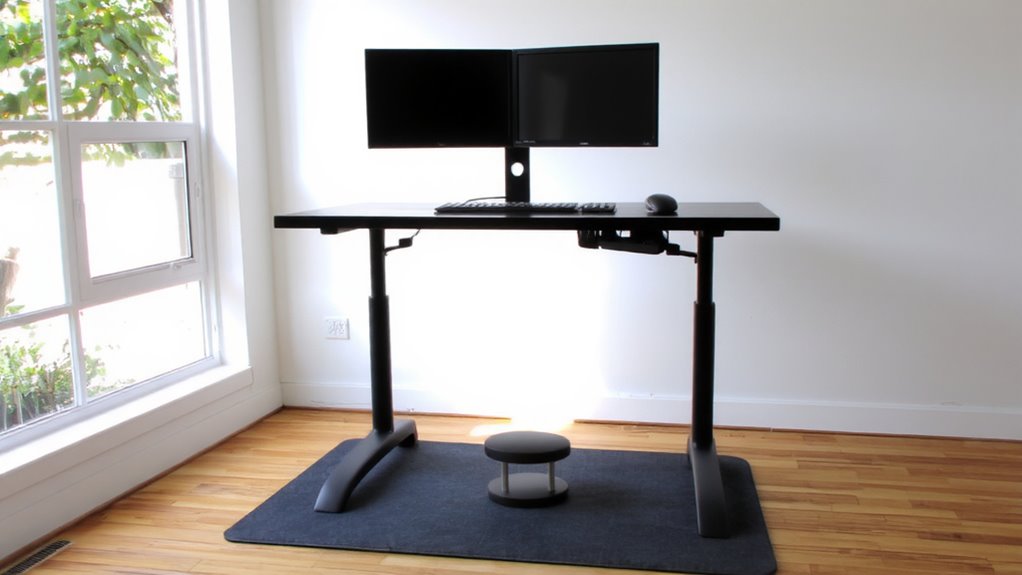
Why do your feet ache after just an hour of standing at your desk? You’re likely experiencing both poor circulation and muscle strain from staying in one position too long. When you stand still, blood flow slows in your lower limbs, which can cause swelling and discomfort. At the same time, your calf and foot muscles stay contracted, leading to fatigue and strain over time. Unlike sitting, standing demands continuous engagement of your postural muscles, especially if your footwear lacks support or your floor is hard like concrete or tile. Even small imbalances in posture can amplify stress on certain foot areas. This isn’t just about comfort-it affects long-term usability of a standing desk. While some solutions help, they aren’t instant fixes. Results depend on your habits, body mechanics, and how consistently you move throughout the day. Incorporating a supportive desk footrest can help reduce lower limb fatigue by promoting better circulation and posture, even when transitioning between sitting and standing.
Use an Anti-Fatigue Mat That Reduces Foot Fatigue
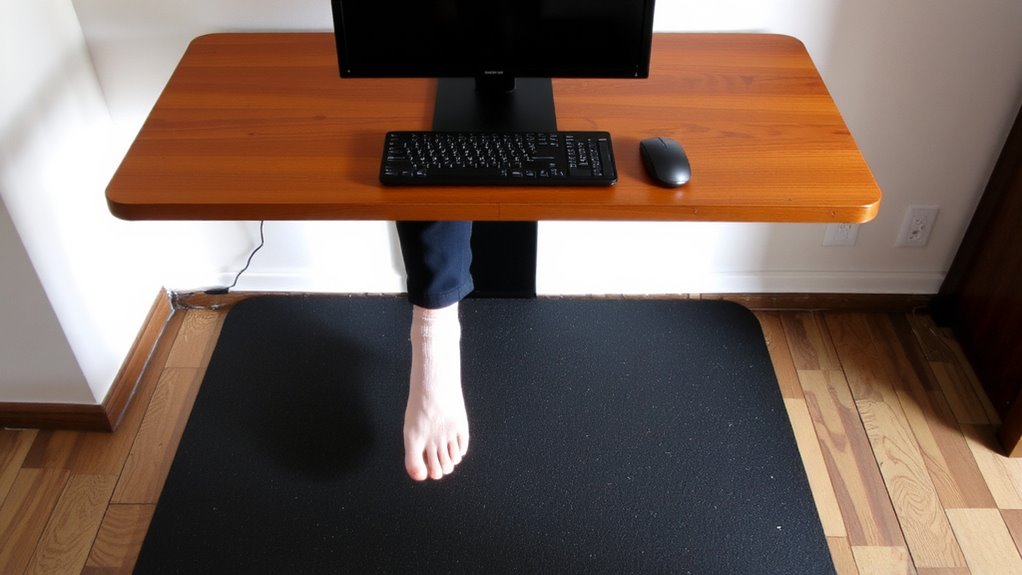
While standing all day can wreak havoc on your feet, switching to an anti-fatigue mat is one of the most effective, research-backed upgrades you can make to your standing desk setup. These mats feature gel cushioning that supports your arches and reduces pressure on joints, helping you stand longer with less discomfort. The textured surface promotes subtle muscle engagement, improving circulation and reducing stiffness over time. Most top models are around ¾ inch thick and made from durable, non-slip materials that hold up after months of use. Look for ones with a 3-year warranty to guarantee longevity. However, not all mats deliver equal support-cheaper foam versions often flatten quickly, losing effectiveness. For the best results, choose a mat specifically designed for extended standing, not just light use. While it won’t fix poor posture, it’s a proven first step toward real relief. Some advanced options even include built-in massage features to further enhance comfort and circulation.
Adjust Desk and Posture to Support Your Feet
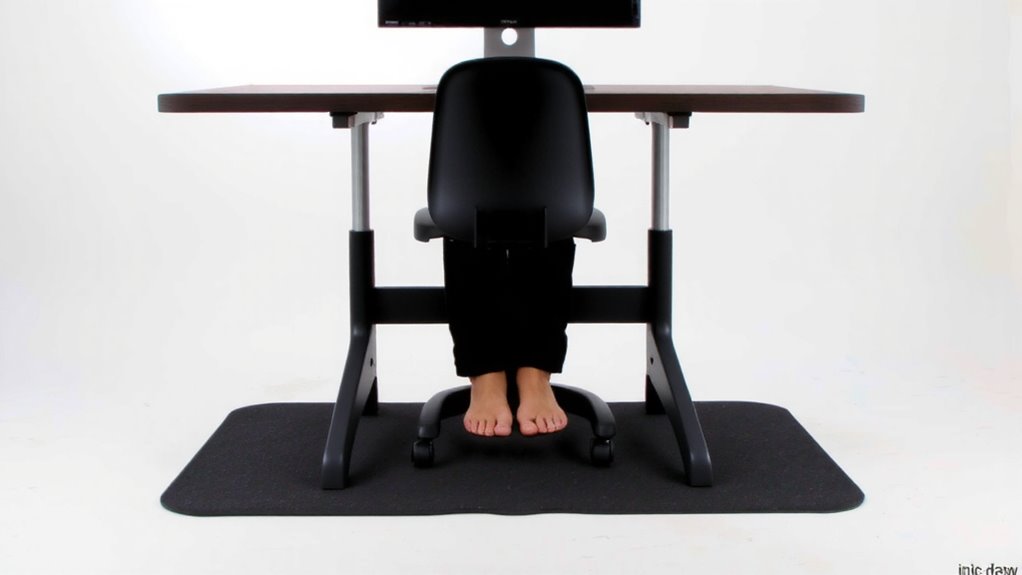
A well-adjusted desk and posture can make a real difference in reducing foot fatigue, but only if set up with precision. Proper ergonomic alignment starts at the desk: your surface should allow elbows to bend at 90°, preventing slouching or overreaching. This position shifts weight distribution evenly across both feet, minimizing pressure. Stand tall-shoulders relaxed, spine neutral, knees slightly bent. Avoid locking your knees or shifting all weight to one leg. Small adjustments matter: even a 2-inch desk height variance can disrupt alignment. Incorporating a supportive standing desk mat can further alleviate discomfort by encouraging subtle movement and improving circulation.
| Feature | Ideal Setting | Why It Matters |
|---|---|---|
| Desk Height | Elbows at 90° | Supports posture, reduces strain |
| Monitor Top | Eye level | Prevents neck hunching |
| Foot Position | Weight even | Promotes circulation |
| Spine Curve | Neutral | Aids ergonomic alignment |
| Knee Bend | Slight | Improves weight distribution |
Move Regularly to Prevent Foot Pain
Even if you’ve dialed in your desk height and posture perfectly, staying in one position for hours will still lead to foot pain-your body needs movement to keep circulation strong and muscles engaged. You should shift your weight, rock side to side, or do small calf raises every 10 to 15 minutes to boost foot circulation and maintain muscle engagement. These micro-movements help prevent stiffness and reduce swelling, especially if you’re on a hard surface. Standing still for too long limits blood flow, which increases fatigue over time. Set a timer or use a smartwatch reminder to prompt small adjustments. You don’t need special gear-a stable floor and consistent habit work. But keep in mind, excessive shifting without support might strain joints. Balance motion with stability. Movement isn’t a fix-all, but combined with proper alignment, it markedly reduces discomfort and supports long-term standing endurance.
Wear Supportive Shoes on Hard Floors
The right pair of supportive shoes makes a meaningful difference when standing for long hours on hard floors, especially in home or office environments where comfort and productivity go hand in hand. Shoes with proper arch support help distribute your weight evenly, reducing strain on your feet and lower limbs. Cushioned soles absorb impact, minimizing fatigue during extended standing. Look for models with removable insoles so you can customize fit and support. Avoid flat dress shoes or slippers-they lack the structure needed for all-day use. While athletic shoes often deliver good cushioning and arch support, not all are suited for office wear. Consider work-safe designs that balance professionalism and function. There’s no universal best shoe, so test options based on your foot shape and daily routine. Replace them every 6–12 months, depending on use, to maintain effectiveness.
On a final note
You’ll likely reduce foot fatigue with the right standing desk setup, but success depends on consistent use and proper choices. An anti-fatigue mat with at least 3/4-inch thick cushioned foam helps, as do supportive shoes with arch support. Pair these with a desk at elbow height and posture checks every hour. Still, prolonged standing causes strain-set a timer to sit or walk every 30 minutes. No gear replaces movement.