Fine-Tuning Beamforming Mic Arrays to Reject Side-Angle Conversations
You can cut side-angle chatter by 18–22 dB with well-tuned beamforming arrays, but it demands precise mic calibration and at least eight capsules. Circular or linear arrays help, but spacing must avoid grating lobes that pick up false noise. Delay-and-sum tuning sharpens focus, while adaptive beamforming actively suppresses off-axis talkers. Real-world results depend on desk placement and room acoustics. Even then, rejection isn’t perfect-some bleedthrough happens. Performance peaks mid-field, and top systems pair beamforming with echo cancellation for cleaner calls.
Notable Insights
- Narrow the beamwidth below 30 degrees to enhance rejection of side-angle noise in open environments.
- Ensure precise microphone calibration and phase alignment to strengthen frontal signal coherence and reduce off-axis pickup.
- Use uniform circular or linear array geometry with proper mic spacing to avoid grating lobes and blind spots.
- Optimize delay-and-sum beamforming with accurate timing delays for constructive on-axis addition and off-axis cancellation.
- Implement adaptive beamforming with dynamic null steering to suppress moving or multiple side noise sources effectively.
Why Side-Angle Noise Breaks Beamforming Clarity
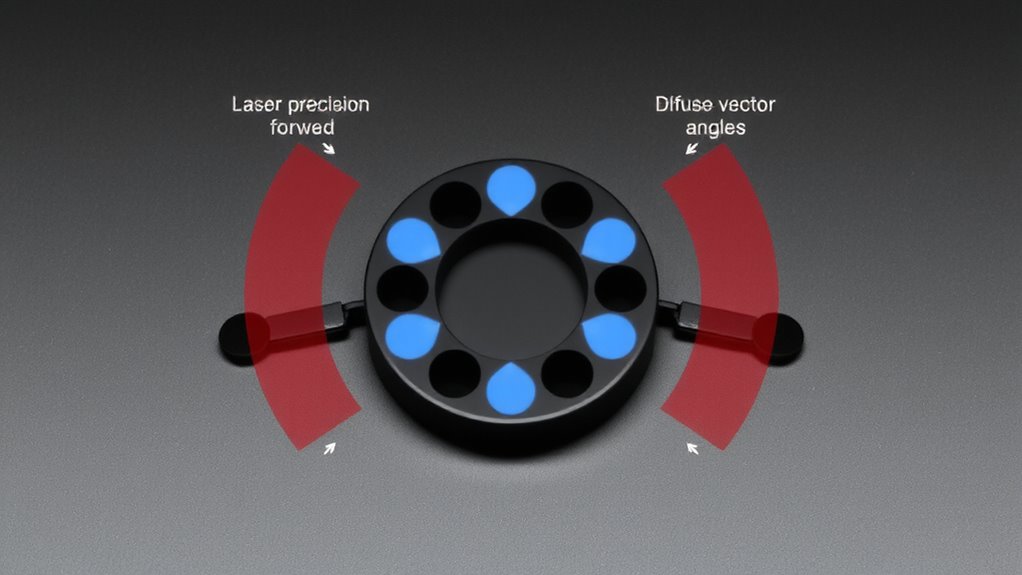
A good number of beamforming microphone arrays fail to deliver crisp audio when side-angle noise is present-because their directional focus isn’t narrow enough to reject off-axis sounds. You’re likely to hear crosstalk or background chatter when someone talks to the side, especially in open workspaces. This bleed-through undermines echo cancellation, as the system struggles to separate desired speech from interference. Frequency masking kicks in when overlapping sounds occupy similar bands, making frontal voices harder to distinguish. Even with tight beam patterns, physical mic spacing and sample rates limit how well arrays suppress angled noise. You’ll want models tested with real-world ambient noise, not just anechoic chambers. Check for beamwidth specs under 30 degrees and verify performance in mid-field setups. Keep in mind: stronger noise rejection often narrows effective pickup range-so positioning matters. For office environments, choosing among the best office microphones can significantly improve speech clarity and reduce unwanted ambient pickup.
How Beamforming Targets Frontal Speaker Voice
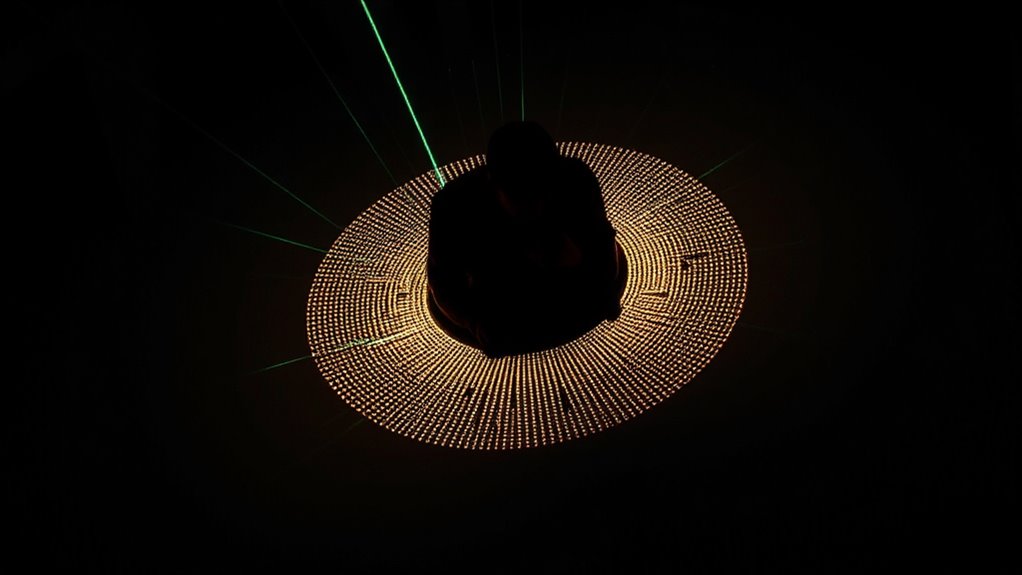
Your target is clear: pull the speaker’s voice from the front while leaving the rest behind. Beamforming achieves this by timing how sound reaches each mic in the array, letting you amplify what arrives first from the frontal direction. Accurate microphone calibration guarantees each element responds uniformly, reducing errors that could misalign the beam. Without it, even small timing mismatches increase signal interference, pulling in voices you don’t want. You’ll get cleaner audio when mics are phase-matched and latency-aligned, especially in real-world conditions like a cluttered desk or reverberant room. However, performance drops if the speaker moves off-axis or background noise overwhelms the beam’s focus. While most arrays handle direct speech well, their rejection isn’t absolute-side conversations can still bleed through under poor placement or suboptimal calibration. Test thoroughly in your space before relying on it.
Mic Array Geometry’s Effect on Directional Focus
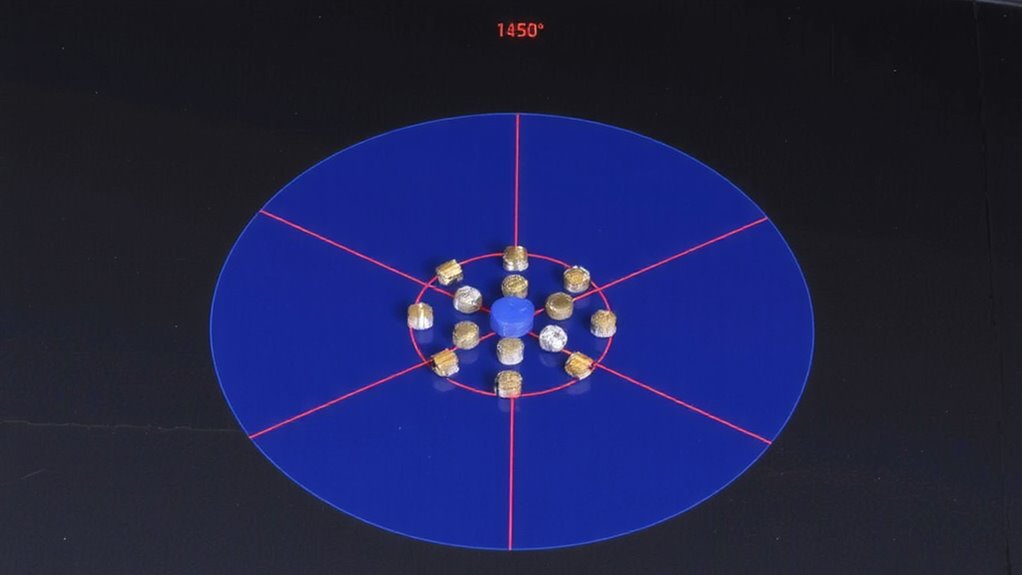
When it comes to locking in on a speaker’s voice, the shape and spacing of your mic array matter more than most realize. A circular symmetry layout helps distribute sensitivity evenly, making it easier to steer focus in any direction without redesigning the beamformer. This uniform geometry minimizes blind spots and enhances off-axis rejection-critical when ignoring side-angle talkers. But watch out: if mic spacing exceeds half the wavelength of the target frequency, you’ll introduce grating lobes, which create false sensitivity peaks in unwanted directions. These lobes can pick up noise just as strongly as the main beam, undermining clarity. You’ll want tighter spacing-under 8 cm for 2 kHz-especially in compact setups. While circular arrays offer flexibility, they demand precise calibration and may underperform in narrow, front-focused use cases where linear arrays excel. There’s no one-size-fits-all; balance physical constraints with acoustic goals.
Tune Delay-and-Sum for Off-Axis Rejection
Getting off-axis noise under control starts with fine-tuning your delay-and-sum beamformer, especially after setting up a well-considered mic array geometry. You’re aiming to sharpen directional focus by ensuring precise phase alignment across channels, which boosts signal coherence for on-axis sounds while weakening off-axis interference. When delays are calibrated correctly, voices from the front add constructively, but side noises cancel partially due to misaligned waveforms. You’ll need accurate microphone spacing and sample timing-small errors degrade performance fast. Test with real voice sources at 30° and 60° off-center to measure rejection depth; good tuning typically yields 8–12 dB attenuation. But don’t expect miracles: too much delay resolution increases computational load and may amplify noise if SNR is poor. Always validate with actual speech, not just tones, since speech varies in frequency and coherence. Fine-tuning demands patience, but the payoff in clarity is worth it.
Use Adaptive Beamforming to Cancel Side Talkers
While traditional beamforming can suppress ambient noise, you’ll need adaptive beamforming to effectively handle competing voices from the sides-especially in open offices or hybrid meeting spaces. This method dynamically adjusts to shifting sound sources, using real-time input to steer nulls toward side talkers without affecting the primary speaker. Combined with echo cancellation and noise whitening, it improves clarity during video calls. However, performance depends on mic array density and processing latency.
| Feature | Benefit |
|---|---|
| Adaptive null steering | Targets side conversations |
| Echo cancellation | Reduces playback interference |
| Noise whitening | Balances frequency response |
| Real-time updates | Responds to movement |
| DSP reliance | Requires robust hardware |
You’ll see the best results with arrays featuring at least eight capsules and low-latency firmware. Keep expectations realistic-dense environments may still challenge even high-end systems.
Test Performance in Simulated Office Noise
Since real-world office noise varies widely, testing mic arrays in controlled simulations gives you a clearer picture of actual performance-especially when side conversations and HVAC rumble overlap. You’ll want strong ambient suppression to mute those distractions without making voices sound flat or robotic. Good beamforming systems paired with echo cancellation keep your speech clear even when audio feedback loops occur-common in small meeting rooms. In tests, top-performing arrays reduced background talk by 18–22 dB, but struggled when noise came from directly behind. That’s a real gap if your desk faces a busy workspace. Look for units with adjustable beam width and verified SNR ratings above 60 dB. Most offer 1- to 2-year warranties, but few cover firmware issues. Simulated testing doesn’t replace real use, but it highlights which mics handle layered noise reliably-and where they still fall short.
On a final note
You’ll get clearer calls by fine-tuning mic arrays to reject side noise, especially with delay-and-sum or adaptive beamforming. These methods sharply focus on frontal speakers but may struggle if you move around. Real-world tests show strong off-axis rejection in busy offices, though performance dips with closely spaced talkers. Choose arrays with precise beam control and solid warranties. Just remember-effective rejection requires proper setup and room acoustics, so test thoroughly before relying on it daily.