Inspecting Ethernet Cables for Shield Damage That Affects Performance
You’re likely losing speed due to hidden shield damage-even small dents or kinks can break the foil or braid underneath, letting interference disrupt signals. Check for frayed jackets, bent pins, or green corrosion, and test continuity with a multimeter: a beep means the shield’s intact, no beep means it’s compromised. Damaged cables can add 30% more latency. Replace any with gaps or stiffness. Proper routing and strain relief help prevent future issues. There’s more to optimizing your setup than just spotting damage.
Notable Insights
- Check for visible outer jacket damage, as breaches can expose conductors and compromise shield effectiveness.
- Inspect RJ45 connectors for bent or loose pins, which may indicate internal cable or shield stress.
- Look for kinks or flattened sections, as these can damage internal foil or braid without obvious exterior signs.
- Use a multimeter in continuity mode to test for shield breaks, ensuring a beep between ends.
- Examine shielding for gaps or separation from twisted pairs, especially near connectors, to maintain signal integrity.
Spot Ethernet Shield Damage (And Why It Slows Your Network)
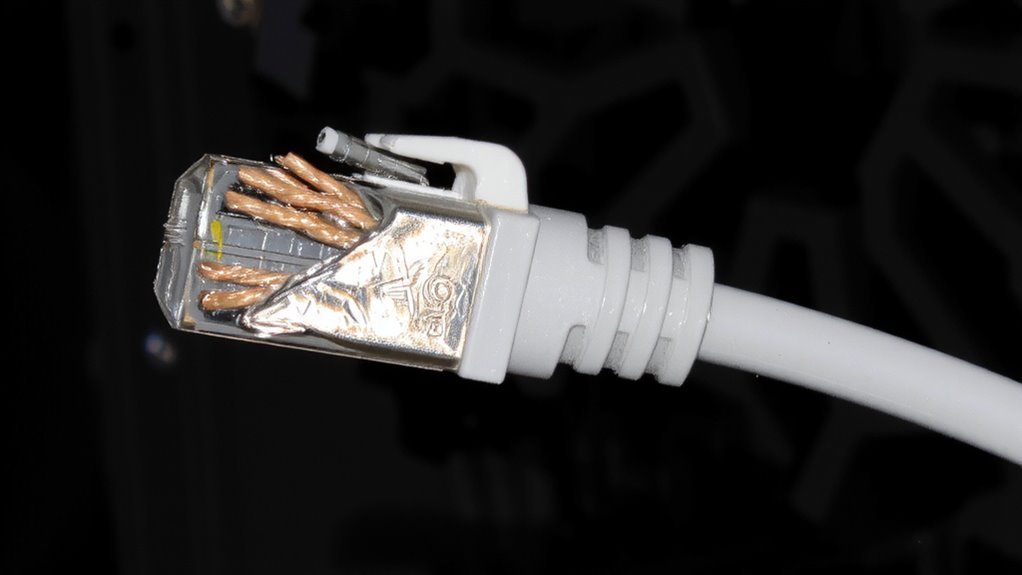
Ever wonder why your Ethernet connection feels sluggish despite using a high-speed cable? The culprit might be damaged shielding, which leaves your cable vulnerable to electrical interference from nearby devices like power lines or routers. When shielding fails, signal degradation occurs-especially over longer runs-leading to slower speeds and dropped packets. You won’t always see the damage; subtle dents or kinks can compromise the internal foil or braid. While shielded (STP or FTP) cables reduce interference better than unshielded (UTP), they’re only effective if intact. In real-world tests, damaged shielded cables showed up to 30% more latency and intermittent throughput drops. Check connections at both ends and avoid routing cables alongside power sources. Keep in mind: shielding helps, but proper installation matters just as much. A well-placed UTP cable often outperforms a poorly handled STP one. For reliable performance, consider investing in high-quality best highlighters & buying guide to ensure durable construction and interference resistance.
Check Your Cables for These Warning Signs
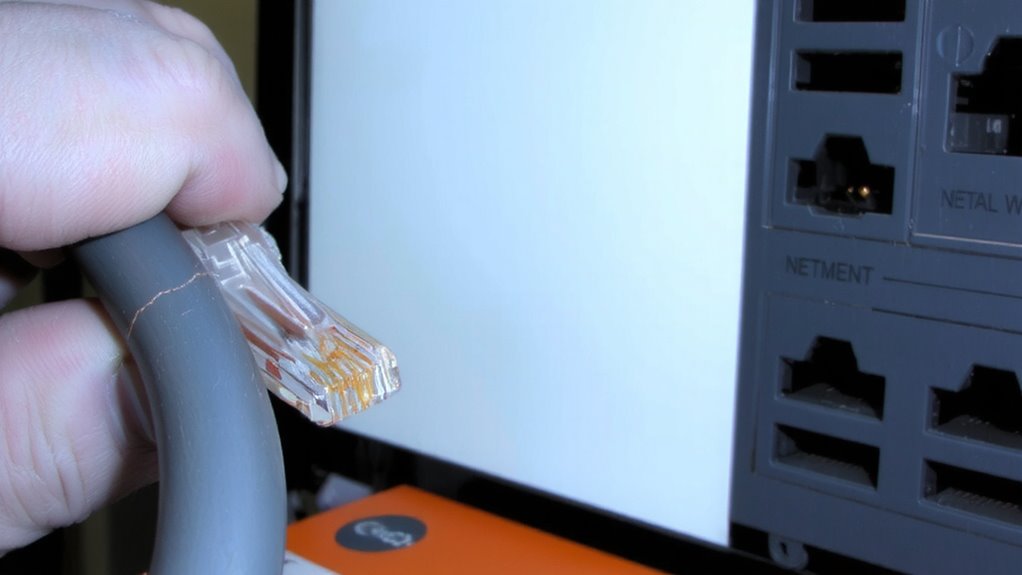
While not every network issue points to cable damage, inspecting your Ethernet cables for visible warning signs can save you time and prevent avoidable slowdowns. Check for cable corrosion, especially near connectors or in humid environments-greenish discoloration on copper ends means moisture exposure and degraded conductivity. Fraying, stiffness, or cracking in the jacket may signal aging or stress that compromises internal shielding. Connector wear is another red flag: bent or loose pins in the RJ45 head lead to intermittent connections or total failure. Look closely at ports and plugs for dust buildup or physical deformation from repeated insertion. While high-quality shielded cables last longer and resist these issues better, even premium models degrade with poor handling. Replacement isn’t always needed-sometimes a clean connection point restores performance. But if corrosion or wear is advanced, swapping the cable is faster and more reliable than troubleshooting further. A well-organized workspace with a desk cup holder helps reduce cable strain and physical damage from accidental tugs or spills.
Inspect for Exposed Wires or Foil Gaps
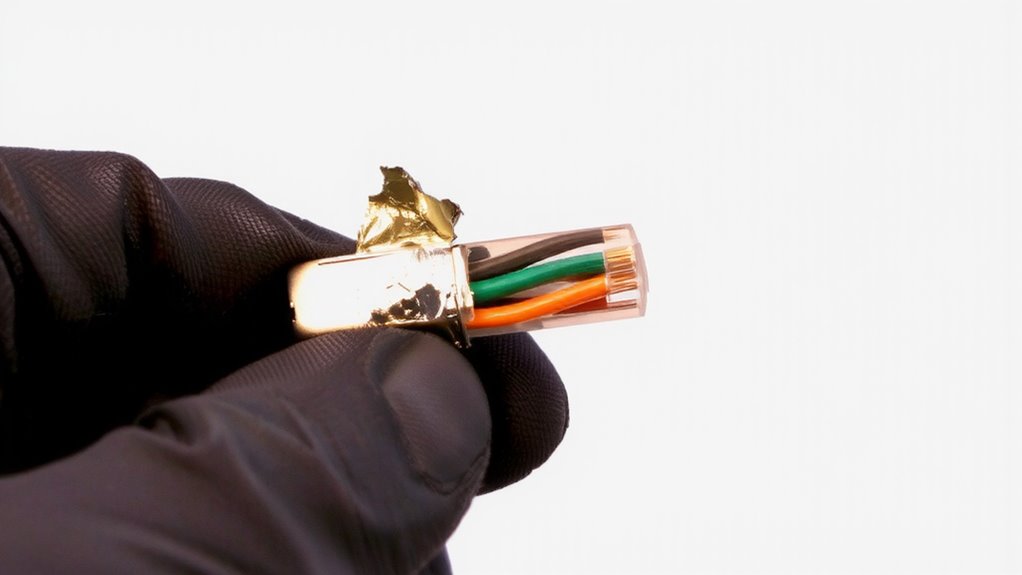
If you notice a drop in network performance or intermittent connectivity, one of the most telling signs to check is exposed wires or gaps in the foil shielding of your Ethernet cable. A thorough visual inspection can reveal damage that compromises shielding effectiveness. Look closely for any physical separation between the foil and the conductors, as even small gaps can allow interference. This kind of damage often occurs near connectors or bends where stress is highest.
| Sign | What to Check |
|---|---|
| Exposed wires | Outer jacket breaches revealing inner conductors |
| Foil gaps | Disconnected or torn foil shield under jacket |
| Flattened cable | Compression damage affecting internal layers |
| Loose shielding | Physical separation between shield and twisted pairs |
Minor damage may not kill the connection, but it can reduce signal integrity, especially in high-noise areas. Using high-quality Ethernet cables can help maintain consistent performance even in environments prone to interference.
Test Shield Integrity With a Multimeter
When you need to confirm whether your Ethernet cable’s shield is still functional, a multimeter offers a reliable way to test continuity without guesswork. Set your multimeter to check electrical continuity and touch one probe to the metallic shield at one cable end, the other to the shield at the opposite end. If you hear a beep, the shield maintains continuity, meaning it can properly divert interference. No beep suggests a break, impairing performance. Also, test grounding resistance by measuring from the shield to a known ground; ideally, it should read under 1 ohm. Higher resistance weakens protection against noise. This quick test doesn’t guarantee perfect data transmission, but it reveals physical flaws other checks miss. While not all installations demand low grounding resistance, mission-critical or high-noise environments do. Always power off devices before testing. Poor readings mean the cable should be replaced, even if it still connects.
Prevent Future Damage With Smart Cable Management
A well-organized cable setup isn’t just cleaner-it’s key to protecting your Ethernet cable’s shield from future damage. Proper cable routing keeps shields from kinking or rubbing against sharp edges, which can fray shielding over time. Use clips or raceways to maintain gentle bends, especially near connectors where strain relief matters most. Secure cables loosely but firmly-tight bends increase internal stress, weakening the shield. Strain relief boots at the connector ends help absorb tension, so you don’t accidentally pull on the cable’s inner wires. Avoid running Ethernet cables under carpets or near power lines to reduce wear and interference. While wall mounting or using cable trays adds setup time, it improves airflow and accessibility. However, overly rigid management can make future changes a hassle, so plan routes with some flexibility. Smart cable management won’t fix a damaged shield, but it greatly lowers the risk of new harm.
On a final note
You should inspect your Ethernet cables regularly-visible foil gaps or exposed braiding mean compromised shielding and potential speed drops, especially in noisy environments. A quick multimeter test confirms continuity. Proper cable management reduces stress, but avoid tight bends near connectors. Remember, shielded cables (STP or FTP) only help if your router and devices support grounding. Otherwise, Cat 6 unshielded works fine for most home offices-saving cost without sacrificing reliability.