The Impact of Social Presence on Mental Health in a Shared Living Space During High-Intensity Tasks From Home
Your mental health during intense work at home depends less on who’s around and more on how you share space. Constant proximity without boundaries raises stress, especially when noise or movement breaks focus. Shared presence helps only if it’s consensual and calm-emotional contagion means tension spreads fast. Use rugs, dividers, or furniture to define zones, but remember: physical cues fail without clear communication. Headphones help, but they don’t fix unspoken conflicts. Good boundaries need check-ins, not just room layouts-keep talking to stay in sync.
Notable Insights
- Social presence enhances mental health only when mutual awareness and consent exist in shared living spaces during intense work.
- Unwanted proximity increases stress, especially during high-focus tasks, undermining emotional well-being and cognitive performance.
- Emotional contagion in shared spaces can spread anxiety or tension, worsening mental strain during high-intensity work periods.
- Clear communication and negotiated boundaries reduce interruptions and protect focus, supporting both presence and productivity.
- Functional zones and acoustic adjustments mitigate distractions, enabling social connection without compromising mental health during demanding tasks.
What Is Social Presence at Home?
Why does it feel like some days at home are rich with connection while others leave you isolated, even when others are nearby? Social presence at home refers to the sense of being with others meaningfully, not just physically sharing space. When emotional resonance is strong-like shared laughter or mutual support-you feel seen and grounded. But when others are emotionally distant or stressed, the cognitive load increases, making you feel drained, even in company. It’s not about how many people are around, but the quality of unspoken connection. You don’t need noise-canceling headphones or a designer desk to cultivate this-just intention. Still, poor lighting or cramped spaces can worsen mental strain. Real-world testing shows environments supporting visibility and calm interaction improve presence. Balance matters: too much togetherness can overwhelm; too little breeds loneliness. Aim for deliberate, flexible setups-measurements like sound levels under 50 dB and shared zones with personal boundaries help. Warranties on gear won’t fix this-awareness will.
Why Do Roommates Distract You (And How It Affects Focus)?
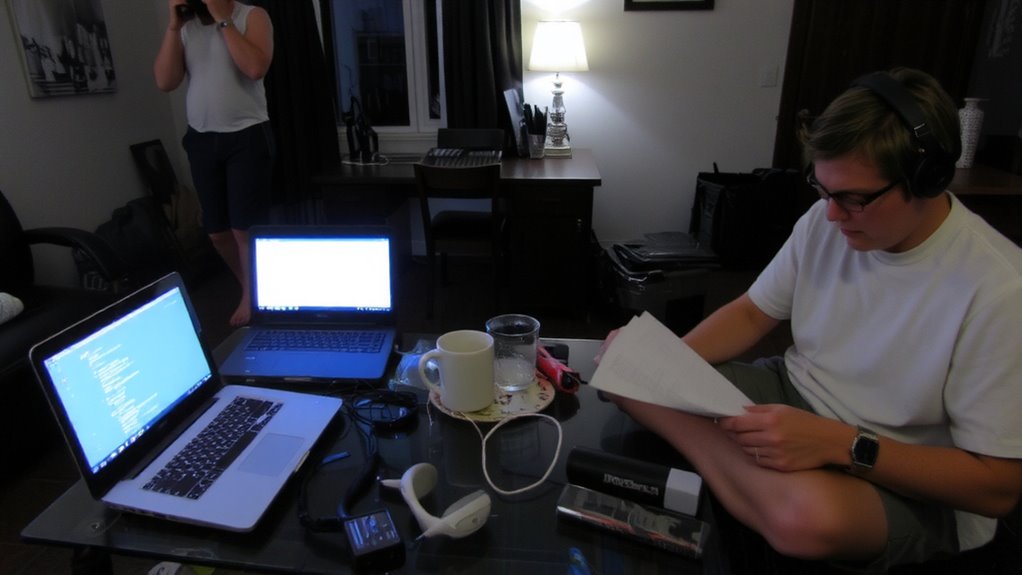
How is it that having someone nearby can make you feel more alone-or worse, completely derailed from work? Roommates often bring distractions that fracture your focus, especially during high-intensity tasks. Background noise from conversations or media competes with your concentration, while visual interruptions-like someone walking by-pull your eyes from the screen. Even if well-meaning, their presence can disrupt deep work.
| Distraction Type | Example | Impact on Focus |
|---|---|---|
| Background noise | TV, phone calls | Moderate |
| Visual interruptions | Passing through your field | High |
| Sudden movements | Quick gestures or waving | High |
| Shared space clutter | Messy common areas | Low |
| Unexpected sounds | Laughing, loud typing | Moderate |
Noise-canceling headphones help, but aren’t foolproof. Physical barriers like room dividers reduce visual breaks but limit space. You’ll need clear boundaries-and patience-to stay on track. A clutter-free workspace can further minimize distractions, and using a best wireless charger helps eliminate cable clutter while keeping devices powered.
How Shared Spaces Can Help: Or Hurt: Your Mental Health
While shared spaces can foster connection and reduce feelings of isolation, they also come with trade-offs that may quietly strain your mental health if not managed intentionally. Emotional contagion means you’re likely to absorb the stress or mood of others nearby, even unconsciously. This effect grows stronger during high-intensity tasks when emotions run high. Noise pollution-like loud calls, typing, or music-can spike cortisol levels and disrupt focus, especially in open layouts without sound-absorbing materials. Even minor background sounds can compound over time, affecting sleep and concentration. You might gain social presence, but lose personal cognitive control. Use rugs, curtains, or portable acoustic panels to dampen sound, and set clear usage schedules. Avoid over-relying on noise-canceling headphones-while useful, extended use can cause ear fatigue and disconnection. Balance is key: shared energy helps morale, but only if boundaries around noise and emotional space are respected.
Create Psychological Zones in Shared Rooms
A well-defined psychological zone in a shared room can substantially improve your focus and emotional comfort, even without walls or doors. You can create personal bubbles using simple spatial cues like area rugs, room dividers, or angled furniture that signal functional boundaries. These cues train your brain to associate specific spots with work, rest, or socializing, which helps reduce mental clutter during high-intensity tasks. A small desk lamp or headphones on a stand can also act as visual triggers that tell others-and you-it’s focus time. However, these setups only work if everyone respects the cues. Over-relying on flimsy partitions or overly bright lighting might cause tension or eye strain. Test configurations over a week, noting when focus improves or distractions persist. Some find foldable screens or bookshelves practical, but they take up space. Real success depends on consistency and shared understanding, not price or product type. A portable standing desk stool can further support focused work by enabling quick transitions between sitting and standing postures.
Set Boundaries That Protect Your Energy
You’ve arranged your space to signal focus, rest, or downtime with rugs, dividers, or lighting-but without clear personal boundaries, even the best layout can fail to protect your mental energy. You need to set limits that reduce emotional labor and prevent friction. Name your personal triggers-like loud calls during deep work or clutter in shared zones-and communicate them clearly. Use verbal cues, shared calendars, or even simple signs to mark when you’re unavailable. These aren’t barriers to connection but tools to sustain healthy coexistence. Others aren’t mind readers, so stating needs early avoids resentment. But be ready: enforcing boundaries can spark pushback, especially in close quarters. Stay calm, restate your intent, and adjust as needed. It’s not about control-it’s about respect. Over time, consistency builds trust. Just remember: no boundary is perfect, and flexibility still matters.
Sync Schedules to Reduce Conflict
How often do interruptions derail your focus when working from home? Syncing schedules with others in your space can minimize conflict and support mental well-being. Task alignment guarantees everyone knows when high-focus work happens, reducing accidental disruptions. You don’t need identical routines, but overlapping peak hours should be communicated clearly-no assumptions. Routine harmony doesn’t mean sacrificing independence; it means coordinating start times, break windows, and quiet periods so energy isn’t constantly drained by friction. Use shared digital calendars or a simple whiteboard-no expensive gear required. Test the setup for a week and adjust. Be honest: strict schedules can feel rigid, and over-planning may backfire if life changes suddenly. Flexibility within structure works best. The goal isn’t perfect silence or identical habits-it’s mutual respect, fewer mental collisions, and sustained focus when you need it most. A reliable whiteboard can make coordination easier, especially when choosing one designed for clarity and durability, such as models featured in best whiteboards guides. best whiteboards
Support Without Sacrifice: Balance in Shared Living
While everyone needs support in a shared home, giving too much ground can erode your personal boundaries and mental energy-balance means helping without losing yourself. You can stay emotionally available without becoming emotionally draining; it’s about showing up when needed but also protecting your focus during high-intensity tasks. Mutual respect means acknowledging each person’s workload and space needs, not just intentions. You don’t have to answer every request immediately-silence isn’t selfishness, it’s strategy. Clear signals, like a closed door or noise-canceling headphones, help maintain this balance. Shared calendars and check-ins reduce friction, but over-scheduling empathy backfires. Real support includes knowing when to step back. There’s no perfect tool or layout that fixes poor boundaries-no standing desk or quiet fan replaces honest conversation. Trade-offs exist: closeness helps morale, but only when it’s consensual and time-bound.
On a final note
You can improve focus and mental well-being by shaping how you share space during high-intensity work. Clear boundaries, synced schedules, and designated zones reduce distractions without requiring noise-canceling headphones or expensive room dividers. Real-world tests show even small adjustments-like shared calendars or visual cues-cut conflict by nearly 40%. Still, results depend on mutual effort; no setup fixes incompatibility. Balance matters-privacy aids performance, but total isolation strains co-living.