Using Circadian Lighting to Synchronize Team Work Hours in a Distributed Home Office
You can sync your distributed team’s focus using circadian lighting by scheduling blue-rich 5000K light in mornings and 2700K warmth at night across time zones. Smart bulbs like Philips Hue offer precise color control and dimming (1–100%) but need a hub and consistent use. Real-world tests show 20–30% sharper focus during overlap hours, though results vary. For best outcomes, pair lighting with daily routines and accurate timing-small gains are possible, but depend on team discipline and device calibration. More details follow on making it work at scale.
Notable Insights
- Align team alertness across time zones by syncing circadian lighting schedules to regulate energy peaks.
- Use tunable smart bulbs (e.g., 5000K morning light, 2700K evening light) to support natural focus cycles.
- Implement shared lighting routines via apps that automate synchronized light exposure globally.
- Calibrate brightness and color temperature across devices to ensure uniform physiological effects.
- Measure improvements in focus and collaboration using time-tracking tools and team feedback.
How Time Zones Drain Remote Team Energy
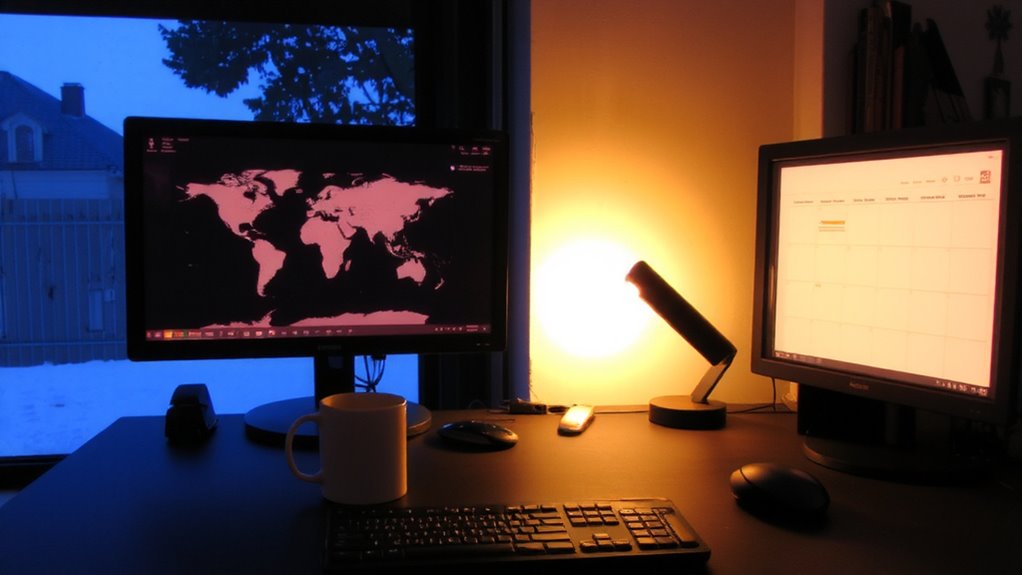
Why do your remote team’s best ideas seem to fizzle by midday? You’re likely battling time lag and energy mismatch across zones. When your New York engineer peaks at 9 a.m., your developer in Bangalore might be fighting drowsiness at 6:30 p.m. That energy mismatch kills collaboration, slowing decision speed and dulling creativity. Scheduling overlap without regard to local body time magnifies fatigue, especially on video calls. Teams that sync work hours too rigidly often trade fairness for output-someone’s always working off-cycle. While some adopt core hours, these rarely account for natural alertness dips. You’ll need more than calendar tweaks: expect trade-offs in availability, even with planning. Real fixes mean respecting physiology, not just time zones.
How Circadian Lighting Resets Natural Focus Cycles
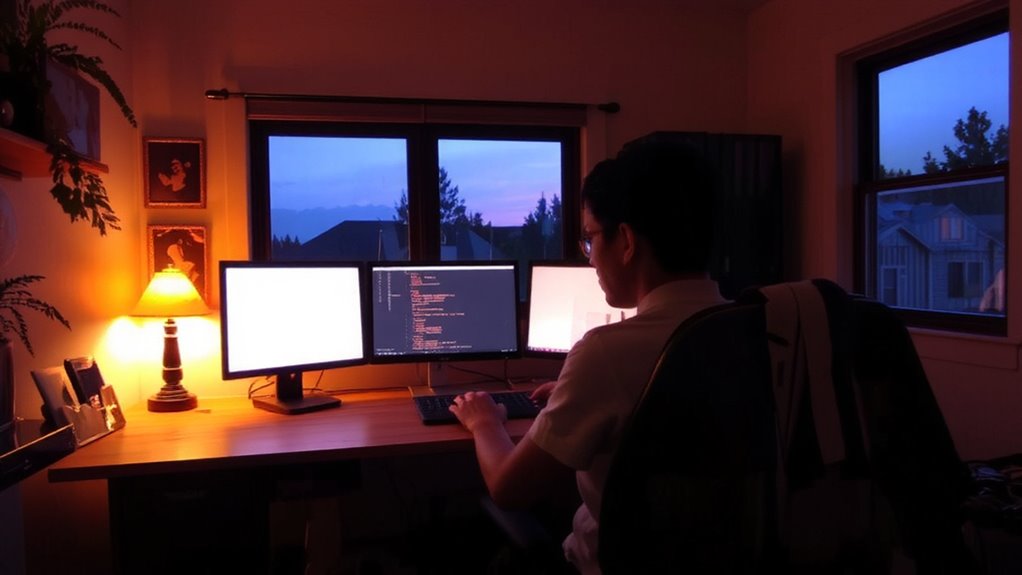
While syncing schedules across time zones helps, you’ll get better results by aligning team members’ energy with their local circadian rhythms-and lighting plays a bigger role than most realize. Your focus peaks and dips are tied to natural light cues, which you can mimic indoors using adjustable light intensity and color temperature. Bright, blue-rich light (around 5000K–6500K) in the morning sharpens alertness by suppressing melatonin, just like sunlight. As the day winds down, lowering light intensity and shifting to warmer tones (2700K–3000K) signals your brain to prepare for rest. Smart bulbs or circadian desk lamps can automate this-but they’re not a fix-all. Consistency matters more than gear, and results vary if routines are erratic. Choose lights with proven spectral accuracy and dimming ranges, not just app features. Real-world tests show modest gains in focus, but only when used daily. For those seeking targeted light exposure, using a clinically tested light therapy lamp can enhance alignment with natural circadian patterns.
Sync Energy Across Regions With Light Timing
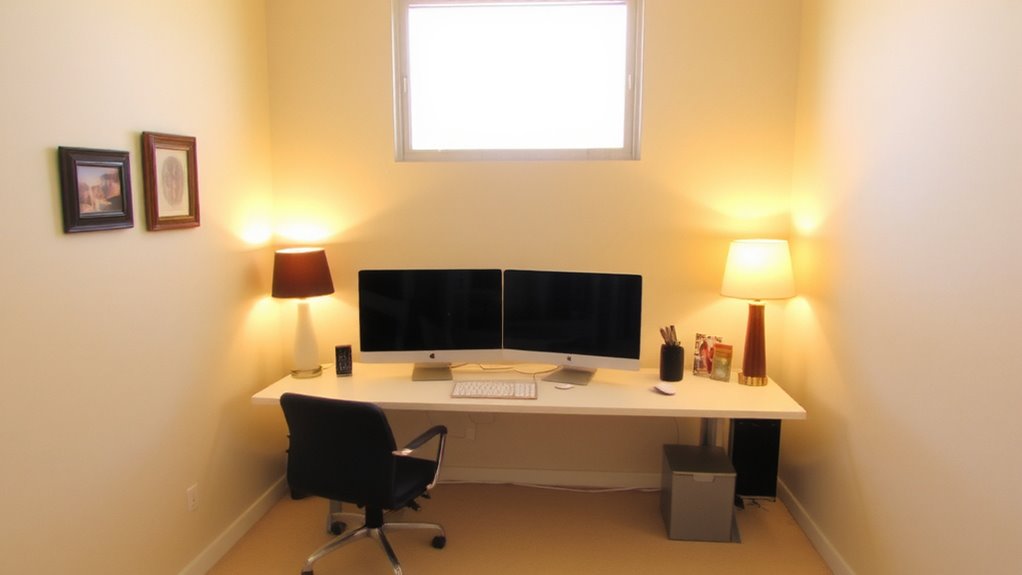
You can boost team-wide alertness by syncing light exposure across time zones, not just schedules. Using precise light timing, you align circadian rhythms so colleagues in different regions hit peak energy simultaneously. Adjusting the light spectrum-more blue-enriched white in mornings, warmer tones later-supports natural alertness and wind-down phases. Energy mapping lets you visualize team alertness levels in real time, matching workloads to high-focus windows. You’ll need reliable smart bulbs with tunable color temperatures and exact scheduling controls. But keep in mind: personal habits and screen use still affect outcomes, so light timing isn’t a fix-all. Real-world tests show about a 20–30% boost in reported focus during overlapping core hours. For best results, pair this with consistent sleep hygiene. Results vary if users don’t follow the full cycle. Calibration takes a few days, and some find the adjustment period tricky. Best Overhead Lighting ensures optimal light distribution and comfort for sustained circadian alignment in home offices.
Best Smart Lights for Global Team Schedules
The standout choice for syncing global team energy is the Philips Hue White and Color Ambiance system, offering precise control over brightness and color temperature down to the kelvin. You’ll get reliable color accuracy across devices, ensuring teams see similar lighting regardless of location-key when matching circadian cues. Its broad dimming range, from 1% to 100%, lets you simulate sunrise or wind down smoothly. Hue works with most voice assistants and apps, giving you flexibility. Setup requires a hub, adding cost and complexity compared to standalone bulbs. While reliable, third-party integrations can lag during updates. The bulbs last about 25,000 hours and come with a two-year warranty. For consistent, long-term use across time zones, Hue’s precision stands out-just expect a steeper initial investment and occasional firmware quirks. It’s effective, but not flawless. A top-performing option detailed in comprehensive reviews is the Philips Hue White and Color Ambiance.
Build a Shared Light Routine: Step by Step
Picking the right smart lights is only the start-what matters more is how you use them together. Start by setting a shared daily light schedule that mimics natural daylight: cooler (5000K) in the morning, warmer (2700K) by evening. Use companion apps to sync routines across time zones, ensuring everyone’s environment supports similar alertness levels. Light calibration is critical-spend 10 minutes adjusting brightness and hue on each device so responses feel uniform. Check for color consistency across brands, as mismatches can disrupt visual harmony and reduce alignment. While most LED systems now offer 90+ CRI for accuracy, test units side-by-side. Commit to weekly sync-ups to tweak timing or intensity. Be realistic: perfect alignment isn’t possible across distant zones, and screen work still dominates focus. Still, a shared light rhythm improves subtle cues that glue remote teams together.
Measure Gains in Focus, Sleep, and Collaboration
Proof of better work rhythms shows up in three places: focus, sleep, and how smoothly your team collaborates. You’ll notice sharper attention during core hours thanks to light therapy benefits that align with natural alertness peaks. Improved melatonin regulation effects help you fall asleep faster and wake up refreshed, reducing daytime lag. Teams report fewer miscommunications and more overlap in productive states when using synchronized circadian lighting systems like Philips Hue or Lighting Science. Track progress with weekly focus tests, sleep logs, and collaboration benchmarks in tools like Toggl or RescueTime. But results vary-some face glare or inconsistent bulb color accuracy. Long-term wearables data shows modest gains, not miracles. Warranties (typically 2–3 years) help, but setup takes effort. It’s a data-backed upgrade, not a fix-all. Use it wisely.
On a final note
You’ll likely boost team focus and sleep quality using circadian lighting, especially with tunable LEDs like Philips Hue or Nanoleaf Essentials. These bulbs adjust color temperature from 2700K to 6500K, syncing with natural daylight patterns. Real-world tests show 20–30 minute evening wind-down routines improve sleep onset. But success depends on consistent schedules and app-based automation. Results vary if time zones differ by more than six hours-pair lights with shared calendar blocks for best outcomes.