How to Choose Fixtures With Minimal Blue Light Emission for Pre-Bed Work
Use warm LED bulbs under 3000K or Amber or red LEDs are even better-they emit almost no blue light, helping keep melatonin levels stable. Look for flicker-free models with CRI over 80 and pair them with dimmers set to 50–100 lux. Position lights downward and away from your face to reduce direct exposure. Even warm LEDs can have blue spikes, so check spectral data if available. A well-placed, warm-shielded fixture makes a real difference when you’re working late. Better choices await.
Notable Insights
- Choose bulbs with a color temperature of 2700K or lower to minimize blue light emission during pre-bed work.
- Opt for red or amber LED bulbs, which emit virtually no blue light and best support melatonin production.
- Verify that warm-white LEDs lack sharp blue spectral spikes by checking manufacturer spectral data when available.
- Dim lights to 50–100 lux and use flicker-free dimming systems to maintain circadian-friendly illumination levels.
- Position fixtures downward or to the side of work areas to reduce direct blue light exposure to the eyes.
Understand How Blue Light Affects Sleep
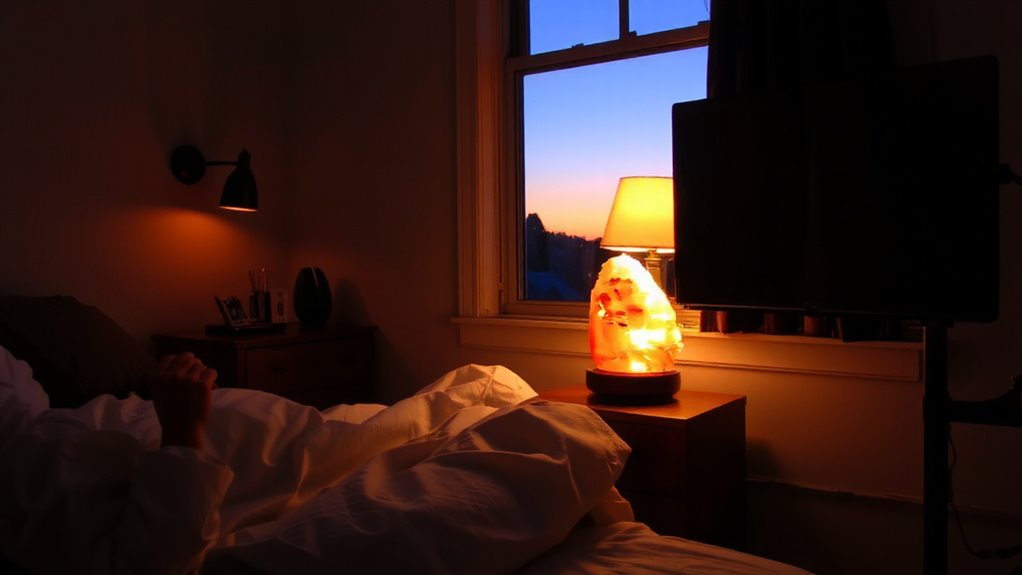
Even though you might not notice it right away, exposure to blue light in the hours before bed can disrupt your sleep by suppressing melatonin, the hormone that signals to your body that it’s time to wind down. This melatonin suppression throws off your circadian rhythm, making it harder to fall asleep and reducing sleep quality. Bright screens and cool-white LEDs are especially disruptive because they emit high levels of blue-rich light. Your body responds as if it’s still daytime, delaying drowsiness. While warm lighting helps, it’s the spectrum-measured in kelvins and spectral power distribution-that truly determines impact. Fixtures under 3000K with low blue output are better, but you should check for independent testing or spectral graphs. Not all warm-colored bulbs are equal-some still leak blue light. Always prioritize verified performance over marketing claims, and consider dimmability and placement for real-world effectiveness in your pre-bed routine. Some people use specialized lighting such as light therapy lamps to regulate circadian rhythms, though these should be used earlier in the day to avoid interfering with sleep.
Use Warm Bulbs Under 3000K for Night Work
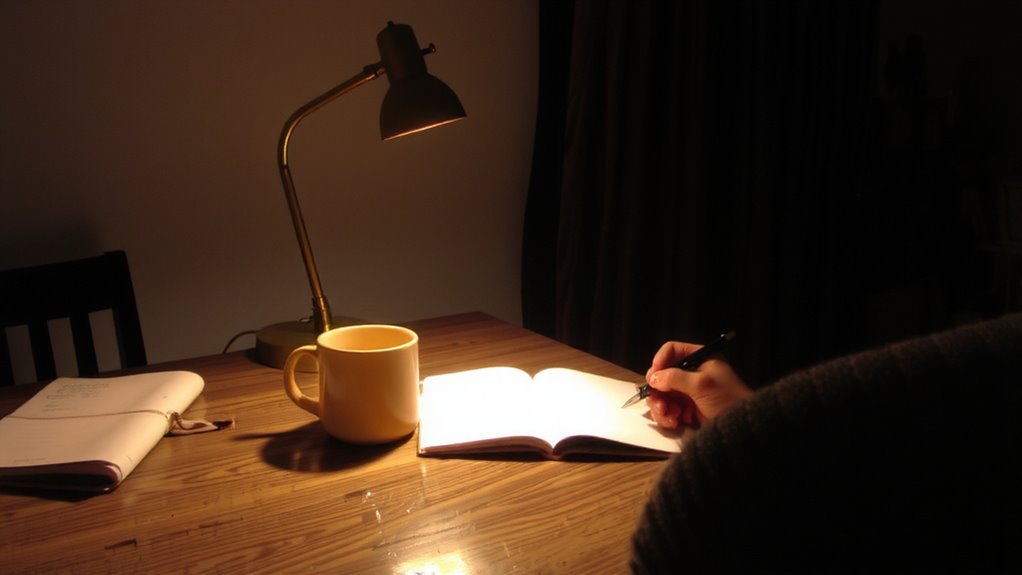
| Color Temperature | Bulb Type | Blue Light Emission |
|---|---|---|
| 2700K | LED | Low |
| 3000K | LED | Moderate |
| 4000K+ | LED | High |
These bulbs offer energy efficiency and long lifespans, but some may still emit a narrow blue spike-check spectral data if available. While warmth improves sleep readiness, lower light output can demand task lighting upgrades. Always verify manufacturer specs and real-world performance before committing. For reading or detailed tasks at night, consider using natural light lamps with adjustable color temperatures to balance clarity and circadian comfort.
Pick Red or Amber LED Bulbs for Safer Light
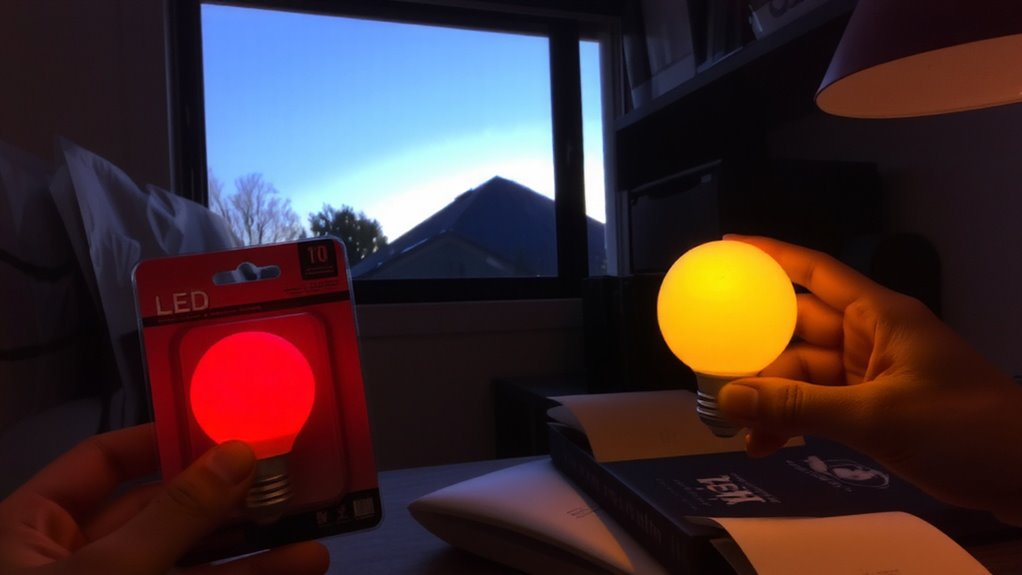
Red and amber LED bulbs are your best bet for late-night work if preserving sleep quality is a priority. These bulbs emit a warmer color temperature-typically below 2000K-and shift the light spectrum away from blue, reducing melatonin suppression. Unlike standard warm white LEDs, red and amber options contain almost no blue light, making them safer for circadian rhythms. Most quality models use precise phosphor coatings or monochromatic diodes to target these hues without flicker. You’ll notice colors look different under this light, so tasks needing color accuracy aren’t ideal. Look for bulbs with ENERGY STAR certification and a CRI above 80 if visibility matters. While they’re effective, remember they’re not meant for primary lighting. Use them only during your final work hours. Real-world tests show they help people fall asleep faster, but only when combined with consistent routines. Some smart lighting systems, like Philips Hue bulbs, offer customizable color temperatures that can be adjusted to minimize blue light emission in the evening.
Dim Lights to Match Evening Brightness
Aim to dim your lights to around 50–100 lux during pre-bed work sessions to mirror natural evening light levels and support melatonin production. Using dim lighting isn’t just about comfort-it’s key for proper evening adaptation, helping your body shift into rest mode. Most adjustable LED fixtures let you lower brightness, but check that they maintain warm color temperatures (under 3000K) when dimmed. Some bulbs shift too blue or flicker at low levels, which harms sleep quality. Look for models labeled “flicker-free” with smooth dimming curves, preferably compatible with trusted dimmer switches like Lutron. Keep in mind: overly dim spaces may strain your eyes if you’re reading or typing, so balance is essential. Test lighting with a lux meter app to confirm output. While dimming supports circadian health, it won’t fix poor bulb choices-pair it with red or amber LEDs for best results.
Place Lamps to Minimize Blue Exposure at Night
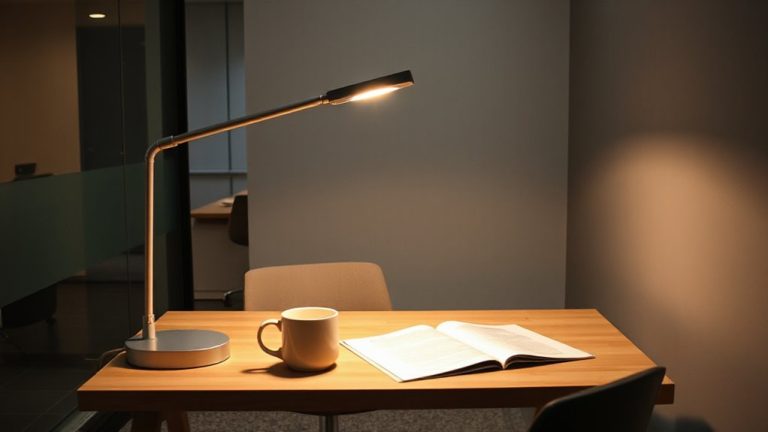
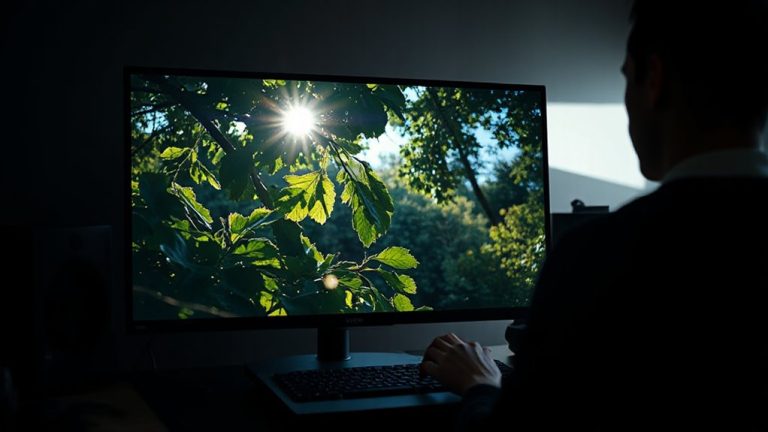
Why settle for disrupted sleep when adjusting your lamp placement could make a real difference? Proper lamp placement helps reduce blue light exposure by directing illumination where you need it-on your work surface, not your face. Aim for downward light direction using adjustable arms or shaded fixtures to minimize glare and circadian interference. Position lamps to the side or behind your monitor to prevent direct eye exposure, especially in the hour before bed. Lamps with warm LEDs (2700K–3000K) and diffusers enhance this effect, cutting blue emission without sacrificing visibility. Just don’t rely on placement alone-pair it with dimming and warm-toned bulbs for full impact. Some users report needing trial and error to find the ideal angle, so test placements over a few evenings. While effective, even well-placed lamps can’t fix poor bulb choices, so check color temperature specs before buying.
On a final note
Choose warm LED bulbs under 3000K or red/amber options to reduce blue light during late work. These fixtures help maintain melatonin levels, supporting better sleep onset. Dimmable lamps with adjustable arms let you control intensity and direction, minimizing nighttime exposure. Just note: very warm or colored lights may distort screen contrasts or paper tones slightly. Always check CRI (aim for 90+) and dimmer compatibility for flicker-free performance. Test one bulb first-personal comfort varies.