How to Use Acoustic Partitions to Separate Talking and Focused Work Zones
Use tall, high-NRC (above 0.85) acoustic partitions to block mid-frequency office noise by 40–50%, placing them between talking areas and quiet zones to intercept sound paths. Pair with dense furniture like credenzas for added insulation, and choose mobile models with locking casters and 5-year warranties for long-term reliability. Leave 2–4 inches from walls to boost absorption. While they won’t stop low-frequency HVAC rumble, proper placement and panel height (at least 5 feet) sharply improve focus-see how small adjustments can refine your layout.
Notable Insights
- Place tall acoustic partitions with NRC above 0.85 between talk-heavy areas and quiet zones to block mid-frequency noise.
- Use mobile panels with 28–35 dB sound blocking and locking casters for flexible, reconfigurable workspace zoning.
- Angle floor-to-ceiling partitions to intercept direct sound paths between desks and collaborative areas.
- Combine partitions with high-backed furniture and matching NRC ratings to extend sound-absorbing barriers seamlessly.
- Maintain 2–4 inch wall gaps and 30-inch clearance paths to optimize absorption and ensure traffic flow.
How Acoustic Partitions Reduce Office Noise
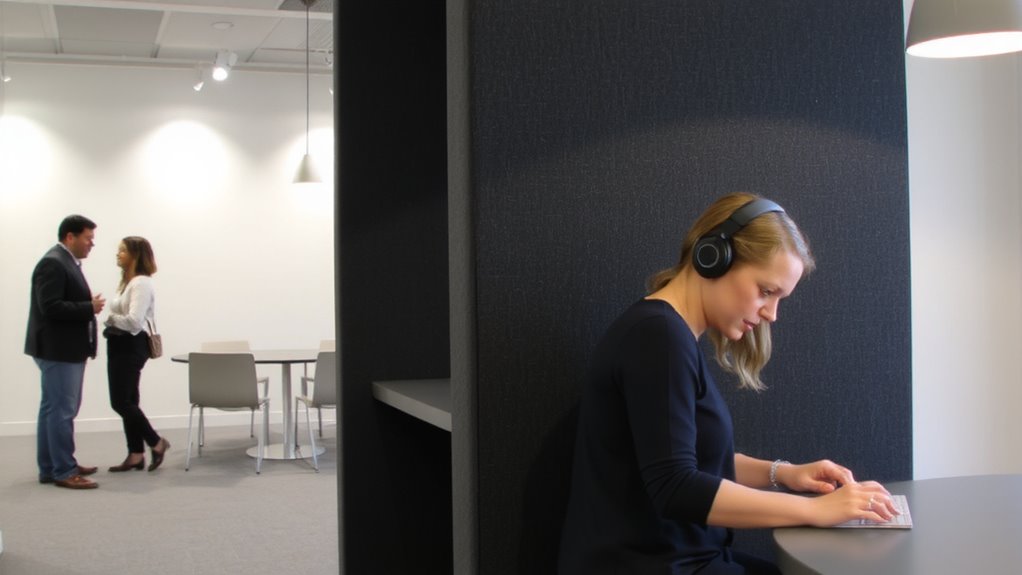
While you can’t eliminate every office noise, acoustic partitions can substantially cut down distracting sounds when set up properly. These panels work through two main methods: sound absorption and noise insulation. Sound absorption reduces echo and reverberation by trapping sound waves in dense, porous materials like recycled PET felt or foam. Noise insulation, meanwhile, blocks sound transmission using heavy, solid barriers that prevent speech and clatter from crossing zones. Properly placed, partitions can reduce mid-frequency noise by 40–50%, improving concentration in open layouts. But effectiveness depends on height, coverage, and placement-gaps or low panels weaken performance. They’re not a full soundproofing solution, but they do deliver measurable improvements. Look for tested Noise Reduction Coefficient (NRC) ratings above 0.7 and verify manufacturer data from independent labs. Used wisely, they offer a practical balance of cost, aesthetics, and real-world noise control.
Pick the Right Partition for Each Zone
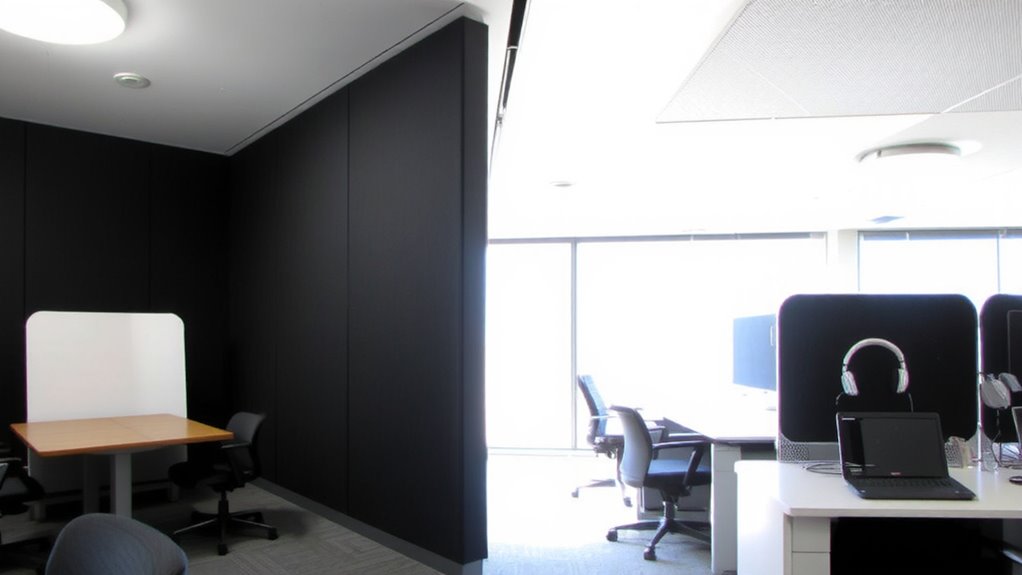
Why do some partitions work better in your busy bullpen than in a quiet focus room? Because each zone needs different acoustic support. For talk-heavy areas, pick partitions with high material density-they block speech better and reduce distractions. In focus rooms, where silence is key, go for taller options with height variability so you can fine-tune coverage. Mobile panels with solid fiberboard or recycled PET felt cores perform well, tested to block 28–35 dB of noise. Look for NRC (Noise Reduction Coefficient) ratings above 0.85. But don’t assume bigger is better-overly tall or dense units can make spaces feel cramped. Height variability lets you adapt to room layout and user height, but make sure casters lock securely. Most quality models offer 5-year warranties, though real-world wear shows seams wear first. Choose smart, not flashy-effective zoning relies on fit, not features.
Place Partitions for Maximum Noise Blocking
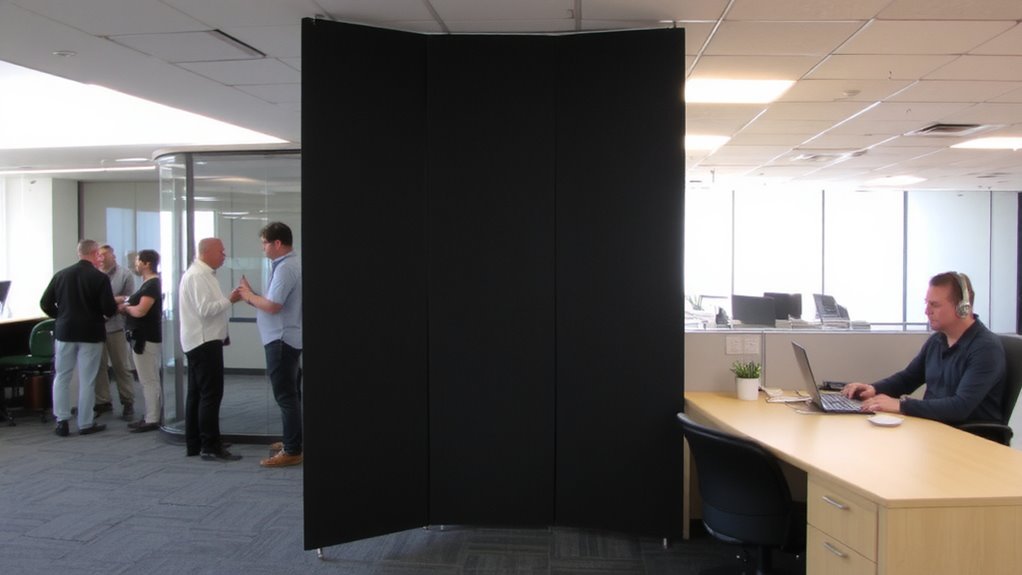
If you want your acoustic partitions to actually reduce noise, placement matters just as much as performance specs. For best sound absorption, position panels so they intercept direct sound paths-between desks, near talkative zones, or around meeting nooks. Tall, floor-to-ceiling partitions offer superior barrier placement, blocking mid- and high-frequency noise more effectively than shorter ones. Angle them slightly toward noise sources to reflect and absorb sound before it spreads. Don’t place them flush against walls; leaving 2–4 inches of space increases absorption efficiency by allowing sound to circulate into the panel core. Keep in mind: even high-NRC-rated panels won’t block low-frequency noise like HVAC rumble. Over-relying on partitions without considering room layout can create false confidence. Test placements over a few days, adjusting based on real employee feedback and noise patterns, not just specs.
Pair Partitions With Furniture for Flow
You get better noise control when you team up acoustic partitions with the right furniture, building on smart placement by turning individual panels into part of a larger sound strategy. Furniture pairing isn’t just about looks-it shapes space flow and improves functionality. For example, placing a partition behind a credenza or low bookshelf adds mass and blocks sound more effectively than a panel alone. Use low-backed sofas or high-desk benches to extend the barrier while keeping sightlines open. This boosts acoustic performance without making the area feel closed off. Just be careful not to overcrowd the zone-tight arrangements can hinder movement and hurt space flow. Opt for modular pieces that align with partition heights and backing materials tested for NRC ratings above 0.70. Always check dimensions and allow at least 30 inches of clearance for comfortable traffic patterns.
Keep Zones Flexible and Quiet
While open layouts thrive on flexibility, you’ll get the best acoustic results by designing zones that can adapt without sacrificing sound control. Use modular layouts with movable partitions to redefine spaces quickly-ideal for shifting from team collaboration to individual focus. These setups support effective sound zoning, reducing speech transmission between areas. Opt for partitions with Noise Reduction Coefficients (NRC) above 0.7 and heights of at least 5 feet to block mid-height sound paths. Pair them with low-glare task lighting and adjustable desks for full functionality. However, avoid over-dividing spaces, as tight clusters can feel confining and hinder airflow. Test configurations in real use: some wheels squeak or fabrics wear faster than warranty terms cover. While these systems improve focus, they’re not soundproof-loud conversations may still bleed through. Balance flexibility with realistic acoustic expectations.
On a final note
Acoustic partitions can effectively separate talking and focused work zones when chosen and placed wisely. Pick panels with a high NRC (above 0.8) for better sound absorption. Position them at desk height to block direct noise paths. Pair with desks or shelves to guide movement and boost privacy. Be mindful of layout changes-flexible setups may need mobile partitions. While they reduce noise, they don’t eliminate loud conversations. Test placement over a week and adjust. Most top models come with 5-year warranties and real-world office testing to back their performance.