How to Create a Sit-Stand Schedule That Matches Your Energy Peaks
Track your energy for three days to pinpoint when you feel sharpest or most drained, then stand during peak focus-like 8–10 a.m. and 1–3 p.m.-using a height-adjustable desk with a 15-inch range and gas-spring lift for smooth, reliable changes. Sit during dips, such as 10–11 a.m. or 3–4 p.m., especially for low-effort tasks. Pair posture shifts with anti-fatigue mats and 20-minute movement cues. Use real-time alerts from wearables or desk sensors, but recalibrate regularly and don’t rely on them completely-your body’s feedback matters just as much.
Notable Insights
- Track daily energy patterns for at least three days to identify peak focus and dip times.
- Stand during high-energy periods like 8–10 a.m. and 1–4 p.m. to boost alertness and productivity.
- Sit during energy slumps, such as 10–11 a.m. and 3–4 p.m., for low-intensity tasks and recovery.
- Use height-adjustable desks and anti-fatigue mats to support smooth, comfortable posture transitions.
- Combine real-time alerts with self-awareness to adjust your schedule and avoid habituation to cues.
Map Your Daily Energy Patterns First
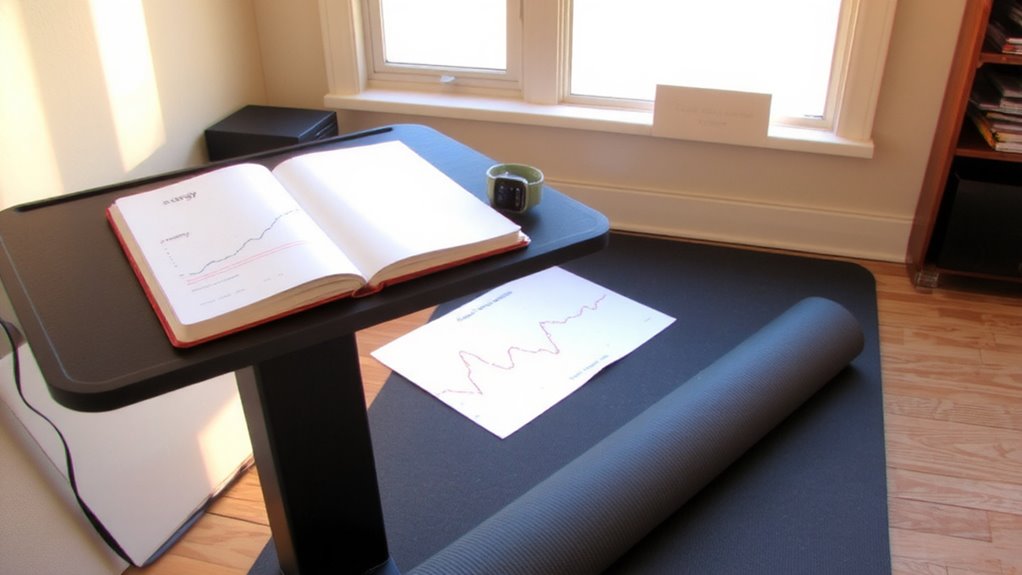
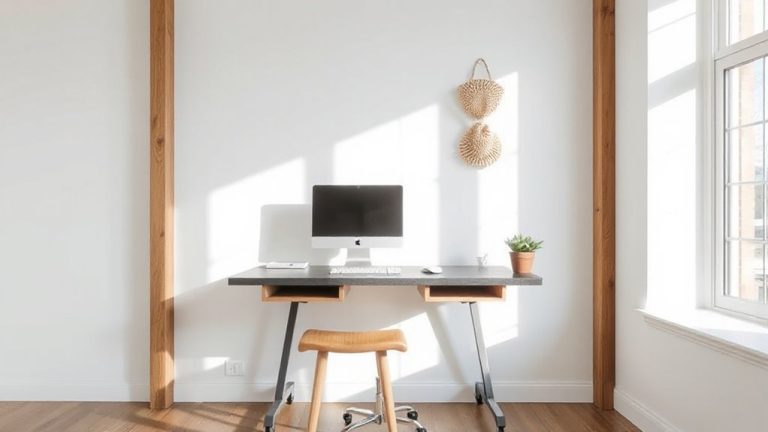
Ever wonder why your focus spikes in the morning but crashes by mid-afternoon? That’s your body’s natural rhythm at work. To build an effective sit-stand schedule, start by mapping your daily energy patterns. Track when you feel sharp, sluggish, or distracted for at least three days. Most people hit a morning slump around 10:30 a.m., followed by an afternoon crash near 3 p.m. Use that data to align standing intervals with peak alertness-save sitting for recovery phases. Don’t assume standing always boosts focus; overuse leads to fatigue. Test with a height-adjustable desk converter that supports smooth shifts, like models with gas-spring mechanisms and at least a 15-inch range. Look for solid warranties-five years minimum. Results vary by individual, so prioritize personal patterns over trends. It’s not about constant movement; it’s about strategic alignment.
Stand During Peak Focus Times
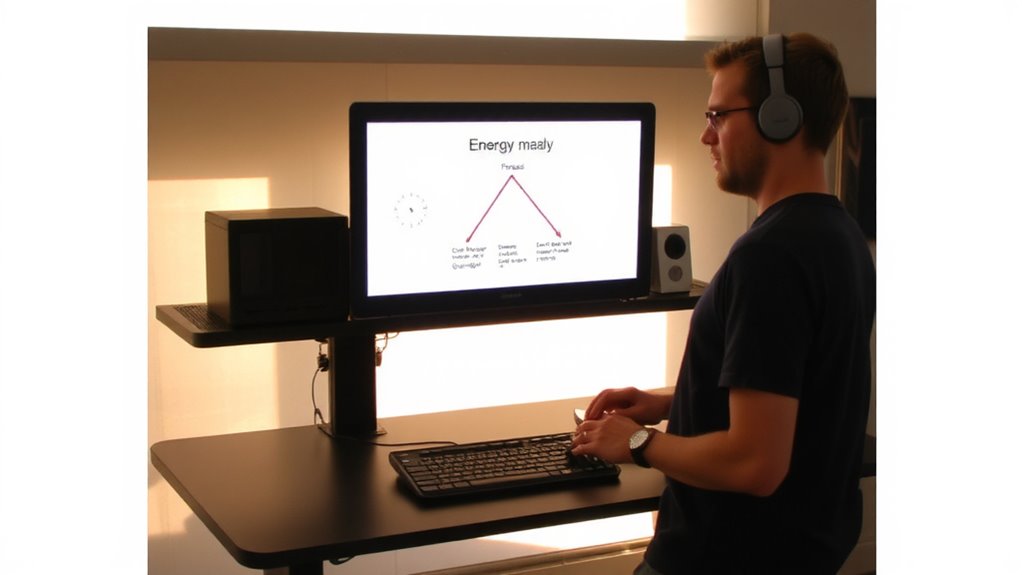
Why stand when you’re already focused? Because standing during peak focus times boosts mental clarity and keeps energy steady. Your body stays engaged, helping you work sharper for longer. Pair this with short active breaks to avoid fatigue. Think of standing as a movement cue-your body’s signal to stay alert.
| Time of Day | Recommended Position |
|---|---|
| 8–10 AM | Stand |
| 10–11 AM | Sit |
| 1–3 PM | Stand |
| 3–4 PM | Sit |
| 4–5 PM | Stand |
Use these times as a starting point, not a rigid rule. Standing too long without proper support can cause lower back strain. Guarantee your standing desk allows smooth height adjustment (electric models test better than crank) and pair it with an anti-fatigue mat. Movement cues like shifting weight or stretching every 20 minutes help. Active breaks lasting 2–3 minutes prevent burnout. Balance matters-stand to amplify focus, but stay aware of discomfort. For optimal ergonomics and ease of use, consider models with electric height adjustment.
Sit When Your Energy Drops
Usually, you’ll want to sit when your energy starts to fade-especially in the early afternoon or late afternoon slump. That’s when rest breaks and low-intensity tasks feel more natural, and sitting supports sustained focus without strain. Use this time for reading, replying to emails, or planning-activities that don’t demand peak alertness. Sitting allows your body to recover, conserving energy for later stand sessions. Just avoid staying seated too long; even during low intensity periods, limit sitting to 60–90 minute stretches, then take a short movement break. A supportive ergonomic chair helps, but it doesn’t need to be expensive-a model with adjustable height, lumbar support, and a breathable mesh back will do. Avoid plush designs that encourage slouching. Over-relying on sitting can reduce circulation and sharpen fatigue over time, so balance is key-even in downtime. A well-designed ergonomic office chair can make a significant difference in comfort and posture during these seated periods.
Time Transitions to Match Energy Shifts
You’ll get the most from your sit-stand routine by syncing desk changes with your body’s natural energy shifts throughout the day. Aligning your posture shifts with morning rhythms and alertness patterns improves focus and supports effective task alignment. Standing during peak mental energy-like early morning or post-lunch clarity windows-boosts engagement, while sitting during dips conserves stamina. A reliable standing desk with smooth transitions ensures you can adapt your workspace quickly and comfortably throughout the day.
| Time of Day | Posture & Purpose |
|---|---|
| 8–10 AM | Stand: Leverage morning rhythms for deep work |
| 10–11 AM | Sit: Light tasks, emails |
| 12–2 PM | Alternate: Match energy fluctuations |
| 2–4 PM | Stand: Re-engage focus after lunch dip |
| 4–5 PM | Sit: Wind down with low-cognitive tasks |
Don’t force rigid shifts-natural energy varies. Most sit-stand desks allow smooth shifts, but abrupt changes can disrupt workflow. Use shifts purposefully, not automatically.
Adjust Your Routine Using Real-Time Feedback
While your energy patterns give a solid starting point, the real benefit of a sit-stand routine comes from adjusting in real time based on how you feel and what you’re doing. You can use real time alerts from apps or desk integrations to prompt position changes, but avoid relying on them exclusively-over-alerting leads to habituation. Pair alerts with posture tracking via wearables or seated sensors to spot slouching or prolonged static positions. This feedback helps you stand during focus-heavy tasks and sit during recovery, matching your body’s actual needs. Still, posture tracking isn’t flawless; accuracy varies by device, and false positives can disrupt workflow. Devices with 90+ hour battery life and Bluetooth 5.0 tend to perform best in real-world tests. Consider a balance between tech input and personal awareness-use the data to inform choices, not replace them. Calibration every few weeks keeps readings reliable.
On a final note
You’ll get the best results by syncing your sit-stand schedule with your natural energy shifts. Stand during sharp focus windows to leverage posture for alertness-ideal for tasks needing quick thinking. Sit when energy dips to conserve effort for long reading or detailed work. Use a sit-stand desk with a height-adjustable frame and a stable, quiet motor; look for five-year warranties. Test changes over two-week blocks, tracking comfort and output. Standing longer doesn’t always help-balance prevents back strain.