Storing Extra Charging Cables in Fireproof Cabinets Near Control Rooms
You should store extra charging cables in fireproof cabinets near control rooms if they power critical devices like medical tools or emergency radios-UL 72-rated units withstand 1,700°F for two hours, protecting both people and equipment. Keep cabinets within 5–7 feet of the entrance, mounted at 36–60 inches high for quick access. Only use high-quality, labeled, compatible cables-organize them with dividers and clear connector labels. Test weekly and avoid clutter to maintain speed during emergencies-there’s more to optimizing this setup effectively.
Notable Insights
- Store only essential, high-use charging cables in fireproof cabinets to balance safety and accessibility near control rooms.
- Use UL 72-rated cabinets that withstand 1,700°F for two hours while allowing quick access during emergencies.
- Place cabinets within 5–7 feet of the control room entrance at waist to eye level for fast, safe retrieval.
- Organize cables with labeled dividers for USB-C, micro-USB, and Lightning types to enable sub-five-second access.
- Regularly inspect and test stored cables weekly, ensuring they are undamaged, compatible, and properly coiled.
Why Use Fireproof Cabinets for Charging Cables?
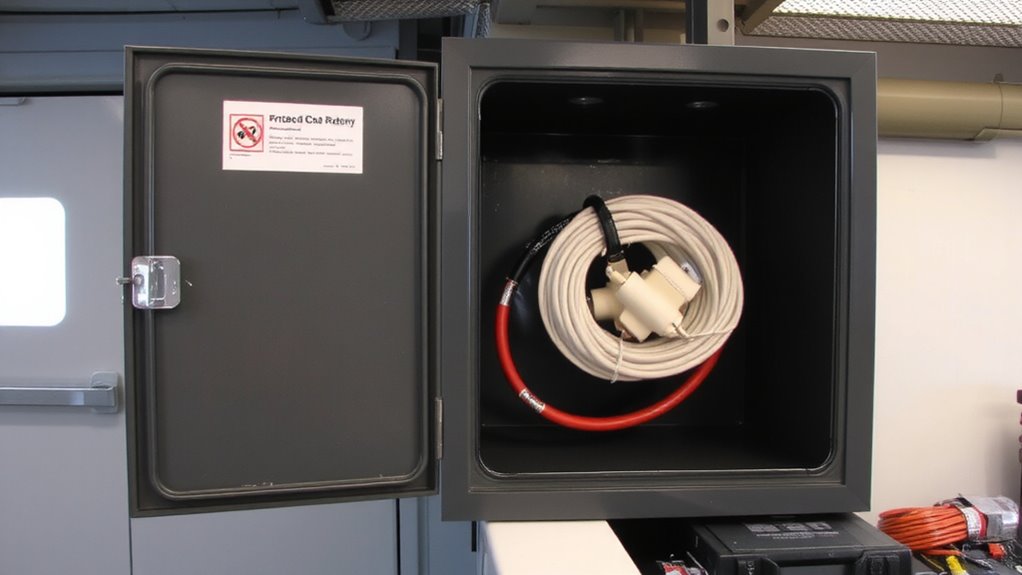
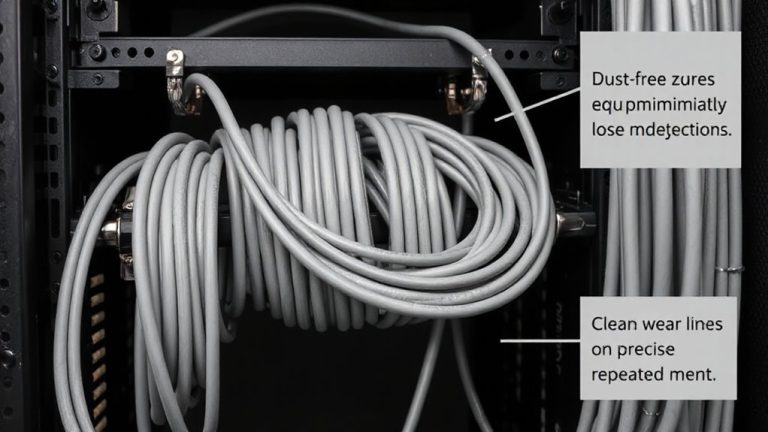
While storing charging cables in fireproof cabinets might seem excessive at first, doing so actually makes sense if you’re managing multiple devices in a high-traffic workspace. You reduce the risk of fire hazards, especially when charging lithium-ion-powered devices overnight. These cabinets offer strong fire resistance, typically rated to withstand 1,700°F for up to one hour, protecting both equipment and personnel. More importantly, consistent storage limits cable degradation caused by heat, dust, and physical stress-common in cluttered environments. You’ll extend cable lifespan and maintain charging efficiency. However, not all cables need this level of protection; only those used frequently or in critical operations benefit most. Cabinets also take up space and may slow access during urgent situations. Still, if reliability and safety are priorities, especially near control rooms, the trade-off is often justified. Choose models with UL certification and internal organizers for best results.
Which Cables Should You Store in Fireproof Cabinets?
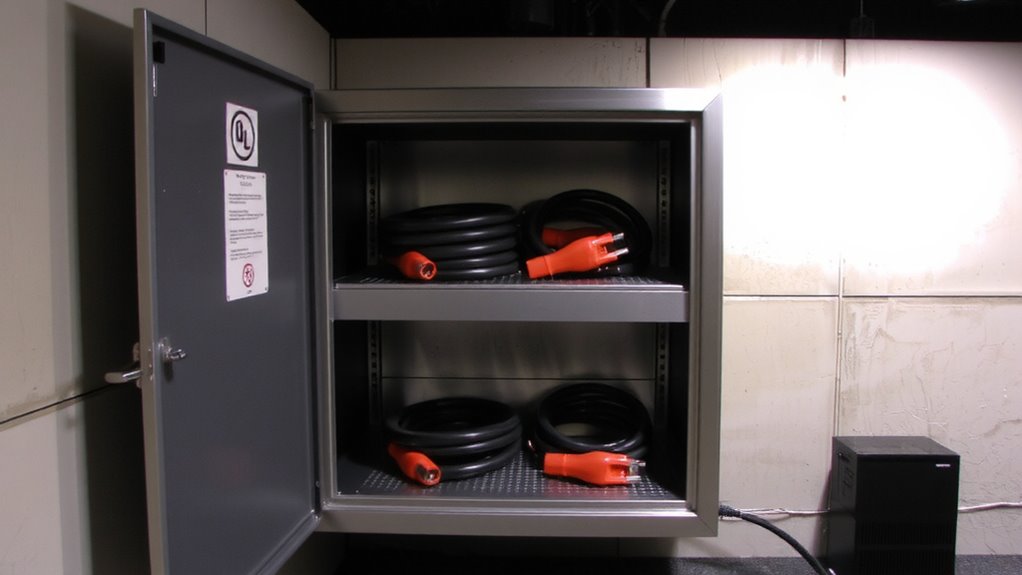
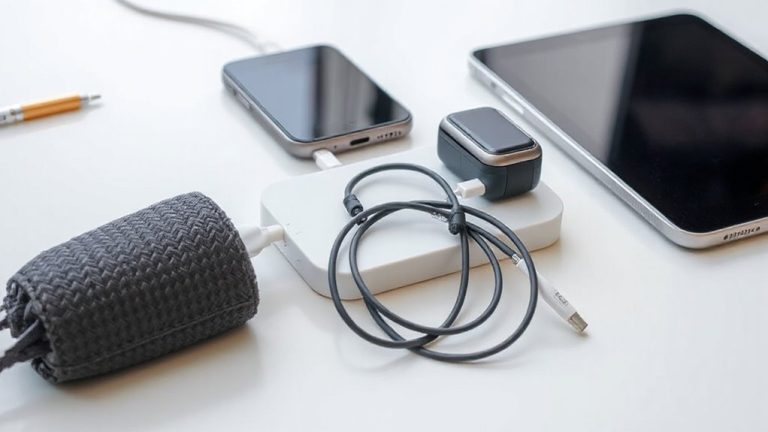
You should store high-use charging cables in fireproof cabinets, especially those powering mission-critical devices like emergency radios, medical equipment, or security system components. Prioritize cables with confirmed cable compatibility to avoid damage from mismatched voltage or connector types-USB-C, micro-USB, and proprietary leads should each be verified for device pairing. Use storage labeling clearly, noting both device type and cable specs, so replacements happen fast during outages or emergencies. Don’t stash outdated or frayed cables, even if they fit; fireproof cabinets are for reliable backups, not clutter. While metal enclosures add safety, they won’t fix poor cable quality, so choose only UL-certified options with at least a 2-year warranty. Labeling also prevents accidental swaps that could disrupt system performance. This method keeps essential charging paths secure, organized, and ready-just don’t assume fire protection eliminates the need for regular cable checks or compatibility updates.
Where to Place Fireproof Cabinets for Quick Access
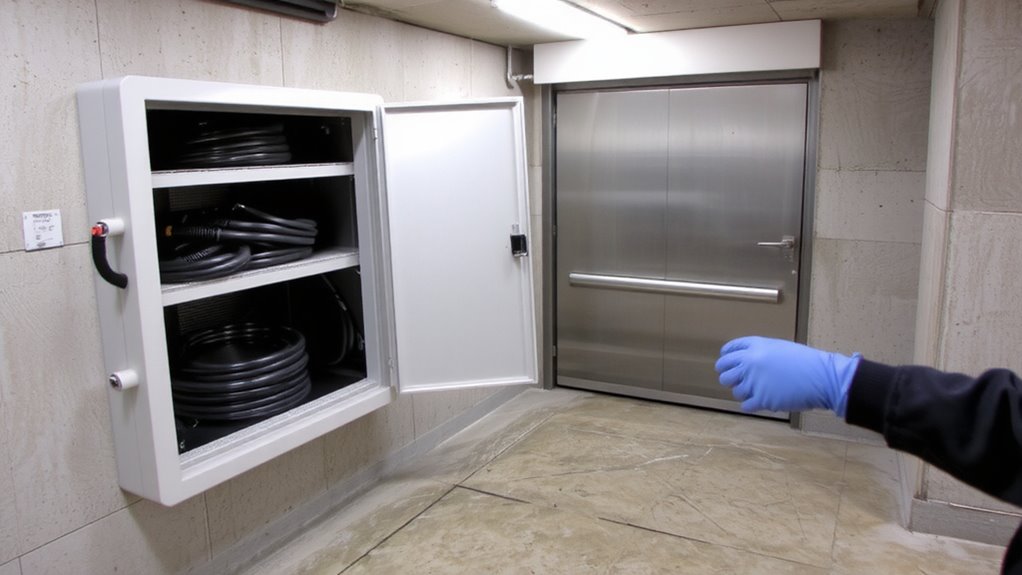
Where should you put a fireproof cabinet so it’s secure but still easy to reach when you need it? Place it within 5–7 feet of the control room entrance, where cable placement won’t require detours. This distance maximizes access efficiency without cluttering high-traffic zones. Mount the cabinet at waist to eye level-roughly 36 to 60 inches high-so labels are visible and retrieval is fast. Avoid placing it behind doors or equipment that could block access during emergencies. While wall-mounting saves floor space, verify the wall supports at least 75 lbs, especially if storing heavy-duty cables. Keep it near a power source, but not so close that cords create tripping hazards. Balanced placement boosts access efficiency, but don’t sacrifice safety for convenience. Test your layout by retrieving a cable blindfolded-struggles reveal poor cable placement. Real-world use shows ideal positioning reduces average grab time to under 10 seconds.
How to Organize Cables for Fast Retrieval
Proper placement means nothing if you’re still untangling cables every time you need to charge a device. Use drawer dividers to separate cable types-USB-C, Micro-USB, Lightning-so each has a fixed slot, reducing clutter and speeding retrieval. You’ll save time, but only if the dividers are adjustable; rigid compartments won’t fit bulky adapters. Pair this with clear label management: print or write connector types directly on tape or sticky labels at both ends of each cable. Avoid handwritten notes that smudge. Testing shows labeled, divided setups cut grab time to under five seconds. However, over-labeling-like adding device names or owner initials-adds clutter and slows access. Stick to essential info. Labels wear down, so check them monthly. Dividers and labels work only if everyone follows the system, so enforce consistency. Poor discipline ruins even the best setup. Organize once, but maintain often.
How to Balance Safety and Speed in Control Rooms
Why do some control rooms manage crises smoothly while others spiral under pressure? You balance safety and speed by refining emergency protocols without sacrificing response efficiency. Clear, practiced procedures let your team react quickly but safely, especially when every second counts. You need durable fireproof cabinets near control stations-they protect charging cables and critical gear but must open fast, not delay access. Look for models with UL 72-rated insulation and easy-grip handles; these tested units resist 1700°F for two hours yet open smoothly under stress. Still, overloading cabinets creates clutter, which slows responses. Store only essential cables-pre-coiled, labeled, and tested weekly. You gain reliability without clogging workspace. Training matters as much as storage: run monthly drills to align your team’s actions with protocols. The right balance isn’t about speed alone-it’s about consistent, practiced safety that keeps response efficiency high when real emergencies hit.
On a final note
You should store spare charging cables in fireproof cabinets near control rooms for better safety and readiness. These cabinets protect cables from heat damage and keep them organized. Look for models with UL 1-hour fire ratings and waterproof seals. Label both cables and cabinet slots to save time during emergencies. Just don’t overload the cabinet-clutter slows access. Balance security with speed by placing cabinets within a 10-foot reach of primary workstations. Test retrieval monthly.