How to Use a Saddle Stool to Transition Between Sitting and Standing
You can use a saddle stool to shift between sitting and standing by adjusting it so your hips sit slightly higher than your knees, keeping your spine aligned and mimicking a standing posture. The forward tilt promotes pelvic alignment and reduces lower back strain, but you’ll need a desk between 33–38 inches to match elbow height at 90 degrees. Alternate positions regularly and take movement breaks every 30 minutes to avoid fatigue-stability and proper form matter most. Most models support up to 300 lbs and use standard gas lifts, but test one for at least 30 days to assess long-term comfort and build quality.
Notable Insights
- Adjust saddle stool height so hips are slightly higher than knees to ease transitions to standing.
- Use the saddle’s forward tilt to maintain natural spine alignment when switching between sitting and standing.
- Position desk between 33–38 inches high to support both seated and standing postures seamlessly.
- Engage core and shift weight dynamically on the saddle to prepare body for smooth standing transitions.
- Take active breaks every 30–45 minutes by standing up briefly, using the stool as a transitional seating base.
Why a Saddle Stool Fixes Your Posture
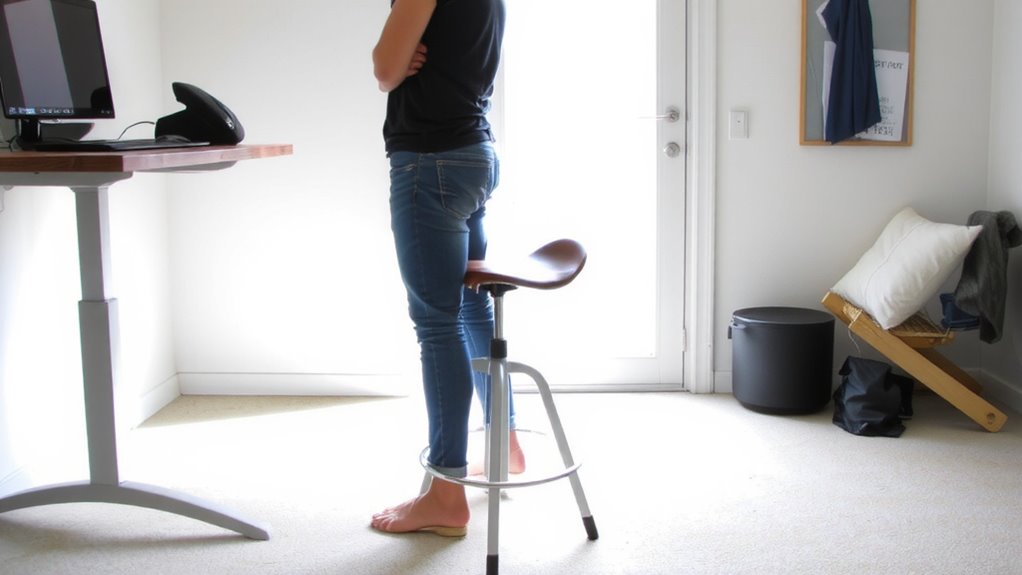
Ever wonder why so many ergonomic experts recommend saddle stools for posture improvement? They promote pelvic alignment by tilting your pelvis forward slightly, which helps maintain the spine’s natural curve and boosts spinal support. Unlike flat seats, the saddle design mimics a standing posture, reducing lower back strain over time. You’ll likely feel the difference within a week of consistent use, especially if you’re shifting from a traditional office chair. Most models offer height adjustability and sturdy bases, fitting standard desk clearances. Just make sure the seat padding isn’t too soft-firm support works better. Still, saddle stools aren’t perfect. They take getting used to, and some users report initial discomfort in the inner thighs. Use yours gradually, no more than 30 minutes at first. Long-term relief depends on correct setup and body awareness, not just the gear itself. Some top models now come with optional backrest support for added lumbar comfort during longer sitting sessions.
How to Sit (and Move) on a Saddle Stool
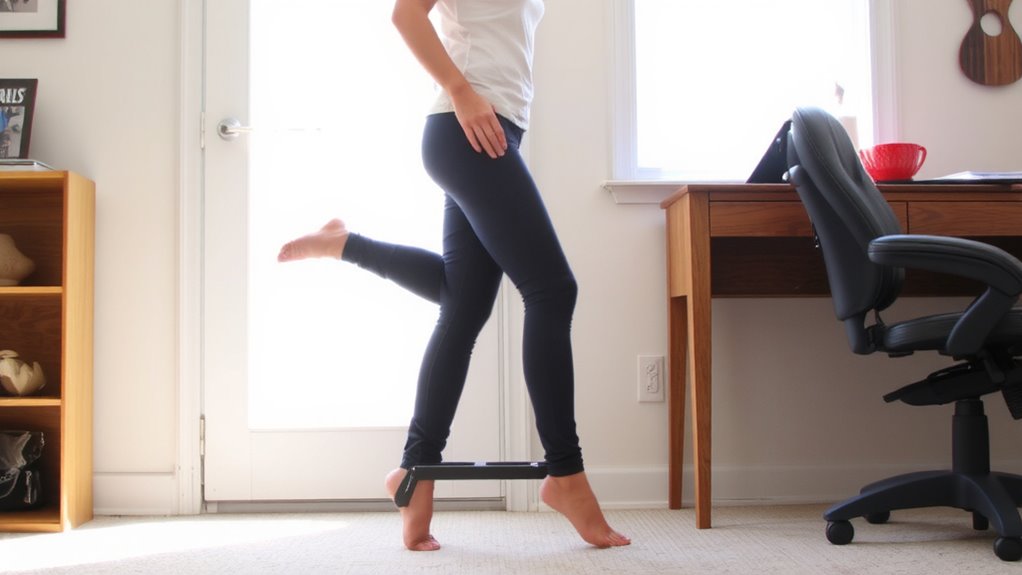
How do you actually sit on a saddle stool and make it work for your daily routine? Start by adjusting the height so your hips sit slightly higher than your knees, promoting proper alignment and mimicking a standing posture. Sit toward the front of the saddle-shaped seat, allowing your spine to maintain its natural curve. Engage in dynamic movement-small shifts, pivots, and weight changes-throughout the day to reduce stiffness and muscle fatigue. Unlike traditional chairs, saddle stools encourage constant micro-motions, which can improve circulation and core engagement. However, they’re not ideal for long static sitting sessions; limit use to 2–3 hours at a stretch. Give your body time to adapt-some discomfort is normal in the first week. Use it as a shift tool, not a full-time replacement, especially if you’re new to active seating. For added flexibility in different environments, consider pairing your setup with a portable kneeling chair.
Set Up Your Desk for a Saddle Stool
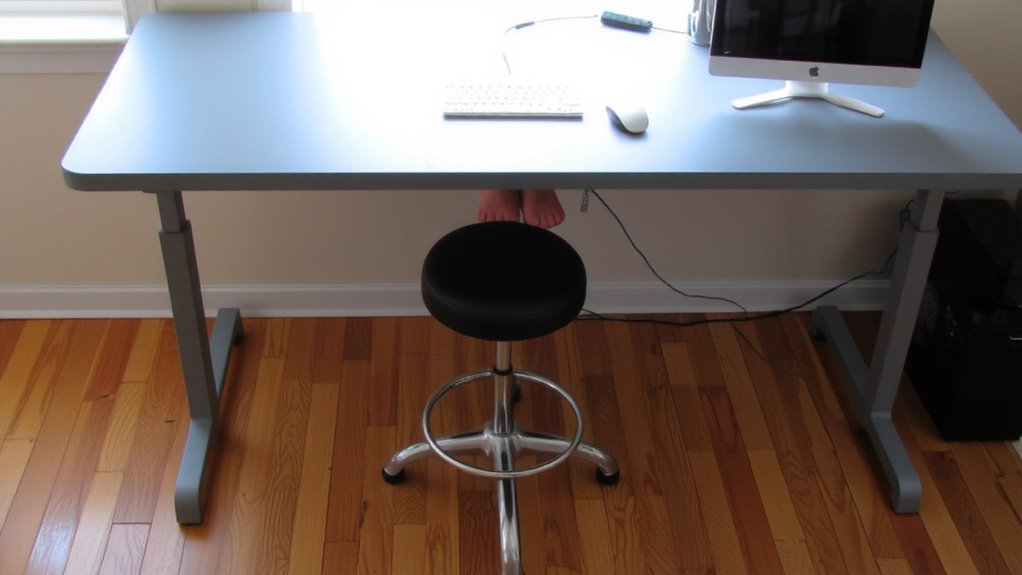
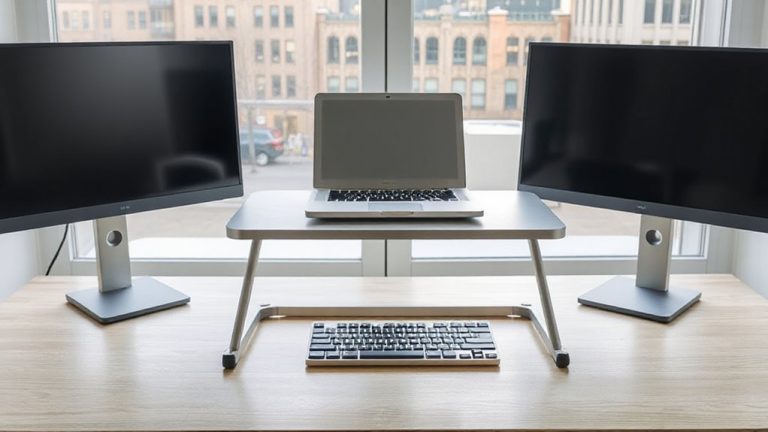
With your saddle stool in place, the next step is setting up your desk to match-because even the best active seating won’t help if your workstation height and layout don’t support proper ergonomics. You’ll need a desk height adjustment system, either manual crank or electric lift, to align your elbows at 90 degrees when typing. Most standard desks are too high for proper ergonomic alignment when using a saddle stool, so don’t assume your current setup works. Aim for a desk surface between 33 and 38 inches high, depending on your frame. If your desk isn’t adjustable, consider a stable riser platform. Keep your monitor at eye level and within 20–30 inches. Poor desk height adjustment undermines posture benefits, so measure carefully. Fixed-height desks often force compromises-not worth it if you’re serious about long-term comfort. For optimal flexibility, consider investing in one of the best standing desks for your workspace.
Take Active Breaks While Seated
Sitting on a saddle stool encourages better posture, but staying still for hours-even in an ergonomic setup-can still lead to stiffness and reduced circulation. You should take frequent posture shifts to maintain blood flow and reduce muscle fatigue. Small adjustments-like tilting your pelvis forward or leaning slightly side to side-activate core muscles and prevent static strain. Pair these subtle posture shifts with short stretch breaks every 30 to 45 minutes: stand, reach overhead, or do gentle torso twists to keep joints mobile. These micro-movements complement the saddle stool’s design without overpromising its benefits. While the seat promotes alignment, it’s not a fix-all-your best results come from movement. Set a timer if needed, but don’t rely on gear alone. Movement breaks are essential, and no stool, no matter how well-designed, replaces active sitting.
Avoid These Saddle Stool Mistakes
Don’t assume a saddle stool automatically fixes poor ergonomics-while it promotes a more open hip angle and encourages active sitting, using one incorrectly can lead to discomfort or long-term strain. Set the saddle height so your knees bent at 90–110 degrees when feet rest flat, ensuring thighs slope slightly downward-too high causes hip pressure, too low strains knees. Avoid relying on built-in back support if present; many models offer minimal lumbar aid, so maintain core engagement to prevent slouching. Don’t stay fixed in one posture: shift positions regularly to use the saddle’s design fully. Many users report relief within weeks, but results vary based on body type and usage. Check weight limits and gas lift durability-warranties often cover defects up to 3 years. Test for at least 30 days to assess long-term comfort.
On a final note
You’ll likely improve posture and movement using a saddle stool, but it’s not a fix-all. Its open hip angle and forward tilt promote better spine alignment than standard chairs. Pair it with a height-adjustable desk set so your elbows stay at 90 degrees. Use a mat and shift positions often. Expect mild discomfort at first-your body adjusts in 1–2 weeks. Not ideal for long static sits; it works best when paired with standing breaks.