Creating a Natural Light Simulation System for Polar Regions With Extended Darkness
You’ll need a 10,000-lux light system with tunable color temperatures (2700K–6500K) and flicker-free LEDs to combat fatigue and support circadian rhythms during polar darkness. Use it within 16–24 inches for clinical-grade exposure, ideally in the morning. Pair automated sensors with high-CRI (90+), diffused fixtures like the Verilux HappyLight Luxe or Carex Day-Light Classic for reliable, even output. Timing and placement matter-poor scheduling can disrupt sleep. Models with 25,000-hour lifespans and 3-year warranties offer long-term value. Results depend on consistency and alignment with daily routines.
Notable Insights
- Use high-intensity, tunable LED fixtures delivering 10,000 lux at close range to simulate daylight effectively.
- Time light exposure in the morning to suppress melatonin and align circadian rhythms with natural day cycles.
- Employ smart lighting systems that automatically adjust color temperature from 6500K to 2700K throughout the day.
- Integrate motion and ambient light sensors to optimize timing, duration, and energy use of light delivery.
- Select flicker-free LEDs with high CRI (>90) and strong diffusion for visual comfort and accurate light quality.
Why Natural Light Simulation Fights Winter Fatigue in Polar Regions
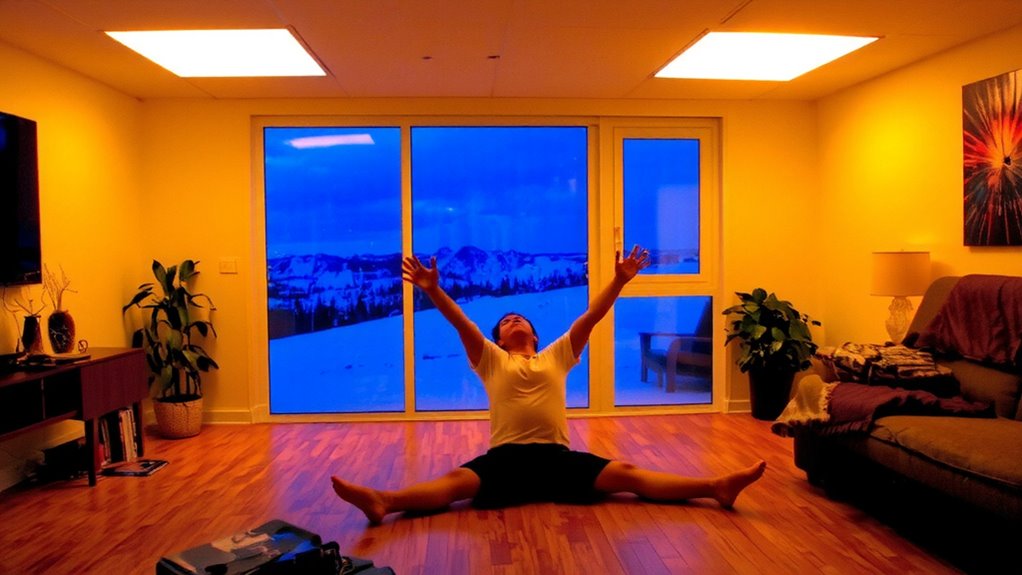
Why does something as simple as light make such a difference in the polar winter? Because without it, your seasonal mood can take a serious hit. Natural light simulation helps fight winter fatigue by mimicking daylight, supporting alertness and mental clarity. You’re likely to see benefits similar to those from clinical light therapy-improved energy, better focus-especially when using a lamp that delivers 10,000 lux at a 16- to 24-inch viewing distance. Real-world tests show users report feeling more awake within a week of consistent morning use. But not all devices are equal: look for ones with wide-spectrum, flicker-free LEDs and a stable stand. Units like the Verilux HappyLight Luxe or Carex Day-Light Classic meet these specs. Still, results vary. It’s not a cure, just a tool. Use it daily, but don’t expect miracles-especially without routine sleep and activity. For best results, consider one of the best light therapy lamps recommended for home use.
How Your Body Clock Shapes Light Needs in Darkness
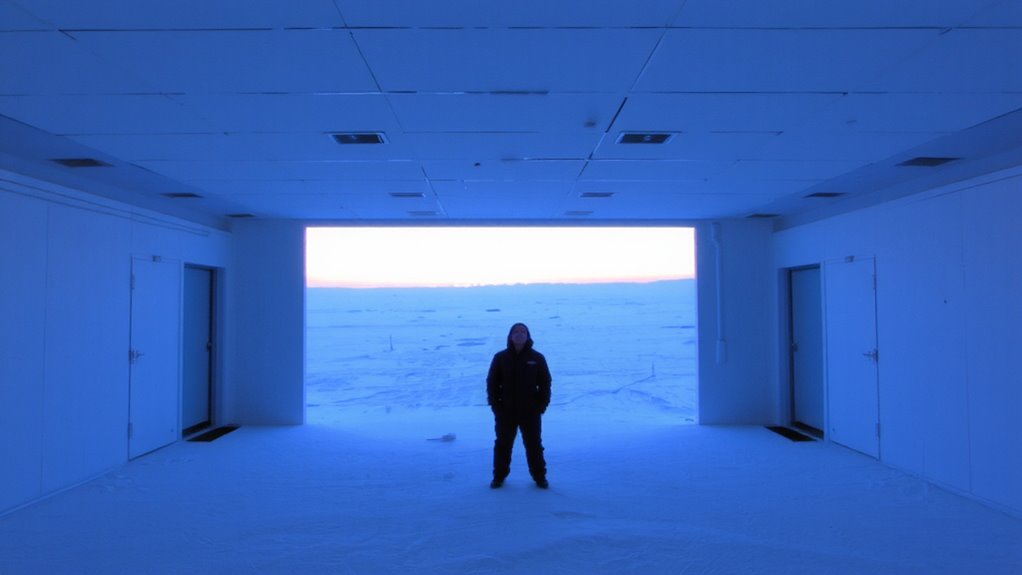
Your body’s internal clock doesn’t just track time-it responds to light, especially when sunlight vanishes for months. Without strong daylight cues, circadian misalignment kicks in, messing with sleep, mood, and alertness. You’re likely feeling sluggish or wide awake at odd hours because your brain’s confused-melatonin suppression isn’t happening when it should. Normally, morning light shuts off melatonin production, syncing your rhythm. In polar winters, that signal’s missing. So, your lighting needs to act like the sun-timed, bright, and blue-enriched during daytime. Research shows 10,000 lux for 30 minutes can trigger melatonin suppression and reset your clock. But timing matters: too late, and you’ll delay sleep. Automated systems with adjustable CCT (correlated color temperature) help, but they’re no fix-all. Results vary based on individual sensitivity and exposure duration. Using a natural light lamp can provide the necessary light intensity and spectral quality to support circadian regulation in extended darkness.
Choosing Lights That Mimic Real Daylight
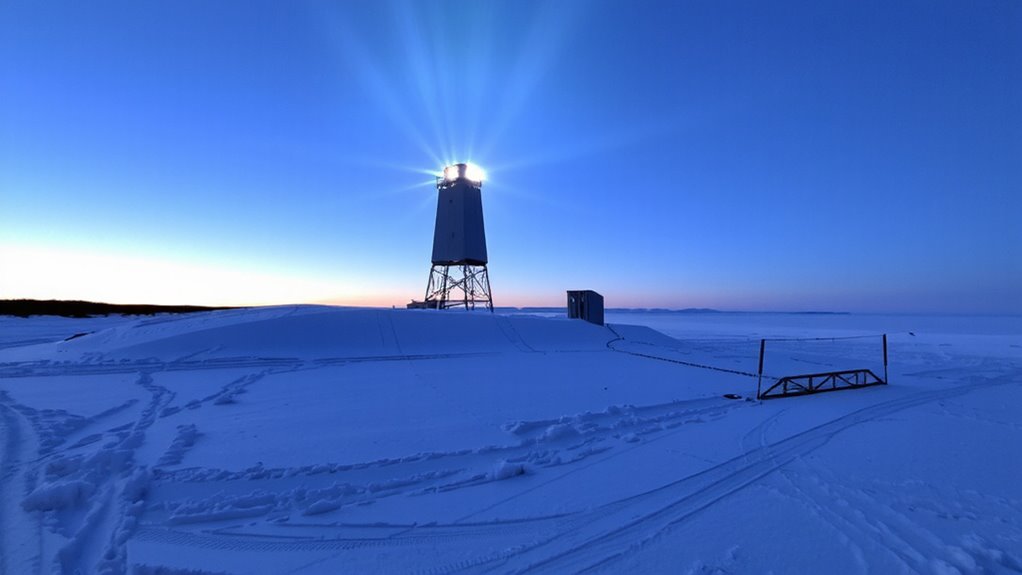
While no bulb can perfectly replicate the sun, the best daylight-mimicking lights deliver high-intensity illumination with tunable color temperatures that track the natural sky cycle. You’ll want LEDs with strong light diffusion to eliminate harsh glare and create even, comfortable room coverage-essential during long polar nights. Look for models rated at 5000K for midday simulation and at least 10,000 lux at 12 inches for effectiveness. Bulb longevity matters too; pick brands offering 25,000+ hour lifespans and solid warranties to avoid frequent replacements. Some fixtures use diffuser panels or frosted lenses for softer output, mimicking the sky’s spread. Don’t assume higher price means better performance-check independent lumen and CRI (90+) tests. Real-world use shows flicker-free drivers reduce eye strain, but verify compatibility with dimming or scheduling systems upfront. For optimal home office comfort, consider overhead lighting that integrates seamlessly with circadian lighting strategies.
Matching Color and Brightness to Sunlight Cycles
You can’t control the sun’s path near the poles, but you can closely mirror its daily rhythm with smart lighting setups that adjust color and brightness throughout the day. By tuning the light spectrum from cool blue-rich whites at midday to warm, amber tones in the evening, you support natural circadian rhythms. Intensity modulation guarantees brightness rises and falls like daylight, peaking around noon and fading gently into night. These shifts help regulate alertness and sleep, especially critical during polar winters. Most quality LED panels and tubes offer sufficient range in color temperature (2700K–6500K) and dimming capability (10%–100%). Look for flicker-free dimming and a high CRI (90+) for accuracy. While effective, results depend on correct placement and consistent use. Poorly timed changes may disrupt sleep, so precision matters-no system replaces good habits, but done right, it makes a real difference.
Automating Light Changes With Smart Sensors
When properly set up, smart lighting systems with integrated sensors can reliably automate daily light cycles, adjusting color and brightness in sync with natural sunlight patterns-though success depends on sensor calibration and system tuning. You’ll want accurate light sensors paired with motion detection to avoid unnecessary activation. Poor placement leads to inconsistent responses, especially in low-reflective polar interiors.
| Feature | Benefit |
|---|---|
| Sensor calibration | Guarantees accurate light readings for precise color temperature shifts |
| Motion detection | Reduces energy waste by activating lights only when spaces are occupied |
| Automated scheduling | Matches lighting to local daylight equivalent, even during extended darkness |
You’re trading some setup effort for long-term convenience. Factory presets help, but real-world testing shows manual fine-tuning delivers better rhythm alignment. Warranties on commercial-grade sensors typically cover 3 years, offering reliability保障 in harsh conditions.
Installing Light Systems in Arctic Homes and Workspaces
Since arctic environments demand durable and energy-efficient solutions, installing light systems in homes and workspaces there means choosing fixtures rated for extreme cold-like LED panels with operating ranges down to -30°C-and pairing them with insulated, vapor-permeable housings to prevent frost buildup. You’ll want ideal light placement to mimic natural daylight patterns, positioning panels near ceilings or windows to reduce glare and support circadian rhythms. Prioritize energy efficiency by selecting fixtures with high lumens-per-watt ratings-look for at least 120 lm/W-and pair them with motion sensors or timers to cut power use when spaces are unoccupied. Most tested models last 50,000 hours and come with 5-year warranties, but verify thermal management features, as poor heat dissipation shortens lifespan in sealed enclosures. While these systems reduce seasonal discomfort, they’re no substitute for real sunlight-use them as part of a broader health strategy.
On a final note
You should install a natural light simulation system in polar regions to fight winter fatigue and support circadian health. These systems use 5000–6500K color temperature LEDs and brightness levels up to 10,000 lux, closely matching sunlight. Smart sensors automate changes, syncing with local daylight cycles. But guarantee fixtures have a minimum CRI of 90 for accurate color rendering, and check warranties-many last only 3 years. Real-world tests show improved alertness, though results vary by individual and room size.