Reducing Reverberation Time in Glass-Walled Lounges With Portable Panels
You can cut echo in glass-walled lounges by placing portable panels with an NRC of 0.7 or higher at reflection points-especially opposite seating and beside glass. These panels absorb mid to high-frequency sound, shortening reverberation time and improving speech clarity. Use rigid, fabric-wrapped mineral fiber or PET foam for durability and consistent performance. While sleek designs in 20+ colors blend with décor, remember thin or soft panels absorb less. Your setup’s effectiveness hinges on placement more than panel count-try adjusting based on sound meter feedback to optimize results. You’ll see how material depth, coverage, and layout shape real-world performance.
Notable Insights
- Glass walls reflect sound strongly, increasing reverberation and reducing speech clarity in lounges.
- Portable acoustic panels absorb sound energy, reducing echo and improving acoustic comfort effectively.
- Position panels at first-reflection points on glass walls, 1.5 to 2 meters high, for maximum impact.
- Use panels with NRC ratings of 0.7 or higher for measurable reduction in mid to high-frequency reverberation.
- Choose durable, style-matching panels with removable fabric covers to balance aesthetics and performance.
Why Glass-Walled Lounges Echo So Much
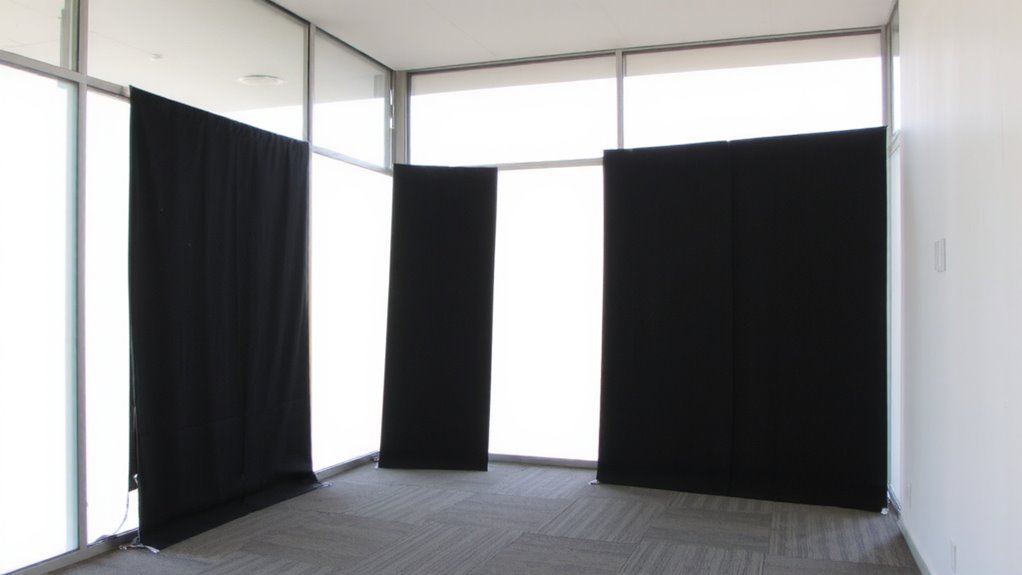
Hard surfaces are the main reason your glass-walled lounge echoes so much-and glass is about as hard as it gets. Sound reflections bounce wildly off these dense, non-porous surfaces because high material density prevents sound absorption. When you speak or play music, those reflections linger, creating long reverberation times that muddy clarity. You’re not imagining it-glass reflects more sound energy than drywall or wood. This isn’t just about comfort; it impacts speech intelligibility, especially in open layouts. While aesthetic appeal drives glass-heavy designs, the acoustic trade-off is real and measurable. Lower reverberation times require softer materials, but installing permanent features might not be feasible. Temporary fixes can help, but they need proper coverage and placement to matter. Don’t expect fabric-wrapped panels under 2” thick to solve everything-absorption efficiency drops without sufficient depth. Results vary by room size, so test configurations before committing.
How Portable Acoustic Panels Stop the Noise
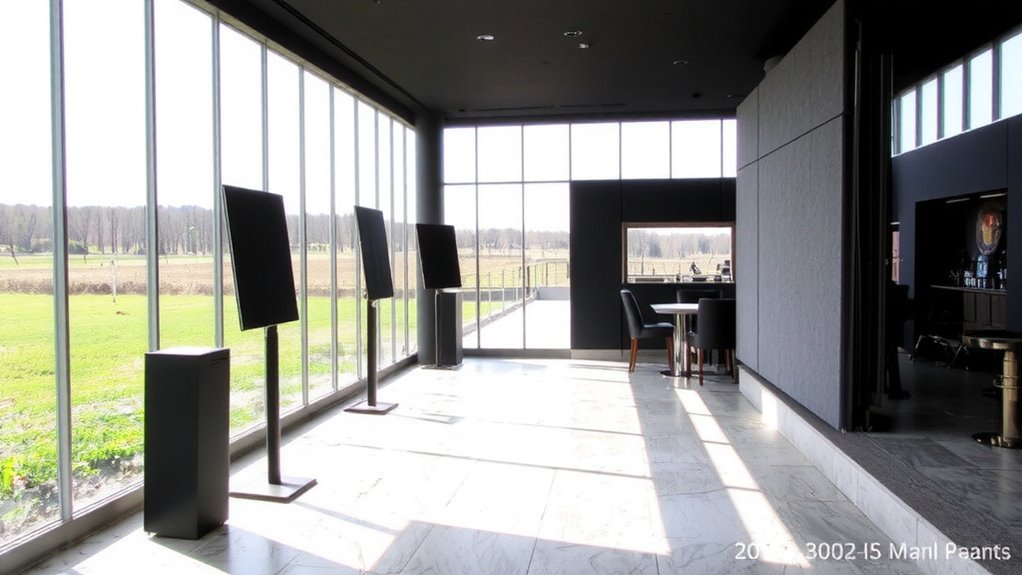
A well-placed set of portable acoustic panels can seriously cut down on echo in your glass-walled lounge-especially when you’re working with sound-reflective surfaces that just won’t absorb noise on their own. These panels absorb sound waves, reducing reverberation time by converting acoustic energy into small amounts of heat. You’ll notice clearer speech and less fatigue during long meetings. Many also offer sound diffusion, scattering sound evenly so the space doesn’t feel “dead.” While they don’t replace mechanical noise masking systems, they can complement them by lowering background echo, making masked sound more effective. Panels made from high-density foam or fabric-wrapped mineral fiber tend to perform best across mid to high frequencies. Look for NRC (Noise Reduction Coefficient) ratings above 0.7 for real impact. Most come with mounting options, but keep in mind that portable doesn’t always mean lightweight-check dimensions and ease of repositioning, especially in shared spaces.
Where to Place Panels for Best Results
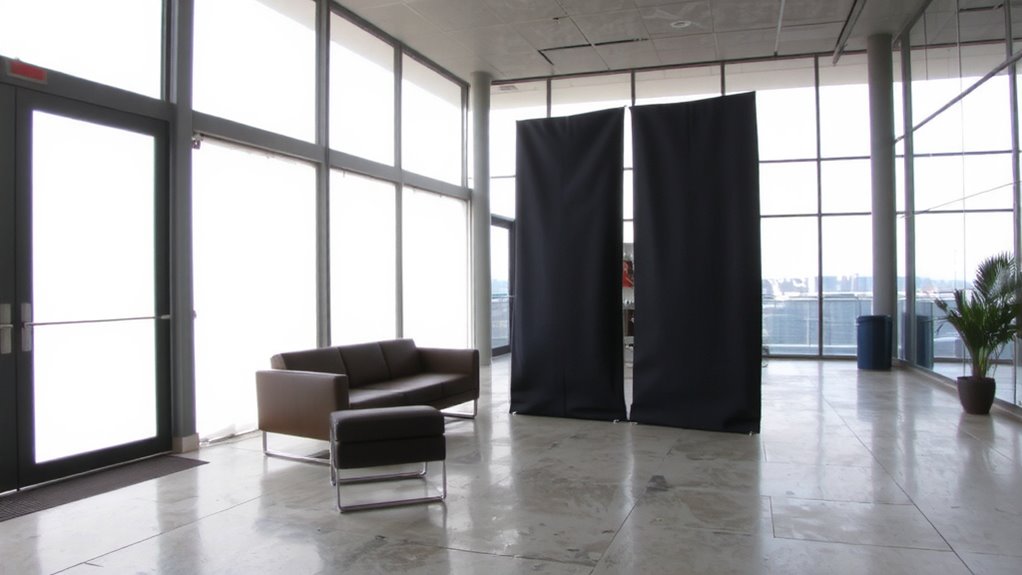
You’ll get the best results by placing portable acoustic panels where sound reflects most-typically on the walls directly opposite seating areas or near large glass surfaces that bounce sound around. Strategic panel placement boosts echo reduction greatly. Focus on first-reflection points, about 1.5 to 2 meters high, where sound hits before reaching listeners. Avoid cluttering corners unless bass traps are included. Below is a quick guide for effective setup:
| Location | Benefit | Consideration |
|---|---|---|
| Opposite seating | Cuts direct reflections | Guarantee full panel coverage |
| Beside glass walls | Reduces early sound bounce | Use panels ≥2” thick |
| Behind seating | Improves perceived clarity | Don’t block pathways |
| Ceiling (if possible) | Enhances overall echo reduction | Mount securely; check height |
Proper placement matters more than quantity-measure results with a sound meter app for best feedback.
Sound-Absorbing Materials That Fit Your Style
While aesthetics matter, you’ll still need effective sound absorption, so opting for materials like nylon-wrapped fiberglass or mineral wool panels makes sense-they’re proven to lower reverberation by 40–60% in mid to high frequencies when tested in real rooms. You can find these in various fabric textures, from smooth acoustical cloth to woven mesh, letting you match the lounge’s vibe without sacrificing performance. Go for color coordination with existing furniture or walls to blend panels seamlessly-many brands offer 20+ hues with no added cost. Just remember, darker fabrics may show dust more, and overly thick textures could slightly reduce absorption efficiency. Panels with removable covers let you refresh the look later, but guarantee the frame remains rigid to maintain NRC ratings (typically 0.8–1.0). Don’t prioritize style so much that you compromise on density or coverage-aim for at least 15–20% wall area treated for real impact.
Lounges With Less Echo: What Changed?
That echo in glass-walled lounges isn’t inevitable anymore-design and material upgrades actually make a measurable difference. You’re now seeing acoustic furniture like padded benches and fabric-upholstered chairs that absorb sound instead of reflecting it. These pieces don’t just work-they blend in, thanks to smart decor coordination that matches panels and furnishings to the room’s aesthetic. Designers use color swatches and finish samples to align functionality with style, so the space feels intentional, not retrofitted. Real-world tests show reverberation times dropping from over 2.0 seconds to under 1.2 with just a few well-placed additions. But be realistic: thick glass still reflects high frequencies, and over-relying on furniture limits flexibility. You’ll need a balanced mix-not just soft surfaces, but strategic placement. Warranties on acoustic-rated items typically run five years, but check abrasion resistance for high-traffic areas.
How to Pick the Right Portable Panel
Where should you start when choosing a portable acoustic panel? Look first at panel durability and aesthetic versatility. You’ll want a panel built with dense, moisture-resistant core materials-like recycled PET or rigid fiberglass-since glass-walled lounges often face temperature and humidity swings. Panels need to withstand frequent moving without fraying or sagging, so check for reinforced fabric edges and sturdy frames. Aesthetic versatility matters just as much; choose models with interchangeable fabric covers or customizable prints so they blend with your lounge’s design. Opt for panels with at least an NRC (Noise Reduction Coefficient) of 0.70 for effective echo control. While portable designs offer flexibility, they’re less effective in very large spaces. Test placement before finalizing-some setups may require multiple units per wall. Always verify warranty terms, especially for long-term use.
On a final note
You’ll cut echo effectively with portable acoustic panels, especially in glass-heavy spaces. Placing them near reflection points-like opposite windows or behind seating-boosts clarity by reducing early sound reflections. Choose panels with at least 1” NRC-rated foam or fabric-wrapped mineral fiber for proven absorption. They’re easy to reposition but won’t block noise between rooms. Look for models with fire-resistant materials and a 1-year warranty. Real-world tests show 30–50% reverb reduction when used correctly.