Designing a Rolling Desk Cart That Can Be Stored Under a Bed or Sofa
You’ll want a rolling desk cart under 6 inches high to slide under beds or sofas easily. Pick one with a slim steel or birch plywood frame-durable but compact-and measure your clearance first; 4–6 inches is the bare minimum. Go for locking casters that hold at least 150 lbs to keep it steady while you work. Adjustable shelves and modular add-ons help customize your setup, though tight spacing limits bulkier items. There’s more to get right for daily reliability.
Notable Insights
- Measure bed or sofa clearance first; ensure at least 4–6 inches for cart access and smooth rolling.
- Choose a slim-profile design under 6 inches high to fit snugly beneath beds or sofas.
- Use lightweight yet sturdy materials like birch plywood or aluminum to prevent sagging and ease movement.
- Install locking casters with a total capacity of 150 lbs to stabilize the cart and protect flooring.
- Design with two adjustable tiers spaced at least 10 inches apart for versatile storage and functionality.
Maximize Small Spaces With a Rolling Desk Cart
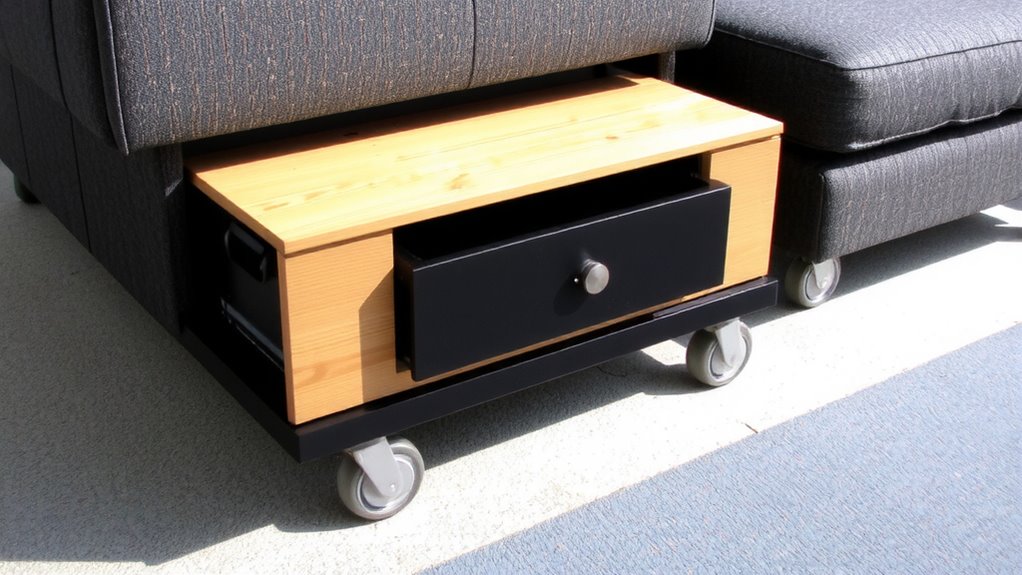
A rolling desk cart can be a game-changer if you’re tight on space and need a flexible workspace. With smart ergonomic design, it supports better posture during long work sessions-look for models with adjustable heights and smooth-gliding casters. These carts maximize space efficiency by serving as both a work surface and a mobile storage hub, letting you roll your setup into tight corners or under furniture when done. Most measure around 24 inches wide, fitting in compact areas without sacrificing usability. Stable three-tier shelves keep supplies within reach, reducing clutter. Solid steel frames handle up to 50 pounds, though lighter builds may wobble under heavy loads. They’re practical for apartments or shared rooms, but won’t replace a full desk for intensive multitasking. Always check weight ratings and wheel locks to guarantee safety and stability. For even more compact solutions, consider best folding tables that can be easily stored and deployed as needed.
Measure Under-Bed or Sofa Clearance First
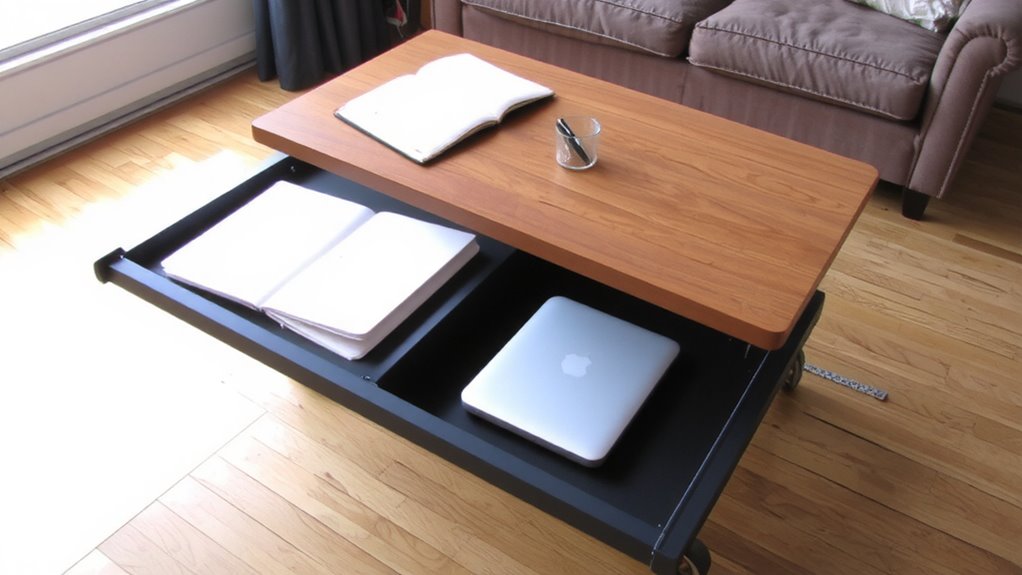
You’ll need at least 4–6 inches of clearance under your bed or sofa to fit most rolling desk carts, so measure first before buying. Getting the right bed height guarantees storage access without daily frustration. A cart that’s too tall won’t slide under, making even smooth-rolling casters useless.
| Clearance (inches) | Storage Access | Emotional Outcome |
|---|---|---|
| <4 | Poor | Frustration, wasted money |
| 4–5 | Limited | Mild annoyance, tight fit |
| 6–8 | Good | Relief, daily convenience |
| >8 | Excellent | Confidence, seamless use |
Most platform beds offer 6–8 inches-ideal for low-profile carts with 3-inch wheels and slim steel frames. Remember: advertised bed height often excludes mattresses. Measure from the floor to the underside of the frame. Some carts list height without load; add ½ inch for safety. Prioritize clearance over features.
Build a Two-Tier Rolling Desk Cart for More Function
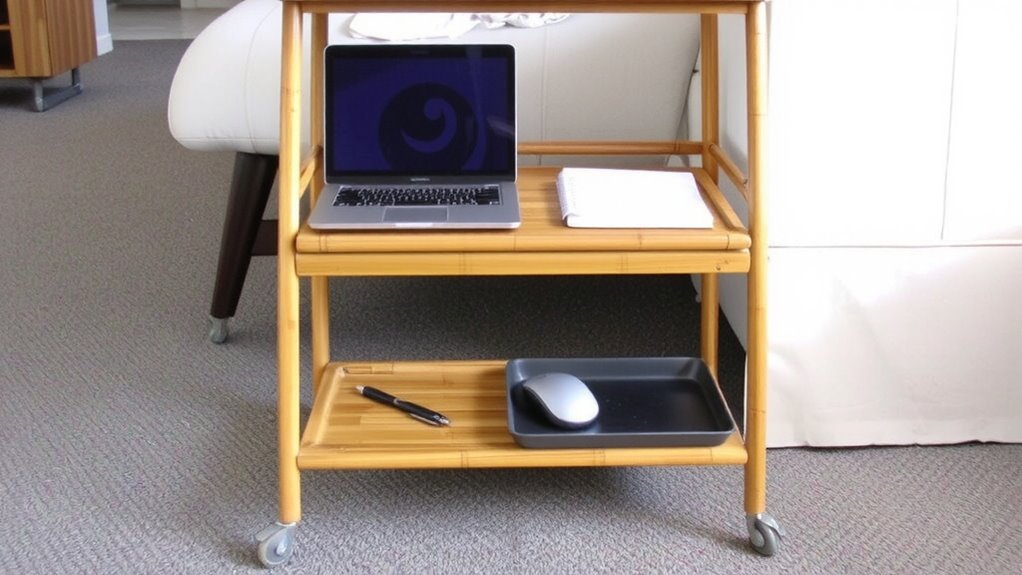
While most rolling carts offer a single shelf, upgrading to a two-tier design gives you dedicated spaces for supplies and tech without swapping out containers. You’ll want at least 10 inches between tiers to fit a laptop charger or standing binder. Look for models with adjustable height shelves so you can accommodate bulkier items like stacked notebooks or a small printer. Many two-tier carts include modular accessories-think file trays, cup holders, or monitor stands-so you can customize on the fly. Casters should lock securely, especially on hardwood or tile. Just keep in mind: adding tiers can reduce under-bed clearance, so recheck height after loading. Solid construction matters-wobbling increases with stacked weight. Choose steel or reinforced ABS over flimsy plastic, and test stability with items you actually use.
Use Lightweight Wood or Metal for a Slim Frame
Nearly every under-bed rolling cart needs to balance strength and slimness, and choosing lightweight wood or metal is often the best way to get that right. You want material durability without excess weight, so opt for birch plywood or aluminum-both resist warping and support daily use. A slim profile, ideally under 6 inches high, fits tight spaces but demands careful engineering for frame stability. Metal frames offer rigidity and long-term resilience, though they can dent. Wood feels warmer and works well when reinforced with corner brackets. Either choice must support at least 30 pounds across two tiers without sagging. Test prototypes by loading them fully and rolling over low-pile carpet-look for flex or wobble. While lightweight builds ease storage, they may sacrifice some impact resistance, so avoid dropping heavy gear on them. Choose wisely-your cart’s longevity hinges on this early decision.
Install Locking Casters on Your Rolling Desk Cart
A rolling desk cart isn’t complete without locking casters-these wheels let you position the unit securely and prevent unwanted movement during use. Choose casters with high caster durability and a load capacity that matches your heaviest setup, ideally at least 150 lbs total. Harder wheel materials like polyurethane protect floors and roll smoothly on hard surfaces, while rubber offers better grip on rugs. Swivel locks let you stabilize the cart fast.
| Benefit | Emotional Payoff |
|---|---|
| Smooth glide | Effortless daily use |
| Secure lock | Peace of mind while working |
| High load capacity | Trust in stability |
| Durable wheels | Long-term reliability |
Mount them flush to avoid snagging. Note: smaller casters (2-3”) save space but may struggle on uneven floors. Test roll resistance before final assembly.
Add Work-Specific Storage to Your Rolling Desk Cart
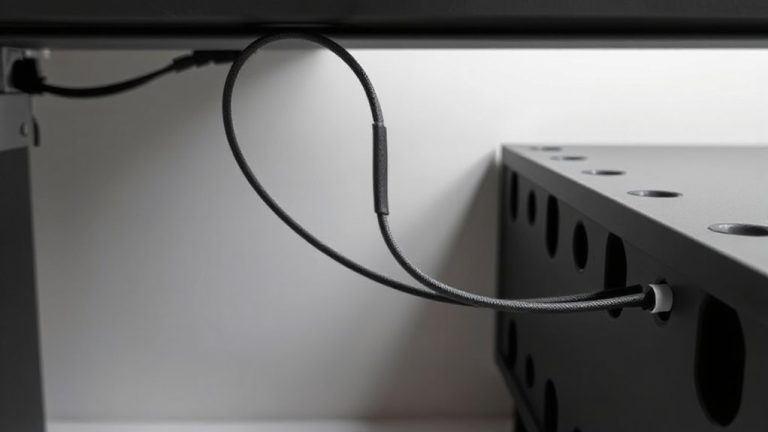
If you want your rolling desk cart to do more than just hold a laptop, outfitting it with work-specific storage is the smart next step-this means adding modular bins, tool trays, or vertical file holders that match your daily workflow. Good cable management keeps cords from tangling and dragging on the floor, so use clip-on sleeves or under-shelf trays. For tool organization, shallow drawers or pegboard panels work well, especially if you handle small electronics or art supplies. Most modular add-ons attach without tools, but verify weight limits-overloading can strain casters or destabilize the cart. Some systems offer customizable dividers and 18-inch depth trays, tested to hold up to 10 lbs each. However, too many accessories reduce open workspace, so balance storage with usability. Check compatibility with your cart’s brand, since third-party bins may not fit flush or align properly.
On a final note
You’ll save space without sacrificing function by building a rolling desk cart under 17 inches tall to fit most beds and sofas. Two tiers boost storage, while locking casters prevent slips on hardwood. Use birch plywood or aluminum for strength without bulk. Add mesh bins for cables or a non-slip mat for your laptop. Just remember-small wheels struggle on carpet, and open shelves mean clutter shows fast.