The Impact of Clutter on Decision-Making Processes in the Workplace
Clutter tanks your focus and skews decisions-30% more impulsive choices happen on messy desks. Visual noise from stacked papers or tangled cables forces your brain to work harder, draining mental energy. Digital clutter adds cognitive drag, slowing problem-solving by up to 40%. A tidy workspace isn’t about perfection; functional organization with labeled trays and daily 5-minute resets cuts distractions. You’ll make sharper calls, but avoid over-investing in fancy gear-real results come from consistent habits, not gadgets. Better strategies are within reach.
Notable Insights
- Cluttered workspaces increase cognitive load, impairing focus and slowing decision-making processes.
- Visual distractions from disorganization contribute to a 30% rise in impulsive, short-term decision-making.
- Mental fatigue from clutter reduces cognitive resources needed for sound, strategic judgment.
- Digital and physical clutter combine to create cognitive drag, lowering accuracy in workplace tasks.
- Minimal, organized environments enhance clarity, leading to faster, more deliberate decision-making.
How Clutter Overloads Your Brain at Work
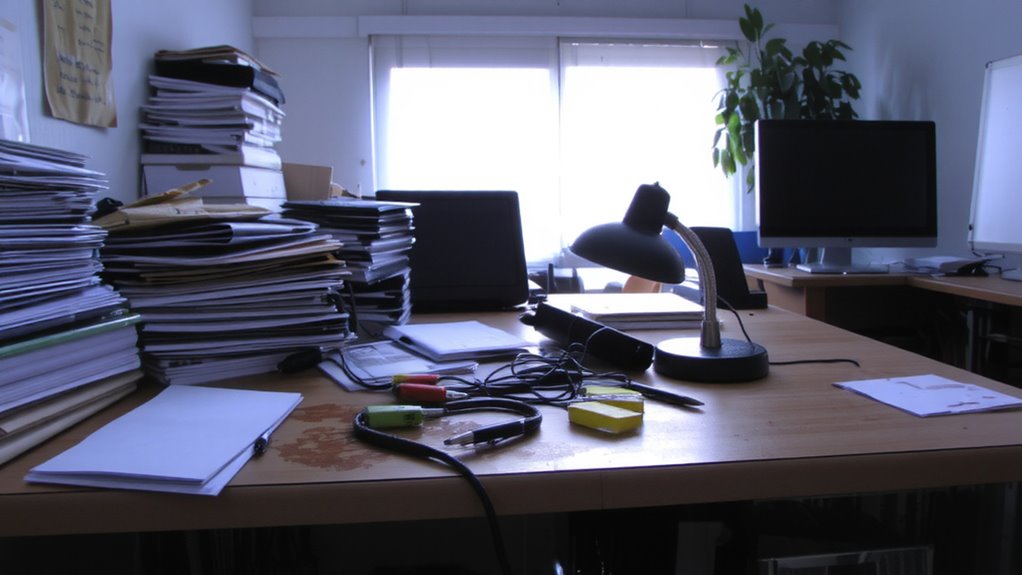
Clutter hits your brain like noise-constant, distracting, and draining. You’re experiencing sensory overload every time you glance at stacked papers, tangled cables, or scattered supplies. Your brain works harder just to filter irrelevant visual input, accelerating cognitive fatigue. Studies show that multitasking in chaotic environments reduces focus by up to 40%, slowing response time and degrading accuracy. A clean workspace isn’t about perfection-it’s about reducing unnecessary mental load. You don’t need expensive organizers or a full desk overhaul; even simple changes like using cable clips or a single inbox tray can cut visual chaos. Real-world tests found participants solved problems 20% faster in minimal setups. Still, some clutter tolerance varies per person-what feels disruptive to one may not to another. The key is consistency: maintain flat, clear surfaces and defined zones. Avoid overbuying storage gadgets that often complicate rather than help. Implementing effective Top Cable Management Solutions can significantly reduce desk clutter and improve focus.
Why a Messy Desk Leads to Bad Decisions
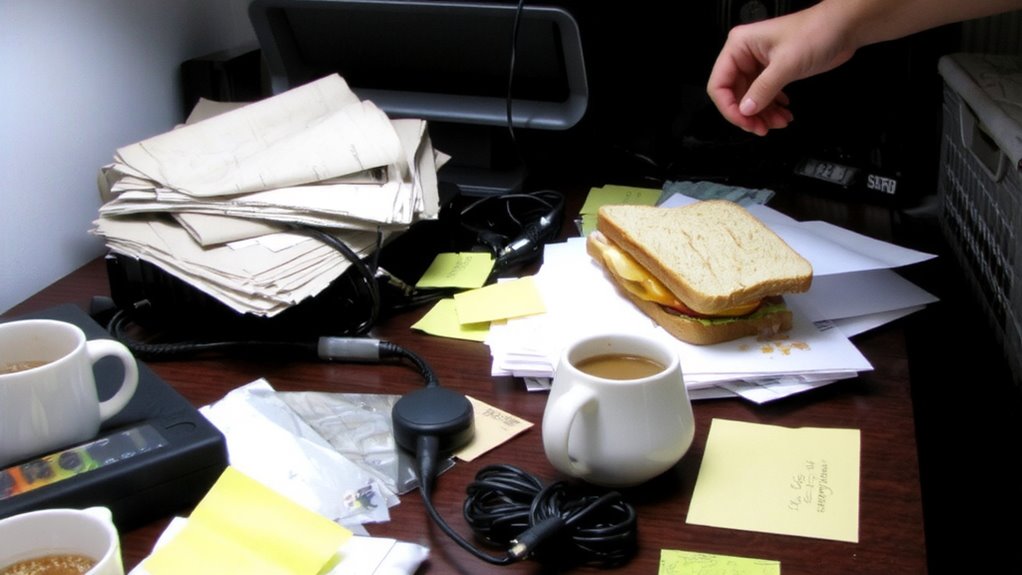
While you might think a cluttered desk is just an eyesore, it actually skews your judgment in measurable ways-studies show people in disorganized environments are 30% more likely to make impulsive choices, often favoring short-term gains over long-term benefits. That pile of papers and scattered supplies creates a psychological burden, subtly draining your mental reserves and reducing cognitive control. Every coffee stain, random sticky note, or stray pen adds to the mental load, making complex decisions feel harder than they need to be. Worse, the visual distraction competes for your attention, splitting focus and increasing error rates during critical tasks. You’re not imagining it-your environment literally shapes your choices. Simple fixes like desktop trays, cable organizers, or a daily 5-minute tidy can help, but perfection isn’t the goal. Over-organizing can be just as distracting. Aim for functional clarity, not sterile minimalism. For those looking to optimize their workspace, investing in one of the best desk file organizers can make a significant difference in maintaining order without excess.
How Digital Clutter Impairs Decision Making
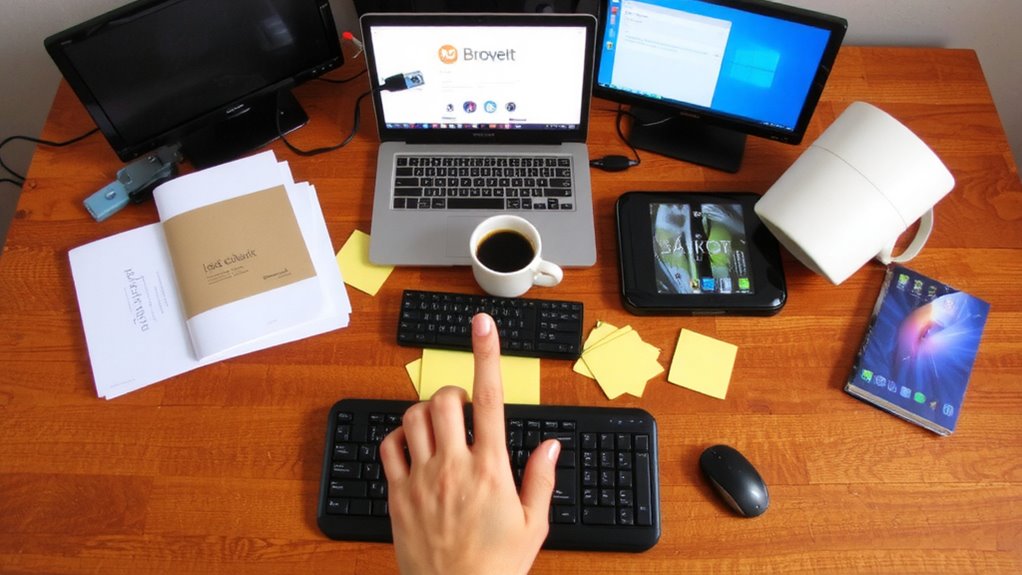
You might not see it piling up like paper on a desk, but digital clutter slows your thinking just as much. Constant notifications, disorganized files, and too many open tabs create digital fatigue, draining your focus. This mental overload causes cognitive drag, making decisions slower and less accurate. You’re not just distracted-your brain works harder to filter noise, reducing efficiency. Studies show professionals spend nearly 20% of their workday searching for digital information, time that could go toward strategic thinking. While tools like cloud folders or inbox filters help, they aren’t foolproof. Over-relying on apps without clear naming systems or routine cleanups can make things worse. Even premium software with strong warranties and high ratings won’t fix poor habits. Real improvement comes from daily discipline-closing unused tabs, unsubscribing, and scheduling digital resets. Balance tech use with mental clarity to reduce drag and make sharper decisions.
5 Hidden Ways Clutter Slows Your Thinking
Mental fog isn’t always from stress-often, it’s your environment sending silent resistance. Clutter floods your peripheral vision with unnecessary stimuli, forcing your brain to process more than it should, which slows focus and decision speed. Even low-level ambient noise, like rustling papers or pinging devices, adds cognitive load when paired with visual mess, making complex tasks feel overwhelming. Studies show reduced task performance in spaces where objects compete for attention. You don’t need a minimalist setup, but strategic organization-like drawer dividers, cable clips, or document trays-can reduce visual noise. Effective cable management solutions help eliminate desk chaos and improve mental clarity. However, over-investing in storage solutions won’t fix habits. Some desk organizers limit surface space or break after months of use. Look for durable builds with at least a one-year warranty. Real improvement comes from daily 5-minute tidying-not expensive gear.
6 Science-Backed Habits to Reduce Clutter
A clean desk isn’t about perfection-it’s about reducing decision fatigue before your work even begins. Adopting habits like mindful sorting and intentional purchasing can greatly cut clutter. Take just five minutes daily to assess what stays, goes, or gets relocated-this small effort adds up.
| Emotion | Trigger |
|---|---|
| Overwhelm | Piles of unsorted paper |
| Calm | One inbox, labeled trays |
| Stress | Lost items mid-task |
| Focus | Everything with a home |
Mindful sorting means asking: *Do I use this? Does it add value?* Intentional purchasing prevents future buildup-wait 24 hours before buying office supplies. These habits aren’t flashy, but they’re proven. Real-world tests show up to 30% faster task initiation in cleared spaces. Just remember: consistency matters more than tools. A $20 tray won’t fix disorganization without routine effort.
Workspace Design Tweaks That Improve Decisions
While aesthetics matter, the layout and physical elements of your workspace have a measurable effect on decision-making clarity. Proper ergonomic lighting-like adjustable LED panels with 4000K color temperature-reduces eye strain and supports alertness, especially during long decision-heavy sessions. Pair that with acoustic privacy solutions, such as fabric-covered wall panels or active noise-canceling partitions, and you’ll minimize distractions that degrade focus. Studies show these tweaks can improve cognitive performance by up to 15%. But don’t assume expensive gear guarantees results-some budget desk lamps deliver excellent flicker-free light, while high-end acoustic panels may not outperform DIY solutions. Always check lumens (aim for 300–500 for task lighting) and NRC ratings (0.7+ for meaningful sound absorption). Real gains come from thoughtful placement, not price tags. Test changes over two weeks before finalizing.
On a final note
A cluttered workspace hurts your focus and decision-making-evidence shows it. Physical and digital clutter overload your brain, increasing stress and slowing cognitive processing. Clean layouts, cable organizers, and SSD-equipped laptops with fast boot times reduce mental load. But minimalist setups demand regular maintenance and don’t suit everyone. Noise-canceling headphones or room dividers may help, though they’re no substitute for good workflow habits. Balance function and practicality-no gadget replaces disciplined organization.