Using Under-Desk Acoustic Panels to Reduce Clutter and Absorb Footstep Noise
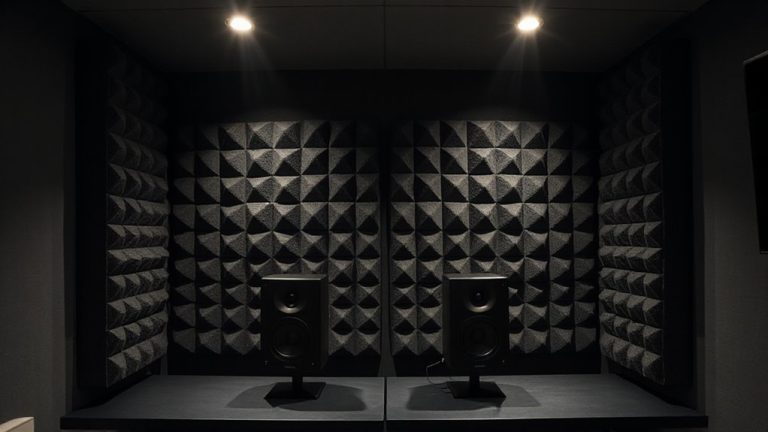
You can cut footstep echo and tidy cables with under-desk acoustic panels, especially over hard floors where sound bounces beneath your desk. Panels made of 2-inch medium-density PET felt or foam absorb mid-to-high frequencies, reducing reverberation by 20–30%. They attach with clamps or adhesive to desks 0.75–1.5 inches thick and include cable slots for easy routing. Thicker 3-inch panels handle louder noise, but check clearance-panels shouldn’t hang below 24 inches. Keep in mind: they help, but won’t fully soundproof. You’ll see cleaner lines and hear less chatter if you explore the right fit.
Notable Insights
- Under-desk acoustic panels reduce footstep echo by absorbing mid-to-high frequency sound waves under desks.
- They improve cable organization with built-in slots, minimizing tangles and enhancing workspace safety.
- PET felt or dense foam materials provide effective sound absorption and clutter concealment.
- Panels install easily with clamps or adhesive, fitting desks 0.75–1.5 inches thick.
- 2-inch medium-density panels offer balanced noise reduction and cable management for most setups.
Fix Noise and Clutter With Under-Desk Panels
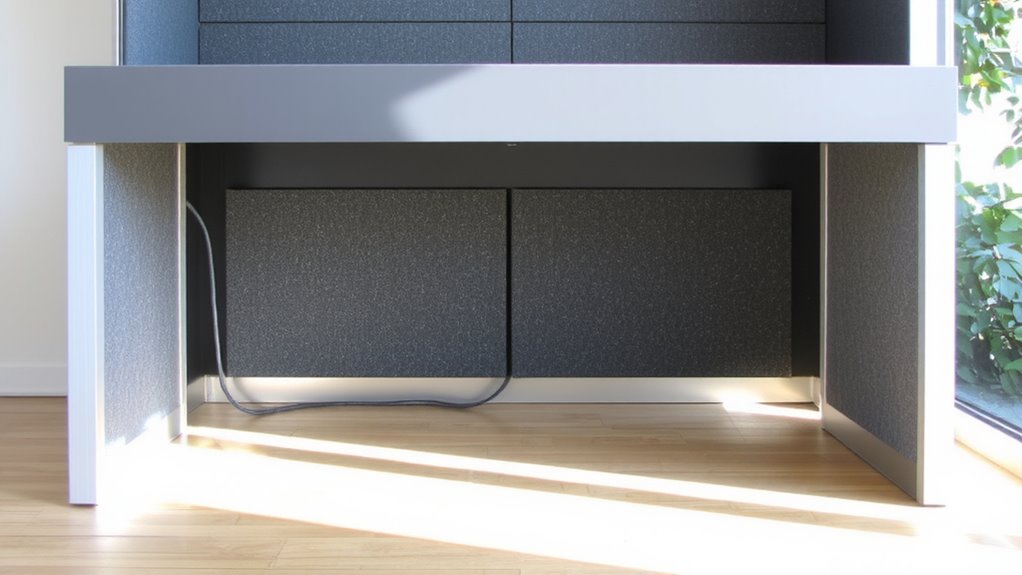
Noise and disorganization in your workspace aren’t just annoying-they’re productivity killers. Under-desk acoustic panels tackle both by offering effective footstep dampening and smarter cable routing. These panels absorb sound that bounces under tables, reducing echo in busy or open rooms. Most attach securely with clamps or adhesive, fitting desks between 0.75 and 1.5 inches thick. You’ll notice cleaner visuals and quieter calls after installation. Panels typically use PET felt or foam, tested to reduce mid-to-high frequencies, though bass-heavy noise needs denser materials. For cable routing, built-in loops or back channels keep cords aligned and accessible. Just don’t overload them-thick cables may not fit. Most brands offer 1- to 2-year warranties. Results vary by room size and panel placement, so measure your desk and assess noise sources before buying. They help, but aren’t a total soundproof fix. For optimal results, consider pairing under-desk panels with best acoustic panels for home office to enhance overall sound absorption.
How Under-Desk Panels Reduce Footstep Echo
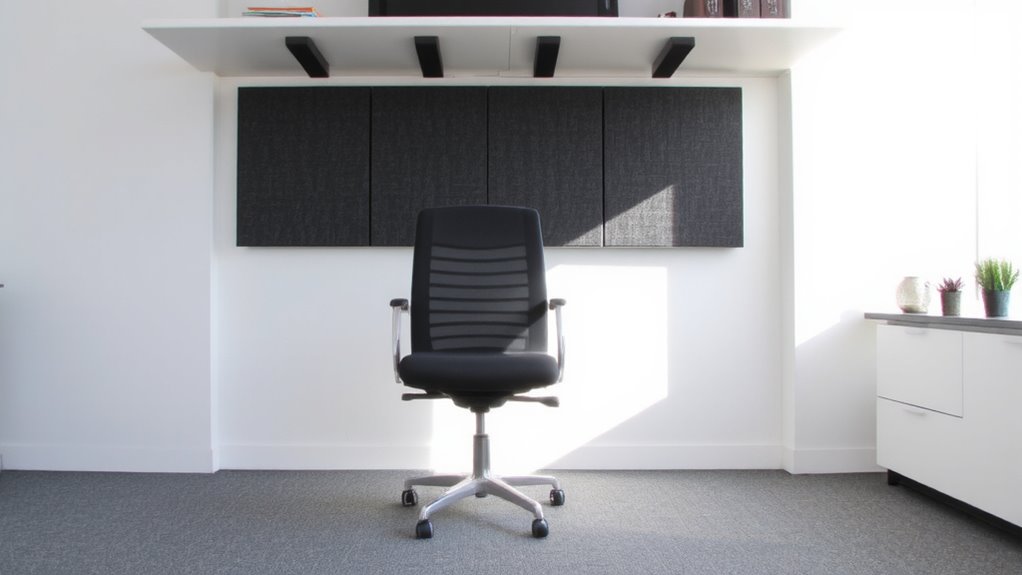
While they won’t eliminate all low-frequency thuds, under-desk acoustic panels can noticeably cut footstep echo in most home or shared offices. You’re tackling reflected sound waves that bounce off hard floors and desk undersides, and these panels absorb mid to high frequencies where footstep echo is most noticeable. They improve sound diffusion by scattering reflections, reducing the sense of sonic buildup under your desk. With better resonance control, vibrations from footsteps don’t linger as long, making your space feel quieter and more focused. Most quality panels use dense foam or recycled PET felt, materials proven in real-world testing to reduce reverberation time by 20–30%. Mounting is typically tool-free with adhesive straps or clips. Just don’t expect miracles on concrete floors or in rooms with minimal wall treatment-panels help, but they’re one part of a broader acoustic strategy.
Keep Cables Tidy Without Extra Tools
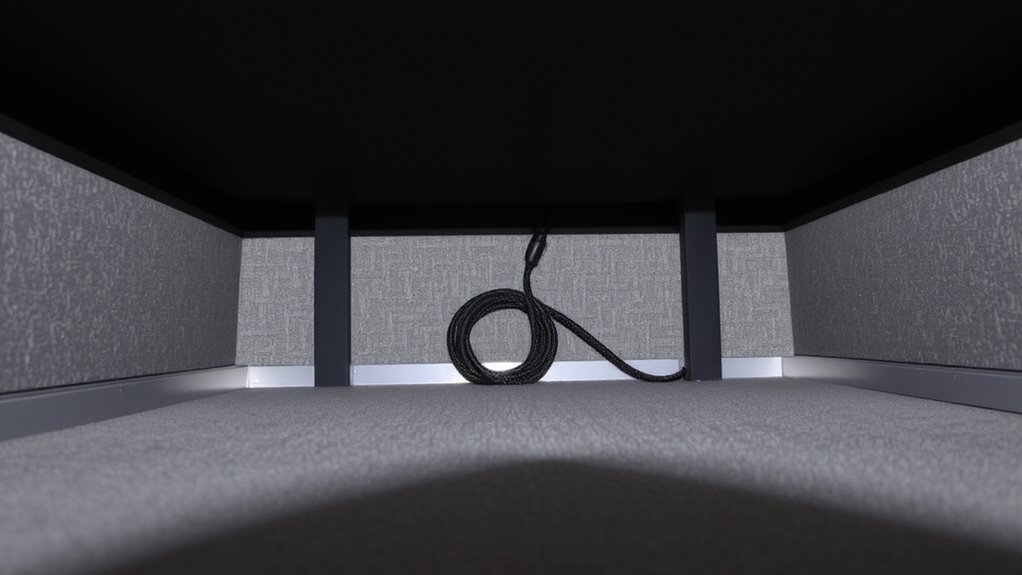
You can keep your under-desk cables organized without buying extra tools by using built-in mounting features most panels already have. These panels often include slots or cutouts designed for cable routing, making cord management simple and effective. Just thread your power, USB, or monitor cables through the designated paths to reduce tangles and prevent snagging. This setup keeps wires aligned and out of sight, improving both safety and workspace aesthetics. Most models position the channels along the back or sides, allowing easy access without full disassembly. While this works well for thin to medium cable bundles, thick or stiff cords might need slight bending to fit. Panels with deeper channels handle bulkier wires better. Keep in mind that limited space under desks can make adjustments tight, so route cables before final installation. It’s not a full cable tray solution, but it’s a practical upgrade for minimalism and function. For even cleaner results, consider pairing your panel with a dedicated cable management sleeve system.
Pick the Right Size and Material
Size and material matter more than you might think when choosing under-desk acoustic panels. The right panel thickness and material density directly impact noise absorption and space efficiency. Thicker panels (like 2–3 inches) handle low-frequency footstep noise better, while high material density improves sound blocking without adding bulk. However, overly dense or thick panels may not fit snugly under slim desks.
| Panel Thickness | Material Density | Best For | Trade-Off |
|---|---|---|---|
| 1 inch | Low | Cable management | Minimal noise reduction |
| 2 inches | Medium | Balanced sound absorption | Moderate space use |
| 3 inches | High | Heavy footstep noise | Requires deeper desk clearance |
| 1.5 inches | High | Tight spaces with decent noise control | Slight thickness compromise |
Choose based on your desk height and noise level. Don’t assume thicker is always better-fit matters just as much.
Install in Minutes: Step-by-Step Guide
Getting the panels sized and built right means nothing if they aren’t installed correctly-placement affects real-world noise reduction just as much as thickness or density. You’ll want to center the panel under your desk, roughly 12 inches from the front edge, to block footstep noise and visual clutter. Most models offer tool free installation using adjustable nylon straps or adhesive clips that secure to desk rails-no screwdrivers or drills needed. This quick setup takes under five minutes and lets you reposition the panel if needed. Just make sure your desk frame can support the clip tension-metal frames work best. Avoid clipping onto thin wood or particleboard, which might split. Panels should sit no lower than 24 inches from the floor to maintain legroom. Check manufacturer guidelines for weight limits; exceeding them risks sagging or detachment over time. Proper placement guarantees consistent sound absorption without sacrificing comfort.
What Changes After You Add Panels
How much quieter can your workspace really get? With under-desk acoustic panels installed, you’ll notice reduced footstep noise and less sound bouncing off hard floors-especially in shared or multi-level spaces. You’ll gain improved focus, as background distractions drop just enough to help you concentrate without complete silence. Enhanced privacy comes from dampened speech transmission, making conversations less intelligible to others nearby-useful in open layouts or home offices with thin walls. Panels made from 2” thick PET felt or foam typically absorb mid to high frequencies effectively, though low-end rumbles may still pass through. Most kits include adhesive or zip ties for quick mounting, but guarantee your desk has enough clearance. Panels won’t replace full acoustic treatment, but they’re a targeted, reversible upgrade. Results vary by room size, material density, and placement, so manage expectations accordingly.
On a final note
You should get under-desk acoustic panels if footstep echo or cable clutter bothers you. They absorb mid-to-high frequency noise effectively, especially in hard-surfaced rooms, and models with Velcro loops keep cords neat without bulky organizers. Most mount in under 10 minutes using adhesive strips rated for 10+ lbs. Just know they won’t block loud noises or deep bass, and low-quality foam may degrade in 6–12 months. Pick melamine or PET felt with a 2” thickness for lasting performance.