Hip Flexor Tightness Prevention Exercises: Reducing Tightness in Hip Flexors Caused by Sedentary Work Patterns With Stretching Routines While Working Remotely From Home
You can prevent hip flexor tightness from sitting all day by doing simple stretches at your desk, like seated marches and figure-four holds, for just 5 minutes every few hours. Pair these with standing breaks and light mobility drills using a resistance band. Avoid overstretching or slouching, which can worsen pain. Small habit shifts-like standing during calls-make a lasting difference if done consistently. The right routine doesn’t need special gear, but proper form and timing turn good efforts into real results. You’ll soon see how small changes build lasting relief.
Notable Insights
- Prolonged sitting shortens hip flexors and weakens glutes, leading to postural imbalances and movement restrictions.
- Perform seated marches and knee-to-chest lifts hourly to activate glutes and reset hip alignment during remote work.
- Incorporate standing hip flexor stretches and figure-four stretches daily to maintain hip mobility and reduce tension.
- Avoid slouching and uneven weight shifting, even at standing desks, to prevent increased hip strain.
- Take 5-minute mobility breaks every 2–3 hours with leg swings, banded clamshells, and lunges with a twist.
Why Sitting Tightens Your Hips
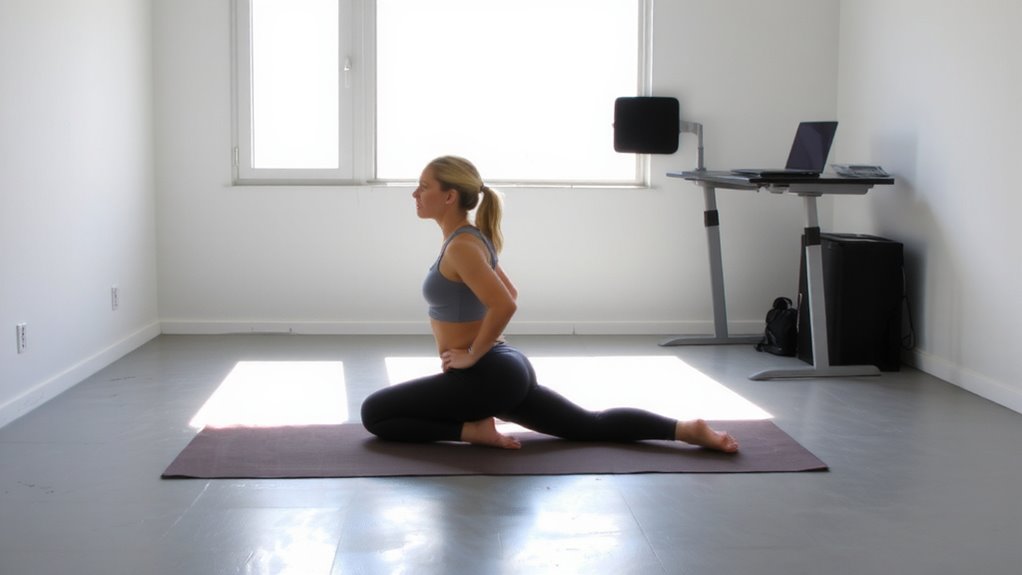
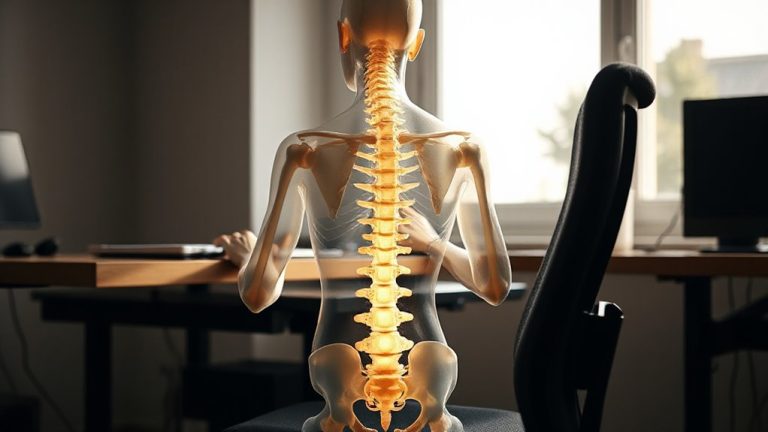
Spending hours at a desk, especially in a standard office chair, quietly sets the stage for tight hip flexors-no matter how supportive your seat seems. You’re fundamentally holding your hips in a flexed position, which over time leads to anatomical shortening of the hip flexor muscles. This isn’t just discomfort; it’s a structural change. When these muscles shorten, they pull on the pelvis, often creating muscular imbalances that affect posture and movement. Your glutes weaken while the front of your hips stay tense, making daily motions harder and raising injury risk. Even ergonomic chairs or standing desks only reduce, not eliminate, this risk-movement matters more than gear. No accessory or luxury setup reverses this process automatically. The real fix? Consistently changing positions and building awareness into your workday. Prevention relies on behavior, not just buying better equipment.
Try These 5 Desk Stretches for Tight Hip Flexors
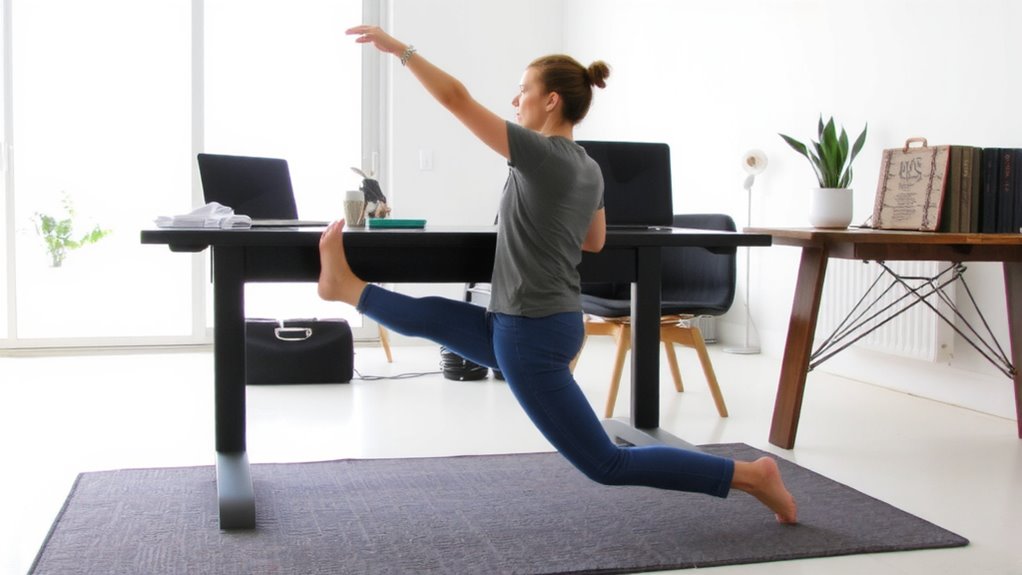
A quick stretch routine at your desk can make a real difference in fighting hip flexor tightness-especially if you’re sitting for long stretches. Try seated marches, knee-to-chest lifts, seated forward bends, figure-four stretches, and standing hip flexor stretches-each takes under a minute and requires no equipment. These moves boost blood flow and support posture correction by resetting your alignment midday. While foam rolling is more effective post-workout, light stretching hourly helps maintain mobility. Don’t expect instant relief-consistency over weeks matters most. Results vary based on your current flexibility and how often you move. Avoid overstretching; mild tension is enough. Wearing supportive shoes and adjusting chair height (hips slightly above knees) improves effectiveness. Combine stretches with walking breaks for better outcomes. While no substitute for exercise, they’re practical during work. Monitor comfort-sharp pain means stop.
Build a 5-Minute Hip Mobility Break
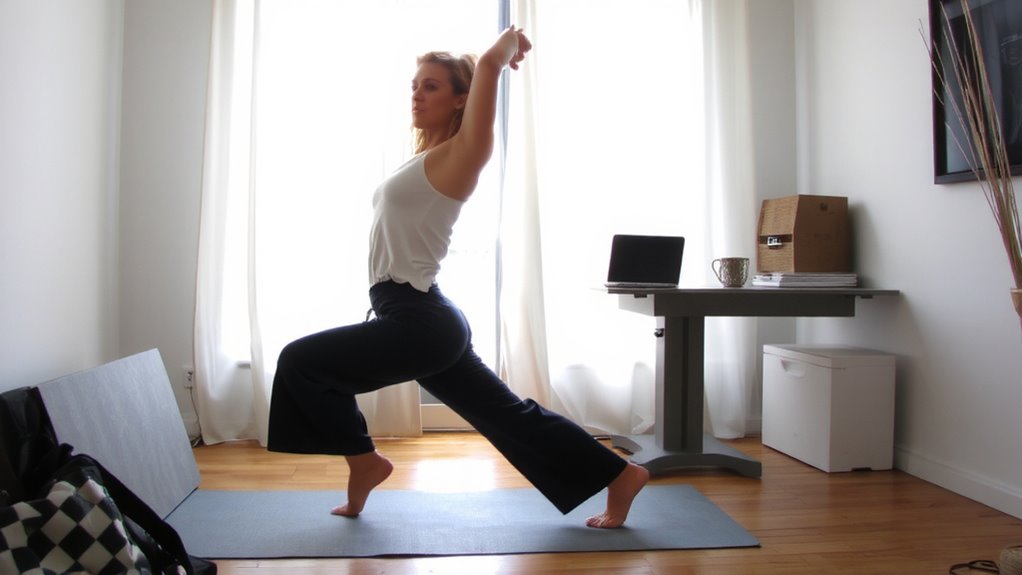
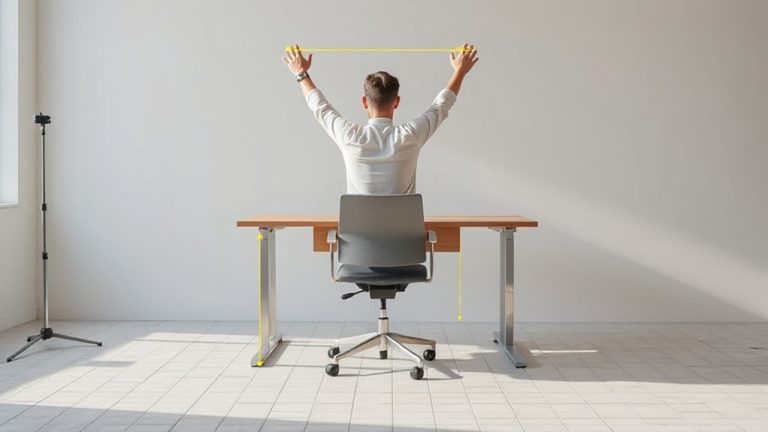
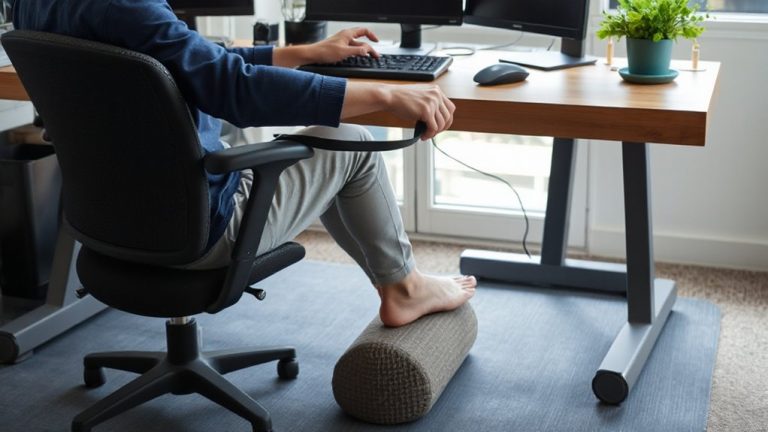
You can do more than just stretch at your desk-you can build a short, effective mobility routine that actually loosens tight hips. Start with a dynamic warmup: 30 seconds of leg swings front to back, then side to side, to lubricate the joint and fire up key muscles. Follow with 10 standing hip circles per side to improve range of motion. Add resistance training using a loop band: 10-15 banded clamshells and monster walks in each direction boost glute strength, which supports hip alignment. Finish with 5 deep bodyweight lunges with a twist to integrate stability and mobility. Do this every 2-3 hours during remote work. No special gear’s needed, though a $10-15 resistance band with measured tension levels (light or medium) improves results. Results vary based on consistency, but most notice improved comfort within a week. Avoid overdoing reps-quality beats quantity.
3 Mistakes That Make Hip Flexor Pain Worse
While sitting for hours might seem harmless, it’s actually one of the fastest ways to worsen hip flexor pain-especially if you’re not adjusting your posture or routine regularly. You’re likely making it worse by relying on poor alignment, like slouching or leaning forward, which reinforces incorrect posture and puts extra strain on your hips. Even standing desks can backfire if you shift your weight unevenly. Overstretching muscles is another common mistake-pushing too hard or holding stretches too long can irritate tissues instead of relaxing them. You don’t need aggressive flexibility; you need consistent, gentle mobility. Avoid bouncing or forcing positions, especially when sore. Short, frequent movement breaks beat intense sessions when you’re stiff. Remember, comfort doesn’t mean correct-many feel fine until pain flares. Check your hip alignment, keep motions controlled, and prioritize consistency over intensity to avoid setbacks.
Daily Habits to Prevent Hip Tightness
Because tight hip flexors often develop from repetition more than intensity, small daily adjustments in movement and workspace setup matter more than occasional corrective efforts. You should practice active sitting-using a chair that encourages micro-movements, like a wobble stool or kneeling bench-for short intervals, but don’t rely on it all day; prolonged use can shift strain to your lower back. Alternate seated positions hourly, and stand every 30 minutes for 2–3 minutes to reset hip angles. Pair this with consistent movement: take walking calls or do standing stretches. Proper hydration supports muscle elasticity, so aim for 8–10 cups of water daily-more if you’re active. A well-lit, ergonomically aligned desk helps, but even the best setup fails without movement. No gear replaces habit; use timers or apps as reminders. Results take 2–4 weeks of consistency. There’s no shortcut, but these habits, when combined, reduce stiffness more effectively than isolated stretches alone. For optimal posture support and subtle movement, consider using one of the best wobble stools designed for focus and comfort.
On a final note
You can reduce hip flexor tightness with consistent, simple stretches during remote work. These routines help counteract long sitting periods, especially when paired with a supportive ergonomic chair and adjustable desk. Still, stretching alone isn’t a fix-move every 30 minutes and avoid locking your hips forward. Results vary based on posture habits and work setup, so combine mobility breaks with proper alignment for real gains.