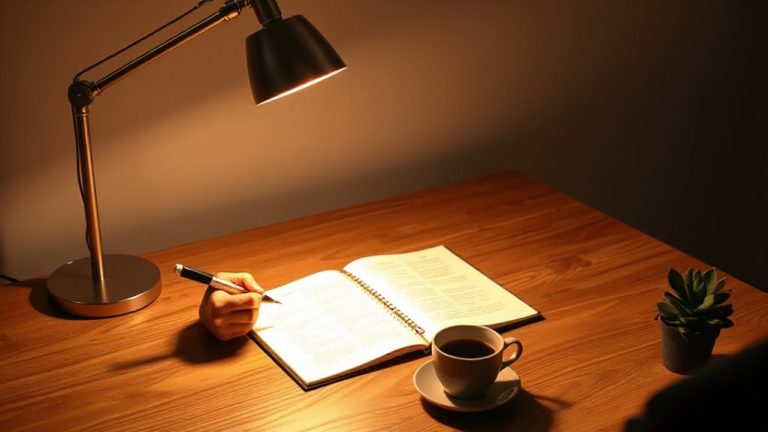
Customizing Lighting Solutions Based on Age-Related Vision Requirements for an Ergonomically Sound Work Environment
You’ll need more light and better color accuracy as you age, so opt for LED task lamps with a CRI over 90 and adjustable color temperature between 3500K and 5000K. Choose models with diffused lenses and adjustable arms to reduce glare and direct light precisely. Dimmable drivers and indirect lighting help manage brightness without eye strain. Prioritize fixtures with 5-year warranties and commercial-grade build. For long-term comfort, balance personal control with consistent ambient levels-there’s a smarter way to tailor lighting that fits everyone’s needs.
Notable Insights
- Older workers need higher illumination levels, requiring 2–3 times more light than younger peers for optimal visual performance.
- Use LED task lights with CRI 90+ to ensure accurate color perception and reduce eye strain across age groups.
- Incorporate adjustable color temperature lighting (3500K–5000K) to balance alertness and visual comfort throughout the day.
- Install indirect or diffused lighting with adjustable arms to minimize glare and light scatter in aging eyes.
- Combine ambient lighting with individual dimmable desk lamps to support personalized, ergonomic lighting adjustments.
How Aging Eyes Shape Lighting Needs at Work
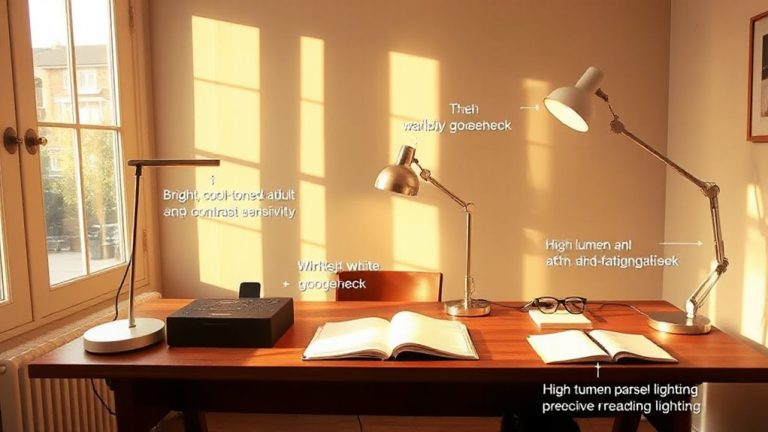
While your eyes change with age, updating your workspace lighting doesn’t have to mean overhauling everything. You naturally lose visual acuity and color perception over time, making it harder to distinguish details and subtle contrasts-especially under poor light. That means your current setup might not support clear, comfortable work, even if it once did. Experts recommend adding a LED task light with a high CRI (90+) to improve clarity and true-to-life color rendering. These fixtures help compensate for declining vision without drastic changes. But don’t assume more light is always better-poorly placed brightness can create harsh contrasts. Look for adjustable arms and diffused lenses to direct light where it’s needed. Most quality models come with 3- to 5-year warranties and have been tested in real office environments. Just remember: even the best light won’t fix misaligned screens or cluttered surfaces. A well-chosen best reading lamps option can further enhance visual comfort by combining optimal brightness, adjustability, and color accuracy tailored for prolonged tasks.
How Brightness and Glare Affect Workers by Age
Why do some lights feel harsher as you get older? As you age, increased light sensitivity makes standard office lighting feel glaring and uncomfortable. Your eyes scatter more light, reducing contrast and causing visual strain, especially under bright or poorly shielded fixtures. This glare isn’t just annoying-it can disrupt your circadian rhythm by overstimulating your nervous system, affecting alertness and sleep quality. Workers over 40 often need 2–3 times more illumination than younger peers, but not more glare. Use indirect lighting and adjustable task lamps to control brightness without hotspots. Anti-glare screens and louvers help, but avoid dimming lights too low-insufficient lux levels (below 300–500 lux) reduce visual performance. Test products with measurable outputs, solid warranties, and flicker-free ratings. Balance is key: too much light harms, too little hinders. Consider using light therapy lamps to support circadian health and improve daytime alertness, especially in poorly lit environments.
Do Warmer or Cooler Lights Work Better by Age?
How do cooler versus warmer lights impact visibility and comfort as you age? As you get older, higher color temperature lights (5000K–6500K) can boost alertness and improve task clarity, but they may reduce visual comfort, especially in long work sessions. Cooler lights mimic daylight, enhancing contrast and focus-helpful for detailed work. However, they can increase eye strain and glare sensitivity, particularly if unshielded. Warmer lights (2700K–3500K) offer softer illumination, reducing glare and creating a relaxed atmosphere, which many older adults prefer for comfort. The ideal choice depends on your task and environment. Pair cooler lights with diffusers or indirect fixtures to minimize harshness. Use tunable LED systems to adjust color temperature throughout the day. Real-world testing shows mixed results-some users adapt quickly; others report headaches. Always check dimming compatibility and warranty length-look for at least 3 years. A well-designed best desk lamp can significantly reduce eye strain by combining optimal color temperature with adjustable brightness and glare control.
Choosing Fixtures That Work for All Ages
Since lighting needs vary considerably with age, choosing fixtures that accommodate a range of visual requirements means prioritizing flexibility, brightness control, and glare reduction. You’ll want adjustable color temperature (2700K–5000K) and dimming options to support different tasks and preferences. Proper fixture placement reduces shadows and eye strain-mounted too high or too low, even great lights underperform.
| Feature | Why It Matters |
|---|---|
| Adjustable arms | Enable precise direction and height |
| Diffused shades | Minimize glare across age groups |
| LED with CRI >90 | Guarantees accurate color recognition |
| Task lighting | Complements ambient via smart placement |
| Dimmable drivers | Allow brightness tuning by user |
While high-end models offer better control, they cost more and may need professional setup. Always check warranties and real-world reviews before buying.
Designing Lighting for Multigenerational Teams
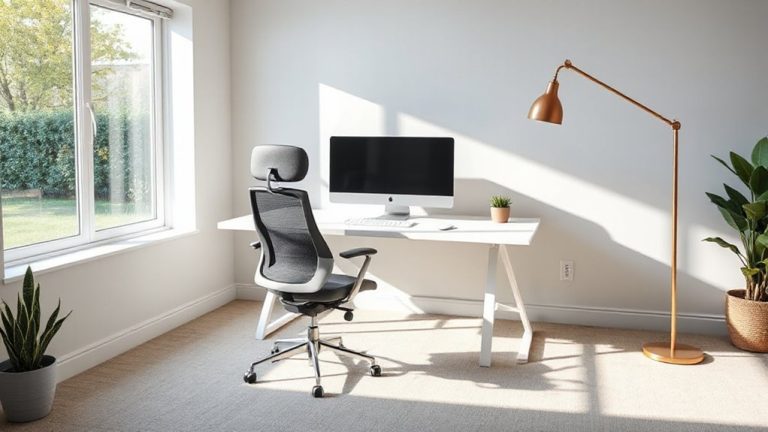
Isn’t it tough when your team’s lighting leaves someone squinting or straining? You need solutions that balance age-related needs without favoring one group. Opt for LED fixtures with adjustable color temperature-offices often settle around 3500K to 4000K, supporting both younger workers’ color preference and older eyes’ contrast sensitivity. Task flexibility is key: pair ambient lighting with individual desk lamps allowing personalized control. Look for dimmable models with CRI ratings above 90 for accurate color rendering. While flexible systems perform well, they require upfront planning and may increase installation costs. Real-world tests show workers report less eye fatigue when they can tweak their immediate lighting. But avoid over-relying on smart bulbs-some lack durability or consistent output. Always check warranties; commercial-grade fixtures typically offer 5+ year coverage. You’ll get better long-term results with modular designs that adapt as your team evolves.
On a final note
You’ll likely need adjustable LED task lights with 3000–5000K color temperature and dimmable brightness to meet diverse age-related vision needs. These offer precise control, reducing eye strain without excessive glare. Opt for models with diffused shades or adjustable arms to direct light effectively. But be mindful-poor placement can create shadows or reflections. Always test in actual workspace conditions, since performance varies by room layout and screen use.