Designing a Functional Home Office Layout With Strategic Light Placement to Maximize Natural Light Benefits
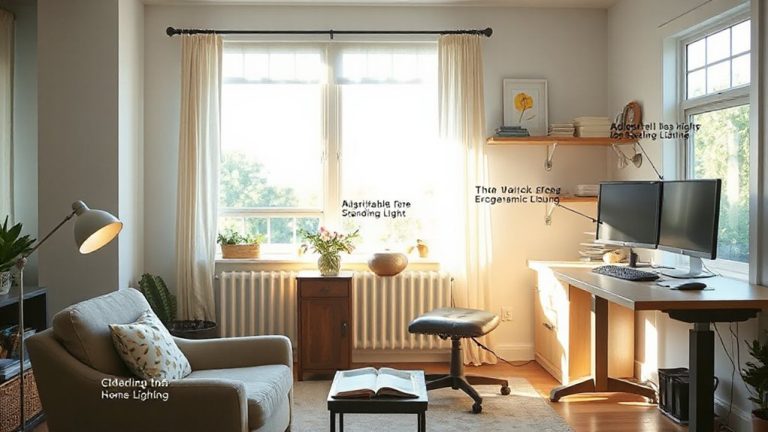
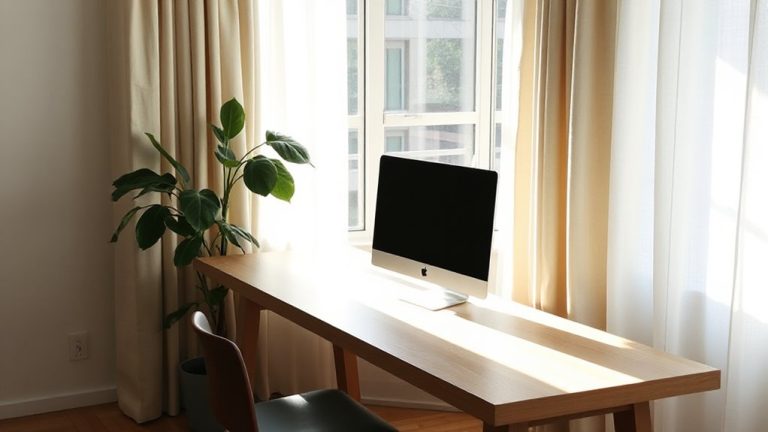
Place your desk beside the window at a 30- to 45-degree angle to maximize natural light and reduce screen glare. Use sheer curtains like voile to diffuse harsh sunlight, but pair them with blinds for UV protection. Position a large mirror across from the window to reflect daylight, and keep furniture low-profile to maintain light flow. Avoid direct sun exposure to prevent heat buildup. You’ll find smart trade-offs between brightness and comfort just ahead.
Notable Insights
- Position your desk beside a window at a 30- to 45-degree angle to optimize natural light and minimize screen glare.
- Use sheer curtains to diffuse harsh sunlight, reducing glare while maintaining brightness and color accuracy.
- Place a large mirror across from the window to reflect and amplify natural light throughout the workspace.
- Arrange furniture to allow unobstructed light flow, keeping pathways clear and avoiding shadows from tall pieces.
- Combine natural light with task lighting using 4000K dimmable LEDs to maintain consistent illumination and reduce eye strain.
Place Your Desk for Maximum Natural Light
While natural light can boost focus and mood, placing your desk directly in front of a window isn’t always the best move. You’ll face glare on screens and uneven light angles that shift throughout the day. Instead, position your desk beside the window, letting indirect light wash across your workspace. This setup reduces eye strain and maintains consistent brightness. Pay attention to desk corners-they can shadow task areas if poorly aligned with the room’s primary light source. For most, a 30- to 45-degree angle between the window and desk surface works best, balancing illumination without hotspots. You’ll still get the benefits of daylight without midday glare. If your room’s layout forces a direct window-facing position, consider adjusting your monitor’s tilt or using a matte screen filter. Even small changes in orientation can markedly improve comfort and productivity over long work sessions.
Use Sheer Curtains to Soften Harsh Sunlight
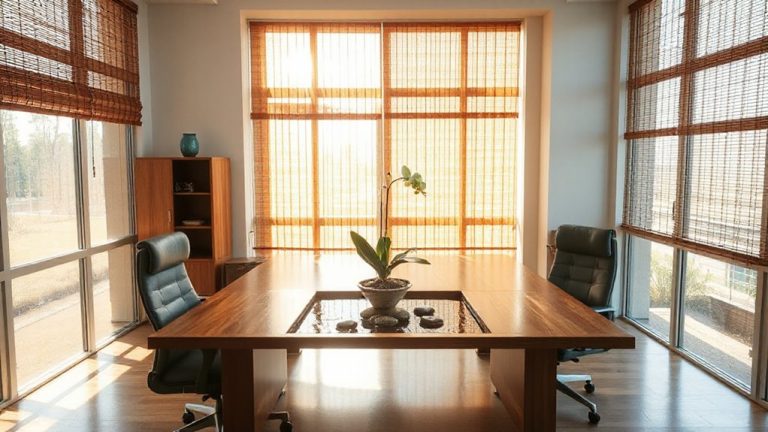
Sheer curtains are your best ally when sunlight turns harsh and distracting. They provide effective daylight diffusion, softening direct beams without dimming your workspace. Opt for lightweight sheer textures like voile or nylon chiffon-they cut glare while maintaining visibility and color accuracy. Unlike heavy drapes, these fabrics let in consistent ambient light, reducing eye strain during peak sun hours. However, they offer minimal privacy and UV protection, so pair them with blinds if needed. Look for machine-washable options with reinforced grommets or tab tops for durability; some tested models last over five years with mild fading. Installation is simple with standard curtain rods, but guarantee full window coverage for even light spread. Keep in mind, sheer curtains won’t block heat, so rely on them only when temperature control isn’t a priority. They’re a practical layer-not a complete fix.
Use Mirrors to Reflect and Spread Light
If you’re looking to amplify natural light in your home office without adding more windows, strategically placing mirrors can make a noticeable difference-just make sure you’re doing it right. Proper mirror placement across from or beside windows bounces daylight deeper into the room. Pairing mirrors with other reflective surfaces, like glass desktops or glossy finishes, enhances brightness but can cause glare if unchecked. Aim for large, lean mirrors (at least 24” x 36”) for maximum effect. Avoid ornate frames that trap shadows. Position them at seated eye level to maintain comfort and function.
| Surface Type | Light Reflection % | Ideal Distance from Window |
|---|---|---|
| Clear glass mirror | 85–90% | 2–6 feet opposite window |
| Metallic finish desk | 60–70% | Adjacent to mirror |
| Matte wall | 20–30% | Not for reflection |
| Polished wood | 40–50% | Secondary bounce surface |
| Whiteboard | 70–75% | Wall-mounted near light path |
Rearrange Furniture to Improve Light Flow
Since natural light boosts focus and reduces eye strain, positioning your desk to catch direct daylight is worth prioritizing-but you’ll want to keep glare off screens and avoid blocking light paths to the rest of the room. Your furniture orientation plays a key role: place larger items like bookshelves along north-facing or interior walls to prevent shadowing. Position your desk perpendicular to windows whenever possible, allowing daylight to reach deeper into the space. This improves light flow and supports better space optimization by keeping pathways clear and functional zones distinct. Avoid pushing desks directly against windowsills-this often limits adjustability and traps light near walls. Instead, allow 18–24 inches of clearance behind chairs for movement and airflow. While repositioning, consider floor traffic and cord management from task lighting or power strips. Effective furniture placement doesn’t require expensive gear-just thoughtful arrangement that balances light access with daily usability. For those upgrading their setup, selecting an ergonomic and spacious best home office desk can further enhance comfort and productivity.
Avoid Glare, Eye Strain, and Overheating
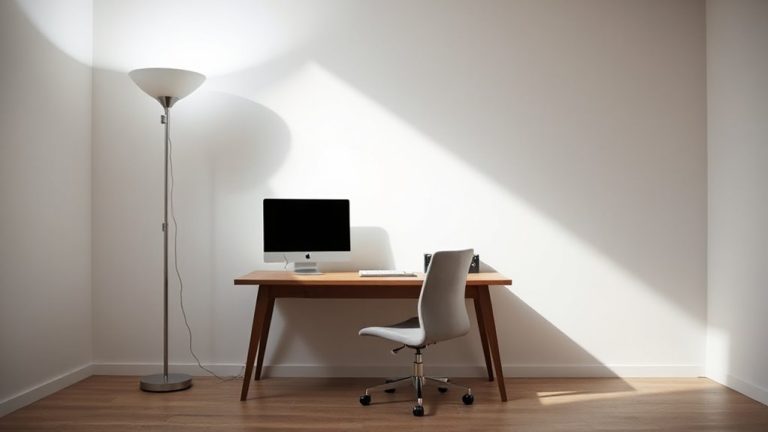
You’ve positioned your desk to maximize daylight, but too much direct sun can create glare on screens, lead to eye fatigue, and heat up your workspace. To counter this, use sheer curtains or adjustable blinds to diffuse harsh rays without killing natural brightness. Pair this with task lighting-like a 4000K LED desk lamp-to maintain consistent illumination when clouds roll in or the sun dips low. Look for models with dimmable output and forward-facing shades to reduce screen reflections. Check that windows have proper thermal insulation; double-glazed units with low-e coatings cut heat gain by up to 40% compared to single-pane glass. This keeps temps stable and lowers AC strain. Avoid placing monitors perpendicular to windows-align them parallel to reduce glare. While natural light is ideal, balance is key: uncontrolled exposure undermines comfort and efficiency. There’s no universal setup-test angles, brightness levels, and lamp placements weekly during the first month. For even greater control over lighting conditions, consider a desk lamp with color temperature control.
Why Natural Light Boosts Focus and Mood
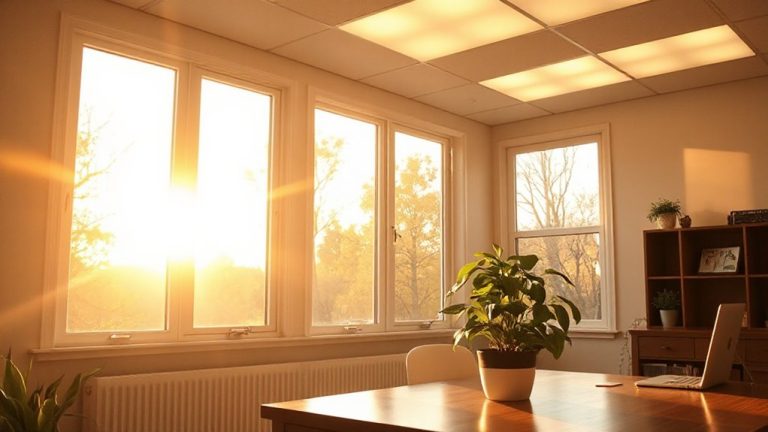
How does something as simple as daylight make your workday feel sharper and more manageable? Because natural light directly supports your circadian rhythm, helping regulate sleep-wake cycles and sharpen focus. When daylight floods your workspace, it boosts serotonin levels, improving mood and reducing fatigue. You’ll notice clearer mental clarity, especially during midday slumps. Exposure to morning sunlight is most effective, signaling your body to stay alert. Studies show workers near windows report higher satisfaction and concentration. But keep glare and screen reflections in check-position your desk at a 90-degree angle to the window. Sheer curtains or adjustable blinds help modulate intensity without blocking light. While full-spectrum artificial bulbs mimic daylight, they can’t fully replace the psychological benefits of real sun exposure. Results vary by individual, so test adjustments over a week. Always balance comfort with function-natural light helps, but poor placement can undo its benefits.
Balance Light and Energy Efficiency All Day
While maximizing daylight can elevate focus and mood, keeping your home office energy efficient throughout the day demands strategic choices in glazing, shading, and supplemental lighting. Light optimization isn’t just about brightness-it’s about consistency and energy management. Use double-glazed windows with low-e coatings to reduce heat gain, and pair them with adjustable blinds for control. During midday, block harsh sun; in the afternoon, open shades to harvest natural rays. LED task lighting with dimmers complements daylight without spiking energy use. A well-positioned portable kneeling chair can further enhance comfort and posture under optimal lighting conditions.
| Feature | Benefit |
|---|---|
| Low-e windows | Reduce UV/IR, maintain visibility |
| Automated shades | Timed adjustments for comfort |
| Motion-sensor LEDs | Cut waste during idle times |
| Light shelves | Reflect daylight deeper into room |
| Energy Star fixtures | Verified efficiency over 10k hours |
Balance isn’t automatic-you’ll need to tweak settings as seasons shift.
On a final note
You’ll work better with natural light, so place your desk near a window, but avoid glare with sheer curtains that diffuse brightness. Mirrors across from windows help spread light deeper into the room. Rearrange furniture to keep pathways clear and light flowing. Watch for afternoon heat buildup-some glazes or tints reduce it but may slightly dull clarity. Balance is key: maximize daylight without overheating or straining your eyes.