Flicker-Free Lighting: Choosing the Right Bulbs to Protect Vision During Long Work Hours
Choose flicker-free LED bulbs with high-frequency PWM or CCR drivers to protect your eyes during long work hours-they cut flicker below 5%, reducing eye strain and headaches. Look for IEEE 1789 or IEC TR 61547-1 labels and a CRI above 90 for clear, stable light. Avoid dimmer incompatibility, as it can trigger flicker even in quality bulbs. Top brands like Philips and GE back their claims with 5-year warranties and real-world testing. There’s more to evaluate when matching bulbs to your workspace needs.
Notable Insights
- Choose flicker-free LED bulbs with high-frequency PWM or constant current reduction to prevent eye strain during long work hours.
- Look for bulbs labeled “flicker-free” or designed for office use, ideally with an IEEE 1789 certification for verified performance.
- Select bulbs with a flicker index below 5% and a CRI above 90 for stable, natural-looking light and accurate color rendering.
- Use smartphone slow-motion video to test for hidden flicker, especially when dimming or using compatible dimmer switches.
- Prioritize top brands like Philips, GE Lighting, or Acuity Brands with 5-year warranties and proven low flicker in independent tests.
Why Flicker-Free Lighting Protects Your Eyes
While most people don’t notice it, flickering in LED and fluorescent lights-especially those with low-frequency pulse-width modulation-can strain your eyes over time, and switching to flicker-free models is one of the most effective yet underappreciated upgrades for your home office. You’re likely to experience less eye fatigue and fewer headaches, especially during long work sessions under artificial light. Flicker forces your pupils to constantly adjust, taxing your visual system even when you aren’t consciously aware. Flicker-free bulbs, typically using high-frequency PWM or constant current reduction, eliminate this strain. Real-world tests show measurable drops in discomfort symptoms after switching. Just make sure to verify specifications-look for <5% flicker index and reputable brands with solid warranties. It’s not a magic fix, and poor ambient lighting design can still cause issues. But for sustained screen work, it’s a smart, evidence-backed step. For overall lighting quality, consider pairing flicker-free bulbs with best natural light lamps to enhance circadian rhythm support and visual comfort.
Which Bulbs Actually Give You Flicker-Free Light?
What actually makes a bulb flicker-free? It’s steady current control and high-quality drivers that prevent rapid brightness changes. You’ll find the most reliable flicker-free performance in LED bulbs labeled “flicker-free” or designed for office use, especially those with a continuous light spectrum that mimics natural daylight. Look for models with a high CRI (above 90) to guarantee clear, balanced light. Bulb compatibility matters-check if your dimmer switches support the LED type, as mismatched systems often cause flicker. Some fluorescent tubes and cheap LEDs still pulse invisibly, even if they seem steady. Top performers in independent lab tests often include brands like Philips and GE but always verify specifications like frequency (aim for >20 kHz) and flicker percentage (<5%). Warranties of 3+ years signal confidence. Don’t assume price equals quality-test one first.
How to Tell If Your Bulbs Are Flickering (Even If You Can’t See It)
How can you spot flicker when your eyes can’t? Try slow motion detection with your smartphone camera-film the bulb in slow motion and look for rolling shadows or pulsing light. If you see waves or strobing, the bulb is flickering, even if imperceptible in real time. You might also notice headaches or eye strain after long work hours, clues your lights are stressing your vision. Some flickering bulbs cause electromagnetic interference, disrupting nearby electronics like speakers or radios-listen for buzzing when lights are on. Dimmer switches often worsen flicker, especially with incompatible LEDs. Not all cameras detect flicker accurately, so test under real working conditions. While slow motion detection helps, it’s not foolproof. Choose bulbs labeled low-flicker or designed for office use, but remember, certification matters-what looks stable today might not perform long-term. For professionals like lawyers who spend extended hours reading and writing, selecting a desk lamp with flicker-free lighting can significantly reduce eye fatigue and improve focus.
Flicker-Free Certification Labels That Matter
You can spot flicker with your phone or notice it through eye strain, but the only reliable way to trust a bulb won’t flicker over time is by checking its certification labels. Flicker free certification labels like IEEE 1789 or IEC TR 61547-1 indicate the bulb meets tested standards for minimal flicker, reducing headaches and fatigue during long work hours. These certifications aren’t just marketing-they’re proof of real lab results. Also, don’t ignore energy efficiency ratings; top-tier flicker-free bulbs often carry ENERGY STAR or comparable ratings, meaning they save power without sacrificing stability. But here’s the catch: not all efficient bulbs are flicker-free, so check both. Some budget LEDs cut corners on drivers, leading to hidden flicker even with high efficiency ratings. For consistent performance, choose bulbs clearly listing both flicker-free certification labels and strong energy efficiency ratings-especially if you’re using them all day.
Top Flicker-Free LED Brands for Workspaces
When it comes to lighting your workspace without the strain of flicker, a few LED brands stand out for delivering consistent, lab-verified performance. You’ll want to take into account Philips, Acuity Brands, and GE Lighting-each offers flicker-free models with strong Color consistency and reliable Beam spread, essential for even task illumination. These brands use high-quality drivers that minimize flicker, often meeting IEEE 1789 standards. Real-world tests show under 5% flicker modulation at full brightness, reducing eye fatigue during long hours. They typically back products with 5-year warranties, signaling confidence in durability. But don’t assume all their LEDs are flicker-free-check packaging for certifications. Also, Beam spread varies by model; wide spreads work better for open desks, while focused beams suit task lamps. Color consistency across multiple bulbs matters if you’re mixing fixtures. Though pricier upfront, these brands’ stability and tested performance make them sound choices for sustained visual comfort.
Best Rooms to Use Flicker-Free Lighting
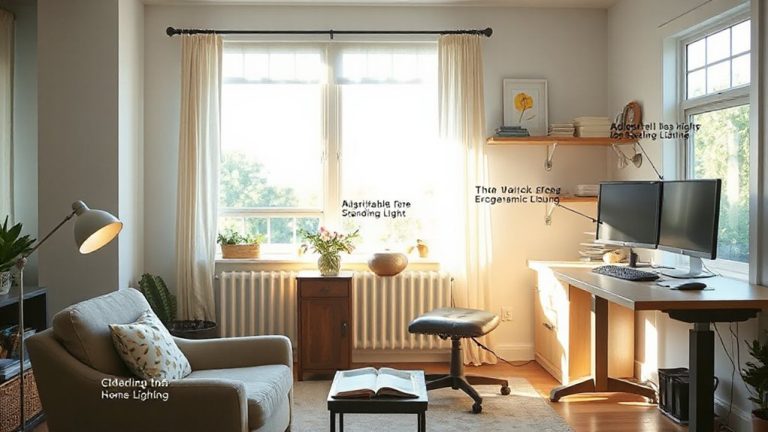
Where should you prioritize flicker-free lighting? Start with home offices and reading nooks-spaces where you spend hours focused under artificial light. In home offices, consistent, stable lighting reduces eye fatigue and helps maintain concentration during long work sessions. Flicker-free LEDs with a high CRI (90+) and low flicker percentage (<5%) mimic natural light, improving comfort. Reading nooks need soft, steady illumination to prevent strain during prolonged reading-flickering bulbs disrupt focus and can trigger headaches. While flicker-free bulbs often cost more upfront, their long-term benefits in comfort and eye health outweigh the price. Just verify specs-look for IEEE 1789 compliance and reliable warranties. Not all “eye comfort” labels are equal, so rely on lab-tested performance, not marketing claims.
Quick Fixes to Remove Room Flicker
Though flickering lights can undermine comfort and focus, replacing incompatible dimmers or outdated bulbs often resolves the issue quickly and affordably. You’ll want to check that your bulbs are labeled as dimmer-compatible, especially if you’re using LEDs with older switches-mismatches here are a common culprit. Adjusting light placement can also reduce perceived flicker, particularly in workspaces where glare or shadows strain the eyes. Consider your room layout: uneven lighting or poorly positioned fixtures can amplify the effect, even if the bulbs themselves are stable. Try relocating lamps or adding indirect sources to balance illumination. While most modern LED drivers minimize flicker at full brightness, they may struggle at low settings unless paired with the right dimmer. Look for bulbs tested with IEEE 1789 guidelines for low-risk flicker. A quick fix works in many cases, but long-term stability depends on matching components and design to your space.
On a final note
You should switch to flicker-free LEDs with low flicker percent (under 5%) and IEEE 1789 compliance, especially in home offices where you work for hours. Models from reputable brands like Philips, Cree, and GE perform well in lab tests and often include 3-5 year warranties. Just make sure they’re paired with compatible dimmers, since mismatched controls can reintroduce flicker. It’s a worthwhile upgrade-just verify specifications instead of relying on packaging claims.