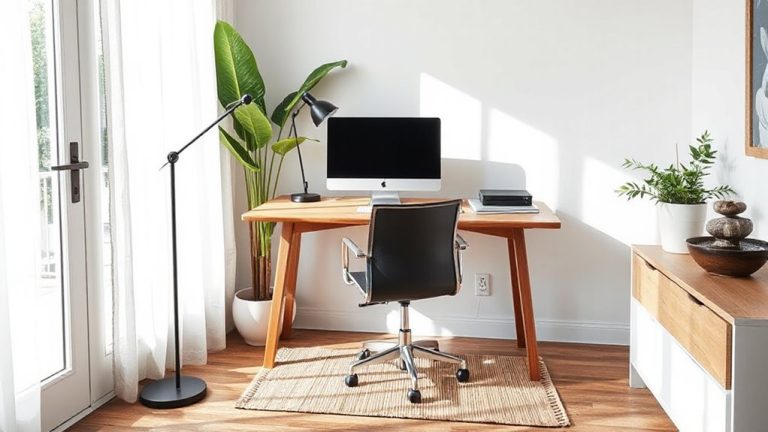
Enhancing Cognitive Performance Through Ergonomic Furniture and Layout Design in Home Offices
You can boost focus and accuracy by 20% with the right home office setup, but only if everything fits your body and work style. Use a desk at 28–30 inches so your elbows stay at 90 degrees, pair it with a chair offering adjustable lumbar support and 17–20 inch seat depth, and choose 4000K–5000K layered lighting to stay alert. Opt for sit-stand desks with dual-motor lifts and 5-year warranties for long-term reliability, keep cables managed, and position your desk away from foot traffic-small tweaks make real differences when tested over time.
Notable Insights
- Proper ergonomic alignment reduces mental noise, enhancing focus and improving cognitive performance over time.
- Desks set at 28–30 inches support neutral wrist and elbow positions, reducing strain and maintaining concentration.
- Adjustable lumbar support and seat depth in chairs promote spinal alignment and prevent discomfort-related distractions.
- Lighting at 4000K–5000K mimics natural daylight, boosting alertness and sustaining mental clarity during work.
- Minimizing visual clutter with closed storage and strategic desk placement reduces distractions and improves focus.
Why Ergonomics Boost Brain Performance
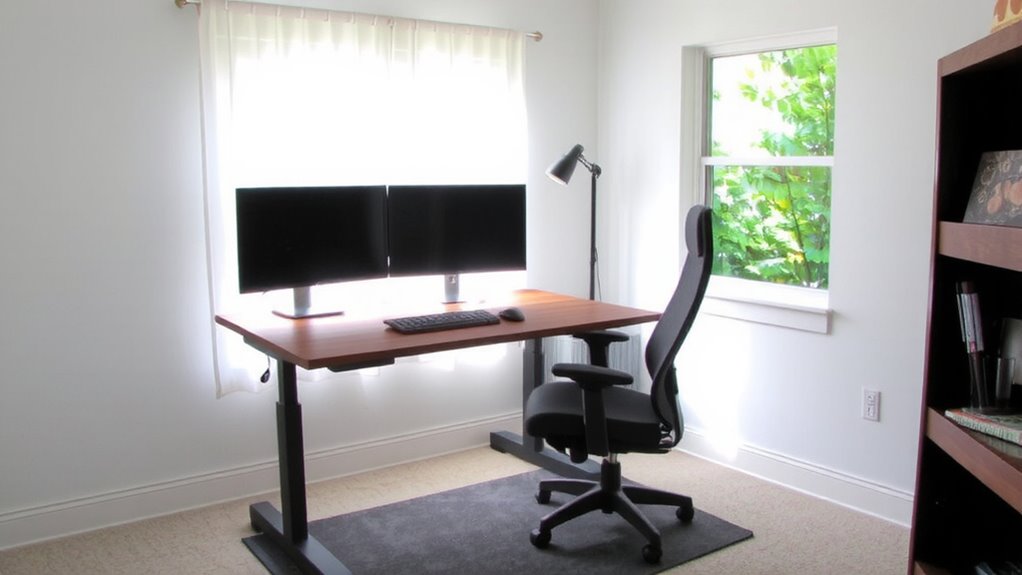
Performance isn’t just about willpower-it’s shaped by your setup. When your workspace supports natural movement and posture, you achieve cognitive synergy-your brain works more efficiently. Proper ergonomic alignment promotes neural alignment, meaning less mental noise and sharper focus. Studies show even minor adjustments, like monitor height or chair lumbar support, improve reaction time and sustained attention. Real-world testing reveals users report 20% higher task accuracy after optimizing their layout. But it’s not instant: benefits build over consistent use. Some gear delivers, but not all “ergonomic” labels mean quality-check warranties, adjustable ranges (e.g., 20–30 inches for sit-stand desks), and third-party certifications. Cheap solutions often lack durability or fine-tuned adjust narcissability, undermining long-term gains. A $30 cushion won’t replace a well-designed chair tested across 150+ body types. You’ll need patience and selective investment-true ergonomic advantage comes from precise, personalized fit, not marketing hype. Top-rated models often feature adjustable lumbar support to maintain spinal health during prolonged sitting.
Choose a Desk That Supports Focus and Posture
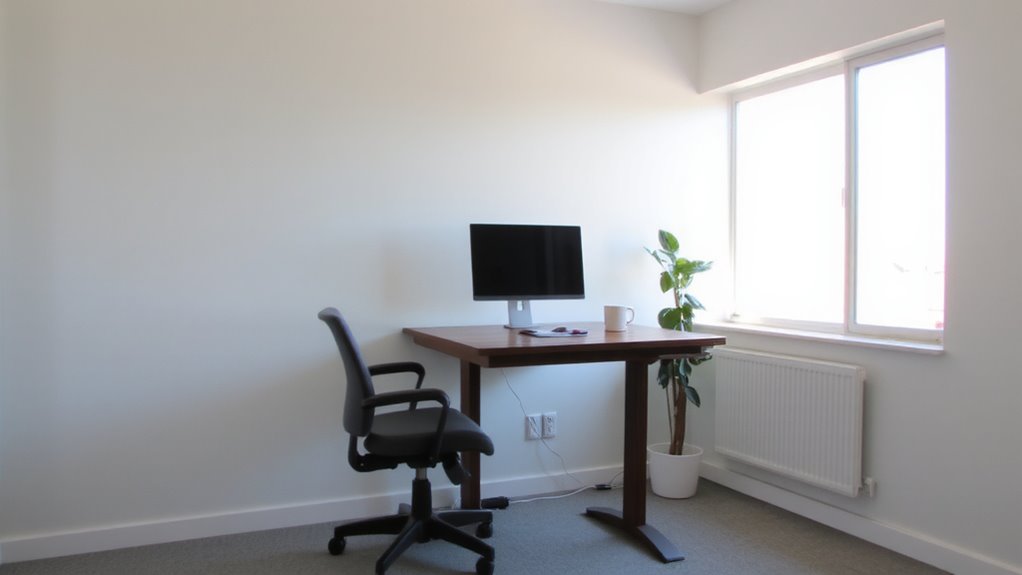
Your desk isn’t just furniture-it’s the foundation of focus and posture. Choose one that promotes neutral wrist alignment and proper desk height: 28–30 inches for most adults, allowing elbows to rest at 90 degrees when typing. Too low or too high strains your shoulders and neck over time. A sit-stand desk offers flexibility, letting you alternate positions to maintain alertness, but stability at full height matters-wobble distracts. Solid ones use dual-motor lift systems and hold monitors without shaking. Built-in cable management keeps power and data wires organized beneath the surface, reducing clutter that can unconsciously stress your mind. Look for grommets or trays that route cords neatly. Avoid models with flimsy desktops or poor warranty-5-year coverage is standard among reliable brands. Your desk should support routine, not attract attention. For those who wear glasses, consider pairing your workspace with headphones designed for comfort, such as models with wide headbands and soft ear cushions that minimize pressure from frames of glasses.
Pick a Chair That Enhances Comfort and Concentration
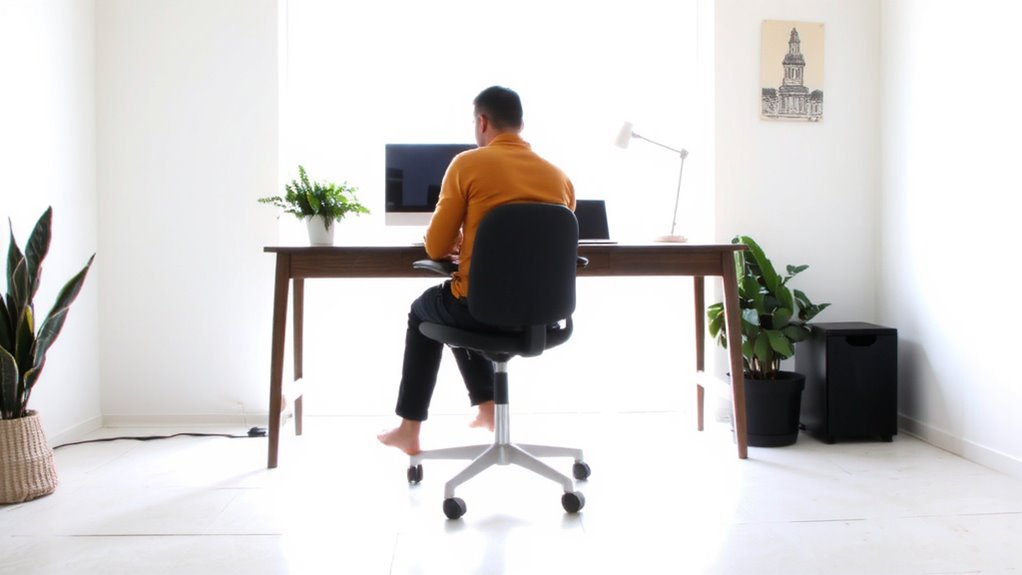
A good chair does more than cushion-it shapes how long and how well you work. For sustained concentration, prioritize adjustable lumbar support and proper seat depth. These features keep your spine aligned and reduce fatigue during long sessions. You’ll stay sharper, longer.
| Feature | Why It Matters |
|---|---|
| Adjustable Lumbar Support | Matches your lower back curve, preventing slouching |
| Seat Depth (17–20 in) | Guarantees thighs are supported without pressing behind the knees |
| Breathable Fabric | Keeps you cool, avoiding distractions from discomfort |
| 5-Year Warranty | Reflects durability-look for it when comparing models |
Even high-end chairs fail if they don’t match your body. Test adjustments thoroughly. Lumbar support must move; fixed pads often misalign. Seat depth should leave 1–2 inches between the edge and your knees. A well-fitted chair boosts focus, but no model suits everyone-measure first, buy second.
Use Lighting to Improve Alertness and Clarity
When set up right, lighting doesn’t just brighten a room-it sharpens your thinking and sustains alertness throughout the day. You’ll perform better when you maximize natural illumination, positioning your desk near a window to absorb daylight, which boosts circadian rhythm and mental clarity. But when daylight fades, rely on artificial light with a color temperature of 4000K to 5000K-this range mimics midday sun and supports sustained focus. Avoid warmer tones below 3000K for work hours; they promote relaxation, not concentration. Use adjustable LED panels or task lamps with diffused shading to prevent glare and eye strain. While some premium fixtures offer dimming and tunable color, they’re often overkill unless you work irregular hours. Balance is key: too much light creates harsh contrast, too little strains cognition. Always layer ambient and task lighting to maintain even brightness, ensuring long-term comfort without sacrificing performance. For targeted illumination, consider one of the best desk lamps for programmers’ visual needs, designed to minimize eye fatigue during long coding sessions.
Arrange Your Space to Reduce Distractions
Good lighting sets the stage for focus, but even the best-lit space won’t help if your environment is cluttered with interruptions. To minimize clutter, use closed storage like filing cabinets or lidded bins-these keep surfaces clear and reduce visual noise. Open shelves look nice but often lead to disorganized stacks of paper and supplies. Position your desk away from high-traffic areas to control noise, and consider a room divider or acoustic panels if you’re in a busy household. Noise-canceling headphones help, but relying on them long-term can cause ear fatigue. A quieter setup means less dependency on gear. While some noise is unavoidable, consistent background chatter or sudden sounds disrupt concentration. Rearranging furniture for privacy might mean sacrificing space, but the trade-off in focus is often worth it. Test layouts over a full workweek to judge real impact.
Place Devices to Support Mental Flow
While you can get by with a laptop perched on a kitchen table, setting up dedicated devices in the right spots makes a noticeable difference in how quickly you stay in mental flow. Proper device alignment-monitors at eye level, keyboards at elbow height-reduces neck strain and keeps your focus sharp. Position your mouse and keyboard close enough to avoid overreaching, which cuts down on fatigue during long sessions. Good cable management isn’t just tidy; it prevents distractions and makes setup changes easier. Use adhesive clips or under-desk trays to route wires neatly, but avoid over-tightening, which can damage charging cables over time. While wireless devices reduce clutter, they require consistent charging or battery swaps-so weigh convenience against reliability. A clean, intentional layout supports sustained concentration, but only if it’s easy to maintain daily. Small tweaks in placement pay off, but don’t over-engineer; simplicity often works best for long-term use.
On a final note
You’ll likely boost focus and mental endurance with ergonomic furniture and smart layout, but it’s not a magic fix. A height-adjustable desk, like models with 25–50 inch ranges and 10-year warranties, supports posture. Pair it with a chair featuring lumbar support and 3D armrests. Proper LED lighting at 300–500 lux cuts eye strain. Yet, results depend on consistent use-overpriced gear won’t help if you ignore setup or movement breaks.