The Role of Personal Space in Promoting Flow State Conditions at Home
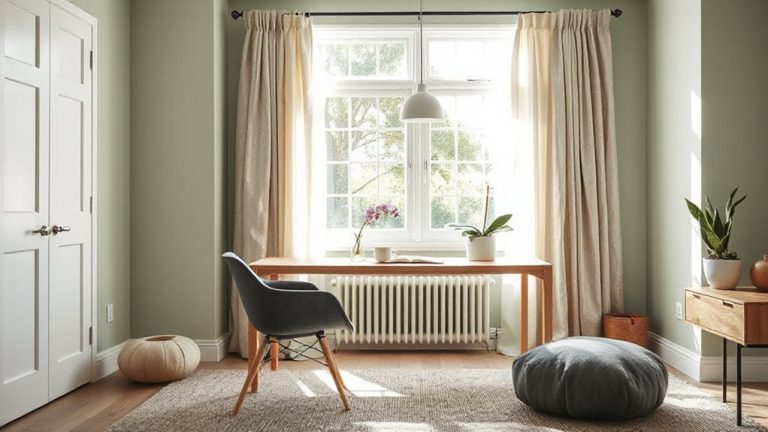
Your personal space shapes focus more than gear ever will-set your chair to keep hips at 90 degrees and your monitor’s top at eye level to stay in flow longer. Use 4000K LED lights near a window, silence non-essential notifications, and clear everything but essentials from your desk. A clean, quiet, well-lit zone helps you drop in fast-but only if you protect it daily with habits like time-blocking. Small upgrades help, but consistency decides results. You’ll see how deliberate design compounds when the right cues align.
Notable Insights
- A dedicated personal workspace minimizes distractions, enabling sustained focus and easier entry into flow states.
- Ergonomic setup with proper chair and monitor positioning supports physical comfort, reducing interruptions during deep work.
- Controlled lighting, especially natural light and 4000K LEDs, enhances alertness and aligns with circadian rhythms for optimal concentration.
- Decluttered surfaces and intentional organization reduce cognitive load, fostering a mentally clear environment conducive to flow.
- Personalized environmental cues like specific scents, sounds, or lighting signals train the brain to associate the space with focused work.
Design a Workspace That Invites Flow
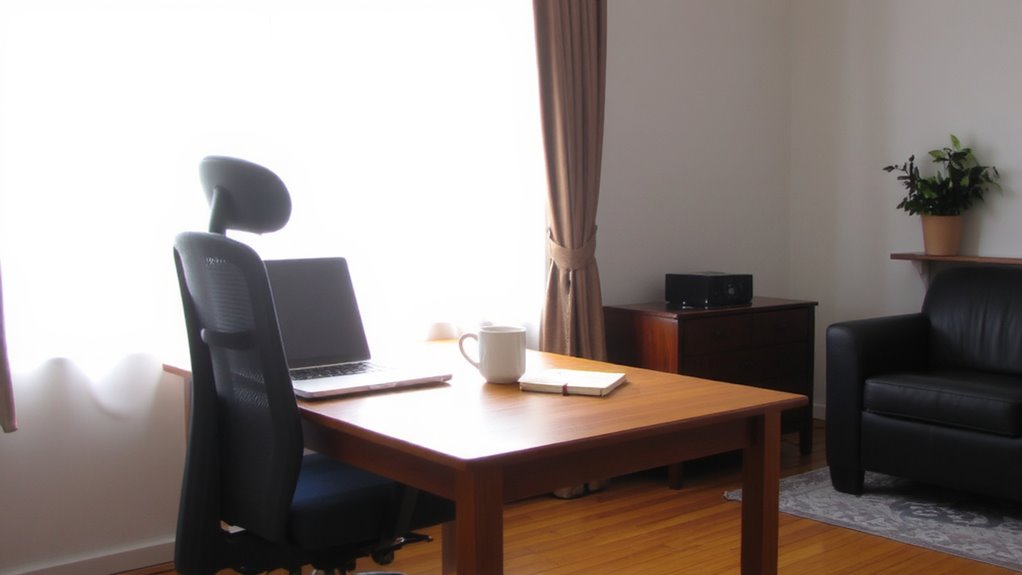
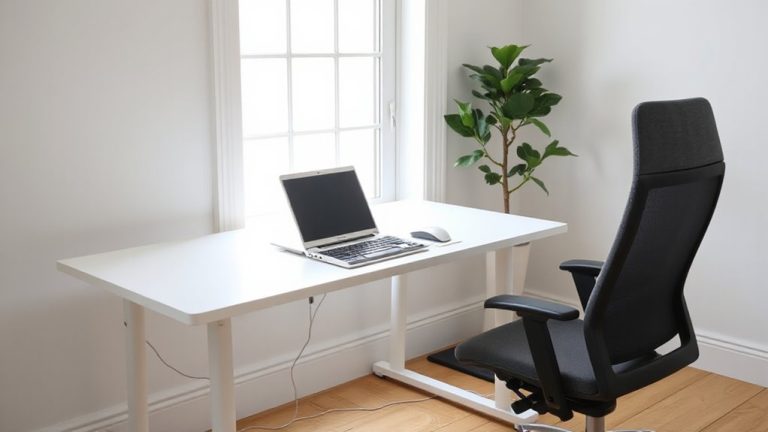
While it’s tempting to think any corner will do, shaping a workspace that truly supports flow means prioritizing both function and focus. You need ergonomic alignment-your chair should support a 90-degree hip angle, and your monitor top should sit at or slightly below eye level to prevent neck strain. A desk with at least 24 inches of depth gives room for movement without crowding. Pair this with aesthetic harmony: neutral colors and minimal visual clutter help sustain concentration. You don’t need expensive gear-a $150 mesh-back chair often outperforms pricier models in long-term comfort tests-but avoid flimsy stands that wobble. Real-world use shows adjustable sit-stand desks improve posture over months, though they cost more and take longer to assemble. Balance is key: prioritize build quality and adjustability over looks, because lasting flow depends on both comfort and consistency. For those seeking optimal setups, consider exploring the best standing desks for your home office.
Cut Out Flow-Killing Distractions
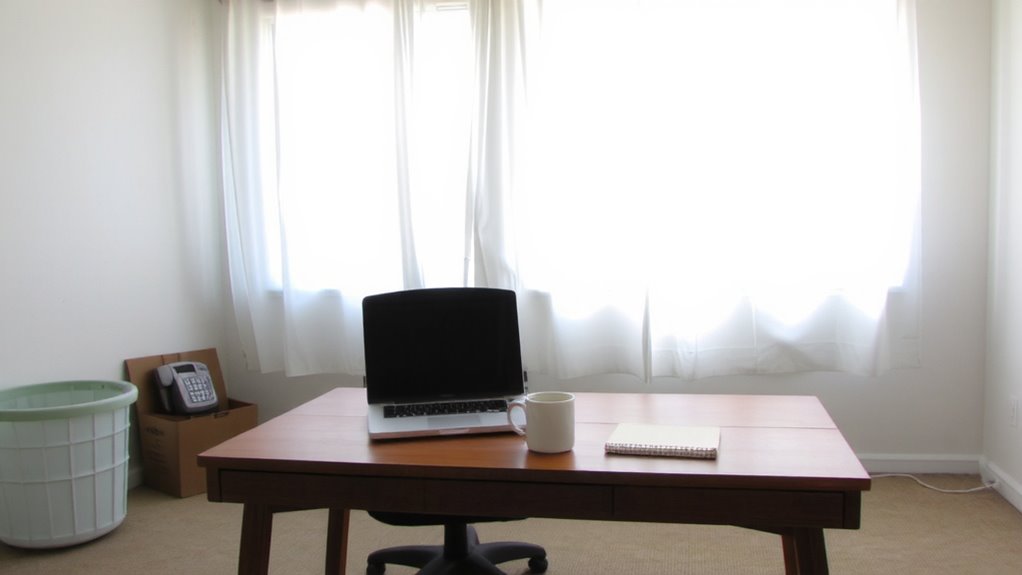
A flow-friendly workspace starts with eliminating distractions that fracture focus, and the most effective fix often isn’t a gadget-it’s a habit. You’ll want to silence digital interruptions by turning off non-essential notifications and scheduling email checks-constant pings erode concentration and deepen mental fatigue. Studies show it takes over 20 minutes to regain deep focus after a single disruption. Use built-in tools like phone Do Not Disturb or browser blockers like Freedom, but don’t rely on them alone-pair them with time-blocking to protect focus. Noise-canceling headphones help, but only if your environment stays predictably quiet. Be honest about what habits actually work for you, not just what sounds ideal. Automation helps, but over-investing in apps or gear can backfire if it becomes maintenance work. The real win is creating rules that stick-simple, repeatable, and enforced.
Light and Sound for Laser Focus
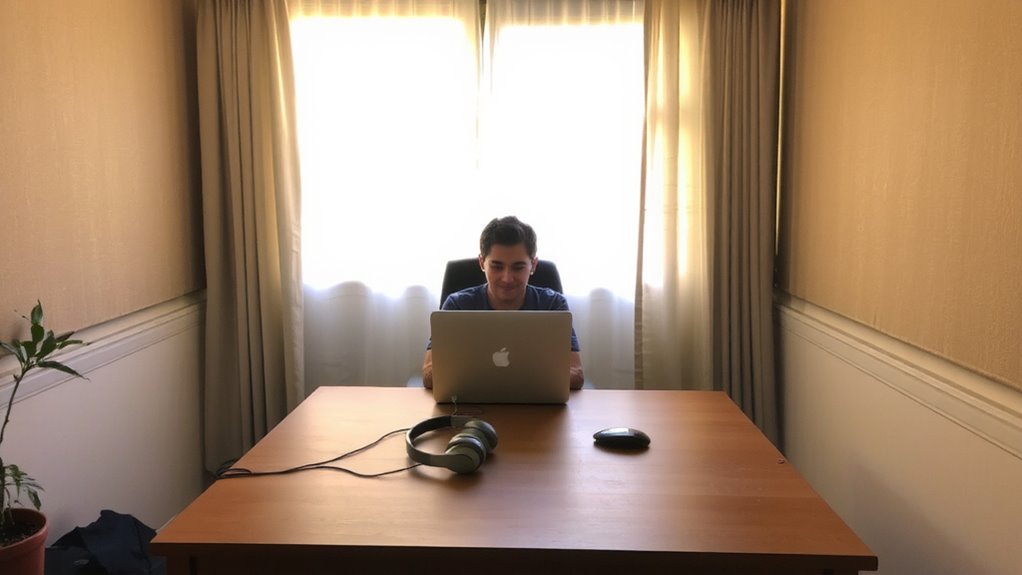
How well is your space supporting focus when the lights dim or background noise shifts? For laser focus, prioritize natural lighting during daytime hours-position your desk near a window to sync with circadian rhythms, reducing eye strain and boosting alertness. When daylight fades, switch to a 4000K color temperature LED task light; it mimics natural lighting well without glare. Avoid overhead fluorescents-they’re too harsh. For ambient sound, use a white noise machine or app with consistent, low-frequency tones to mask disruptions. Some find brown noise improves concentration better than white. Wired over-ear headphones with passive isolation work reliably, but true noise cancellation varies by model and may cause fatigue over time. Don’t overspend-many $30–$50 tools perform nearly as well as premium ones in controlled tests. Balance effectiveness, comfort, and cost. Consider a high-quality best desk lamps option designed for prolonged task lighting.
Declutter So Your Brain Can Focus
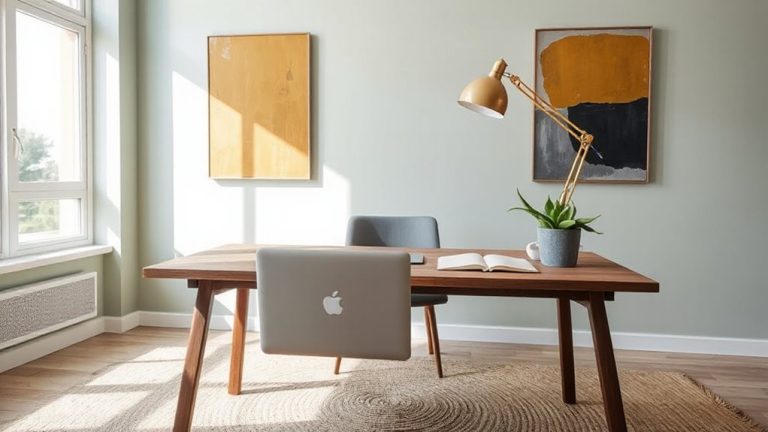
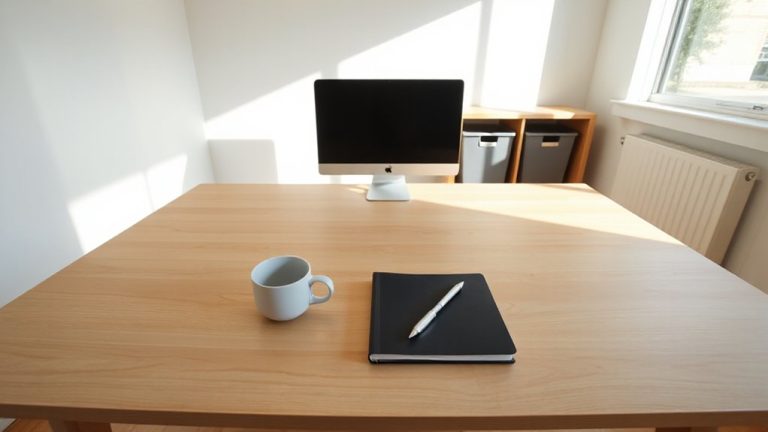
When your workspace is overloaded with unnecessary items, your brain spends energy managing visual noise instead of focusing on the task at hand-so start by removing everything from your desk that doesn’t serve an immediate function. You’ll notice a real improvement in mental clarity and cognitive ease within minutes. A clean surface reduces distractions, letting you plunge into work faster and stay in flow longer. But don’t go overboard-minimalism isn’t required, just intentionality. Keep only tools you use daily, like your notebook, laptop, and pen holder. Avoid decorative items or unused gadgets that clutter sightlines. While some people benefit from an empty desk, others need a photo or plant for comfort-just guarantee those items are deliberate, not defaults. Test a fully cleared space first, then reintroduce only what supports focus. It’s not about perfection-it’s about function. You’ll find cognitive ease grows when your environment reflects purpose, not habit. A well-chosen desk organizer can help maintain this intentional setup by keeping essential tools neatly in place.
Personalize Your Space to Trigger Flow Faster
Your environment isn’t just background-it’s a cueing system for your brain. Personalizing your space with mindset cues and sensory triggers can speed up your entry into flow. A photo of a past success, a quote that grounds you, or even a specific lamp you only turn on when focusing-these aren’t decorations, they’re signals. They tell your brain: it’s time to engage. Use consistent sensory triggers like a scent (e.g., a pine essential oil diffuser) or background sound (binaural beats at 10 Hz) tested to reduce distractions. But be selective-too many stimuli create clutter, undermining the calm focus you need. Choose items with purpose, not flair. A $20 desk lamp with warm, dimmable light may outperform an expensive smart setup if it reliably cues concentration. The goal isn’t a styled workspace-it’s a functional trigger system built over time, tested for real results.
Match Your Space to Your Work Type
While one workspace might work for answering emails, it won’t necessarily suit deep creative work-matching your environment to your task type is essential for consistent flow. You need clear task alignment to avoid mental friction. Spatial zoning helps: designate one area for focused work, another for administrative tasks, and a separate spot for brainstorming or rest. A standing desk with a monitor arm supports quick shifts between sitting and standing, but only if the zone allows movement. Use room dividers or shelving units to define spaces without permanent changes. Lighting matters, too-tune brightness and color temperature to the task. Noise control, like acoustic panels or quiet hours, boosts concentration. But remember, rigid setups can backfire if they’re too inflexible. Balance structure with adaptability. Measure your space, test layouts for a week, and adjust. Flow isn’t about perfection-it’s about smart, functional fits that suit how you actually work.
Why Your Environment Is the First Step to Flow
A well-designed environment isn’t the backdrop to flow-it’s the trigger. You prime your brain for focus just by entering a space built for deep work. That’s mindset priming: your surroundings signal it’s time to perform. Ritual cues like a dedicated desk lamp, noise-canceling headphones, or even a consistent chair height reinforce this shift. These aren’t luxuries-they’re functional tools tested in real-world setups to reduce distraction. A standing desk with a height range of 25–52 inches fits most body types, but stability at full extension varies by model. Look for steel frames and three-year warranties. Yet, high-end gear won’t fix poor lighting or clutter. Position task lights to avoid glare, and keep cables managed with simple clips-not smart bins that fail over time. Your space shapes attention before you even begin. Get it right, and flow follows.
On a final note
You’ll boost focus by designing a dedicated workspace, but it’s no magic fix. Solid lighting (500–800 lux), noise control (like foam panels or $100–$150 active noise-canceling headphones), and a clutter-free desk help trigger flow-backed by studies on attention restoration. Yet results vary: introverts may gain more, and small spaces limit gear. A standing desk or monitor riser can help, but don’t overspend-test layout changes first. Warranties matter for long-term use, but behavior shapes outcomes more than tools.