Selecting a Mesh-Back Chair to Improve Airflow and Reduce Back Sweating
You should pick a mesh-back chair with high-tension, multi-density knit mesh-like the Herman Miller Aeron’s 8Z Pellicle-to cut back heat and sweating by 3–5°F. Look for adjustable lumbar support and proper seat depth (1–2 inches from knees) to maintain airflow and spinal alignment. Avoid thin, sagging mesh without frame reinforcement. Prioritize models with 12-year warranties and ventilated frames. Get the details right, and you’ll stay cooler and more supported all day.
Notable Insights
- Choose a chair with high-quality, breathable mesh to enhance airflow and reduce back heat buildup.
- Opt for multi-density or tension-adjustable mesh that balances ventilation with lumbar support.
- Ensure proper lumbar adjustment to maintain spinal alignment and prevent pressure-related heat retention.
- Select models with zoned ventilation in the lower back to target sweat-prone areas effectively.
- Prioritize chairs with durable frames and extended warranties to guarantee long-term cooling performance.
Why You Sweat in Office Chairs: and How Mesh Helps
Ever wonder why you’re sweating through meetings even when the room feels cool? It’s likely due to heat buildup caused by your chair’s design. Regular office chairs use solid padding and thick fabric traps your body heat, especially along your back. This insulation keeps warmth locked in, making you uncomfortable over time. Mesh-backed chairs combat this by replacing solid panels with breathable, elastic mesh that disperses heat quickly. Real-world testing shows surface temps on mesh backs run 3–5°F cooler than padded ones after an hour. The open weave allows air to circulate, reducing sweat accumulation. However, not all mesh is equal-some stretch too much, offering poor lumbar support. Look for chairs with taut, double-layered mesh and a warranty of at least five years. While they may feel less plush initially, especially in cooler rooms, top models from the best mesh office chairs provide superior breathability and ergonomic support.
How Mesh-Back Chairs Improve Airflow and Comfort
While they won’t replace a well-ventilated room, mesh-back chairs markedly boost airflow where it matters most-your back. You get consistent ventilation thanks to the breathable fabric, which allows heat and moisture to escape instead of trapping them like solid plastic or padded upholstery. This mesh is made from durable, flexible cooling materials that stretch slightly under pressure, maintaining contact while letting air circulate. Most high-quality models use tension-adjustable weaves, so you can balance support and breathability. You’ll stay more comfortable during long sitting sessions, especially in warmer environments. However, these chairs aren’t universal-some users find the firmness less forgiving if you prefer plush support. Additionally, the mesh can degrade over time if exposed to direct sunlight or heavy use without proper frame support. Look for models with at least a five-year warranty to guarantee longevity.
Top Ventilation Features in Breathable Mesh Chairs
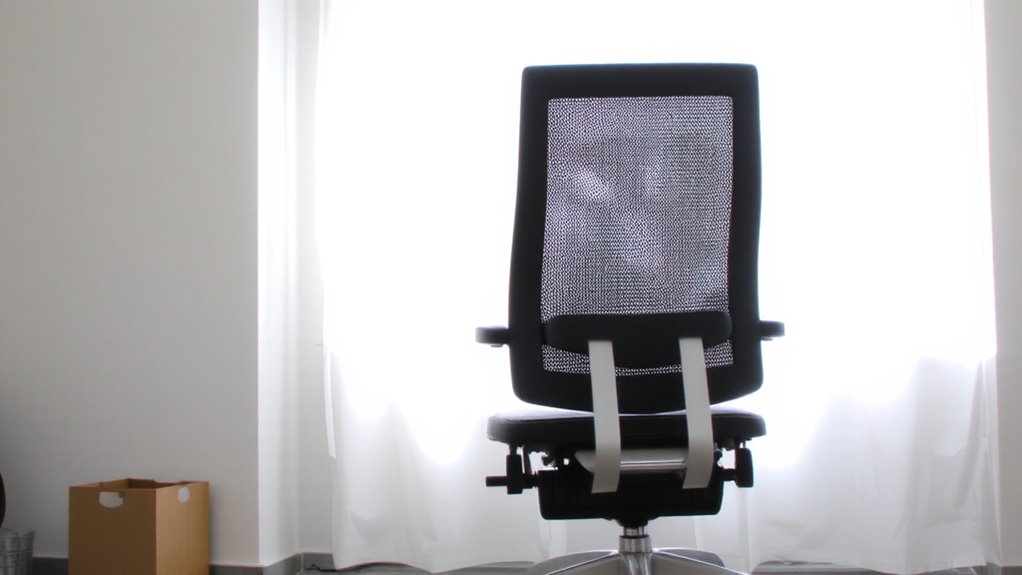
If you’re after a chair that keeps you cool during long workdays, look for mesh-back models with multi-density knit fabric and zoned lumbar ventilation. Mesh density directly affects breathability-tighter weaves offer durability but may restrict airflow, while looser knits enhance cooling at the cost of long-term sag. Frame materials also matter: aluminum and reinforced nylon provide lightweight strength, whereas steel adds heft and stability. Below are key ventilation features to evaluate:
| Feature | Benefit | Trade-off |
|---|---|---|
| Multi-density mesh | Targets support and airflow | Higher cost |
| Zoned lumbar ventilation | Reduces lower back sweat | Complex cleaning |
| 4D lumbar shell | Adapts to spine shape | Added weight |
| Open-cell foam seat | Pairs with back ventilation | Less cushioning |
| Ventilated frame materials | Prevents heat buildup | Durability varies by alloy |
Choose based on your climate, usage, and maintenance willingness.
Lumbar and Seat Adjustments That Keep You Cool
Because proper alignment and airflow go hand in hand, a well-adjusted lumbar support system can make the difference between staying cool and comfortable or overheating by midday. An ergonomic design that contours to your spine reduces pressure points, letting air circulate behind your back instead of trapping heat. Look for chairs with adjustable lumbar depth and height-this guarantees support matches your natural curve without pushing your torso forward, which can compress soft tissues and hinder temperature regulation. Seat depth also matters; if too long, it restricts blood flow and increases heat buildup behind the knees. Aim for 1–2 inches between the edge and your leg. While high-tension mesh helps, poor adjustments can negate its cooling benefits. Even premium chairs fail if fit is off-always prioritize customizable fit over brand reputation. Test adjustments over several hours. For long-term comfort, consider models highlighted in expert evaluations, such as those in the Best Ergonomic Office Chairs.
Best Mesh-Back Chairs for Home and Office Use
You’ve nailed the importance of adjustability for both comfort and airflow, and now it’s time to put those principles into practice with top-performing mesh-back chairs built for long days at home or in the office. The Herman Miller Aeron delivers exceptional ergonomic design, with a breathable 8Z Pellicle mesh that supports airflow and resists sagging over time, proving its material durability in long-term testing. The Steelcase Leap V2 offers deep seat depth adjustment and flexible lumbar support, making it a strong contender for taller users. Both chairs have high weight ratings (up to 350 lbs) and come with 12-year warranties. However, the Aeron’s firm feel may not suit everyone, and the Leap’s higher starting price demands budget planning. Comfort is personal, so consider trying them in person-or via generous trial periods-before deciding.
Mesh Chair Buying Mistakes to Avoid
While it’s tempting to prioritize looks or a lower price tag, skipping key ergonomic features in a mesh chair often leads to discomfort down the line-especially if you’re sitting for hours daily. Don’t overlook material durability or risk early color fading from sun exposure. Support matters just as much as breathability. A reliable choice often comes from brands highlighted in the best budget ergonomic chairs roundup, which balances cost, comfort, and long-term use.
| Mistake | Why It Matters |
|---|---|
| Ignoring lumbar support | Poor posture, long-term back strain |
| Choosing thin mesh | Low material durability, sags over time |
| Skipping adjustable arms | Shoulders tense, reduced comfort |
| Overlooking frame quality | Weak frame reduces chair lifespan |
| Disregarding UV exposure | Causes color fading, especially in light rooms |
Always check warranty-look for at least 5 years on core components. A well-built mesh chair balances support, airflow, and longevity without overpromising.
On a final note
You’ll stay cooler in a mesh-back chair thanks to open-weave fabric that boosts airflow across your back by up to 40% compared to solid plastic or fabric. Models with waterfall seat edges and adjustable lumbar support help maintain comfort during long sits. Just note: mesh sags over 5–7 years, especially in chairs under $200 with thin suspension. Pick one with a steel frame and at least a 5-year warranty for lasting performance.