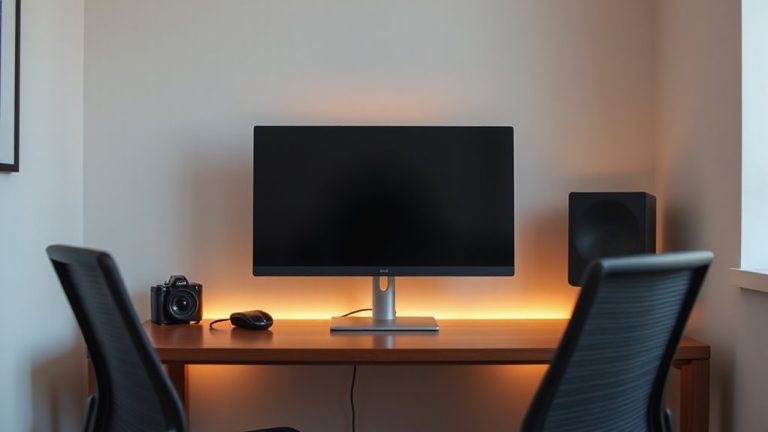
Creating an Inviting Home Office Space to Combat Isolation Effects
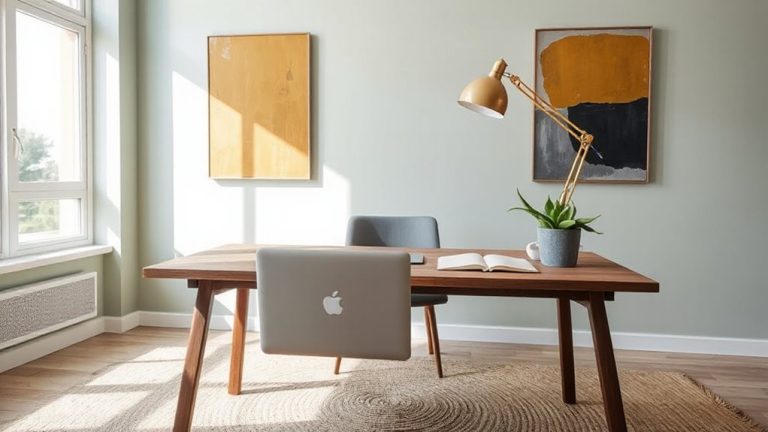
You can reduce isolation by designing a home office with more natural light-position your desk near a window and use sheer blinds to avoid glare. Add a 5000K daylight LED task light for consistent brightness. Include one or two personal items, like a travel trinket or favorite notebook, to ground the space in meaning. Use a snake plant or pothos in a ceramic pot to bring calm, low-maintenance nature indoors. Choose a solid wood desk and pair it with an ergonomic chair that has adjustable armrests and lumbar support. A height-adjustable desk helps you switch between sitting and standing, boosting circulation-just make sure it has a solid warranty and test it for 30 days. Keep sightlines open with a low divider or area rug to define the zone without closing it off. These changes help you feel more connected and alert-but balance is key: too much decor or lighting can backfire. Small, tested upgrades often deliver the clearest results. You’ll find better ways to personalize your flow with a few targeted tweaks.
Notable Insights
- Position your desk near a window to maximize natural light and strengthen circadian rhythms.
- Use sheer curtains and adjustable daylight-balanced task lighting to reduce glare and boost alertness.
- Place meaningful personal items like a favorite mug or travel souvenir to foster emotional connection.
- Add low-maintenance plants and natural materials such as wood or stone to create calming warmth.
- Design an open, movement-friendly zone with flexible furniture to support focus and reduce isolation.
Light Your Space to Combat Isolation and Stay Alert
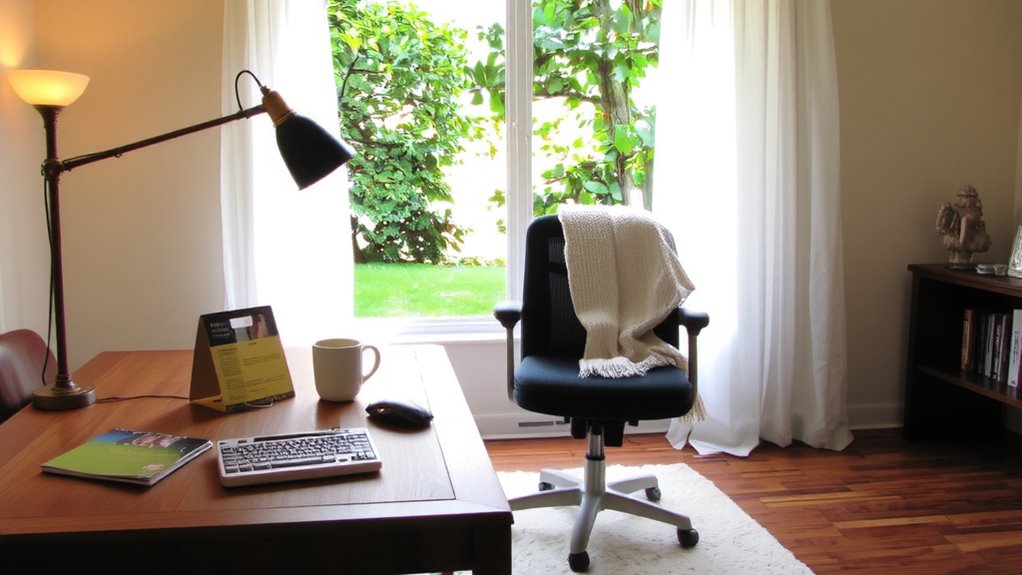
Natural light does more than brighten a room-it shapes your focus and mood. Positioning your desk near a window helps you stay alert and connected to the outside world, reducing the sense of isolation. To maximize brightness, use sheer curtains or blinds that let sunlight in without glare. This cuts down on eye strain during long work sessions. You should also angle your screen to reduce shadows and avoid harsh contrasts that tire your eyes. Adding a daylight-balanced LED task light (around 5000K) gives consistent illumination when clouds roll in. While natural light is ideal, relying solely on it creates uneven lighting, especially in winter. Pairing it with adjustable fixtures offers control but avoid overly bright overheads-they can wash out screens. Test lighting at different times of day. A three-year warranty on LED bulbs guarantees long-term reliability without frequent replacements. For targeted brightness and ergonomic design, consider one of the best desk lamps for remote work.
Make Your Desk Feel Like *You* With Meaningful Objects
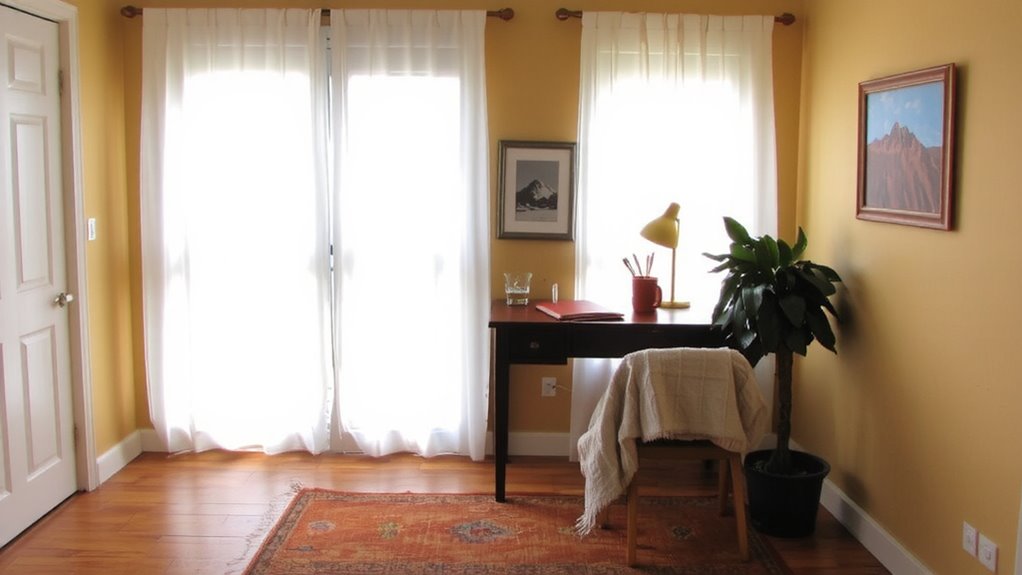
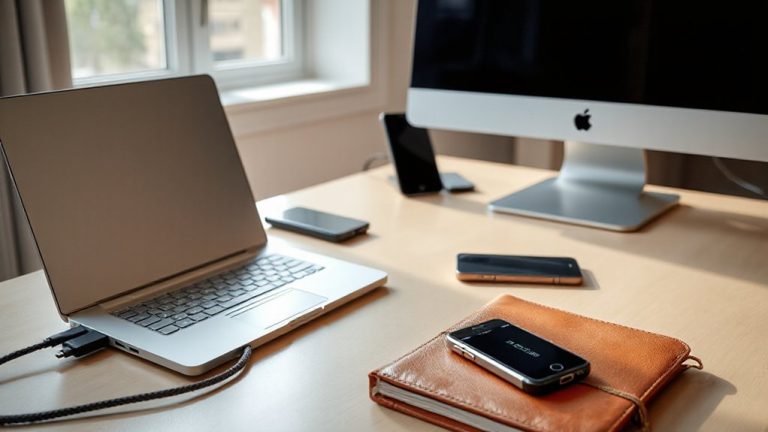
A well-chosen item or two on your desk can make a real difference in how connected you feel to your workspace-just don’t turn it into a cluttered shelf. Personal artifacts like a favorite pen, a worn notebook, or a small photo remind you of who you are beyond work. Sentimental decor-perhaps a handmade mug or a trinket from a meaningful trip-adds warmth without distracting. These objects anchor you emotionally, especially during long solo hours. But keep surfaces mostly clear; clutter increases mental load. One or two items that spark identity or joy are enough. Test placement: if it pulls focus during calls or slows your workflow, rethink it. Quality matters less than significance here-this isn’t about price or design trends. It’s about creating subtle, personal touchpoints that make your desk feel like *you*, not a generic office setup.
Bring Nature Indoors for Calm and Emotional Connection
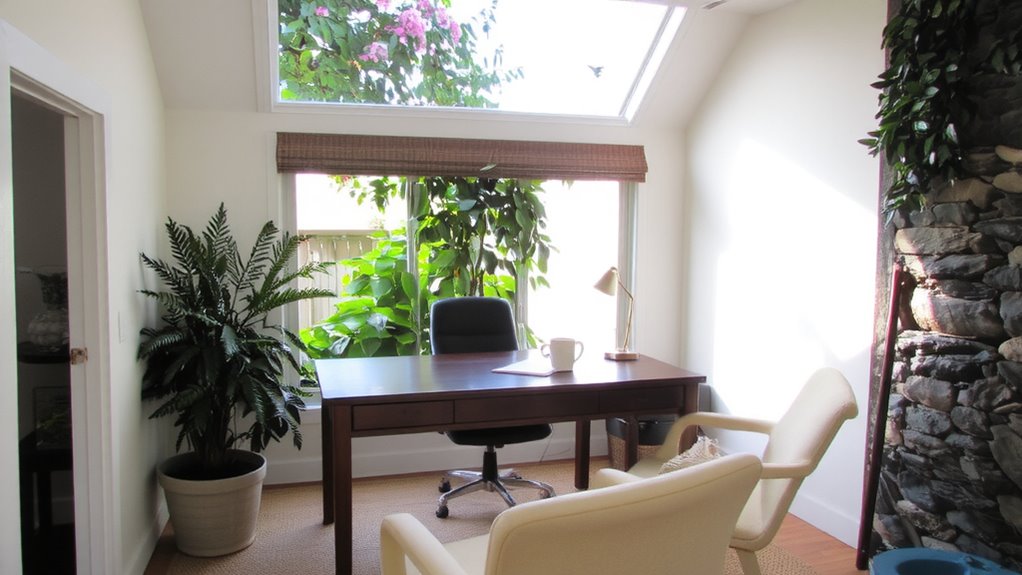
You’ve made your desk feel like part of your identity with a few carefully chosen personal items-now go further by weaving in elements that engage your senses and steady your mood. Introducing indoor plants like snake or pothos varieties can lower stress and modestly improve air quality, but don’t expect dramatic health benefits-consistent care matters more than the number of plants. Pair them with natural materials like solid wood desks, stone coasters, or jute rugs to deepen a sense of calm; their textures and subtle variations feel grounding over long work hours. Just make certain materials are low-VOC and sustainably sourced to avoid off-gassing or environmental harm. While greenery and organic textures boost emotional connection, overcrowding your space can create clutter. Choose hardy, low-light plants and durable finishes that match your routine. Not every plant thrives in every space-monitor light and humidity realistically. For those seeking low-maintenance options, consider some of the best office plants that thrive in typical workspace conditions.
Define a Work Zone That Balances Focus and Openness
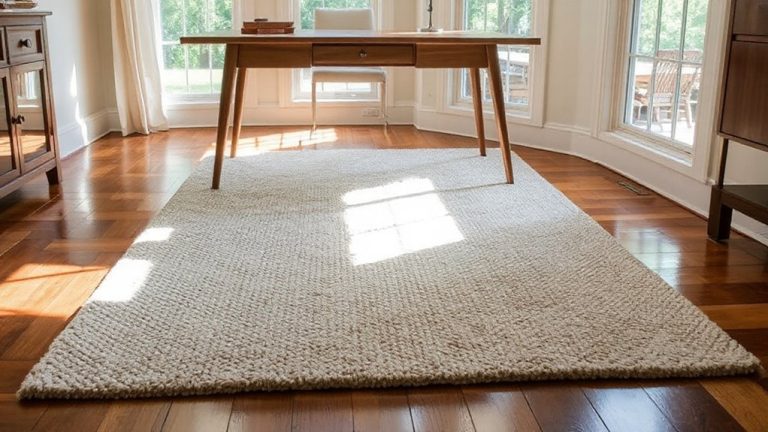
While carving out a dedicated work zone at home, aim to strike a clear balance between focus and openness-one that keeps distractions low without making the space feel closed off or isolating. Establishing boundaries clarity helps define where work begins and ends, using area rugs, shelves, or low dividers to mark the zone without blocking light or movement. At the same time, prioritize zone flexibility-choose slim, mobile furniture like rolling carts or foldable desks that allow quick reconfiguration. Open-backed stools or transparent chair designs maintain visual flow, helping you stay connected to your home environment. Avoid permanent walls or heavy enclosures unless noise is a major issue, as they can deepen feelings of separation. Natural sightlines to shared areas support both concentration and social awareness, making the space feel integrated yet intentional. A well-chosen desk can enhance both functionality and comfort, so consider one of the top-rated home office desks when furnishing your space.
Arrange Your Chair and Desk for Movement and Mood Shifts
Since sitting in the same position for hours can drain focus and strain your back, setting up your chair and desk to support movement and mood shifts isn’t just comfortable-it’s essential for sustained productivity. Choose a chair with proper ergonomic support, like adjustable armrests, lumbar padding, and seat depth, to prevent long-term discomfort. Pair it with a height-adjustable desk that lets you shift between sitting and standing, promoting dynamic posture throughout the day. Small movements matter-rocking slightly or shifting weight activates muscles and improves circulation. While sit-stand desks improve engagement, they can be pricey and take time to adjust. Test models with a 30-day return policy and look for solid warranties. Remember, even the best gear won’t fix poor habits-set reminders to move every 30 minutes for real impact.
On a final note
You’ll likely feel more focused and less isolated by optimizing your home office, but results depend on consistent use. Position task lighting at a 30-degree angle to reduce glare, and pick a desk with at least 30 inches of depth for flexibility. Adding real plants improves air quality and mood, though they need weekly care. Ergonomic chairs help posture, but even high-end models won’t fix poor setup. Test setups over two weeks before finalizing.