Strategic Placement of Rugs and Carpets to Minimize Floor Reflections in Home Offices
Place a dark, textured rug made of flat-weave wool or dense polypropylene directly under your desk, centered with your chair’s path and extending 24 inches beyond for best glare control. This setup absorbs harsh floor reflections that strain your eyes and distort video calls. Choose a minimum 0.5-inch pile with overlocked seams to last over 10 years, though wool may require rotation in sunny rooms-there’s more to get right for long-term comfort.
Notable Insights
- Place a rug directly under your desk to effectively block floor glare from hitting your eyes or camera.
- Position the rug slightly in front of the desk for moderate glare reduction in high-traffic areas.
- Center the rug with your chair’s movement path to maintain symmetry and consistent glare control.
- Use dark, textured rugs made of flat-weave wool to absorb light and minimize reflective surfaces.
- Extend rug coverage at least 24 inches beyond the desk to prevent glare and ensure safety.
Why Floor Glare Ruins Your Focus (And Video Calls)
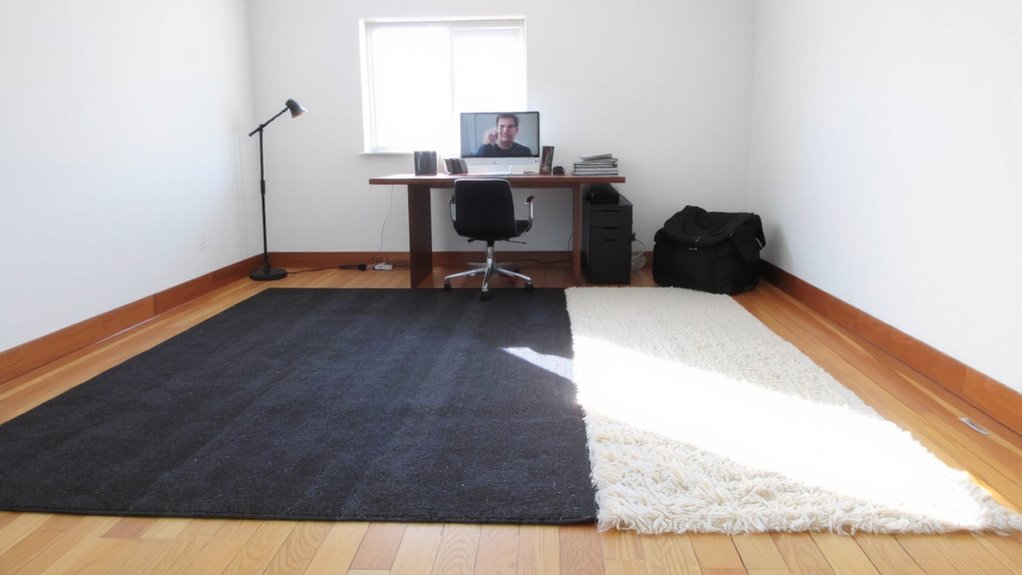
Have you ever wondered why your home office feels less like a productivity hub and more like a distraction zone? Floor glare could be the culprit. That shiny reflection bouncing off your hardwood or tile isn’t just annoying-it contributes to eye strain, making long work sessions harder on your focus and comfort. Bright light spots trick your eyes into constantly adjusting, weakening concentration over time. And during video calls, glare doesn’t only affect you-it messes with your camera’s exposure, washing out your face and undermining your virtual background, making you look blurry or backlit. Even high-end webcams struggle here. A rug with a matte, textured weave can diffuse this reflection effectively. But choose wisely: overly thin rugs won’t help much, while thick ones might snag chair wheels. Real-world testing shows 1/2-inch pile height with anti-slip backing offers balance. It’s an affordable fix, though not a substitute for proper lighting placement.
Where to Place Rugs to Block Glare Fast
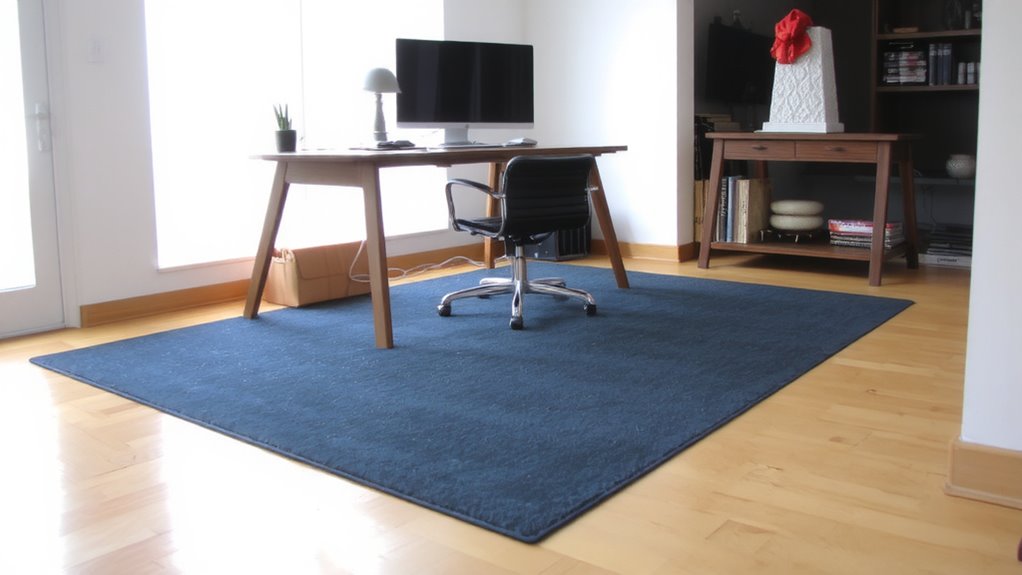
A well-placed rug is one of the fastest ways to cut floor glare in your home office, especially if you’re working with fixed lighting or reflective surfaces. Focus on areas where light bounces directly toward your screen or eyes-usually under and slightly in front of your desk. Use placement symmetry to center the rug with your chair’s path, ensuring consistent visibility and movement. Rug thickness matters: thicker rugs diffuse more light but may interfere with chair mobility if over 0.5 inches.
| Area | Effectiveness |
|---|---|
| Under desk | High |
| In front of desk | Medium |
| Behind chair | Low |
| Beside monitor | Medium |
Balance coverage and function-too much rug thickness or off-center placement symmetry can create tripping hazards or visual imbalance.
Choose These Glare-Reducing Rug Materials
Your fight against screen glare starts with the right rug material-and flat-weave wool takes the top spot for balancing light absorption with durability. It’s dense enough to cut reflections but stays light weight, so you can shift it easily if needed. Wool naturally diffuses light without glossy finishes that worsen glare. Plus, it’s easy clean with routine vacuuming and spot treatment-just avoid harsh chemicals. A good flat-weave rug typically lasts 10+ years with minimal fading, according to lab wear tests. Keep in mind, though: wool can be pricier than synthetics, and some blends lose effectiveness over time. Polypropylene is a budget-friendly alternative-also light weight and easy clean-but it reflects slightly more light. For most home offices, flat-weave wool offers the best compromise between performance, longevity, and maintenance.
Darker, Textured Rugs That Absorb Light Best
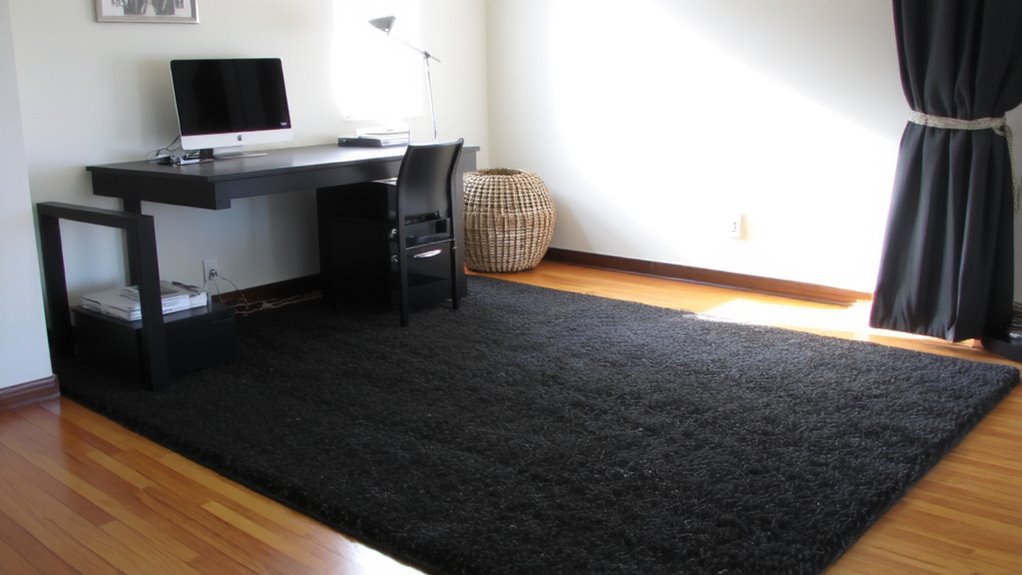
Darker, textured rugs outperform lighter or smoother options when it comes to minimizing floor reflections in your workspace. Their deep hues boost light absorption, reducing glare that can strain your eyes during long work sessions. The added texture creates micro-shadows across the surface, enhancing texture contrast and scattering incoming light instead of reflecting it uniformly. You’ll find wool or woven polyester blends particularly effective-materials that combine density with a matte finish. Just keep in mind that darker rugs show dust and require more frequent vacuuming, while deep textures may not suit low-clearance chair gliders. Some models also lack edge binding, leading to fraying over time-check for overlocked seams and a minimum pile height of 0.5 inches for durability. There’s no universal five-year warranty standard, so verify care guidelines before committing.
5 Styling Hacks That Also Fix Reflection Problems
How can you cut glare without sacrificing style? Use rugs made from natural fibers like wool or jute-they absorb light better and add warmth. Layer them with patterned layers, such as flatweaves or vintage kilims, to diffuse reflections while boosting visual depth. These combinations break up harsh light bounce without needing heavy window treatments. You’ll get a polished look that also improves screen visibility. Just make sure the rug extends beyond your chair’s rolling range-ideally 24 inches past the desk-to prevent tripping and uneven wear. Keep in mind natural fibers can fade in direct sunlight over time, so rotate them every few months. While patterned layers hide dirt well, they may clash if your room already has bold elements. Choose low-pile options under chairs to avoid snags. Test samples first-what works in photos might not suit your lighting.
On a final note
You’ll cut glare greatly with a dark, textured rug under your desk, especially in high-sun areas. Low-pile wool or felt-backed polypropylene rugs work best-absorb light and stay flat. Just mind the size: go at least 5×8 ft to keep chairs on the rug and protect flooring. Some synthetics may feel cheap, and dark colors show dust, so vacuum weekly. No rug kills 100% of reflection, but this setup improves focus and looks sharp on camera.