Light Pollution and Its Impact on Sleep Patterns When Working From Home
Working from home? Evening light from cool-white LEDs, screens, and streetlights can suppress melatonin and delay sleep. Blue-rich light tricks your body clock, especially if you lack morning sunlight. Use warm-dimmable bulbs and blackout curtains with a denier above 200 to block indoor and outdoor light. Lutron shades or floor-length, side-rail-backed curtains reduce light leaks. Pair with a contoured sleep mask for near-total darkness-comfort varies by fit. A dark, cool room supports deeper rest, but effectiveness depends on consistent nightly habits and shielding quality. Strong results require attention to both brightness and timing. You’ll see how to optimize every part of your space and routine for better alignment with your natural rhythm.
Notable Insights
- Working from home increases evening exposure to artificial light, disrupting circadian rhythms and delaying sleep onset.
- Blue-rich light from cool-white LEDs and screens suppresses melatonin, especially harmful after sunset.
- Using warm-dimmable bulbs and smart lighting in evening mode helps maintain natural melatonin production.
- Blackout curtains with high denier ratings and proper installation block outdoor light pollution, improving sleep quality.
- Combining sleep masks, mindfulness, and device-free routines supports circadian alignment despite indoor light exposure.
How Light Pollution Sabotages Your Sleep
What happens when your evening wind-down is quietly disrupted by the glow of streetlights or your own smart bulbs? You’re likely sacrificing sleep quality without realizing it. Light pollution-from outdoor fixtures or poorly timed indoor lighting-triggers circadian disruption, confusing your body’s natural rhythm. Blue-heavy LEDs and bright overheads in your home office may boost focus during work hours, but at night, they suppress melatonin, delaying sleep onset. Even dim light seeping under doors or pulsing from devices can fragment rest. To improve outcomes, use warm-dimmable bulbs and blackout curtains with a denier rating above 200. However, not all smart bulbs offer true night modes-some still emit residual blue light. Reliable models list spectral data and support automation via apps, but require setup effort. Results vary by room layout and individual sensitivity, so test changes over two weeks for measurable sleep improvements.
The Science Behind Light and Your Body Clock
Why does flipping on a lamp at night feel like a harmless act when it can so easily derail your sleep? Because light directly affects your circadian rhythm, your body’s internal clock. When you’re exposed to light after sunset, especially blue-rich wavelengths, it triggers melatonin suppression, delaying sleep onset. Your brain interprets this as daytime, disrupting natural cycles.
| Time of Day | Light Type | Effect on Body |
|---|---|---|
| Morning | Bright, blue-rich | Resets circadian rhythm |
| Evening | Dim, warm-toned | Supports melatonin release |
| Night | Bright or blue | Causes melatonin suppression |
Working from home increases evening exposure to artificial light, often without awareness. Limiting cool-white LEDs and using dim, warm lighting after dusk helps maintain healthy sleep patterns. Still, individual sensitivity varies-some notice changes quickly, others don’t. Consistency matters more than perfection. Choosing lighting that mimics natural daylight cycles can further support your rhythm, and selecting the right natural light lamps can make a meaningful difference in regulating your exposure.
What’s Emitting Harmful Light at Night: Inside and Out
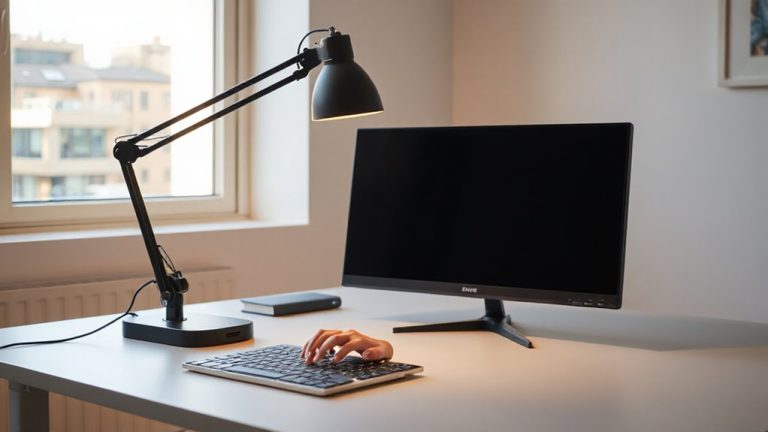
How often do you keep working past sunset, bathed in the glow of your desk lamp or computer screen, without thinking about how that light impacts your rest? Inside, your electronics and bright overhead lights pump out blue-rich light that disrupts melatonin, especially if you’re using cool-white bulbs or unfiltered LED screens. Smart lighting can help-you can dim them or shift to warmer tones, but only if you’ve set them up properly. Many people leave these systems on default settings, making things worse. Outside, poorly shielded outdoor fixtures spill excessive brightness into your space, particularly streetlights or neighbor’s security lights. These contribute to skyglow and sneak in through windows. While full cutoff outdoor fixtures reduce upward light and glare, not all homes have them. You’re likely exposed to more artificial light than you realize, both from within your workspace and beyond your walls-control starts with recognizing the sources. Choosing the right best home office lighting can significantly reduce disruptive blue light exposure during evening hours.
Best Ways to Block Outside Light When You Sleep
Even if you’ve minimized indoor light sources, outside light can still seep into your bedroom and disrupt your sleep-especially from streetlights, neighboring properties, or illuminated signs. Your best defense is installing blackout shades, which block nearly 100% of incoming light when properly fitted and sealed at the edges. They’re more effective than light curtains, which often let glow filter through sides or top. Look for blackout shades with a tight weave, opaque lining, and side rails to prevent light gaps-tested models like those from Lutron or Levolor deliver consistent results. Light curtains can help if you need flexibility or rent your space, but choose ones labeled “total blackout” and hang them wide and floor-length. Keep in mind: blackout shades may require professional installation and aren’t ideal for shared windows you open often. Both options improve sleep, but shades offer superior, permanent control.
How Remote Work Worsens Light Exposure
Working from home often means your bedroom doubles as your office, and that shift ramps up your exposure to light at times when your body should be winding down. You’re likely staring at screens longer, and that means more blue light, which suppresses melatonin and delays sleep onset. Even in the evening, lingering screen glare from laptops or tablets keeps your brain alert when it should be relaxing. Unlike office spaces designed with ambient lighting, home setups often rely on harsh overhead lights or unfiltered device screens. While some monitors offer blue light filters, they don’t eliminate all disruptive wavelengths. Using devices after sunset intensifies the problem, especially without controlled brightness or warm色 temperature settings. You can reduce exposure with timed screen breaks and matte screen protectors, but the real issue is proximity-working and sleeping in the same space blurs light boundaries. There’s no perfect fix, but awareness helps you make smarter lighting choices.
Set Up a Bedroom for Deeper, Darker Sleep
What if your bedroom could actually help you sleep, instead of working against you? Start by blocking outside light with blackout curtains-they’re effective, especially if they cover the full window and seal tightly at the edges. Look for ones with a high opacity rating (99% or more) and thermal insulation, which also improves energy efficiency. They’re not perfect-some let slivers of light through at the edges-but when paired with a well-fitted sleep mask, you get near-total darkness. A good sleep mask should be contoured around the eyes to avoid pressure but snug enough to stay in place. Test one with washable fabric and adjustable straps; comfort varies by face shape. While blackout curtains require installation, a sleep mask is portable and low-risk to try. Neither replaces a healthy wind-down routine, but both directly combat light pollution interfering with melatonin. For optimal results, consider the best home office curtains, which often feature thermal insulation and full coverage to enhance both comfort and light blocking.
Calm Your Mind Before Bed: Without Screens
How much easier would it be to fall asleep if your mind weren’t still buzzing from the day’s demands? Ditching screens an hour before bed helps, but actively calming your mind matters more. A consistent journaling practice-just 5 to 10 minutes of writing down tasks, worries, or gratitude-clears mental clutter without needing special tools. Pair that with mindfulness meditation using a simple timer or non-backlit meditation device, and you reduce cognitive arousal markedly. Studies show both methods improve sleep onset and quality, especially when blue light and work stress mix at home. You don’t need apps or smart gear-those can backfire with notifications or screen temptation. The trade-off? It takes discipline to stick with analog routines in a digital workspace. But over time, the ritual itself becomes a cue for rest. No subscriptions, no updates, just proven techniques that work quietly-and screen-free.
On a final note
You’ll sleep better by controlling light pollution, especially while working from home. Blackout curtains with a tight weave block 100% of streetlight and screen glow, and amber-tinted LED bulbs reduce blue light after dark. But results depend on your room layout and window size-measure carefully. Some products overpromise; look for lab-tested materials with a 3-year warranty. Adjusting habits matters just as much as gear.