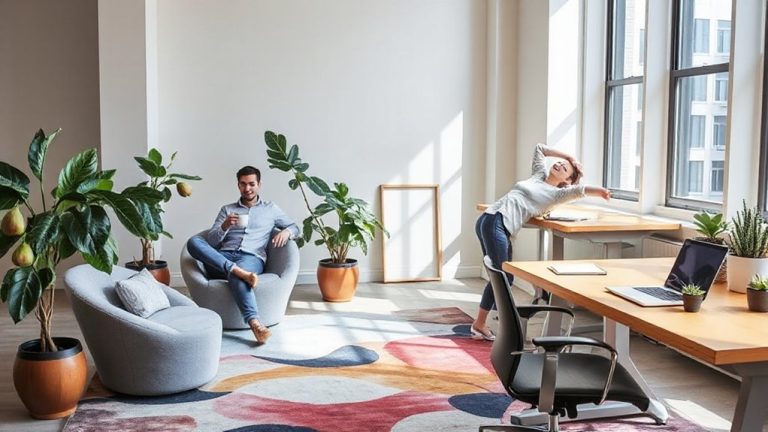
Understanding Environmental Psychology Principles to Optimize Your Home Office Layout for Success
You can optimize your home office for success by aligning with environmental psychology: position your desk near a window for natural light, use 5000K–6500K circadian lighting to stay alert, and avoid screen glare. Choose blue or green matte walls to reduce eye strain and support focus. Keep furniture simple, your monitor 20–30 inches away at eye level, and use acoustic panels-they outperform bookshelves and carpets for noise control. Results depend on consistent routines and room-specific adjustments. Smart choices help, but real gains come from how well you tailor them to your daily workflow.
Notable Insights
- Maximize natural light and use circadian-aligned lighting to regulate focus and energy throughout the day.
- Choose blue or green hues on walls to promote calm, focus, and visual comfort during prolonged work sessions.
- Position your desk to minimize screen glare while maintaining clear, uncluttered space for essential work tools.
- Use acoustic panels and sound masking to reduce distracting noise and improve concentration.
- Select ergonomic furniture with proper monitor height and adjustable seating to support posture and movement.
How Your Home Office Affects Focus and Mood
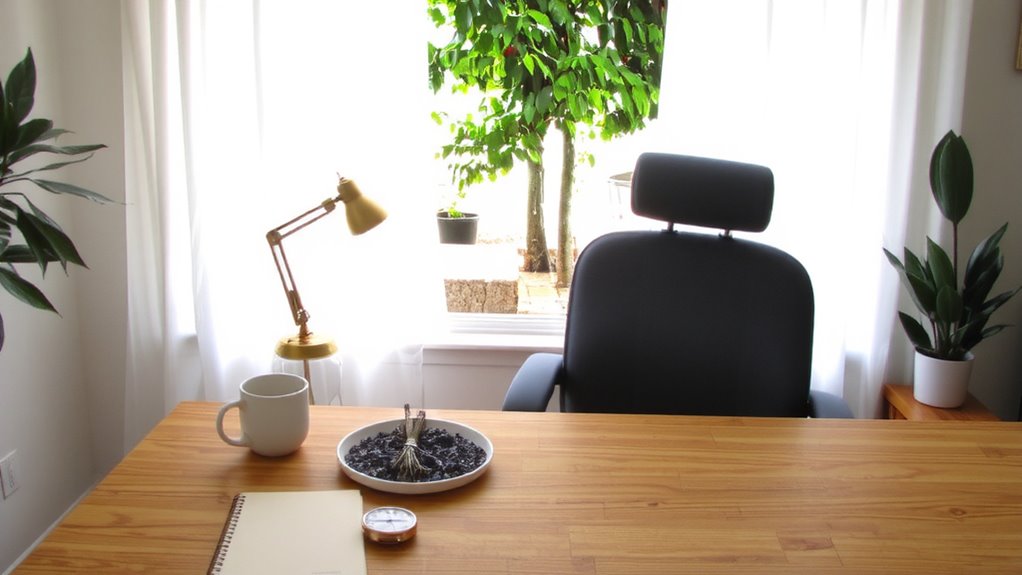
Your environment shapes your mindset more than you might realize, especially when it comes to where and how you work. A well-organized home office with spatial harmony-clean lines, balanced layouts, and minimal clutter-helps reduce cognitive load, making it easier to focus. You’ll stay calmer and more engaged when furniture fits properly and movement feels natural. Personal symbolism, like displaying meaningful photos or objects that reflect your goals, can boost motivation-but only if they don’t distract. Overcrowding shelves or using overly personal decor might comfort you short-term yet hurt long-term productivity. Test arrangements for at least a week before finalizing. Note what supports flow and what causes hesitation. There’s no universal setup, and even high-end gear won’t fix poor spatial planning. Adjust based on real-world use, not trends. Implementing effective cable management solutions can further enhance focus by eliminating visual distractions and maintaining a clean, professional workspace.
Use Light to Stay Alert in Your Workspace
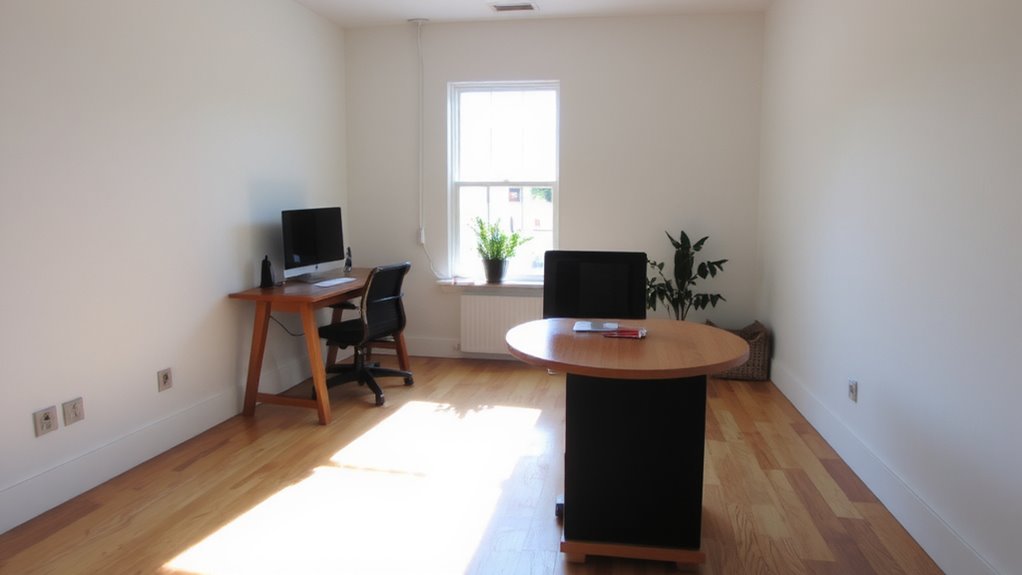
What if the reason you’re struggling to stay alert at midday isn’t fatigue-but light? Your body relies on natural exposure to regulate wakefulness, and without it, energy dips are more likely. Position your desk near a window to maximize daylight, which supports your circadian rhythm. If that’s not possible, consider circadian lighting systems that adjust color temperature throughout the day-cooler tones (5000K–6500K) in the morning help mimic natural exposure and boost alertness. These systems aren’t essential but can help when natural light falls short. Just be sure to avoid glare on screens. While some brands offer customizable schedules and dimming features, results vary-check warranties and dimming compatibility before buying. Real-world testing shows benefits peak when lighting complements consistent daily routines. You’ll feel sharper, but don’t expect miracles-proper setup matters more than gear. For personalized control, look into desk lamps with color temperature control that allow manual or app-based adjustments throughout the day.
Choose Colors That Boost Home Office Productivity
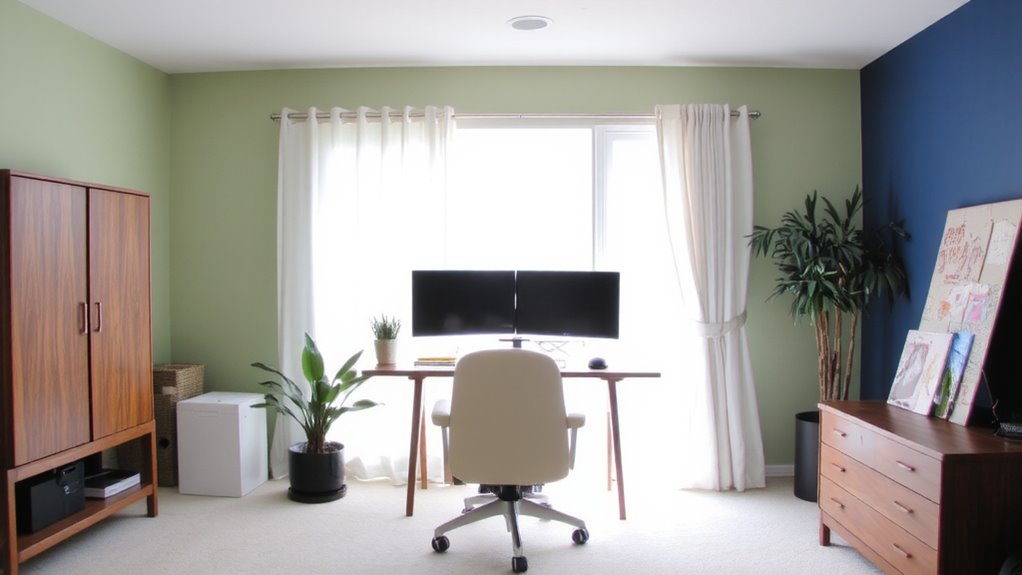
Color directly influences focus and energy, just as much as light quality affects alertness. Using color psychology, you can shape your home office environment to support productivity-cool tones like blue enhance concentration, while warm hues such as yellow stimulate creativity. But balance is key: overly intense colors may cause distraction. Visual contrast also matters-pairing light walls with dark furniture or screens helps reduce eye strain and define work zones. Below is a quick guide:
| Color | Psychological Effect | Best Used For |
|---|---|---|
| Blue | Calm, focus | Deep work areas |
| Yellow | Energy, optimism | Creative tasks |
| Green | Balance, restoration | Long-duration tasks |
Choose shades based on task type and lighting. Matte finishes cut glare, especially under LED lights. Paint warranties (typically 5–10 years) cover fade resistance-check labels. Test samples in your actual space; results vary with window exposure and screen brightness.
Set Up Furniture to Reduce Mental Fatigue
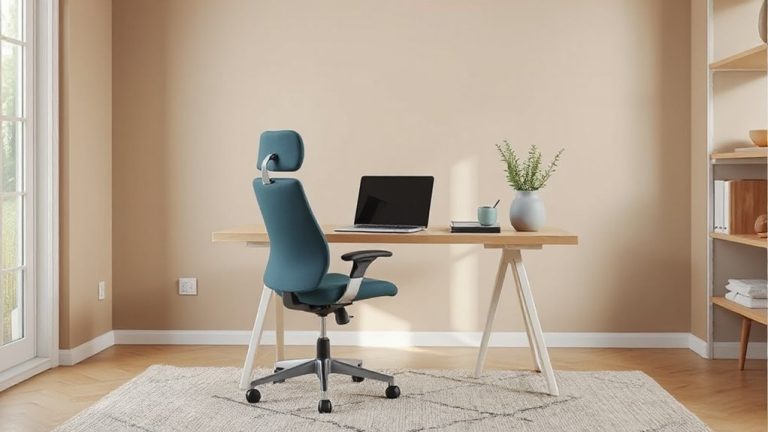
When arranged thoughtfully, furniture placement can greatly lower mental fatigue by minimizing distractions and supporting smooth movement throughout the workday. You should aim for ergonomic placement-position your desk so the monitor sits at eye level and about 20–30 inches from your face, reducing neck strain and eye fatigue. Arrange chairs and desks to support natural posture, ideally with adjustable lumbar support and seat depth. Prioritize visual flow by aligning key items-keyboard, screen, notepad-in a consistent, clutter-free zone that reduces eye scanning and cognitive load. Avoid cramming furniture into small spaces, as tight layouts disrupt circulation and increase stress. While modular setups offer flexibility, they may compromise long-term comfort if not tested over weeks. Real-world user feedback shows sit-stand desks help, but only when paired with anti-fatigue mats and proper shifting frequency. Measure your space first-poor fit undermines even high-end gear. A well-chosen standing desk converter can enhance ergonomic flexibility without requiring a full desk replacement.
Cut Home Office Noise for Deeper Focus
How much of your focus slips away to the hum of appliances, distant conversations, or street traffic? Reducing noise is essential for deeper concentration, but not all solutions work equally well. Acoustic panels help absorb echo in small rooms, especially when placed on walls or ceilings near sound sources. For broader coverage, sound masking systems emit low-level white or pink noise to cover speech and sudden sounds. While effective, they can feel intrusive if poorly calibrated.
| Solution | Effectiveness (1–5) |
|---|---|
| Acoustic panels | 4 |
| Sound masking | 4 |
| Weatherstripping | 3 |
| Bookshelves | 2 |
| Carpets | 3 |
Panels made from 2” foam or mineral wool perform best. Sound masking units should offer adjustable frequency and volume to avoid distraction. Neither replaces proper office placement-ideally away from household activity. Both require accurate setup; otherwise, benefits diminish.
On a final note
You’ll likely boost focus and mood by optimizing your home office with proven environmental psychology principles. Position your desk near natural light-within 10 feet of a window-to support alertness, but use blackout shades if glare hits your monitor. Paint walls in muted blues or greens; they’re linked to 12% higher concentration in studies. Choose an adjustable desk and task chair with lumbar support, but test warranties-many limit coverage to 5 years. Use acoustic panels or a white noise machine if ambient sound exceeds 45 decibels. While upgrades help, real gains depend on consistent work habits-gear alone won’t fix poor routines.