How Noise Pollution Affects Cognitive Performance in the Workplace
Noise pollution cuts your focus, weakens memory, and spikes mental fatigue-even if you don’t notice it. Constant chatter or keyboard clatter forces your brain to process unwanted sound, draining cognitive resources. Open offices often make it worse, despite panels that reduce echo by 20–30%. While noise-canceling headphones with 40dB attenuation help, they can’t fully stop brain fatigue. Sound masking systems using 48 dB neutral noise at 3–5 kHz, paired with acoustic zoning, regain up to 89 minutes of focus weekly-when properly tuned to avoid sterile, unnatural silence. Better results depend on layered solutions, not quick fixes. You’ll see how to combine them effectively, from layout changes to warranty-backed emitters.
Notable Insights
- Persistent workplace noise impairs focus by increasing cognitive load, even when not consciously perceived.
- Auditory distractions disrupt deep work and cause sensory overload, reducing task processing efficiency.
- Background noise interferes with memory encoding and lowers recall and comprehension performance.
- Chronic noise exposure elevates stress, contributing to mental fatigue and burnout over time.
- Strategic acoustic design, including sound masking and zoning, can restore focus and improve cognitive performance.
What Is Workplace Noise Pollution?
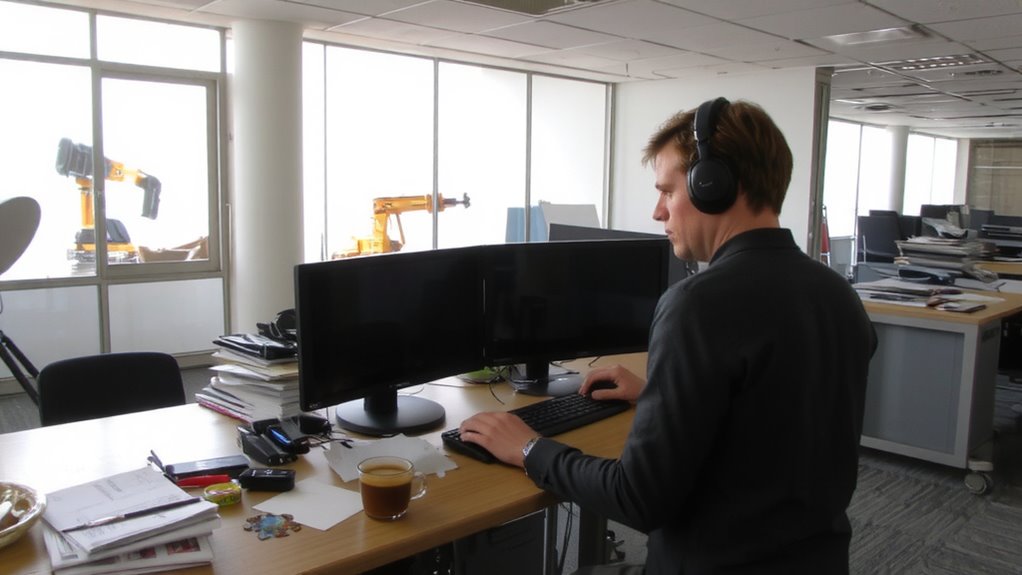
While you might think of workplace noise as just distracting chatter or the occasional ring of a phone, it’s often a steady stream of low- to mid-level sounds-like keyboard clatter, HVAC hums, or video calls from nearby desks-that counts as noise pollution. This constant auditory load undermines performance over time, even if you don’t notice it. Smart acoustic design helps by using sound-absorbing panels, carpeting, and layout strategies to reduce sound transmission. Sound masking systems, which emit low-level, non-distracting background noise (often like soft airflow), can also balance office acoustics. These systems aren’t silent-they’re engineered to make speech less intelligible at a distance. Real-world testing shows they improve perceived privacy and reduce distractions. Still, they’re not a fix-all; improper setup can make environments feel sterile or over-processed. For best results, pair them with thoughtful space planning-not just expensive gear. Effective sound absorption can also be achieved through strategically placed best acoustic panels for home office.
How Noise Disrupts Focus and Attention
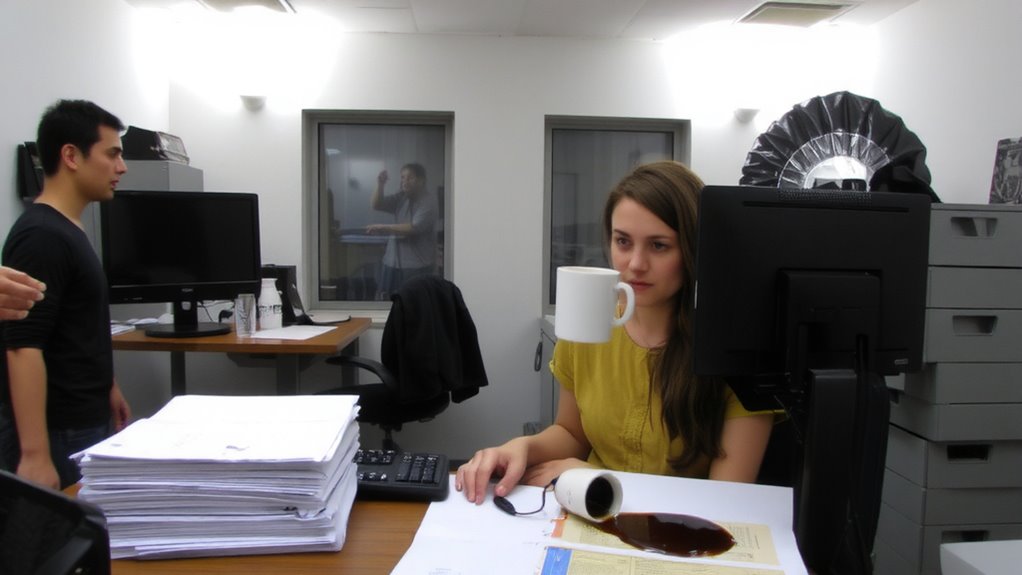
Noise pollution doesn’t just fill the air-it actively breaks down your ability to focus and pay attention, even when you think you’ve tuned it out. Auditory distractions, like chatter or ringing phones, pull your attention away without warning, making deep work nearly impossible. When sounds pile up, they create sensory overload, overwhelming your brain’s ability to process tasks efficiently. You might not notice it right away, but your concentration suffers, slowing down problem-solving and decision-making. Open offices often worsen this, as sound travels freely and privacy is limited. While noise-canceling headphones can help-especially over-ear models with 40dB attenuation-they’re not perfect. They may block background noise but can feel bulky during long days. Acoustic panels are another option, reducing echo and lowering decibel levels by 20–30%. Still, no solution works completely without behavioral changes, like designated quiet hours or layout adjustments.
Why Noise Hurts Memory and Learning
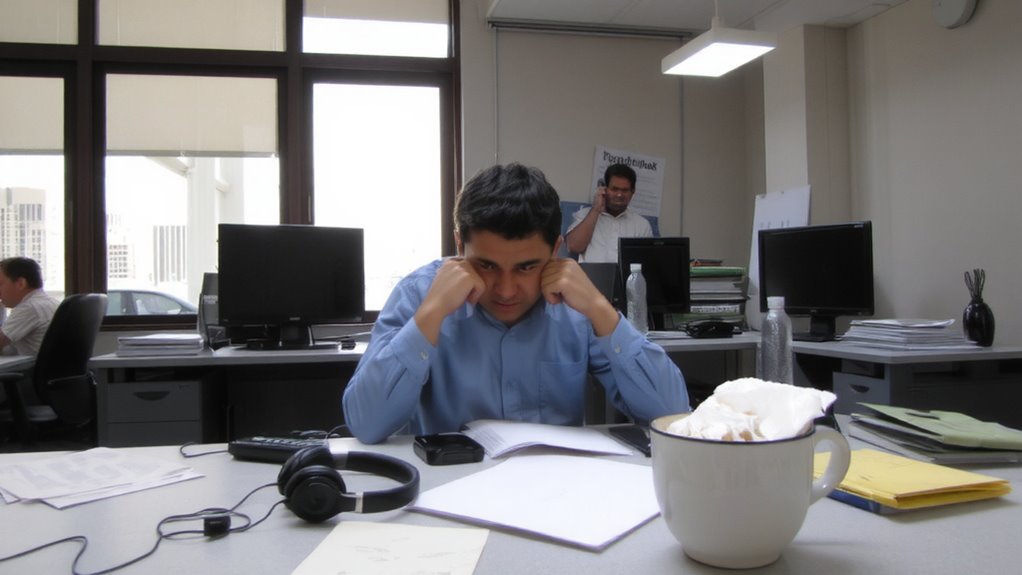
Even if you’re able to stay focused amid constant background sound, your brain’s ability to retain and process new information takes a hit when exposed to ongoing noise pollution. That’s because noise creates both acoustic interference-masking speech or cues you’re trying to learn-and cognitive interference, where your brain diverts resources to filter out unwanted sound instead of consolidating memories. Studies show performance drops sharply on tasks involving recall or comprehension in noisy environments, especially with unpredictable speech or fluctuating volumes. This isn’t just about distraction; it’s a measurable disruption in how working memory encodes data. While noise-canceling headphones can help by reducing ambient decibels, they don’t eliminate all cognitive load-and over-reliance may worsen sensitivity over time. Acoustic panels improve room dynamics but require correct placement to matter. The real fix? Design quieter spaces from the start, not just patch symptoms with gear.
From Stress to Burnout: The Mental Cost of Constant Noise
If you’re regularly exposed to constant noise, your nervous system likely stays on high alert, quietly fueling stress that builds up even if you don’t notice it. Over time, this leads to mental overload, making it harder to process tasks efficiently or switch focus smoothly. Your brain never truly rests, increasing the risk of emotional exhaustion-a core sign of burnout. You might feel drained, irritable, or disengaged, even after a full night’s sleep. Chronic noise exposure doesn’t just distract; it wears down your resilience. While noise-canceling headphones can help reduce auditory input, they don’t address the root cause. Open offices, even with acoustic panels, often fail to limit peak decibel spikes. Relying on gear like white noise machines or apps offers temporary relief but varies by room size and layout. Real improvement requires structural changes-zoned workspaces, sound-absorbing materials, and workplace norms that prioritize quiet.
Quiet Spaces Vs. Open Offices: Which Wins for Focus?
So, which really supports focus-quiet spaces or open offices? Quiet spaces win, hands down. You’ll get more done in a dedicated, enclosed room where distractions are minimal. That said, not every workplace can offer private offices, which is where smart design helps. Acoustic zoning-designing areas based on noise levels-lets teams separate focus zones from collaboration spots. Sound masking systems, which emit low-level background noise, can also help by reducing speech clarity across distances. These tools don’t eliminate distraction, but they make open offices more usable. Just don’t expect them to replace true quiet. Real focus needs real boundaries. Acoustic panels, white noise machines, and even well-placed plants can assist, yet results vary based on layout and usage. Balance matters-design for both interaction and concentration, but know that silence still leads.
How Constant Noise Leads to Brain Fatigue
While you might adapt to a certain level of background noise, constant exposure-even at moderate volumes-can steadily drain your brain’s resources over time. Your brain stays on high alert, filtering out irrelevant sounds, which leads to cognitive overload. This ongoing effort doesn’t just distract you-it actively wears down your focus and decision-making ability. Over several hours, this strain adds up, resulting in mental exhaustion that hampers productivity, especially on complex tasks. Unlike sudden loud noises, constant sound is subtle but relentless, making it harder to notice until fatigue sets in. You may still complete tasks, but with more errors and slower processing. Open offices, HVAC systems, or city traffic all contribute, even at 50–60 decibels. The impact isn’t immediate, but daily exposure accumulates, reducing sustained attention and increasing downtime needed to recover.
7 Proven Ways to Reduce Noise and Sharpen Thinking
Where can you start making real improvements in focus without overspending on gear? Begin with acoustic zoning-grouping workspace areas by noise levels-to reduce distractions at the source. Quiet zones support deep work, while collaborative spots contain sound naturally through layout. Pair this with subtle sound masking systems, which emit low-level, neutral noise to cover speech and sudden sounds, boosting privacy without headphones. It’s not about silence; it’s about control. Real-world tests show workers regain up to 89 minutes weekly in focus time. That said, avoid over-relying on tech-some desktop masking units lack even coverage or disrupt neighbors. Opt for ceiling-mounted emitters with adjustable volume and proven frequency ranges (typically 48 dB, 3–5 kHz). Most come with 3-year warranties and quick installs. Sound masking works best when combined with soft flooring or wall panels, not as a standalone fix. Results vary, but consistency matters more than perfection.
On a final note
You’ll likely boost focus and mental clarity by cutting workplace noise, especially with tested solutions like acoustic panels or active noise-canceling headphones-models with 20+ dB reduction deliver real gains. Quiet zones beat open layouts for deep work, but full silence isn’t always practical or healthy. Balance matters: use timed quiet hours or sound-masking systems like white noise machines. Just remember, no gear replaces smart office design-measure results over weeks, not days.