Creating Functional Acoustic Zones in Open-Plan Home Offices Using Furniture Layout
You can create effective acoustic zones by using floor-to-ceiling bookshelves filled with books to block sound-opt for solid wood, pack them tightly, and seal ceiling gaps to prevent leakage. Place your desk in the quietest corner, away from foot traffic, and use thick rugs with rubber backing or 1/2-inch acoustic underlay to cut echo. Define zones with low-pile rugs and fabric panels (NRC 0.70), which reduce reverberation better than hollow dividers. There’s more to get right with layout and material balance.
Notable Insights
- Position floor-to-ceiling bookshelves filled with books to block noise paths and absorb sound between zones.
- Place desks in quiet corners away from foot traffic, using walls or furniture as acoustic and visual barriers.
- Define activity-specific zones through layout and small rugs, aligning with actual usage patterns over time.
- Use thick, low-pile area rugs with acoustic underlay to reduce mid-range echo and define functional zones.
- Install heavy curtains, fabric panels, and upholstered furniture to absorb sound and enhance speech privacy.
Reduce Noise With Smart Bookshelf and Divider Placement
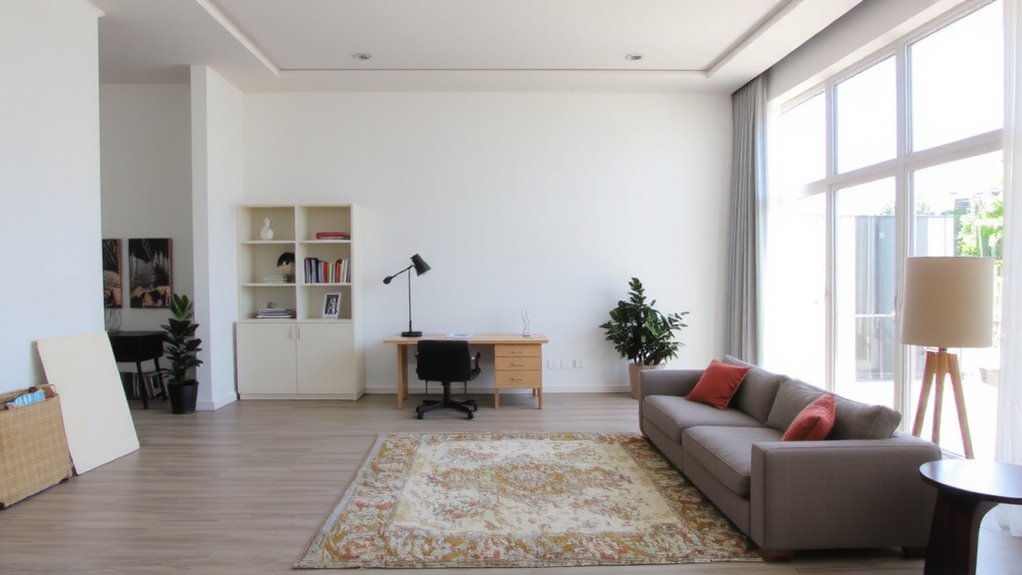
While you might not think a bookshelf can do much beyond holding books, placing one strategically between your workspace and noisy areas can noticeably reduce sound transmission-especially if you choose a solid, floor-to-ceiling model filled with books of varying sizes. This is where bookshelf insulation becomes effective: mass and irregular surfaces scatter and absorb sound waves. Divider placement matters just as much-position the unit to block direct paths of noise, like between a desk and hallway. You’ll gain acoustic privacy without a full renovation. However, hollow or shallow shelves offer minimal benefit, and overloading weak units risks warping or collapse. Avoid wobbly particleboard unless anchored. For best results, pick solid wood, pack densely, and leave no gaps at the ceiling. It’s not a soundproof wall, but with smart layout, you’ll see real improvement-just manage expectations. Adding dedicated acoustic treatment like best acoustic panels can further enhance sound absorption in critical areas.
Position Your Desk for Maximum Focus and Minimal Distractions
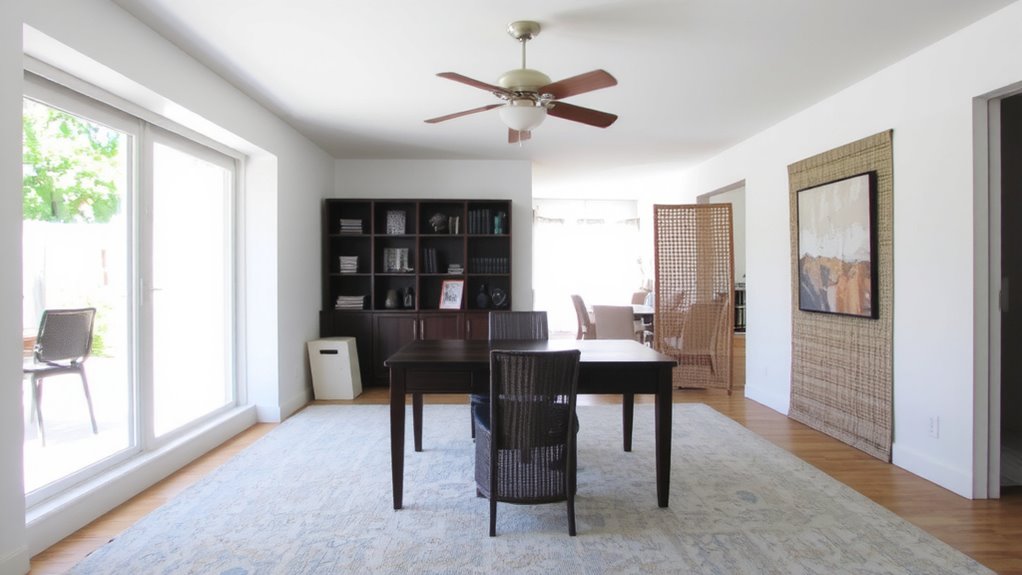
Put your desk in the quietest corner of the room, ideally away from foot traffic and high-activity zones-this simple move sharpens focus better than most gadgets promising productivity. Face away from distractions whenever possible, and use walls or tall furniture as visual barriers to create a sense of enclosure. Guarantee your monitor is at eye level and your chair supports natural posture-proper ergonomic alignment reduces strain during long work sessions. Avoid placing your desk directly under bright lights or in front of windows with strong glare, as these interfere with screen visibility and concentration. While corner placement limits noise exposure, it may restrict natural light-balance these by adjusting screen angle and using task lighting. Positioning isn’t one-size-fits-all; test layouts based on your daily tasks and noise patterns. Small tweaks can markedly improve both comfort and sustained focus without requiring expensive gear or renovations. For compact spaces, consider a best small computer desk that combines space-saving design with ergonomic functionality.
Define Work and Relax Zones by Activity (Not Just Furniture)
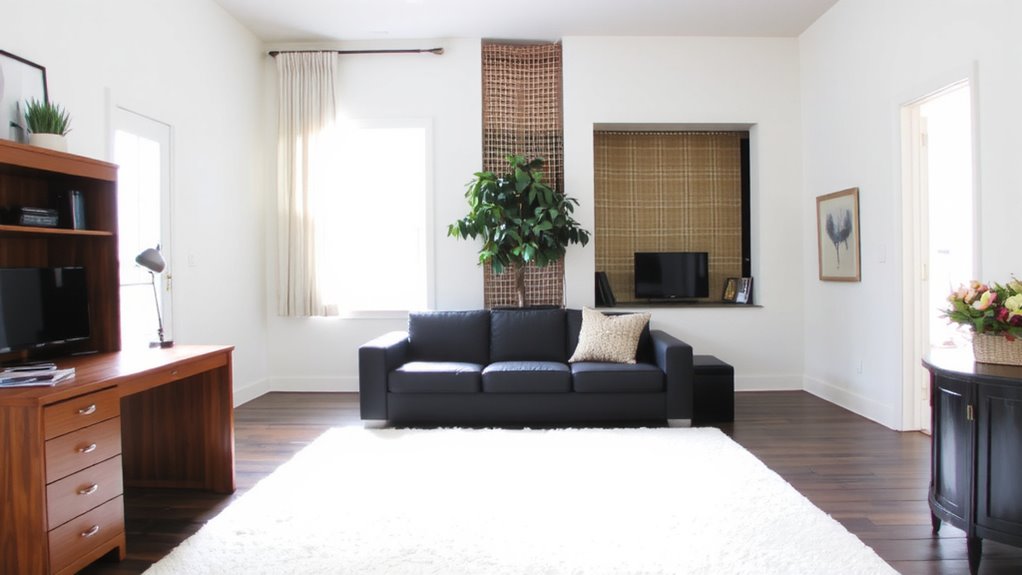
Since your home office serves multiple roles, designating zones based on activity-not just furniture placement-helps sharpen focus and support mental shifts between work and rest. Start with activity mapping to identify when and how you use each area: deep work, quick tasks, reading, or unwinding. This informs effective zone labeling, like “Focus Zone” or “Read & Relax,” which guides both behavior and layout. A desk facing a wall suits concentration, while a cozy chair near indirect light works better for breaks. Be precise-use small rugs or shelf units as subtle visual cues, not full dividers, to avoid cramped sightlines. Remember, clear activity zones reduce cognitive load, but they demand honest routines; without consistent habits, even smart layouts fail. Activity mapping takes 3–5 days of observation, but skipping it risks inefficient spaces. Label zones temporarily at first-adjust based on actual use, not assumptions. For added privacy in shared spaces, consider a best desk divider that doubles as an acoustic barrier.
Cut Echo With Rugs and Sound-Absorbing Flooring
A single well-placed rug can reduce up to 30% of mid-range room echo, making sound-absorbing flooring one of the most effective yet overlooked upgrades for a functional home office. You’ll want to use thick area rugs with dense pile or rubber backing-they’re proven to dampen sound better than thin mats. Pair them with acoustic underlay materials like felt or foam, especially if you’re on hardwood or tile, to block impact noise and soften reflections. While wall-to-wall carpet offers more coverage, area rugs give you flexibility to zone spaces without permanent changes. Just note: overly plush textures may trap dust, so low-pile options are easier to maintain. Also, not all underlay materials deliver equal noise reduction-look for lab-tested specs, not marketing claims. In real-world testing, combinations of 1/2-inch underlay and 40-oz area rugs consistently outperform cheaper alternatives. They’re not soundproof, but they cut echo meaningfully.
Boost Acoustic Comfort With Soft Furnishings and Curtains
Soft furnishings and heavy curtains aren’t just for style-they’re functional tools that can cut reverberation by up to 40% when strategically placed. You’ll boost sound insulation and comfort by adding plush elements like upholstered chairs, fabric panels, and floor-length curtains. These materials absorb mid- to high-frequency noise, making your open-plan office feel calmer and more focused.
| Product | Noise Reduction Coefficient (NRC) |
|---|---|
| Heavy curtains | 0.45 |
| Fabric wall panels | 0.70 |
| Upholstered chair | 0.30 |
| Throw pillows | 0.20 |
Place fabric panels on walls opposite desks and hang curtains over glass doors or windows. While soft furnishings require regular cleaning and vary in durability, their acoustic impact is measurable. They won’t replace dedicated soundproofing but markedly improve room acoustics when combined with rugs and smart layouts.
Design Layouts That Balance Style and Sound Control
You’ve got the right fabrics in place-now it’s time to think about how your furniture and room setup affect sound. Arrange pieces to create natural barriers that absorb and deflect noise without killing aesthetic harmony. Use bookshelves with books and decorative objects to scatter sound waves-solid wood offers better mass than hollow particleboard. Position desks and seating to maintain clear sightlines while introducing material contrast, like pairing a plush sofa with a sleek metal desk, to balance visual and acoustic needs. Avoid placing hard surfaces opposite each other, as they reflect sound and increase echo. Test layouts by talking at typical volume and adjusting until speech feels contained. Remember, even the best design can’t eliminate all noise-some compromise between openness and privacy is inevitable. Prioritize function but don’t sacrifice cohesion.
Use Zones to Separate Calls, Focus Work, and Downtime
Functionality starts with separation-designate distinct zones for calls, focused work, and relaxation to reduce auditory crossover and mental fatigue. Use low bookshelves or Privacy screens to define areas without blocking light or airflow; these physical cues help your brain switch modes and keep noise from spreading. Position your call zone in a corner with a headset and noise-canceling mic to minimize echo. Anchor your focus area with a clean desk and task lighting, while ambient lighting in the downtime nook supports eye comfort and mental reset. Rugs and upholstered furniture absorb sound, but avoid overfilling small spaces-they can trap noise. While Privacy screens with fabric panels improve speech privacy, they won’t block loud sounds. Similarly, ambient lighting sets mood but doesn’t replace daylight. Test layouts over a week to balance acoustics, comfort, and actual use-what looks good might not work long-term.
On a final note
You can effectively shape acoustic zones in your open-plan home office with smart layout choices. Bookshelves filled with books, area rugs at least 3/4 inch thick, and floor-to-ceiling curtains reduce noise and echo. Position desks away from high-traffic paths to limit distractions. Soft furnishings help, but total soundproofing isn’t realistic-expect moderate improvement, not silence. Balance aesthetics with function, and test changes gradually to suit your daily workflow.