Using Bookshelves as Natural Sound Diffusers in Home Office Acoustic Design
Bookshelves can effectively diffuse sound in your home office when loaded with varied books and placed at key reflection points. Opt for deep shelves (8–12 inches) with irregular book heights, orientations, and spacing to scatter mid to high frequencies and reduce echo without deadening the room. Position them asymmetrically near walls or corners, leaving 6 inches from the wall for better diffusion. They’re not a full substitute for absorption-use panels where needed. You’ll find smarter setups that balance both.
Notable Insights
- Bookshelves with uneven book arrangements scatter sound waves, reducing harsh reflections in home offices.
- Shelf depth of 8–12 inches enhances diffusion by creating air gaps behind books for better sound management.
- Varying book sizes, orientations, and spacing increases surface irregularity, improving mid to high-frequency diffusion.
- Positioning bookshelves at primary reflection points on side walls or corners maximizes acoustic effectiveness.
- Combine bookshelves with absorption panels to control reverberation while maintaining a lively, balanced sound.
How Sound Reflections Hurt Your Home Office Calls
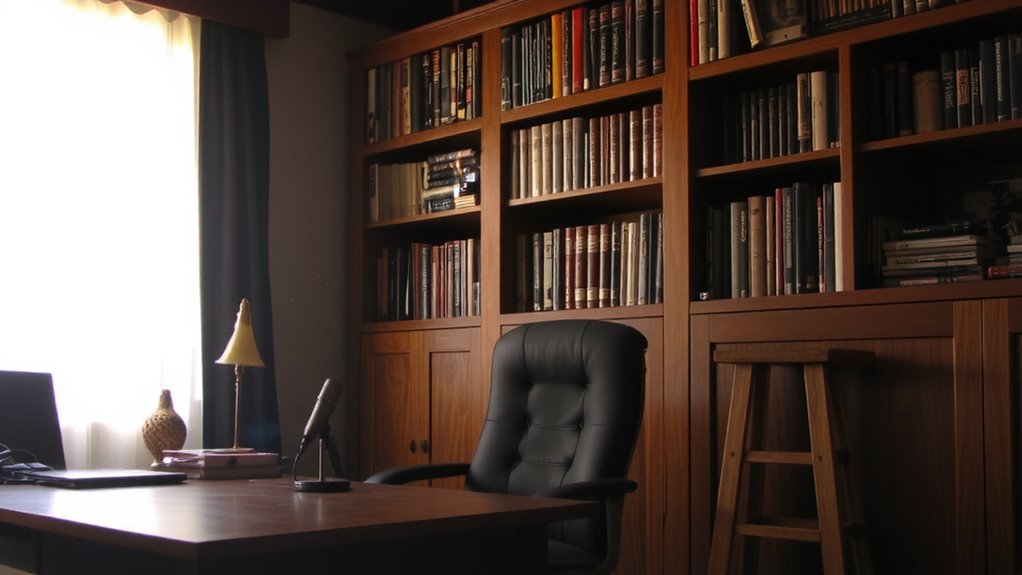
Why does your voice sound muffled or distant on video calls, even with a high-end microphone? Hard surfaces in your room reflect sound, causing delayed repetitions that muddy your speech. These reflections create reverberation, making your audio feel hollow or cluttered-especially problematic in small, untreated rooms. You need echo reduction to clean up vocal clarity, and that’s where basic reverberation control becomes essential. Even premium headsets can’t fix room acoustics; the issue isn’t your gear, it’s your space. Soft furnishings help, but they often lack precise diffusion. While full acoustic panels offer measurable absorption, they’re costly and alter room aesthetics. A DIY approach, like repositioning furniture, delivers moderate improvement but inconsistent results. Treatments must cover primary reflection points-side walls and ceiling-to matter. Without proper placement and material depth, gains in speech intelligibility are minimal. Performance varies by room size and existing finishes. For those seeking a balance of function and affordability, best acoustic panels for home office provide targeted sound absorption without compromising style.
Why Bookshelves Make Great Natural Sound Diffusers
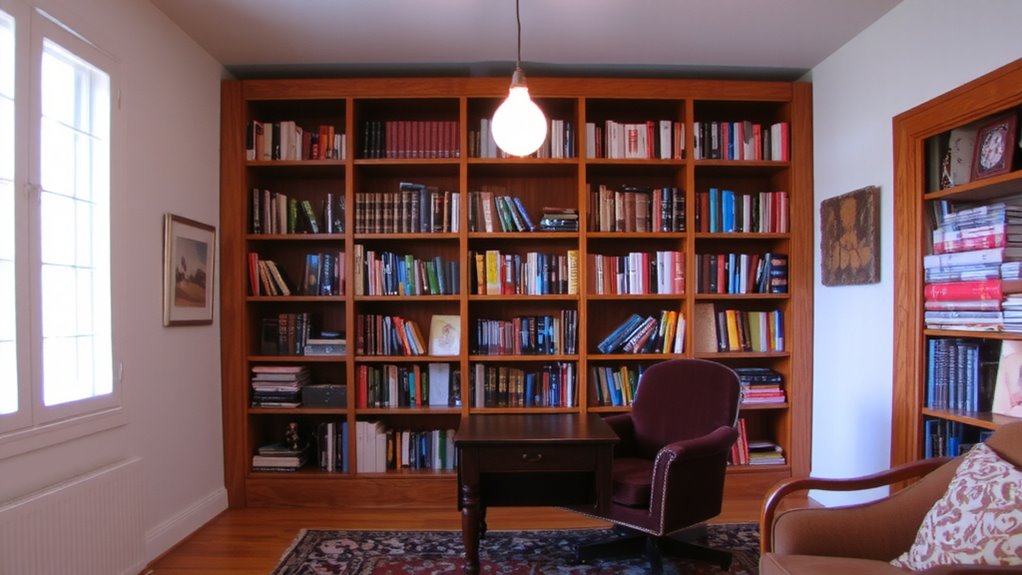
You’re not stuck choosing between ugly foam panels and echo-filled calls-well-arranged bookshelves offer a practical middle ground by scattering sound waves instead of absorbing them like traditional treatments. Their uneven surfaces, packed with varied book textures, break up sound reflections more naturally than flat barriers. Shelf depth matters-deeper shelves (8+ inches) create better scattering by allowing sound to reflect off both books and the back wall, increasing diffusion. Unlike foam, bookshelves don’t deaden a room but maintain liveliness while reducing problematic echoes. They’re functional furniture, not single-purpose acoustic gear, so they serve dual roles without dedicated space. Still, placement is key-positioning too close to the wall or using shallow shelves weakens effect. Don’t expect studio-grade results, but in typical home offices, they’re a smart, affordable compromise. Real-world testing shows measurable improvement in speech clarity-just don’t overcrowd or align books too neatly, or you lose diffusion benefits. For optimal performance, consider choosing from the best office bookshelves that combine ample depth with varied structural design.
What Makes a Bookshelf Effective for Acoustic Diffusion
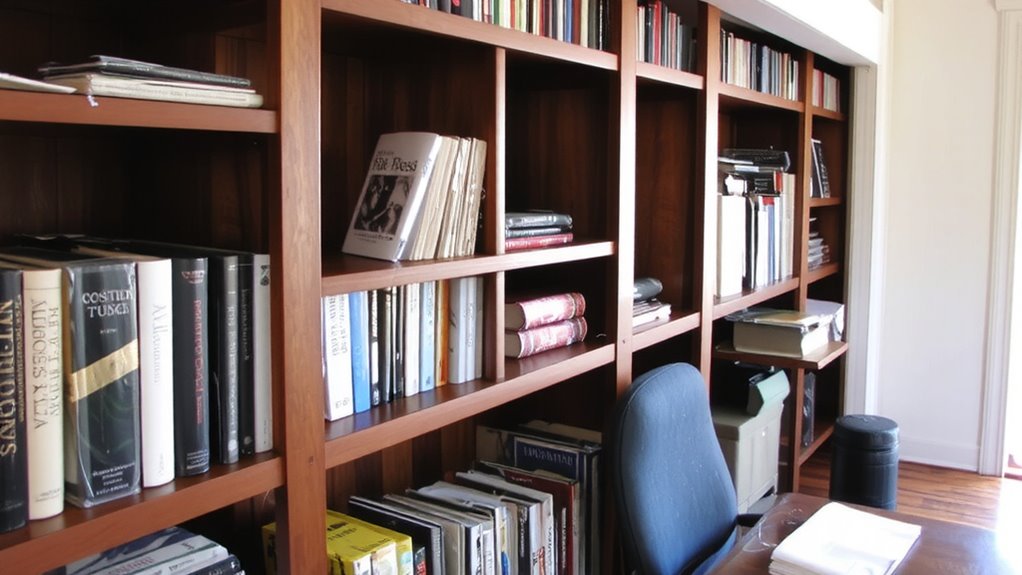
Success starts with depth, surface variation, and strategic layout-three key factors that turn a simple bookshelf into an effective sound diffuser. You’ll want shelves at least 8–12 inches deep to create meaningful air gaps, helping manage mid to high-frequency reflections. Surface variation, achieved through books of different heights and thickness, works best when combined with irregular spacing between objects, scattering sound waves in multiple directions. Material density matters-solid wood or MDF shelves offer better sound interaction than flimsy particleboard, which can absorb or resonate unpredictably. Avoid uniform arrangements; clumping or symmetrical gaps reduce diffusion. While not a replacement for professional acoustic panels in critical environments, a well-built bookshelf improves room clarity. Just don’t rely on it for bass control-its impact is limited below 300 Hz.
Arrange Books for Maximum Sound Scattering Effect
A well-arranged book collection can turn your shelf into a surprisingly effective sound diffuser. You’ll get the best scattering by mixing book orientation-place some spine-in, others face-out, and a few standing sideways. This irregular layout breaks up sound waves better than uniform alignment. Combine that with size variation: stack tall hardcovers beside short paperbacks and leave a few gaps. The uneven depths and angles scatter mid to high frequencies more effectively than flat surfaces. Just don’t expect deep bass control-these shelves diffuse, not absorb. Results depend on shelf depth, room placement, and how densely you pack them. While not a substitute for professional panels, a thoughtfully arranged shelf offers a low-cost, visually appealing way to improve acoustics-just keep expectations realistic and avoid overcrowding, which can reduce effect.
Combine Bookshelves With Absorption for Balanced Audio
Bookshelves filled with unevenly arranged books help scatter mid and high frequencies, but they don’t remove sound energy-meaning reflections and reverberation can still clutter your listening space. That’s why you should pair your bookshelf setup with dedicated absorption. While book absorption does occur, especially with densely packed, varied depths of books, it’s inconsistent and minimal compared to proper acoustic foam or fabric-wrapped panels. Without added absorption, you risk shelf resonance reinforcing certain frequencies, especially if shelves are shallow or overloaded. Combine diffusive bookshelves with absorption panels on back and side walls to tame flutter echo and control decay times. This hybrid approach balances clarity and warmth without over-damping. Just don’t rely solely on books-they’re not substitutes for tested acoustic treatment. For real improvement, measure results with a calibrated microphone and adjust accordingly.
Best Room Placements for Acoustically Optimized Shelving
While you might be tempted to place your bookshelves wherever they fit, their location has a direct impact on sound diffusion and overall room acoustics. For best results, try corner positioning-this helps break up sound waves that tend to accumulate in room boundaries, reducing bass buildup and echoes. Asymmetric layouts, where shelves are placed unevenly across walls, improve acoustic scattering compared to mirrored setups, creating a more balanced sound field. Position your tallest, densely filled shelves opposite primary sound sources like speakers, but avoid blocking front or rear speakers entirely. Keep at least 6 inches of space between the shelf and wall to enhance diffusion. Remember, overloading one area throws off the balance, so distribute mass thoughtfully. While bookshelves aren’t as effective as dedicated diffusers, their irregular surface still helps. Just don’t rely on them alone in highly reflective rooms.
Stylish Ways to Blend Function and Decor in Your Setup
What if your bookshelves could do more than just hold books-could they actually shape how your room sounds while looking like a natural part of your decor? With smart styling, they can. Opt for a minimalist design that balances open shelves with hidden storage to reduce visual clutter and improve sound diffusion. Mix book heights and add decorative objects for effective acoustic scattering without sacrificing style.
| Shelf Style | Acoustic Benefit | Decor Tip |
|---|---|---|
| Asymmetrical | Breaks up sound waves | Use plants for soft contrast |
| Cubby units | Diffuses mid-range frequencies | Rotate books front-facing |
| Ladder style | Lightweight diffusion | Add baskets for hidden storage |
| Floating shelves | Minimalist design | Space evenly across wall |
| Tall reach-in | Deep sound trapping | Use bins to hide office supplies |
Balance form and function, but remember: too many objects can over-dampen sound.
On a final note
You’ll get noticeably clearer audio with bookshelves as diffusers, especially if filled unevenly with books of varying thickness-this scatters mid-to-high frequencies effectively. Just don’t rely on them alone; pair with broadband absorbers at reflection points for balanced sound. They work best behind you or to the sides, not blocking room modes. Be honest: aesthetics help sell it, but real acoustic gains depend on density and placement. No magic, just physics-and thoughtful setup.