Step-by-Step Guide to Soundproofing a Home Office Door Without Replacing It
You can soundproof your home office door without replacing it, but results depend on sealing gaps larger than 1/8 inch. Start by applying V-strip or foam weatherstripping to the sides and top, then install an adjustable door sweep with an EPDM seal to block the bottom gap-this alone can cut sound leakage by up to 50%. Add a door blanket with an NRC of 0.6 or higher for extra dampening, and reinforce the frame with longer hinge screws and acoustic caulk to boost the STC rating. Proper installation matters most, and using warrantied parts guarantees long-term performance. There’s more to optimizing each step for your specific door setup.
Notable Insights
- Identify and seal gaps around the door using weatherstripping on the sides and top to block sound leakage.
- Install an adjustable door sweep with a solid threshold to close the largest sound leak at the bottom.
- Apply acoustic caulk to seal cracks and joints around the door frame for improved sound isolation.
- Hang a door blanket with an NRC of 0.6 or higher to dampen airborne noise effectively.
- Reinforce the door frame by tightening hinges with longer screws and adding shims to improve acoustic sealing.
Find Where Sound Escapes
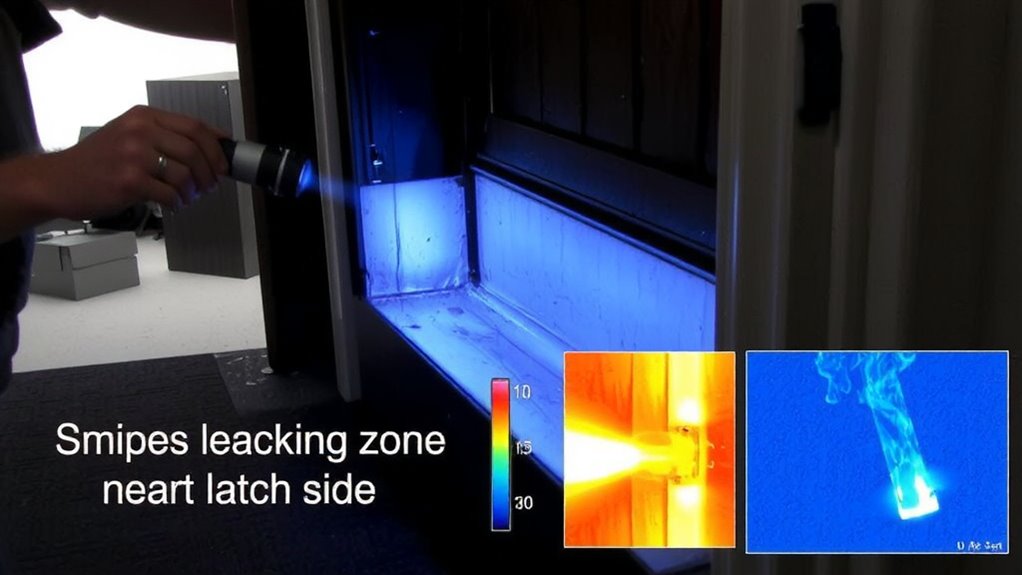
While you might assume the entire door is the primary source of sound leakage, the truth is that most noise escapes through the gaps around it-especially at the sides, top, and bottom. These air leaks create sound cracks where voices, music, or traffic easily pass. You can detect them by running your hand along the edges while someone flushes a toilet or turns on a hair dryer inside the room-you’ll feel airflow and hear increased noise. Common gaps exceed 1/8 inch, which is more than enough to compromise privacy. Even small openings drastically reduce a door’s STC (Sound Transmission Class) rating. Don’t overlook the threshold; that bottom gap often leaks the most sound. While solid-core doors help, they won’t fix these weaknesses on their own. Identifying every leak now guarantees your later fixes actually work. Skip this step, and even top-tier materials won’t deliver the performance you expect.
Seal Gaps With Weatherstripping
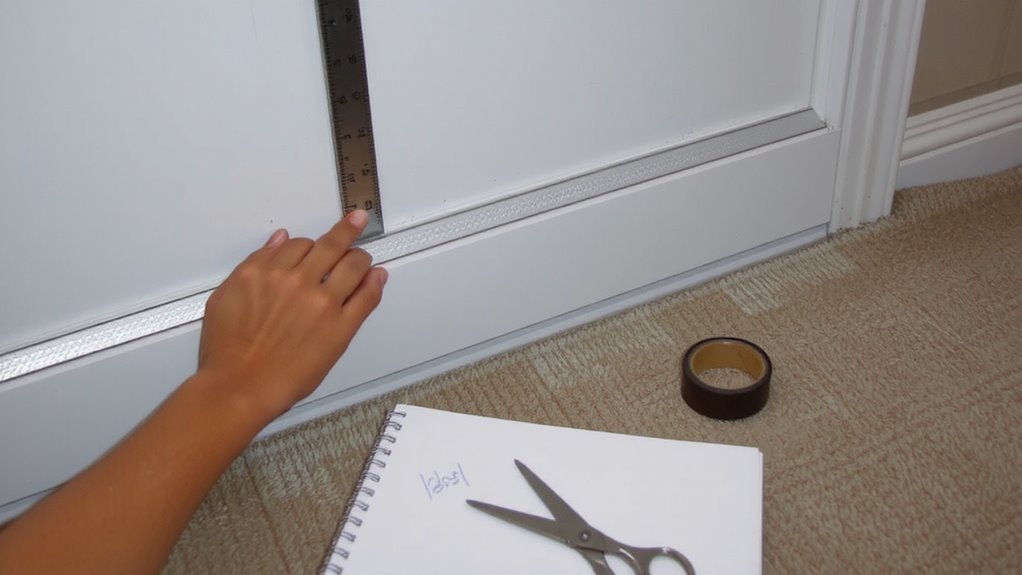
You’re better off sealing those gaps right away with quality weatherstripping-it’s one of the most effective, low-cost steps you can take to block sound from slipping around your door. Apply adhesive-backed foam or V-strip along the door’s sides and top, ensuring a snug fit when closed. For the bottom, pair an adjustable door sweep with a solid threshold to close the largest air gap. Use acoustic caulk to seal any remaining cracks, especially around frame joints-unlike regular caulk, it stays flexible and maintains an airtight seal. Most kits cost under $30 and cut sound leakage by 50–70% in real-world tests. Note: cheap materials wear quickly; look for ones with at least a 5-year warranty. Weatherstripping works best when the door already closes tightly-if it’s misaligned, fix that first. It won’t stop all sound, but it’s a proven starting point.
Block Noise With a Door Blanket
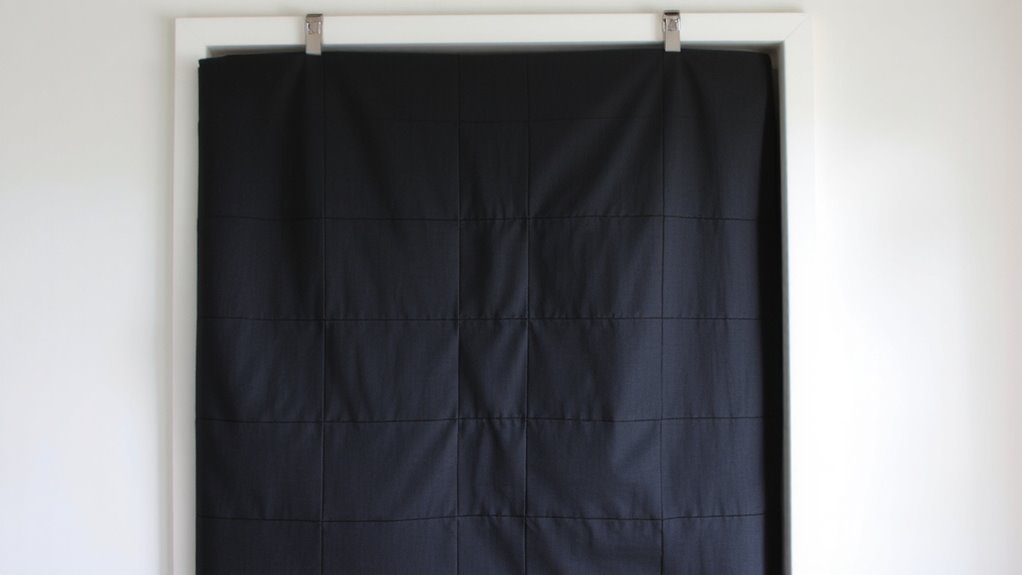
A door blanket offers a quick, non-permanent way to cut down on noise transmission through a home office door, especially when you can’t replace or modify the door itself. It provides decent sound dampening by adding mass and density, reducing airborne noise like voices or music. Most effective models combine layers of vinyl, foam, or fabric to boost noise absorption across a range of frequencies. You hang it like a heavy curtain using rods or clips, ensuring full coverage from top to bottom. Look for products with an NRC (Noise Reduction Coefficient) of 0.6 or higher for measurable performance. While not as effective as permanent solutions, it’s a solid short-term fix. Just know it blocks light and may limit door use. Most brands offer 1-year warranties, and real-world tests show up to 50% noise reduction in typical home environments-worth it if discretion and simplicity matter.
Stop Floor Gaps With a Door Sweep
If you’re serious about reducing noise leakage from your home office, sealing the gap under the door with a door sweep is one of the most effective and affordable steps you can take. This gap often undermines your acoustic insulation efforts, letting sound sneak through like a draft. A quality door sweep, mounted tightly to the door’s bottom edge, closes that opening and improves sound blocking by up to 50% in real-world tests. Look for models with EPDM seals-they compress well and last. Most install in minutes with screws and require no tools beyond a drill. Check for consistent contact with the threshold; uneven floors create weak spots. Use draft detection (like holding a lit incense stick near the gap) to confirm the seal. Some sweeps limit door swing or wear down with daily use, so choose one with an adjustable or replaceable seal. Read warranty terms-10-year coverage indicates durability.
Upgrade to a Solid Core Door
Noise control starts at the door, and nothing delivers better acoustic performance than a solid core door. You’ll notice a real drop in sound transfer thanks to its high material density and typical 1¾-inch door thickness-much better than hollow cores that barely block speech. Solid cores use compressed wood fiber or particleboard, adding mass that blocks airborne noise. Lab tests show they achieve STC ratings of 30–35, about 10–15 points higher than most hollow doors. That means clearer quiet in your home office. Just be sure your hinges and frame can handle the extra weight, usually 45–60 lbs. If your current setup isn’t rated for it, expect sagging over time. Installation is like any interior door, but check swing clearance and hinge alignment. While pricier-$100–$300-this upgrade often outperforms cheaper fixes. It’s a lasting fix, not a patch.
Reinforce the Frame for Maximum Seal
The door frame isn’t just support-it’s part of the sound barrier. If it’s loose or uneven, sound sneaks through, no matter how good your door is. Reinforcing the frame boosts both door alignment and frame insulation, sealing gaps where noise enters. Start by checking hinge screws; tighten or replace them with longer ones to pull the jamb snug against the stud. Add shims behind the hinges if the door sags. Then, apply acoustic sealant around the frame before reinstalling trim-this improves frame insulation without visible changes. Use a door sweep and perimeter seals for a full barrier. Keep in mind, over-tightening can warp the frame, so adjust carefully. Results vary by wall construction, but real-world tests show STC ratings improve by 5–8 points when done right. It’s effective, but not a fix for structural flaws.
On a final note
You can substantially reduce noise leakage without replacing your home office door. Weatherstripping seals gaps around the frame, a door sweep blocks sound at the threshold, and a dense door blanket adds mass. These fixes are effective and affordable. But results vary by wall construction and noise type-low frequencies are harder to stop. Performance depends on precise installation and material thickness. No solution achieves total silence, but combined, they offer meaningful improvement for calls or concentration.