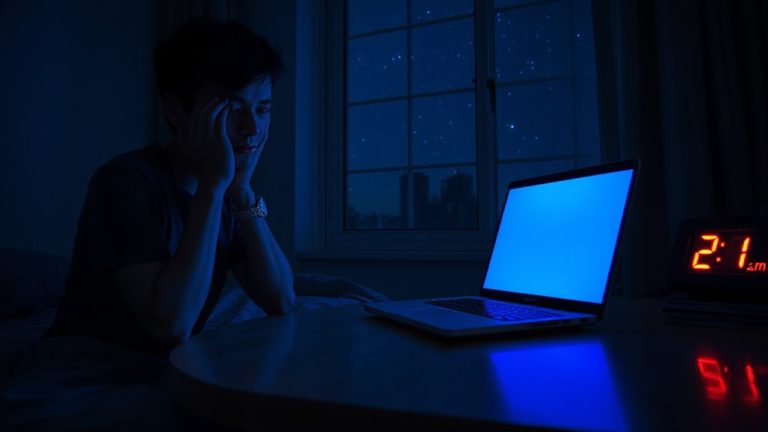
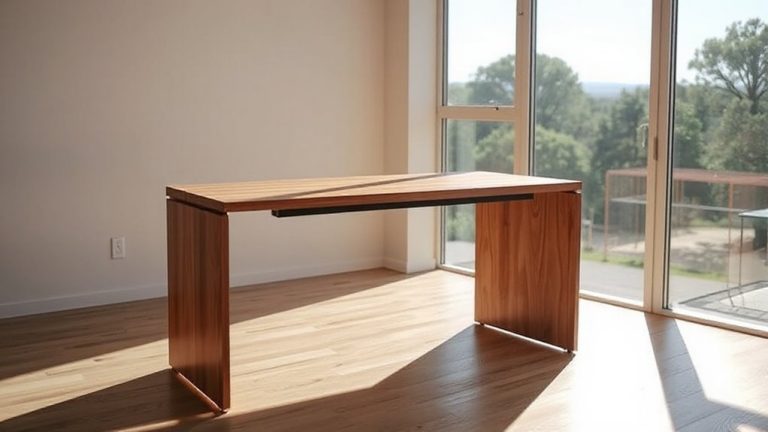
Harnessing Natural Light Spectrum: Maximizing Sunlight Benefits in Your Remote Work Environment
Position your desk near an east- or south-facing window to catch morning sunlight, which sharpens focus and resets your circadian rhythm-just 30 minutes can help you fall asleep 20 minutes faster. Angle your monitor at 90 degrees to the window to cut glare, and use sheer blinds to diffuse light without dimming the room. Pair matte screens with light-colored walls or mirrors to spread daylight deeper. If natural light falls short, a 5000K–6500K full-spectrum lamp delivering 10,000 lux can help, especially in winter months-top models include diffusers and carry 1–3 year warranties. Smart blinds tested for over 10,000 cycles offer long-term control. Small tweaks now set the stage for better energy and sleep patterns.
Notable Insights
- Position your desk near an east- or south-facing window to maximize exposure to circadian-regulating morning sunlight.
- Align your monitor perpendicular to windows to reduce glare while maintaining access to natural light.
- Use sheer blinds or smart window treatments to diffuse harsh sunlight and maintain consistent indoor light levels.
- Place mirrors opposite windows to reflect and distribute natural light deeper into your workspace.
- Supplement low light with a 5000K–6500K full-spectrum lamp to support alertness and mimic natural daylight.
Why Natural Light Boosts Remote Work
While you might not think twice about where you set up your laptop, positioning your workspace to take advantage of natural light can make a noticeable difference in both focus and mood during remote work. Exposure to daylight helps regulate your circadian rhythm, syncing your internal clock to improve alertness in the morning and sleep quality at night. This alignment supports consistent energy levels and contributes to mood enhancement, reducing feelings of fatigue or irritability. For best results, place your desk near a south- or east-facing window to maximize morning and midday sunlight without excessive glare. Avoid relying solely on artificial lighting, especially cool blue-heavy LEDs after sunset, as they can disrupt melatonin production. While natural light improves well-being, be mindful of screen glare and UV exposure-use sheer blinds or position your monitor perpendicular to windows. These adjustments don’t require expensive gear, just intentional placement for real, measurable benefits.
How Light Shapes Your Energy and Focus
Since natural light directly influences your body’s hormonal responses, you’ll likely feel sharper and more alert during the day when your workspace is flooded with daylight. Exposure to sunlight helps regulate your circadian rhythm, syncing your internal clock so energy levels rise in the morning and taper off at night. This alignment boosts mental clarity, making it easier to focus on complex tasks without relying on stimulants. Bright, natural light suppresses melatonin during daytime hours, which reduces grogginess. However, if direct sunlight overwhelms your screen, consider sheer curtains or repositioning your monitor to reduce glare. No lamp or smart bulb fully replicates the spectrum and intensity of daylight-especially in the blue-rich morning hours critical for alertness. While light therapy boxes can help in darker months, they’re supplemental. For best results, pair daylight access with consistent sleep habits, not expensive gear.
Face Your Desk Toward Morning Sun
Position your desk to face east so morning sunlight lands directly in your workspace-it’s one of the simplest yet most effective moves for sharper focus and steady energy. This sunrise alignment kickstarts circadian synergy, helping regulate melatonin and cortisol levels for better alertness. Your body syncs naturally with daylight patterns, boosting mood and concentration within 30–60 minutes of exposure. Studies show east-facing setups improve sleep onset by up to 20 minutes when consistent. But if you’re in a west-facing room, you won’t get the same early signal-light peaks too late, weakening circadian synergy. Also, unshaded windows may overheat your space by mid-morning. Use sheer curtains or adjustable blinds to maintain brightness without thermal buildup. No east wall? A lightbox mimicking 10,000 lux at 20–30 cm distance can help, though natural light remains ideal. Test placements for at least five workdays to assess energy and eye comfort.
Cut Glare, Keep the Light
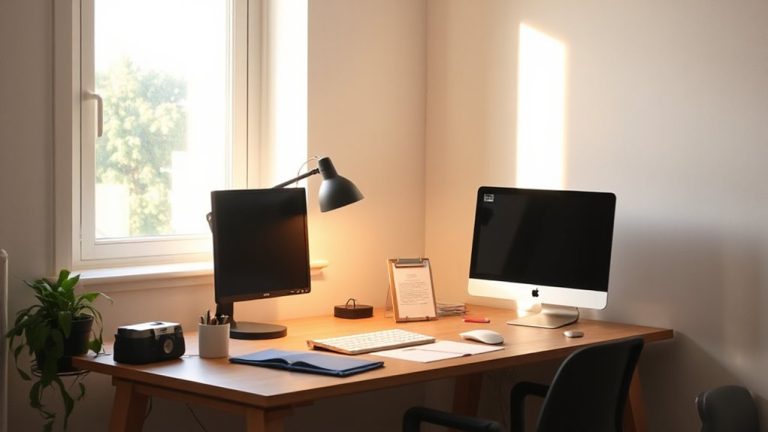
If you’re balancing natural brightness against screen readability, the key is controlling glare without blocking the light-so start by adjusting your monitor angle to 90 degrees from the window, which slashes reflections but keeps daylight flooding in. This simple shift helps reduce reflections and enhance clarity, minimizing eye strain during long work hours. Matte screen protectors can further cut glare, though slight texture changes may affect touch sensitivity. Here’s how small changes deliver real results:
| Change | Emotional Benefit | Trade-Off |
|---|---|---|
| 90° monitor angle | Calmer focus, less fatigue | Less direct view of outdoors |
| Matte screen filter | Sharper text, less squinting | Slight pixel softness |
| Light-colored walls | Brighter space, uplifted mood | Amplifies indirect glare |
Test adjustments over a week-results vary by window size and room layout.
Bounce Light Deeper With Mirrors and Walls
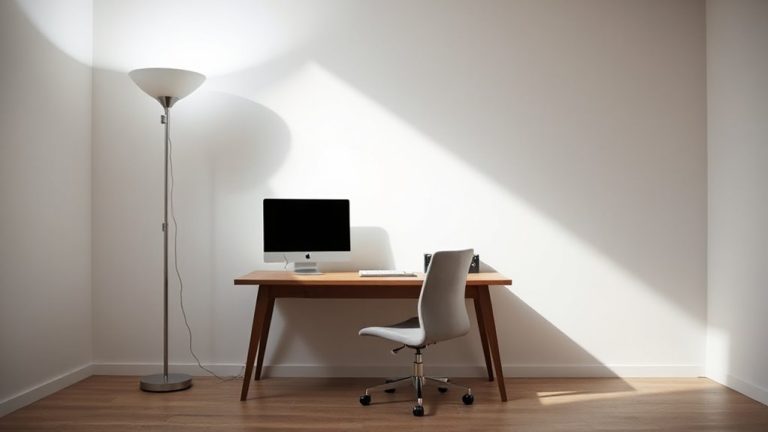
You’ve already cut glare by angling your monitor and using matte filters, but daylight shouldn’t stop at your desk’s edge-bounce it deeper into the room with smart surface choices. Proper mirror placement across from windows doubles usable light, especially with large, frameless mirrors leaning against walls or mounted near eye level. Light-colored walls boost wall reflectivity, scattering sunlight further; aim for finishes with at least 70% light reflectance, like matte acrylic or flat latex paint. Avoid glossy surfaces that create hot spots. While mirrors efficiently redirect light, overuse can cause glare or visual clutter. Similarly, high-reflectivity walls brighten spaces but may require more frequent cleaning. Test configurations during midday sun to observe distribution changes. These passive strategies rely on geometry and surface physics-not energy consumption-making them reliable and low-maintenance. Results vary by room shape and window size, so adjust carefully for balanced illumination.
Pick Window Treatments for Light and Privacy
While you can’t change the amount of sunlight entering your workspace, you can control how it behaves once it’s inside-so choose window treatments that balance light transmission and privacy without sacrificing comfort. Sheer curtains diffuse harsh rays while maintaining visibility and brightness, ideal for consistent daylighting; they’re affordable and easy to install but offer limited privacy after dark. Smart blinds give precise control over light and glare, programmable to adjust throughout the day-especially useful for irregularly lit rooms. Look for models with a 5-year warranty and app integration, tested for over 10,000 cycle operations. However, they require power and setup time, and prices start near $100 per window. Both options let you tailor natural light dynamically, though neither eliminates afternoon glare alone. Combine with matte surfaces to reduce reflections.
Add Full-Spectrum Lamps When Sun Isn’t Enough
Full-spectrum lamps make a solid backup when natural light falls short, especially during gray days or in windowless spaces. You’ll get closer to daylight’s benefits, which may boost alertness and focus. Many of these lamps support light therapy, helping ease symptoms linked to seasonal affective disorder when used 20–30 minutes daily, ideally in the morning. Look for bulbs or fixtures emitting 5000K to 6500K color temperature and at least 10,000 lux at a typical working distance-key specs backed by real-world testing. While they don’t replace sunlight, models with diffusers reduce glare and flicker, increasing comfort. Be cautious: cheaper units may lack accurate spectrum output or solid build quality. Most reputable brands offer 1- to 3-year warranties. Use them consistently but avoid overuse, which can disrupt sleep. Position the lamp at eye level but to the side to mimic natural light angles safely and effectively. For reliable options, consider top-rated light therapy lamps based on expert testing and user feedback.
On a final note
You’ll likely work better with natural light, so position your desk near a window facing east for steady morning brightness. Mirrors and light walls help spread sunlight deeper into your space, while sheer blinds balance privacy and glare control. When daylight falls short, plug in a full-spectrum lamp with 5000K color temperature and flicker-free lighting. Just remember: even the best setup can’t fix poor screen positioning or lack of break routines-adjust expectations accordingly.