Designing a Desk With Built-In Drawers Under the Work Surface
You’re better off buying a factory-built desk with built-in drawers-they offer precise, smooth glides and durable mechanisms you can’t easily replicate at home. Look for full-extension, soft-close slides and drawers sized right: small (6–10”) for pens, medium (12–16”) for notebooks, large (18–24”) for files. Choose oak or maple for durability, and prioritize a 60” width and 28–30” height for comfort. Built-in systems save space and boost efficiency, but expect to pay $300 more for premium features. Smart layout and tested materials mean fewer trade-offs down the line.
Notable Insights
- Choose a desk width of at least 60 inches to accommodate dual monitors and built-in drawers without sacrificing workspace.
- Opt for factory-built desks with pre-engineered drawers to ensure smooth glides and long-term durability.
- Design drawers in varying sizes: small (6–10″) for pens, medium (12–16″) for notebooks, and large (18–24″) for files.
- Position top drawers for frequent-use items and place them on the dominant side for handedness efficiency.
- Use full-extension, soft-close drawer slides and keep drawer height under 6 inches to preserve legroom.
Decide: Build Your Desk or Buy One?
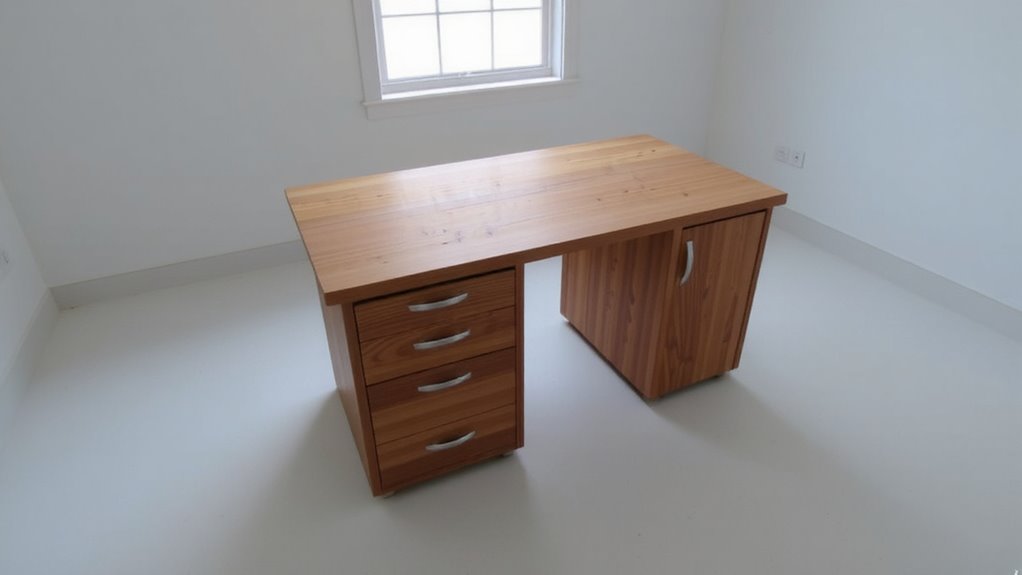
You’ve got two clear paths: build your desk with built-in drawers or buy one ready-made, and for most people, buying beats building unless you’re confident with tools and tight on budget. Factory-built desks often include precision-engineered hidden mechanisms and smooth glides that are hard to replicate at home. You also gain access to tested durability, warranties, and consistent measurements. Plus, custom finishes let you match your room’s style without extra labor. But pre-made models with advanced features can cost more-sometimes $300 to $600 over basic versions. Building your own saves money and offers full control, but alignment issues and drawer function often demand rework. If you skip professional hardware, like undermount slides or soft-close systems, performance suffers. So unless you’ve got workshop experience and time, a quality store-bought desk with hidden mechanisms and custom finishes is the smarter, more reliable choice. For inspiration and top-rated options, check out the Best Home Office Desks roundup to see models that combine functionality and style.
Design Built-In Drawers for Your Workflow
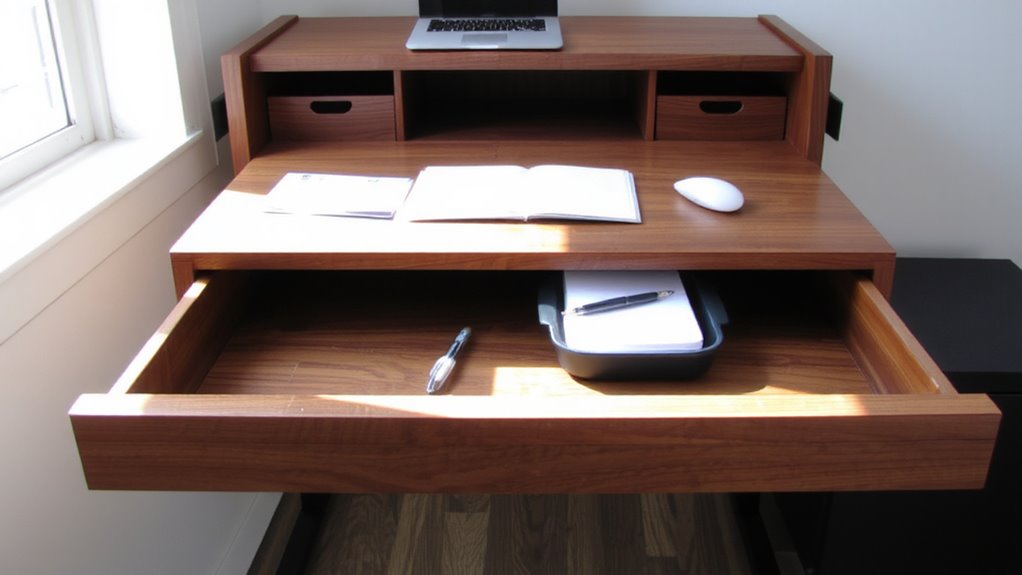
A store-bought desk with built-in drawers often delivers better function and long-term reliability, especially if you’re prioritizing a seamless workflow. Pre-engineered systems guarantee smooth glide mechanisms and precise drawer organization, improving tool accessibility during long work sessions. When designed right, built-in drawers keep essentials close without cluttering your surface. For those considering upgrades or replacements, exploring the best desk drawers can provide valuable insights into top-performing models and features.
| Drawer Size | Ideal For | Accessibility Level |
|---|---|---|
| Small (6–10″) | Pens, sticky notes | High – front access |
| Medium (12–16″) | Notebooks, chargers | Moderate – full extension |
| Large (18–24″) | Files, supplies | Lower – requires reach |
| Vertical dividers | Tools, tech | High – organized sections |
Prioritize drawer organization tailored to your daily tools. While customization is limited compared to DIY, you gain tested durability and consistent tool accessibility-just verify slide quality and weight ratings before buying.
Size Your Desk for Comfort and Space
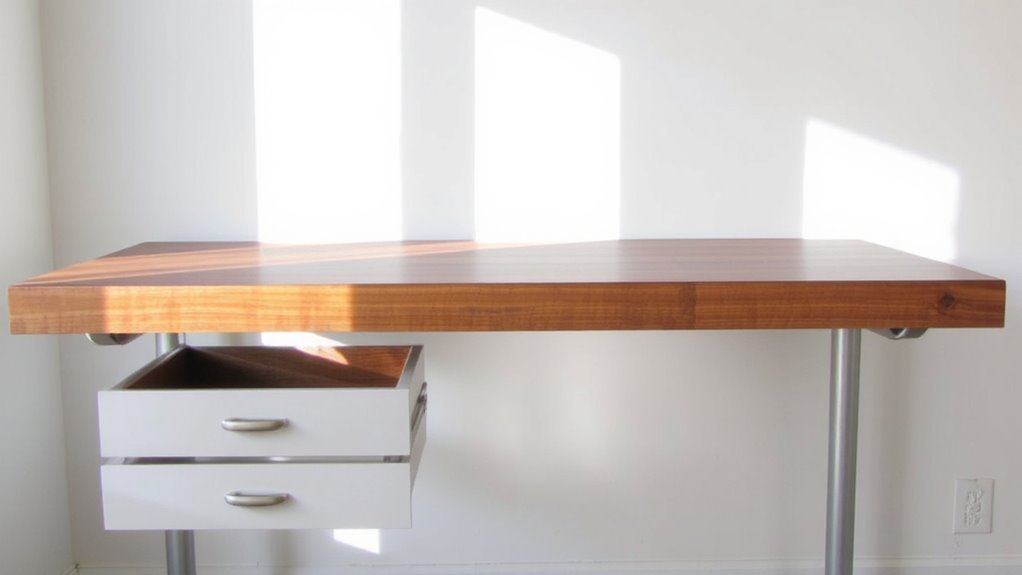
At least 60 inches of desk width is necessary for most people to comfortably manage a dual-monitor setup, keyboard, and writing space without feeling cramped. Go wider if you sketch or spread documents. Depth matters too-aim for 24 to 30 inches to preserve legroom clearance and keep your monitor at a healthy viewing distance. Set the surface at ergonomic height: typically 28 to 30 inches for seated work, depending on your chair and build. If you’re taller or use a standing desk, adjust accordingly, but guarantee your elbows stay at 90 degrees when typing. Don’t forget drawer depth-keep them under 6 inches high so they don’t steal legroom. A well-sized desk boosts focus and cuts fatigue, but oversized builds can dominate small rooms. Measure your space and workflow first. Comfort hinges on fit, not just features.
Choose Materials for Style and Durability
Solid wood desks, especially those made from oak or maple, deliver lasting durability and a premium look that holds up over years of daily use. Your wood selection directly impacts both longevity and aesthetic character-oak offers pronounced grain, while maple gives a smoother, more uniform appearance. Finish options matter just as much; they protect against scratches and spills while defining the final tone. Consider factory-applied finishes for even coverage and tested resilience. Here’s how common choices stack up:
| Wood Type | Durability (Scratch Resistance) | Best Finish Options |
|---|---|---|
| Oak | High | Satin polyurethane |
| Maple | Very High | Matte oil finish |
| Pine | Low | Paint or lacquer |
Pine is cheaper but dents easily-fine for light use. Always balance style with practicality: a beautiful finish can wear thin if it’s not suited to your routine. Test samples under real conditions before committing.
Arrange Drawers for Maximum Efficiency
When setting up your desk, you’ll want to position the drawers so they support how you actually work-because no matter how durable the build, inefficient layout can slow you down. Smart drawer placement means putting frequently used items within easy reach, usually in the top drawer, while reserving deeper drawers for bulkier supplies. Aim for an organizational layout that mirrors your workflow: left-side drawers for left-handers, right-side for right-handed users, or center drawers for shared access. Consider width-each drawer should be wide enough to hold standard folders or notebooks without sliding around. Soft-close mechanisms add durability and reduce wear. However, too many drawers can limit legroom, so balance storage with ergonomics. Test the pull-out depth; full-extension slides let you access the back of the drawer without straining. Drawer placement isn’t just about convenience-it’s about sustaining efficiency over time.
On a final note
You’ll likely save space and customize storage well with a built-in drawer desk, especially if you sketch plans first and use plywood or solid wood. Built-in drawers under the work surface improve legroom versus standalone units. Just confirm drawer glides are full-extension and rated for 40+ lbs to avoid sagging. Expect longer assembly versus buying pre-made. Measure your room and seating carefully-poor clearance or depth ruins ergonomics, even with great materials.