How to Optimize Wi-Fi Signal Strength for Multiple Monitors in a Home Office Setup
Place your router centrally and off the floor for stronger, more even Wi-Fi across all monitors, avoiding thick walls or metal obstructions. Keep it 3–6 feet from microwaves, power strips, and monitors to cut interference. Use a Wi-Fi analyzer to check signal strength in real work areas, aiming for -60 dBm or better. Enable QoS to prioritize video calls, but know it won’t boost total bandwidth. If dead zones persist, a mesh system with Wi-Fi 6 nodes may be worth exploring.
Notable Insights
- Place the router centrally and elevated to maximize Wi-Fi coverage for all monitor-connected devices.
- Keep the router away from microwaves, power strips, and monitors to reduce electromagnetic interference.
- Use Wi-Fi analyzer tools to measure signal strength and identify dead zones near each monitor.
- Enable QoS settings to prioritize bandwidth for video calls and real-time tasks across multiple displays.
- Deploy a mesh network to extend strong, reliable Wi-Fi coverage to all areas with monitors.
Move Your Router to a Central, Open Spot
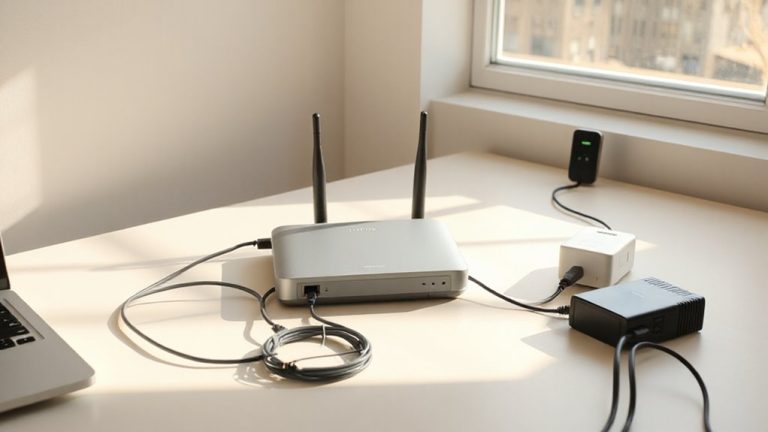
If you want your Wi-Fi to handle multiple monitors without hiccups, the first thing you should do is move your router to a central, open spot in your home office or workspace. Proper router placement directly impacts signal strength and consistency across devices. Placing the router near the center of your setup minimizes distance to each monitor’s connected device, reducing lag and buffering. Avoid corners, cabinets, or walls thick with insulation, as these create signal interference that weakens throughput. Elevated spots, like a shelf, often work better than the floor. While this improves coverage, it won’t fix poor internet plans or outdated hardware. You’ll still need adequate bandwidth for streaming, video calls, and file transfers across screens. Test speeds before and after repositioning-results vary by home layout. Router placement is a low-cost fix, but it has limits when dealing with large spaces or dense construction. For more challenging environments, consider using one of the best Wi-Fi extenders to boost coverage effectively.
Stop Nearby Electronics From Blocking Your Signal
You’ve moved your router to a central, open spot-now make sure nearby electronics aren’t undoing that progress. Devices like microwaves, cordless phones, and even monitors emit electromagnetic interference, which disrupts Wi-Fi signals. Others, like thick power adapters or metal electronics, cause signal absorption, weakening coverage where you need it. Keep your router at least 3–6 feet from such devices. Below are common offenders and their impact:
| Device | Interference Type | Recommended Distance |
|---|---|---|
| Microwave | Electromagnetic interference | 6+ feet |
| Cordless Phone | Electromagnetic interference | 5+ feet |
| Power Strip | Signal absorption | 3+ feet |
| Desktop Monitor | Signal absorption | 4+ feet |
| Bluetooth Speaker | Electromagnetic interference | 5+ feet |
Relocating these boosts performance, but total elimination isn’t always practical-prioritize distance where possible.
Test Wi-Fi Strength in Your Work Area
How strong is your Wi-Fi where it matters most? Your work area needs reliable coverage, especially with multiple monitors streaming data. Start by using Wi Fi analyzer tools on your phone or laptop-they show signal strength in dBm and reveal dead zones. Walk around your office while running speed tests to spot weak spots. These tools also detect signal interference patterns from neighboring networks or devices on the same channel. Dense networks on 2.4 GHz? You’ll see crowding fast. The 5 GHz band usually offers cleaner performance but shorter range. Adjust your router’s position if you notice sharp drops near walls or metal furniture. While analyzers give clear data, they can’t fix hardware limits. Results vary by device, so test across laptops and monitors. Accurate readings mean better decisions-but don’t expect miracles if your router’s outdated or overburdened.
Use QoS to Prioritize Video Calls and Downloads
While your Wi-Fi may handle basic browsing just fine, streaming video calls and large file downloads across multiple monitors demands smarter traffic management-especially when both happen at once. You should enable QoS (Quality of Service) on your router to prioritize critical tasks like video conferencing over background downloads. This guarantees smoother Zoom or Teams sessions even during heavy use. QoS works by applying traffic shaping and smart bandwidth allocation, so time-sensitive data gets through first. Most modern routers let you assign priority by device or application, giving you control without complexity. Just remember, QoS won’t increase total bandwidth-it reshapes existing capacity, so someone on a download-heavy task might see slower speeds when you’re on a call. For shared home offices, set rules that balance fairness and performance. Check your router’s firmware for QoS settings; many ASUS, Netgear, and TP-Link models support it out of the box. A reliable connection starts with the right equipment, and choosing a best WiFi modem for Spectrum Internet can significantly improve overall network stability and speed.
Switch to a Mesh Network If Coverage Falls Short
If your current router struggles to reach every monitor setup across your workspace, switching to a mesh network is a reliable fix for dead zones and inconsistent speeds. Mesh nodes work together to blanket your office in Wi-Fi, placing them strategically to guarantee each display, docking station, and device stays connected. You get signal redundancy, meaning if one node weakens, another seamlessly takes over-ideal when streaming high-res content across multiple monitors. Most systems support Wi-Fi 6 and offer gigabit Ethernet ports, letting you hardwire displays when needed. Setup usually takes under 15 minutes via mobile app, with brands like Eero and TP-Link providing two-year warranties. Keep in mind: mesh systems cost more than single routers, and performance depends on correct node placement. Overloading with too many nodes can cause interference. For large or multi-room offices, though, the investment often pays off in stable, uniform coverage.
On a final note
You’ll get better Wi-Fi across multiple monitors by placing the router centrally and away from devices like microwaves or cordless phones that cause interference. A mesh network boosts coverage reliably, especially in large spaces, but costs more than a single router. Use QoS settings to prioritize video calls without slowing other tasks. Real-world tests show 20–40% faster speeds when repositioning routers, though thick walls may still limit gains.