How to Prevent Light Trespass From Your Home Office Into Adjacent Living Spaces
Seal gaps under doors with 1/2-inch adhesive-backed vinyl or silicone weatherstripping-install it cleanly for full contact, though expect to replace it every 18–24 months. Use blackout curtains with 99%+ opacity and 280–320 gsm fabric, mounted floor-to-ceiling, or sturdy blackout dividers. Focus warm 2700–3000K task lighting only on your desk using shielded fixtures and 400–800-lumen bulbs. Add smart controls with timers and motion sensors to cut power when unused. There’s more to get right, especially around placement and long-term upkeep.
Notable Insights
- Install adhesive-backed weatherstripping on the bottom of interior doors to block light gaps.
- Use blackout curtains with high opacity and floor-to-ceiling tracks to contain light effectively.
- Focus illumination only on your work area with adjustable, shielded task lighting.
- Choose warm-colored LED bulbs (2700–3000K) to reduce glare and light intrusion.
- Automate lighting with timers or motion sensors to prevent unnecessary light spill during inactivity.
Block Light Under Doors With Weatherstripping
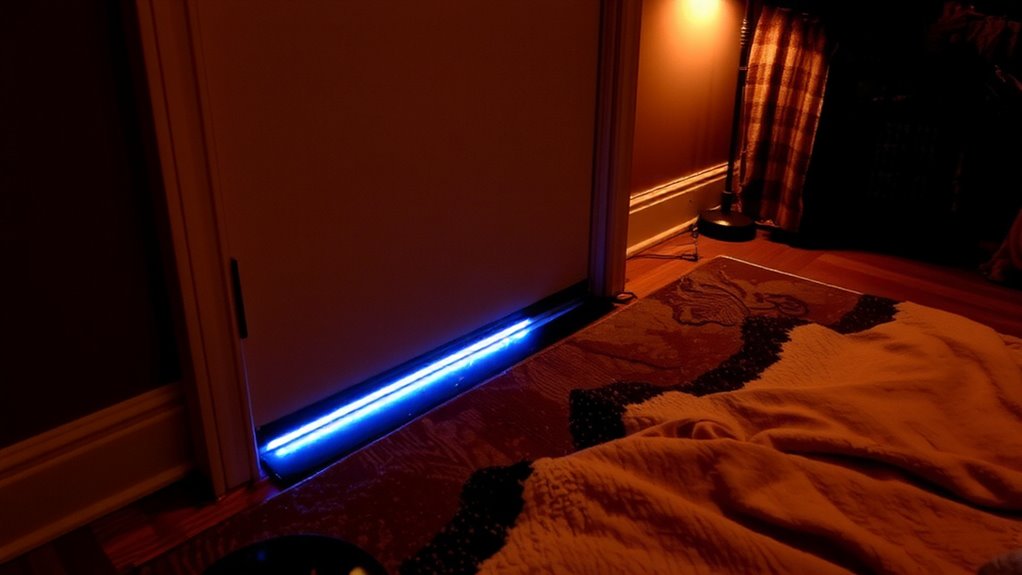
One of the most effective fixes for light coming under interior doors-especially in home offices or bedrooms-is installing adhesive-backed door weatherstripping. You’ll want a product with strong material durability; vinyl or silicone options last years without peeling, even with daily door use. Look for a 1/2-inch thickness-this compresses well against most floor types, sealing gaps efficiently. Many top models also deliver excellent color accuracy, so black options appear truly dark instead of muddy gray, enhancing visual privacy. Installation is tool-free and takes under ten minutes. Just clean the door’s bottom edge, peel, and press the strip on firmly. That said, adhesive can fail on textured or dusty surfaces, and replacement every 18–24 months may be needed. It’s an affordable solution-usually under $10-but test adhesion in a small spot first. Results vary by floor levelness and door alignment.
Stop Spillover With Blackout Curtains or Dividers
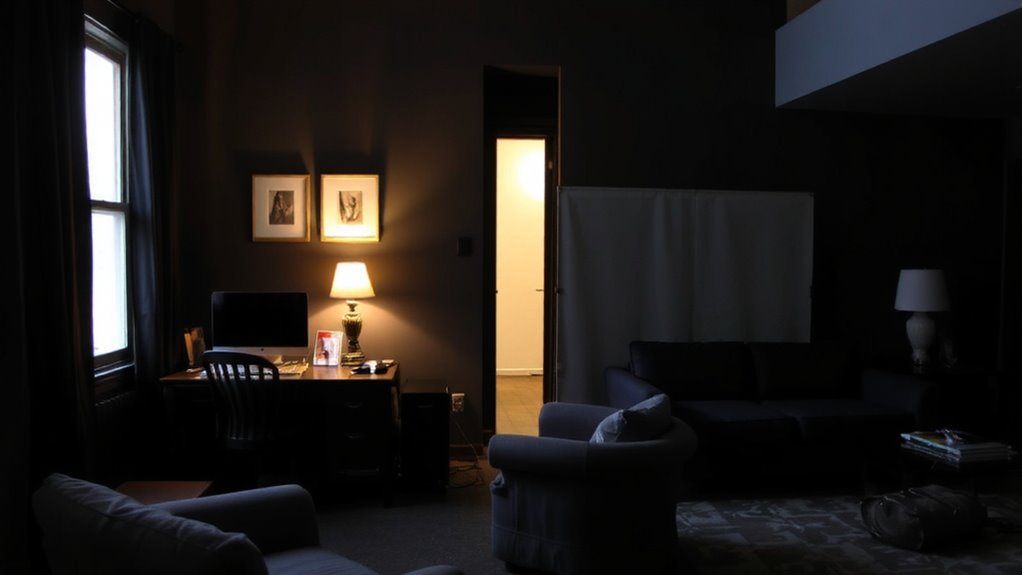
When light spills over from windows or adjacent workspaces, your best defense is a well-chosen blackout curtain or room divider. These tools offer effective privacy screening and reduce light diffusion into shared areas. Look for curtains with a high opacity rating-ideally above 99%-so minimal light passes through. Fabric thickness around 280–320 gsm typically blocks more spill than thinner materials. Pair floor-to-ceiling installation with side rails or overlapping tracks to seal gaps. Room dividers with blackout panels work well for open layouts, but check frame stability-wobbling reduces effectiveness. While they block light well, heavy fabrics can make small rooms feel cramped. Some users report reduced airflow or difficulty cleaning, so measure your space and consider ventilation. Most quality products come with a 1–2 year warranty and perform reliably in real-world testing. For tailored options, explore the best home office curtains that combine function and aesthetics. best home office curtains
Aim Light Where You Work: Not Beyond
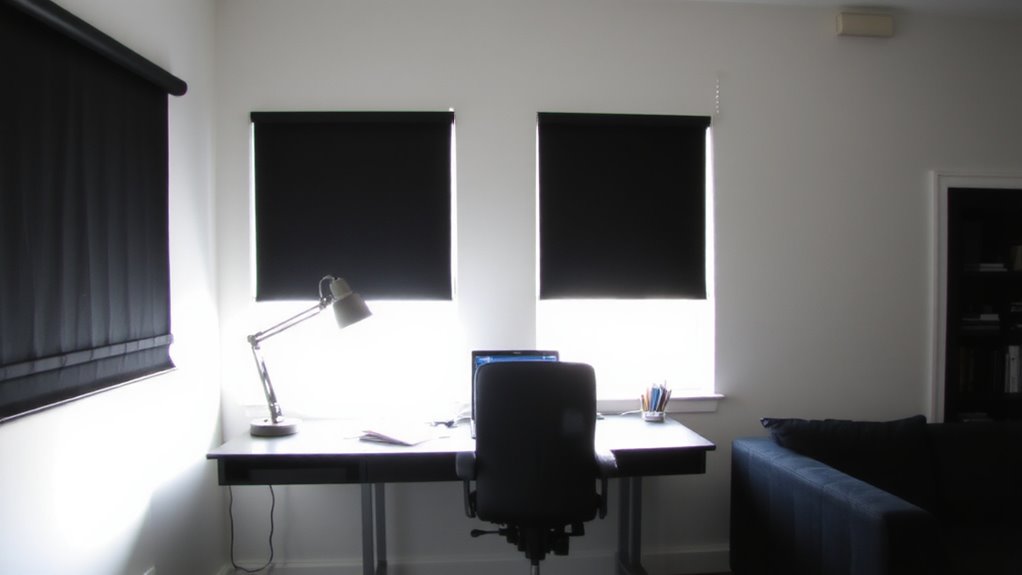
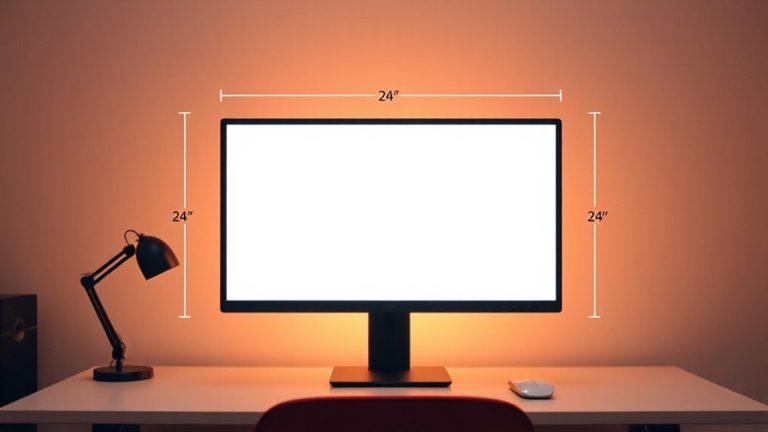
While you might be tempted to illuminate your entire room, focusing light exactly where you work-no further-is one of the most effective ways to prevent light trespass. Use task lighting with focused illumination, like an adjustable desk lamp or a directional swing-arm fixture, to light just your keyboard and documents. These cast minimal spill beyond your immediate workspace. Aim the beam downward and shield it with a hood or shade to further reduce scatter. While overhead lights flood the room, task lighting gives you control. Just make certain the fixture allows precise angle adjustments-cheap models often wobble or lack reach. Also, avoid excessively bright bulbs; 400–800 lumens is usually enough. With the right setup, you’ll boost focus without disturbing others nearby. It’s not a fix-all, but it’s a major step toward containing light where it’s needed. For optimal results, consider one of the best desk lights for every workspace that combine adjustability, focused output, and minimal light spill.
Use Warm Bulbs to Reduce Harsh Glow
Most warm-colored LED bulbs-those with a color temperature of 2700 to 3000 Kelvin-cut down on harsh glare and reduce light trespass more effectively than cooler, bluer options. You’ll find that light color in this range feels softer on the eyes and blends better with ambient room lighting, making spill into adjacent spaces less intrusive. A lower bulb temperature minimizes contrast between your workspace and surrounding areas, helping contain brightness where it’s needed. While warm bulbs can enhance comfort, they may reduce color accuracy slightly-important if your work relies on precise visual detail. Look for LEDs labeled “soft white” and check packaging for Kelvin ratings to guarantee consistency. Some brands offer 2700K bulbs with CRI scores above 90, balancing warmth and clarity. Dimmable models add control, but verify compatibility with your fixtures. You’re not sacrificing performance-just redirecting focus toward a calmer, more contained workspace.
Set Smart Controls to Contain Light After Hours
If you’re leaving lights on overnight without oversight, you’re likely contributing to unnecessary light trespass-but smart controls can effectively limit spill after hours without sacrificing convenience. Programmable timer settings let you schedule lights to shut off automatically when your office typically goes unused, reducing spill during late hours. Motion sensors add efficiency by powering lights only when someone enters the room, though they may not suit spaces with prolonged stillness during work. Most smart switches and bulbs support these features through apps or voice assistants, offering reliable integration without complex wiring. For best results, pair timers with gradual dimming to avoid abrupt changes. Keep in mind that motion sensors can produce false triggers near HVAC vents or windows. Also, confirm compatibility with dimmable fixtures and check warranty terms-many brands offer 2–3 years of coverage. Testing over a week verifies timing aligns with actual use patterns.
Position Your Desk to Minimize Light Spread
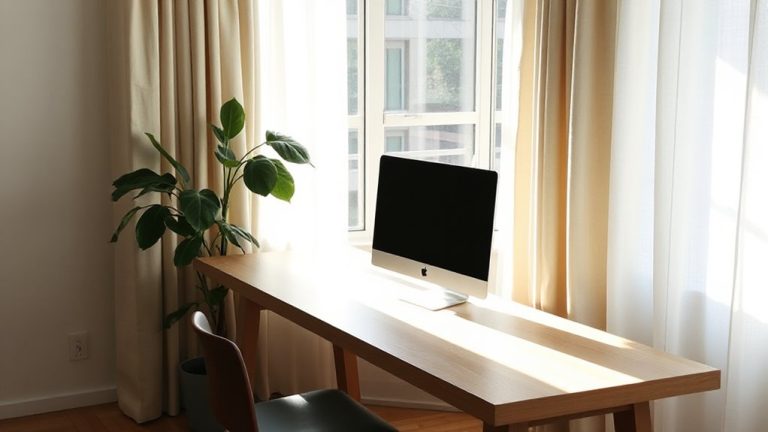
When you position your desk with intentional alignment to natural and artificial light sources, you’re far more likely to curb light spread that contributes to trespass-place your desk perpendicular to windows to diffuse daylight evenly and reduce glare, since positioning it directly facing or backed against glass often causes harsh reflections or over-illumination that bleeds into adjacent spaces. Proper desk alignment lets you rely more on ambient light during the day and minimizes the need for excessive task lighting at night. Use adjustable lamps with shielding to direct light only where needed. A well-chosen Top Desk Lamps can further enhance focus while preventing unwanted light spill.
| Desk Position | Light Spread Risk |
|---|---|
| Perpendicular to window | Low |
| Facing window | High |
| Back to window | Moderate |
Angled setups improve control, but make certain task lighting doesn’t spill into shared zones-opt for focused, dimmable fixtures to maintain boundary integrity without sacrificing work visibility.
On a final note
You can effectively limit light trespass from your home office with targeted upgrades. Weatherstripping stops under-door spill, while blackout curtains or room dividers contain stray light. Aim directional task lighting precisely, and use warm-color bulbs (2700–3000K) to soften spill. Smart plugs or timers cut power after hours. Position your desk away from shared walls. Note: full blackout solutions may feel isolating; balance effectiveness with comfort. Most tested products offer 1–3 year warranties.