How to Use Light Shelves to Reflect Daylight Deeper Into a Long, Narrow Office
Mount a light shelf on south-facing windows at 6.5 feet high with a 2–3 foot overhang and 30-degree upward tilt to reflect daylight up to 15 feet into your narrow office. Use matte white or high-reflectance aluminum (80%–95% VLR) to evenly distribute light and avoid glare. Avoid north-facing installs-they deliver minimal gain. Pair with a white ceiling and guarantee the lower lip masks direct view of the window. Performance depends on precise alignment with sun angles; seasonal tuning helps. You’ll see how design choices impact real-world daylighting.
Notable Insights
- Position light shelves on south-facing windows to maximize daylight penetration through optimal sun angles.
- Install shelves at 6.5 feet high with a 2–3 foot overhang to balance light reflection and avoid shadows.
- Angle the upper shelf 30 degrees upward to direct reflected light deeper toward the ceiling and interior.
- Use matte white or high-reflectance diffuse coatings (80%–95% VLR) to spread light evenly and reduce glare.
- Combine with a lower 12–18 inch overhang to block direct window view and enhance visual comfort.
Use Light Shelves to Brighten Narrow Offices Naturally
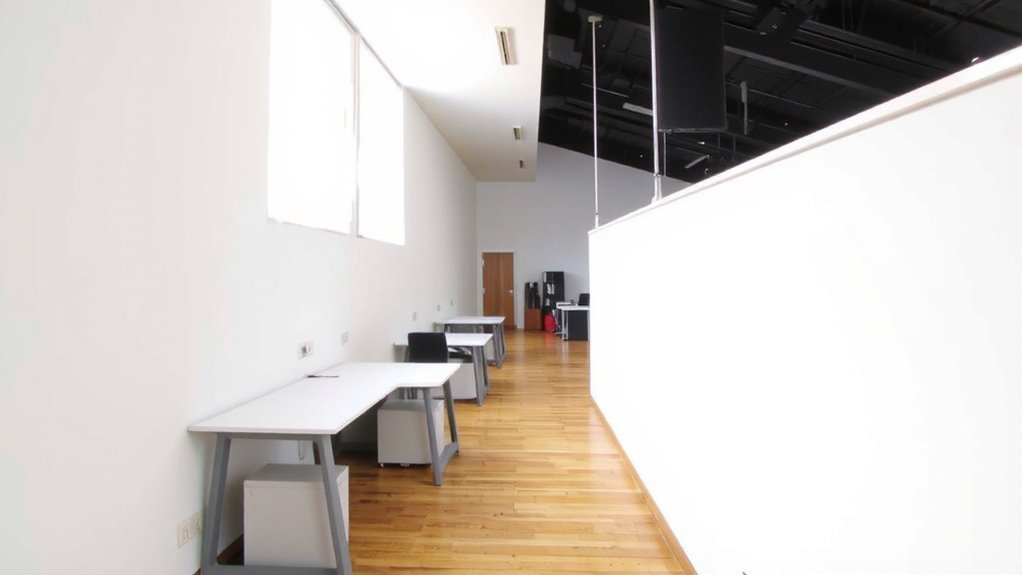
While your narrow office might struggle with dim corners, installing light shelves can effectively boost natural illumination by reflecting daylight deeper into the space. You’ll appreciate how they reduce reliance on electric lighting during daytime hours, cutting energy use. Properly positioned, rigid light shelves made of reflective aluminum or white-painted panels bounce sunlight toward the ceiling, distributing it evenly. Look for models with thermal insulation backings-they help minimize heat transfer, stabilizing indoor temperatures. Some integrated designs also support airflow management by allowing ceiling-level vents to remain unobstructed, aiding natural convection. However, avoid bulky installations that block upper window sections, which could reduce overall light intake. Guarantee seals are tight to prevent drafts, and confirm compliance with building codes. Most reputable brands offer 10-year warranties. Real-world tests show a 30–50% increase in daylight penetration, but effectiveness depends on ceiling height and window size.
How South and North Windows Affect Light Shelf Performance
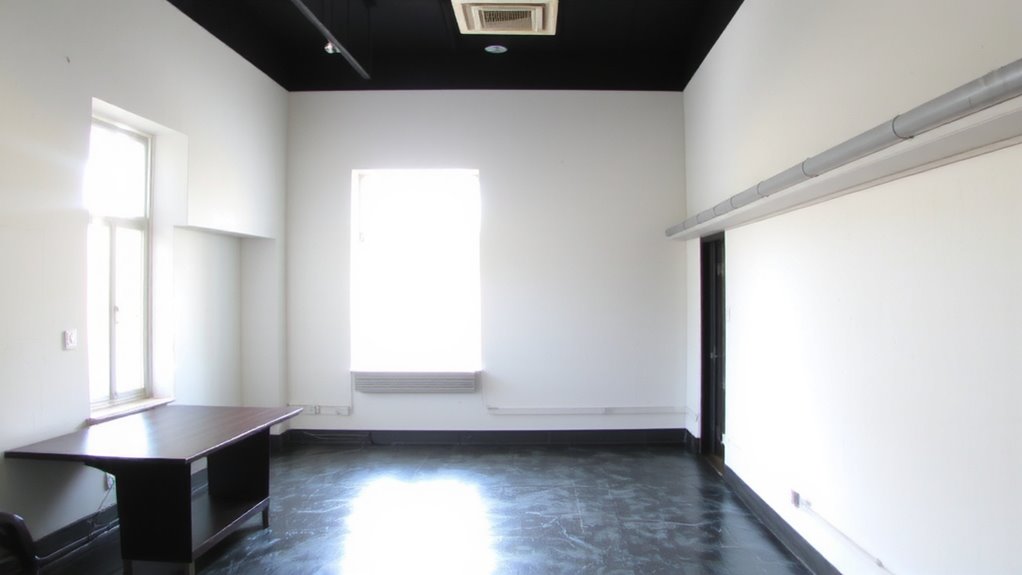
Why do some light shelves deliver brighter, more consistent daylight while others barely make a difference? Your window orientation plays a vital role. With south-facing windows, you get high solar altitude in summer and lower angles in winter, letting light shelves reflect sunlight deep into the space year-round. These angles make south exposures ideal for consistent performance. North windows, though, provide diffuse daylight with no direct sun, so light shelves add minimal benefit-there’s little direct light to reflect. You’ll still get even illumination without glare, but don’t expect dramatic depth. Solar altitude changes matter less here since direct beam penetration is absent. If you’re prioritizing daylight reach, south-facing setups with light shelves outperform north ones. But if glare control and soft light are your goals, north lighting with a basic shelf may suffice. Know your priorities and daylight patterns before choosing.
Light Shelf Height and Depth for Deep Daylight Reach
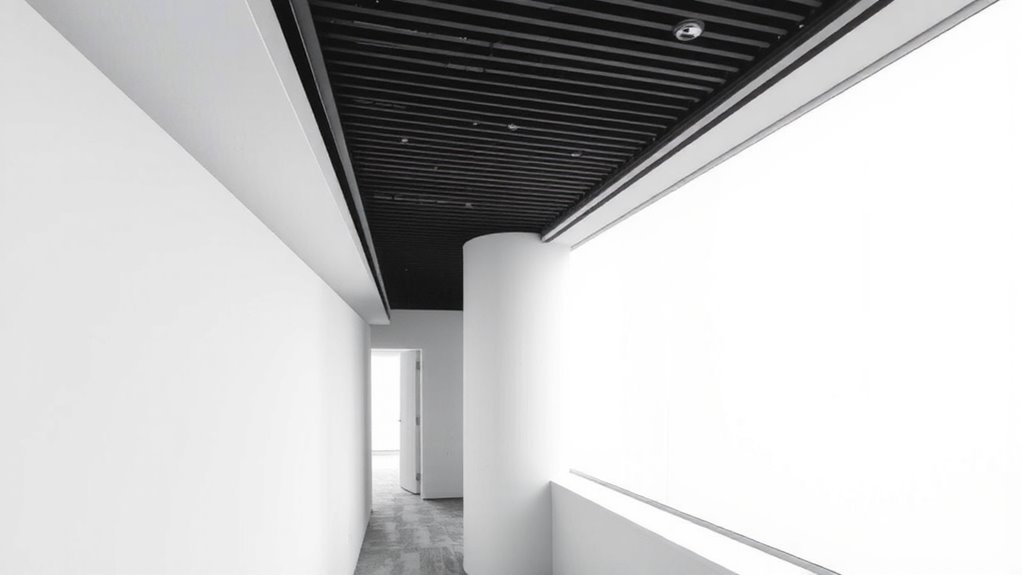
You get the best daylight penetration from a light shelf when its height and depth are matched to your window’s geometry and the sun’s path. For deep daylight reach, the shelf should sit just below eye level-around 6.5 feet-and extend outward with a shelf overhang of 2 to 3 feet. This setup, paired with an ideal angle of 30 degrees upward, effectively bounces light toward the ceiling. Going deeper than 3 feet can cast shadows if not properly aligned.
| Window Height (ft) | Shelf Overhang (ft) |
|---|---|
| 6 | 2 |
| 7 | 2.5 |
| 8 | 3 |
| 9 | 3 |
| 10 | 3 |
Higher shelves block views; deeper overhangs need precise angles. Always test with sun path models for your latitude.
Best Materials for Maximum Light Reflection
The top-performing materials for light shelf surfaces are matte white paint, high-reflectance white films, and aluminum panels with diffuse coatings-these consistently deliver 80% to 95% visible light reflectance (VLR) in controlled tests. You’ll want reflective coatings that maintain high VLR over time, especially since dust and aging can reduce efficiency. Matte or diffuse surface finish is key-it spreads light evenly without hotspots. Glossy finishes might seem bright but cause glare, which defeats the purpose. White films like 3M™ DI-NOC™ or MetaVision’s VarioLux offer 92%+ VLR and last longer than painted surfaces, though they cost more upfront. Aluminum panels are durable and often come with 10-year warranties, but need proper coating to avoid specular reflection. Painted surfaces work if you use non-yellowing, high-pigment matte paint-but they degrade faster. Choose based on your budget and maintenance plan.
Control Glare While Spreading Light Evenly
While bouncing sunlight deep into a narrow office, a well-designed light shelf shouldn’t trade glare for illumination. You’ll want to balance brightness by using surfaces that promote diffuse reflection-matte, slightly textured finishes scatter light evenly instead of creating hotspots. Pairing an upper reflective shelf with a lower overhang adds glare masking, blocking direct sun from workers’ eyes while redirecting it upward to bounce off the ceiling. Aim for a shelf depth where the lower lip extends about 12–18 inches, shielding views toward the window’s brightest area. You’ll see best results if the ceiling is white or light-colored, boosting daylight penetration. But be cautious-poorly positioned shelves can worsen glare, especially with low solar angles. Test different tilt angles during midday and adjust based on seasonal sun paths to maintain consistent light levels. There’s no one-size-fits-all setup; fine-tuning is essential.
On a final note
You’ll get deeper, even daylight in narrow offices with light shelves-ideal near south or north windows. Mount them high, around 7–9 feet, and extend them 2–3 feet outside for best bounce. Use white or specular aluminum surfaces to boost reflectivity. Just mind the glare: pair shelves with blinds or diffuse glazing. They cut lighting costs, but only work where daylight hits directly-no retrofit fixes deep interior rooms.