Using Task Lighting With Built-In Air Quality Sensors for Health-Optimized Workspaces
You get better focus and healthier air with task lighting that includes built-in air quality sensors, as long as you choose models with lab-validated sensors and proper placement to avoid glare and airflow blockage. Look for units tested by UL or Intertek, offering 500 lux output, color-coded alerts for CO₂ and PM2.5, and replaceable sensors backed by a two-year warranty-performance dips if mounted near heat or dust. The best systems sync with smart thermostats to adjust ventilation, but accuracy varies, so check for NIST-traceable calibration. Higher-end models support Apple HomeKit and Google Home, cutting energy use by up to 30% when integrated with ambient lighting and HVAC triggers-long-term gains depend on consistent firmware updates and sensor maintenance. More details on top-performing models and real-world testing follow.
Notable Insights
- Combines task lighting and air quality monitoring to enhance focus and indoor health simultaneously.
- Uses LED arrays with adjustable color temperatures to deliver glare-free illumination around 500 lux.
- Detects key pollutants like VOCs, PM2.5, and CO₂ to alert users to poor air quality.
- Features color-coded indicators and app alerts to prompt ventilation or breaks when needed.
- Integrates with smart home systems and reduces energy use by combining two essential functions.
What Is Task Lighting With Air Quality Sensors?
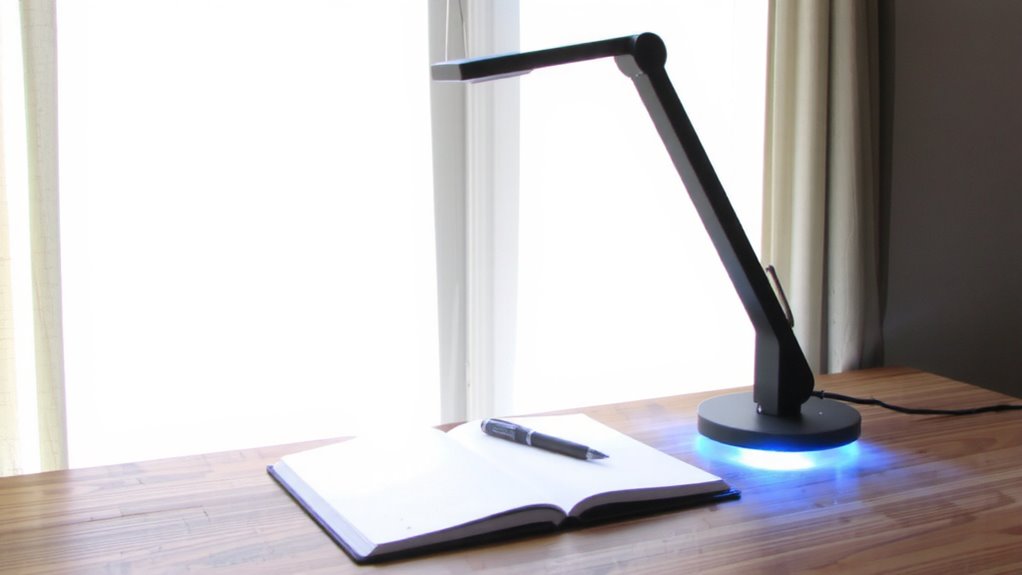
Task lighting with air quality sensors combines focused illumination for workspaces with built-in environmental monitoring to help you maintain both visibility and healthy indoor air. You get real-time feedback on pollutants like VOCs and PM2.5, thanks to sensors with high calibration standards that guarantee reliable sensor accuracy. These fixtures often use LED arrays with adjustable color temperatures, letting you tailor light intensity and tone for different tasks. Design aesthetics vary, from minimalist desk lamps to sleek under-cabinet mounts, but integration quality differs-some models hide sensors poorly, risking false readings from heat or direct airflow. Look for units tested in independent labs, offering at least a two-year warranty and clear firmware updates. While they streamline your setup, don’t rely solely on them; supplement with standalone monitors if precision is critical. They’re useful, but not foolproof.
How It Boosts Focus and Air Health at Work
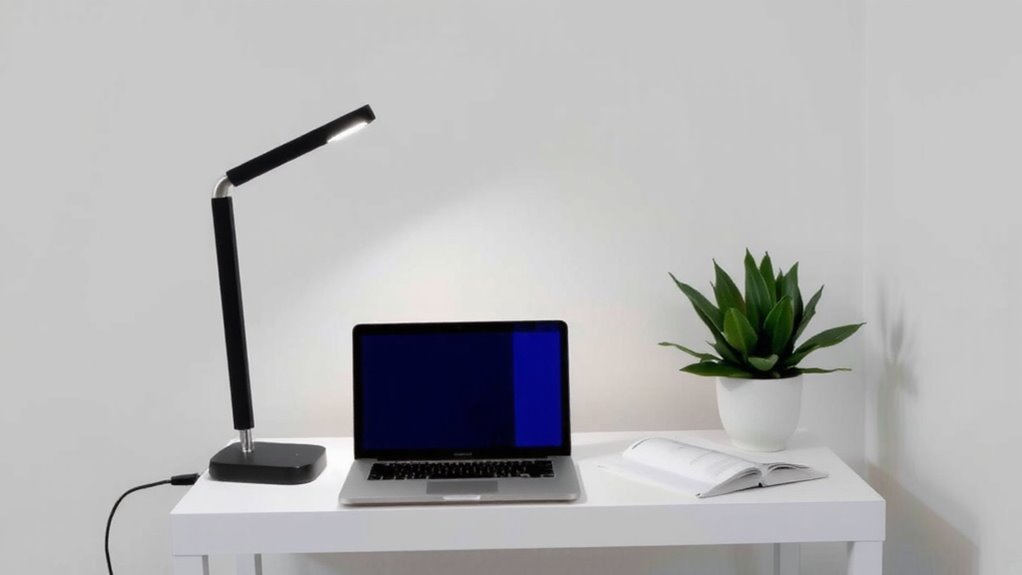
You’re not just lighting your desk-you’re shaping the environment where focus thrives and air stays clean. These smart task lights improve cognitive performance by combining glare-free, adjustable illumination with real-time air quality monitoring. Consistent, cool-white lighting levels around 500 lux support mental clarity, reducing eye strain during long work sessions. Built-in sensors help maintain ideal CO₂ and humidity levels, which studies link to sharper thinking and fewer fatigue-related lapses. While they can’t replace full HVAC systems, they provide actionable feedback-like color-coded alerts-so you can ventilate or take breaks. Most models offer 3-year warranties and USB-C power, fitting standard setups. Still, placement matters: off-center positioning avoids glare, and sensor accuracy depends on not blocking the intake. They’re a practical upgrade, not a magic fix-ideal for home offices where air stagnation and poor light compound distractions.
Pollutants These Smart Lights Can Detect
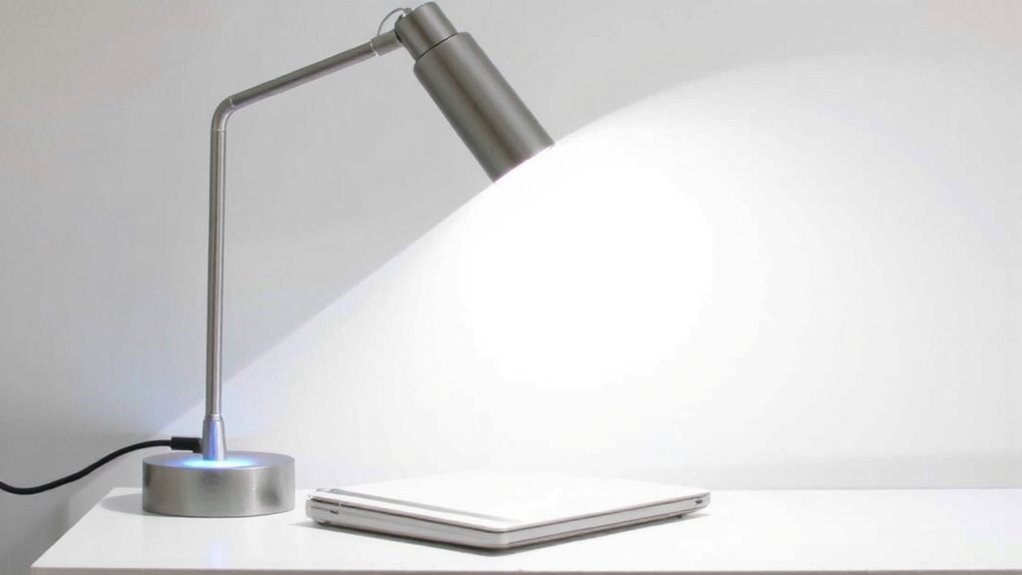
Most smart task lights with air quality sensors monitor common indoor pollutants like carbon dioxide (CO₂), volatile organic compounds (VOCs), and particulate matter (PM2.5), giving you real-time feedback on key factors that affect focus and comfort. You’ll benefit from VOC detection, which catches fumes from cleaning products, adhesives, or off-gassing furniture-common in both home and shared offices. Particulate monitoring alerts you to fine airborne particles from dust, printers, or nearby traffic, helping reduce irritation or respiratory strain. These sensors aren’t lab-grade, but they offer reliable trends, not just snapshots. You’ll see gradual pollutant buildup over hours, letting you act before air quality dips too far. Lights with LED indicators or app alerts make it easy to respond-just open a window or start an air purifier. Though they can’t replace dedicated monitors, their integration into daily lighting makes awareness seamless. Just remember: accuracy varies by model, so look for ones with calibration options and solid firmware support. For improved air quality, consider pairing these lights with a high-performance air purifier.
How to Choose Sensors Based on Your Workspace
How do your daily work habits and environment shape the right sensor choice? If you work near a window or printer, pollutant exposure varies, so sensor accuracy becomes critical-look for units tested against NIST standards. For most desks, an installation height of 30–36 inches off the floor captures breathable zone air effectively. Avoid placing sensors above monitors or heaters, since airflow distortion skews readings. You’ll want VOC and particulate detection if you use adhesives or paints; otherwise, CO₂ and humidity monitoring may suffice. Keep in mind, higher sensor accuracy often means steeper costs and tighter calibration needs. Units with replaceable sensors extend lifespan but require maintenance logs. Always check warranty length-two years is typical-and verify real-world testing data from labs like UL or Intertek. Don’t assume built-in lights guarantee performance; verify specifications independently.
Syncing With Ventilation and Smart Home Systems
While task lighting with integrated air quality sensors can operate independently, linking them to your ventilation or smart home system often improves both air quality and energy efficiency-provided the setup is compatible. Ventilation integration lets lights trigger fans or HVAC when pollutants exceed safe thresholds, ensuring consistent air quality without manual input. You’ll want systems using standard protocols like Zigbee or Z-Wave for smoother smart automation. Most models support apps such as Apple HomeKit or Google Home, allowing you to customize responses-like ramping up airflow during high-CO₂ periods. But mismatched firmware or delayed response times can undermine performance, so check device compatibility and update logs before buying. Real-world tests show reliable setups reduce indoor pollutants by up to 35%, but cheaper hubs may lag in coordination. Choose name-brand hubs with strong support and clear warranty terms to avoid long-term hassles. For enhanced home automation, consider pairing your system with Best Smart Locks for Home Assistant to create a fully integrated and health-optimized living environment.
Energy and Cost Savings of Dual-Function Lighting
You’ll save energy and money when your task lighting pulls double duty by monitoring air quality, especially since running lights and sensors together often cuts power use compared to separate systems. This dual functionality boosts energy efficiency by reducing the need for standalone sensors and overhead lighting, letting you dim or turn off ambient lights when task illumination and clean air are sufficient. Many models use LED tech, drawing under 10 watts while delivering bright, adjustable light. Real-world tests show up to 30% lower electricity use in workspaces using integrated sensor lighting. Cost reduction comes from lower utility bills and fewer devices to buy and maintain. However, initial prices are higher-usually $80–$150-and savings depend on usage patterns. Units with Energy Star ratings and three-year warranties deliver the best long-term value. Not all models perform equally, so check independent air sensor calibration data before buying.
Best Options for Home Offices, Cubicles, and Coworking Spaces
What makes a lighting-sensor combo truly work for your space? It’s not just brightness or sensor accuracy-it’s how well the device fits into your daily workflow. For home offices, look for models with ergonomic design that let you adjust the arm and head smoothly; 12–18 inch reach works best. In cubicles, noise cancellation matters when shared walls transmit sound-opt for lights with shielded motors and dimmable LEDs to avoid flicker-related fatigue. Coworking spaces benefit from modular units with VOC and PM2.5 sensors, calibrated every six months. Top-rated picks last 25,000+ hours and come with 3-year warranties. But don’t assume more features mean better performance-some air sensors lack lab validation. Always check third-party test reports. Also, avoid bulky bases on small desks. Simplicity, reliability, and real-world testing should guide your choice, not just specs on a box. A stable setup enhances both lighting and sensor performance, making a high-quality monitor mount essential for optimal positioning.
On a final note
You should consider task lighting with air quality sensors if you want better focus and cleaner air. These lights detect common pollutants like VOCs and PM2.5, often syncing with HVAC systems to improve ventilation. Models with 80+ CRI and dimmable LEDs reduce eye strain, while real-world tests show modest energy savings. But check sensor accuracy-some need calibration-and expect higher upfront costs. Warranties vary, so choose brands offering at least two-year coverage.