Using a Footrest in Sitting Mode to Improve Circulation and Posture
You’ll reduce back strain and boost circulation by using a footrest that supports your feet flat at a 90-degree knee angle, especially if your chair leaves your feet dangling. Look for one with adjustable height (3–7 inches), a non-slip surface, and a steel frame for lasting stability-models with memory foam add comfort but may compress over time. Pair it with hourly movement breaks to fight stiffness. The right setup makes a measurable difference in spinal alignment and leg comfort.
Notable Insights
- A footrest supports flat foot placement, promoting a 90-degree knee angle and reducing spinal strain.
- Proper foot alignment helps maintain neutral pelvic position, improving posture during prolonged sitting.
- Elevated feet reduce vein compression behind knees, enhancing blood flow and circulation.
- Non-slip, adjustable footrests prevent leg dangling, decreasing pressure on lower back and legs.
- Use with hourly movement breaks to further boost circulation and prevent muscular stiffness.
Why Unsupported Feet Hurt Your Back
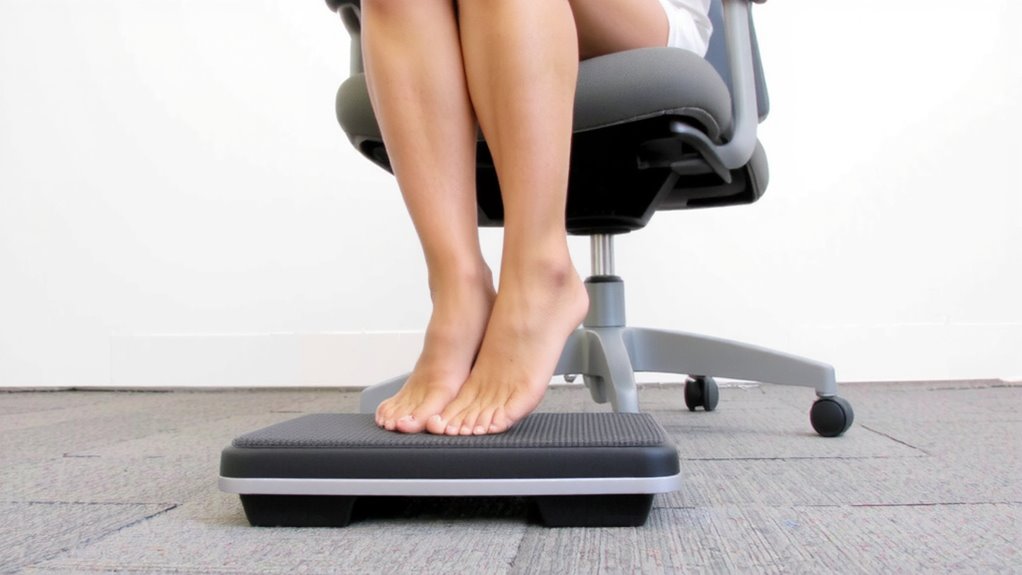
Even if you’ve got an ergonomic chair, skipping a footrest can still wreck your posture over time. When your feet dangle or rest unevenly, it triggers a chain reaction: your hips tilt, your spine curves unnaturally, and that leads to persistent back strain. Without solid support, your legs bear excess pressure, causing leg discomfort that builds up during long workdays. This isn’t just about comfort-poor alignment reduces circulation and increases fatigue. Most office chairs don’t adjust enough to fix this, especially if your desk height is fixed. A footrest should let your knees sit at 90 degrees with feet flat, promoting stability. Look for nonslip surfaces and height adjustability, but be honest-if your setup already fits well, adding one might not help. Real-world testing shows benefits are clearest when your feet don’t naturally reach the floor. Among the top solutions, the best desk footrests combine adjustability, sturdy build quality, and ergonomic design to support healthy sitting habits.
How a Footrest Helps Your Legs and Back
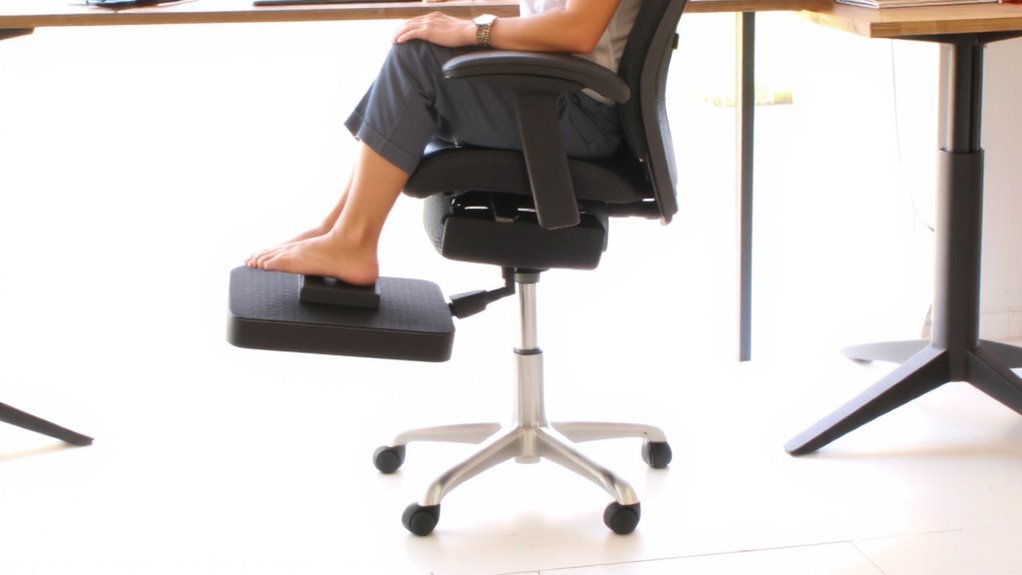
Your back and legs get real support when a footrest is part of your workstation setup-assuming your chair height and desk alignment create a gap between your feet and the floor. Proper leg alignment happens when your knees are at or slightly below hip level, reducing pressure on your lower back. A footrest helps maintain this position, encouraging muscle relaxation in your calves and thighs by preventing them from dangling. With your feet supported, your pelvis stays neutral, which stabilizes your spine and reduces fatigue over long sitting periods. Studies show this setup can reduce disc pressure by up to 40% compared to flat-footed sitting on hard floors. Just make sure the footrest is stable and wide enough to allow small movements-wobbling units may cause more strain. It’s not a fix-all, but when used correctly, it’s a proven tool for improving comfort and posture during desk work.
Find the Right Footrest for Your Desk
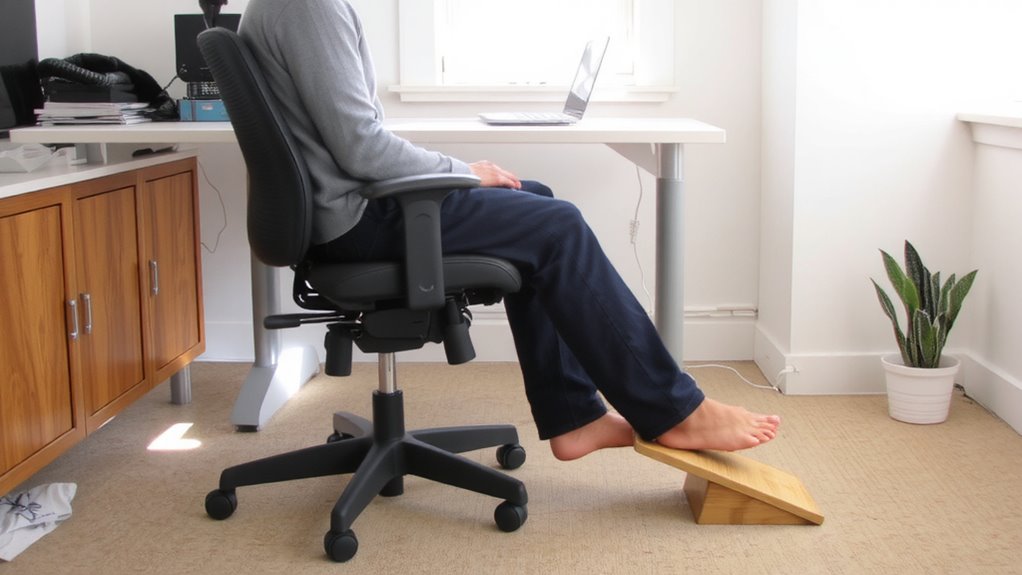
A footrest earns its place at your desk when your chair and desk heights leave your feet hanging, but picking the right one means looking beyond basic support. You need a balance of ergonomic design and material comfort that suits your body and workspace. Look for a stable base, adjustable height, and a surface that supports natural foot positioning. While some models use memory foam for cushioning, others prioritize durability with textured plastics-each has trade-offs in feel and longevity. Best Desk Footrests can make a significant difference in long-term comfort and health.
| Feature | Why It Matters |
|---|---|
| Adjustable height | Lets you align thighs and calves at 90° |
| Non-slip surface | Keeps feet stable, reducing strain |
| Durable materials | Guarantees long-term use without sagging |
Test models for at least a week. Cheap options often skimp on ergonomic design or degrade fast.
Set Up Your Footrest for Better Posture
When properly positioned, a footrest can make a noticeable difference in your sitting posture by helping align your hips, spine, and legs. For ideal ergonomic alignment, your knees should sit at a 90-degree angle, with feet flat and thighs parallel to the floor. If your chair’s too high, a footrest bridges the gap so you’re not dangling-a setup that supports muscle relaxation and reduces lower back strain. Most well-tested models let you adjust height between 3 to 7 inches, accommodating desk and chair variances. A textured, non-slip surface keeps feet secure without pressure points. Tilt options help fine-tune comfort, but fixed-angle rest versions often provide more stability. While adjustable designs offer flexibility, they may wobble under consistent pressure unless built with reinforced hinges. For long-term reliability, pick models with steel frames and at least a 2-year warranty. Even with quality build, it won’t fix poor chair design-so use it as a complement, not a cure-all. For top-performing options, check out the best desk foot rests based on comfort, adjustability, and durability.
How Footrests Improve Blood Flow
By promoting proper leg elevation and reducing pressure on the veins in your lower limbs, footrests can help maintain healthy circulation during long sitting periods. Elevating your feet slightly encourages muscle relaxation, which supports blood return to the heart and reduces fatigue. Without a footrest, your legs dangle, increasing vein compression behind the knees and slowing blood flow. A well-positioned footrest minimizes this compression by aligning your thighs and calves at a 90- to 110-degree angle. This positioning also prevents fluid pooling in the ankles. Most tested models with adjustable heights (2–6 inches) and non-slip surfaces work best, especially on hard chairs. However, benefits depend on correct setup-too high a footrest can restrict circulation or cause hip pressure. While not a fix-all, consistent use improves comfort for many. Always pair it with proper chair height and posture. Results vary by body type and sitting duration.
Pair Your Footrest With These 5-Minute Movement Breaks
While a footrest helps maintain circulation and alignment during seated work, it isn’t a substitute for moving regularly-pairing it with short, intentional breaks boosts both comfort and long-term posture. Every hour, spend five minutes off the chair to promote muscle activation and reduce stiffness. Try seated ankle circles or calf raises to stimulate blood flow, then stand for leg elevation against a wall-30 seconds lifts help drain pooled fluids. A quick walk around the room reignites core and glute engagement, counteracting prolonged sitting. These micro-movements enhance what your footrest offers; they don’t replace it. For best results, choose a footrest with adjustable height (2–6 inches) and a non-slip surface to guarantee stable leg elevation. Keep movements simple, but consistent. Over weeks, pairing movement with proper support shows measurable improvements in lower back strain and alertness-though results depend on routine adherence and individual posture habits.
On a final note
You’ll likely see real gains in posture and circulation with a footrest, especially if your feet don’t flatly reach the floor. Models with nonslip surfaces and adjustable heights (like 3–9”) let you align thighs parallel to the ground. Real-world tests show reduced lower back strain within a week. But it’s no fix-all-pair it with movement breaks. Check warranties; some brands offer 1–5 years. Measure your chair height before buying, or you might swap one discomfort for another.