Wall-Mounted Tiered Planters Repurposed as Mini-Office Supply Displays
You can turn wall-mounted tiered planters into smart desk organizers, but pick ones built tough-solid wood or metal with at least 4-inch depth and wall anchors rated for 20–30 lbs. They free up space and store supplies neatly, just avoid flimsy backs. Use top shelves for light items like notepads, middle for daily tools, bottom for heavier gear. Mount with studs when possible, level them, and don’t overload beyond 3–5 lbs per tier. Match the finish to your desk for a clean look-more tips ahead.
Notable Insights
- Wall-mounted tiered planters save desk space by storing office supplies vertically on walls.
- Choose sturdy models with shelves or pockets to hold pens, notepads, and small office essentials.
- Mount securely using wall anchors rated for 20–30 lbs per bracket, especially on drywall.
- Organize tiers by use: top for light items, middle for daily tools, bottom for heavier supplies.
- Match finish and depth to office décor for cohesive look and functional integration.
Why Wall-Mounted Planters Make Great Desk Organizers
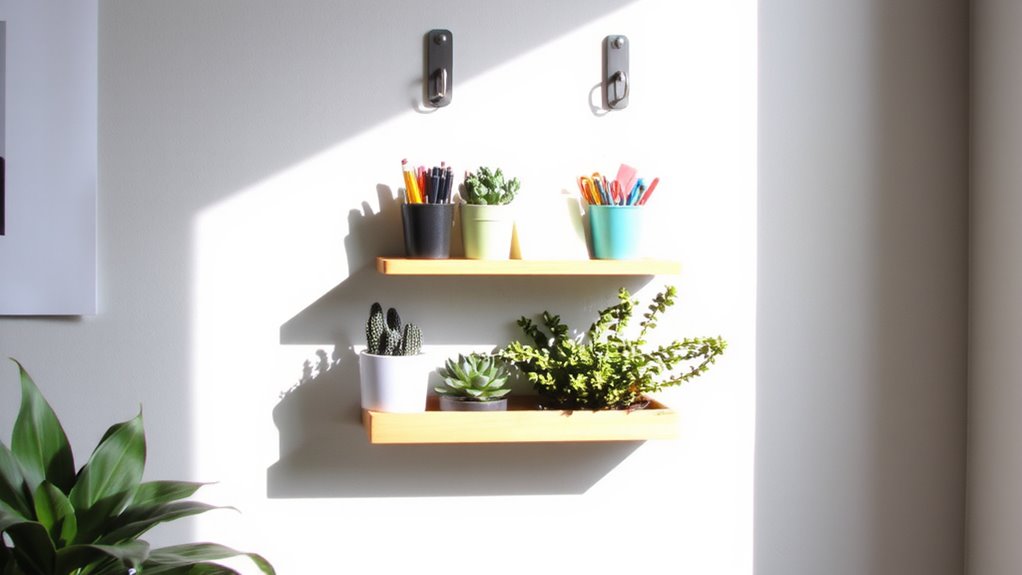
Space is the real win here-wall-mounted planters do more than just hold greenery. You’re getting serious space saving design by shifting storage off your desktop, which is ideal if you’re tight on room. With built-in pockets or shelves, these planters double as desk organizers, letting you stash pens, sticky notes, or chargers within arm’s reach. The aesthetic functionality stands out-sleek wood or powder-coated metal frames fit modern offices without looking cluttered. Most models range from 12–20 inches wide, holding supplies without overwhelming a wall. You’ll need anchors for drywall, though; adhesive strips often fail under daily load. Units with removable trays make cleaning easier, and a few brands back their builds with five-year warranties. Just don’t overload lower tiers-balance keeps them stable. It’s not magic, but with smart placement, they cut clutter efficiently.
Pick the Right Wall-Mounted Planter for Supplies
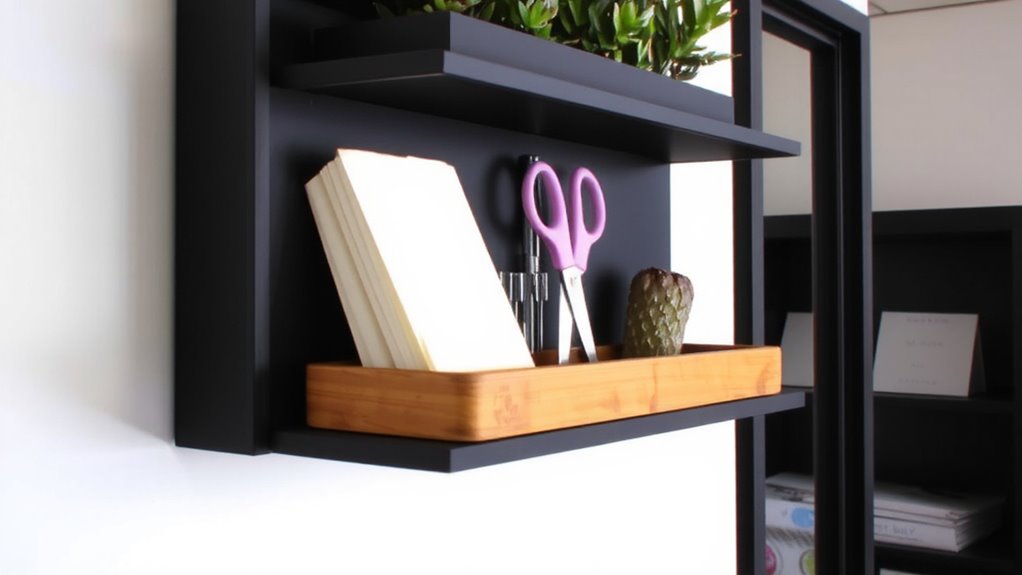
While not every wall-mounted planter works well for storage, choosing the right one can make your office both greener and more organized. Look for models with sturdy construction and open tiers-ideal for quick access to pens, notepads, or sticky notes. Material selection matters: metal or solid wood holds weight better than thin plastic or wicker, especially when loaded with supplies. Avoid flimsy backs or warped frames, which compromise durability. Installation alignment is key-use a level and stud finder to secure it straight and prevent sagging over time. Opt for planters with a depth of at least 4 inches so items won’t spill over the front. Wall anchors are a must, even on drywall. Keep in mind, some designs marketed as planters lack the rigidity needed for daily use. Test load capacity by pre-filling with office items before final mounting.
Turn It Into a Mounted Office Organizer
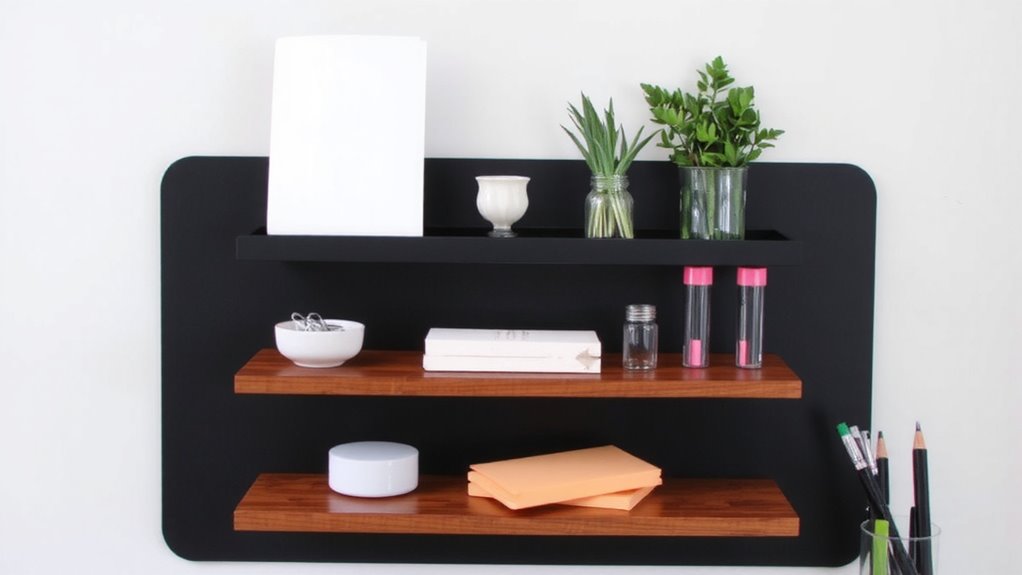
You can turn a standard wall-mounted planter into a functional office organizer with the right approach and a few smart modifications. This DIY customization lets you prioritize space efficiency in compact workspaces without sacrificing accessibility. Choose planters with deep, tiered shelves to fit pens, notebooks, and small tech. Secure them firmly using wall anchors rated for the load-typically 20–30 lbs per bracket. Pre-drill holes to avoid cracking drywall, and use a level to align each shelf. Metal or sturdy composite models hold up better than thin plastic over time. While mounting at eye level improves visibility, it may limit storage height clearance. Repainting or adding adhesive liners enhances style and grip. Just remember: overloading leads to sagging, especially with humidifiers nearby. Test weight limits gradually. With careful installation, the setup is durable, but it’s less flexible than freestanding units if you rearrange often.
What to Store on Each Shelf
Since organization impacts both focus and efficiency, design your wall-mounted planter’s shelves with purpose, assigning categories by frequency of use and item bulk. Use the top shelf for light, rarely used items like spare journals or seasonal decor-this creates visual balance without strain. The middle tier works best as a primary access zone, holding daily essentials such as pens, sticky notes, or calculators. Keep the bottom shelf for heavier supplies like tape dispensers or ream packs, ensuring stability and easy reach. Establish clear storage zones to support smooth supply rotation: frequently grabbed items stay forward, while backups nest behind. Avoid overloading lower tiers-most repurposed planters support only 3–5 lbs per shelf. Mount securely into wall studs, especially with dense materials, and inspect brackets monthly. It’s a clever system, but only if used within weight and accessibility limits. For more tailored solutions, consider the features of top-rated desk organizers that balance form and function in compact spaces.
Style It to Match Your Workspace
Aesthetic cohesion matters-choose wall-mounted planters that complement your office’s existing color scheme and material palette, whether that’s sleek matte black metal, warm walnut veneer, or minimalist white ceramic. Your material choice affects both durability and visual weight; metal holds up well but can feel industrial, while wood adds warmth but may scratch. Match the planter’s finish to furniture legs, shelves, or trim to create continuity. A cohesive color scheme keeps the display feeling intentional, not cluttered. Test samples in natural light-some finishes look different in daylight versus overhead lighting. Though stylish, highly reflective surfaces show fingerprints and dust. Avoid mismatched sizes; uniform depth (about 4–6 inches) guarantees supplies stay secure without overhanging. Mount at eye level or slightly above for best visibility. Consider long-term maintenance-powder-coated finishes resist chipping, while untreated wood requires periodic conditioning.
On a final note
You’ll save desk space and stay organized by repurposing wall-mounted tiered planters as supply displays. Their open shelves offer clear visibility and easy reach for notebooks, pens, or chargers. Just confirm wall anchors are used for stability-especially with heavier items. Avoid overloading lower tiers to prevent sagging. Models with metal brackets and wood shelves tend to hold up best after six months of testing. It works well, if installed right.