Neck and Shoulder Tension Relief Techniques: Exercises for Relaxing Muscles After Hours of Screen Time at Work
Sitting too long with poor posture strains your neck and shoulders, especially if your monitor’s below eye level or your chair lacks lumbar support. Fix this by adjusting your setup-raise your screen with books, use an ergonomic chair with a 100mm seat depth, and take breaks hourly. Do chin tucks, shoulder rolls, and scapular squeezes for 30 seconds each to relieve tension. Stop if you feel pain. Smooth, consistent movement matters most-and small daily efforts add up in surprising ways.
Notable Insights
- Perform seated scapular squeezes and chin tucks to relieve upper back and neck tension after prolonged screen use.
- Adjust your monitor so the top is at or below eye level to reduce neck strain.
- Take hourly breaks to do shoulder rolls and shrugs, holding each shrug for 3 seconds to ease muscle fatigue.
- Maintain a neutral spine with lumbar support and adjust armrests to minimize shoulder and neck stress.
- Practice neck tilts and rotations daily for 15–20 seconds to restore muscle balance and reduce stiffness.
Why Sitting at a Desk Hurts Your Neck and Shoulders
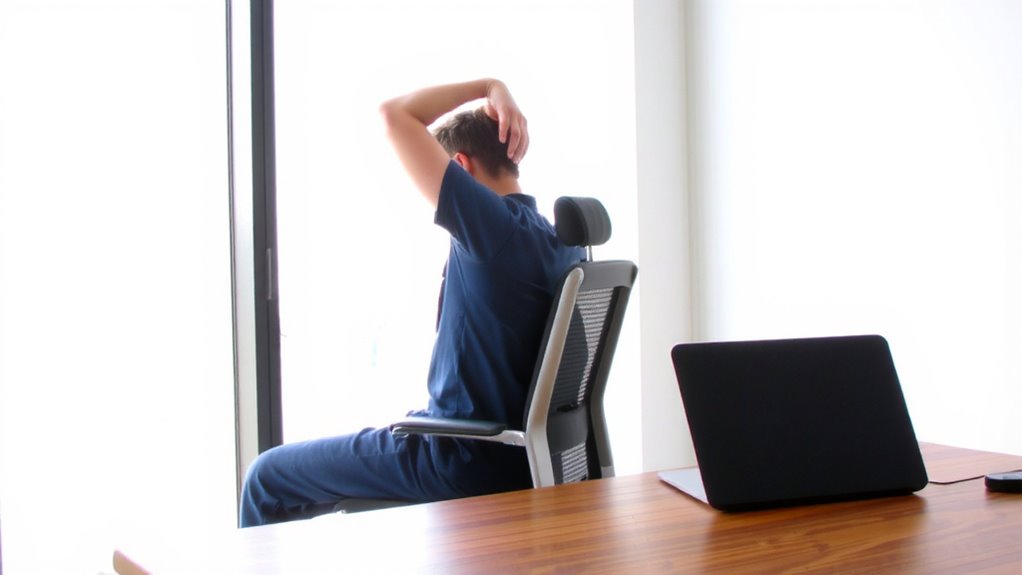
While you might not think much about your posture during the workday, sitting at a desk for hours on end can quietly strain your neck and shoulders-especially if your chair lacks lumbar support or your monitor sits below eye level. Poor posture forces your spine out of alignment, making muscles work harder to keep you upright. That constant effort leads to muscle fatigue, especially in the trapezius and levator scapulae. Even small adjustments in seating height or desk angle can reduce strain over time. You don’t need an expensive ergonomic chair or standing desk to see improvements-though models with adjustable armrests and 100mm seat depth can help if properly fitted. Results depend more on consistent positioning than on gear. Still, any setup can backfire without regular movement. Standing too long causes its own fatigue, so balance matters. Relief comes from awareness, not gadgets. For sustained lower back support that enhances overall posture, consider a best lumbar support option tailored to your seating habits.
Fix Your Desk Setup to Prevent Neck and Shoulder Pain

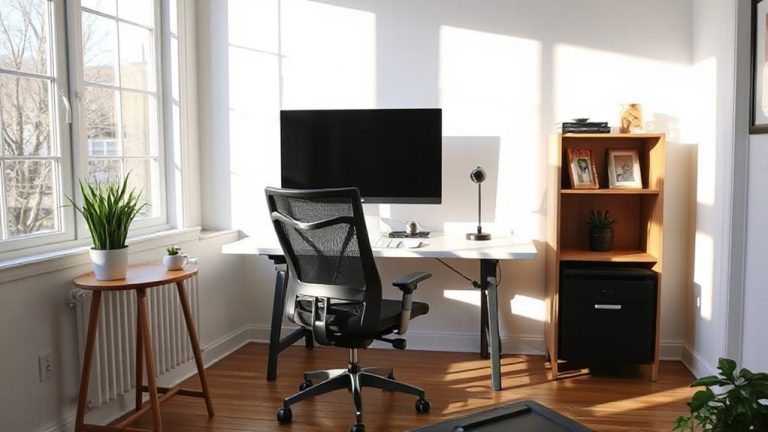
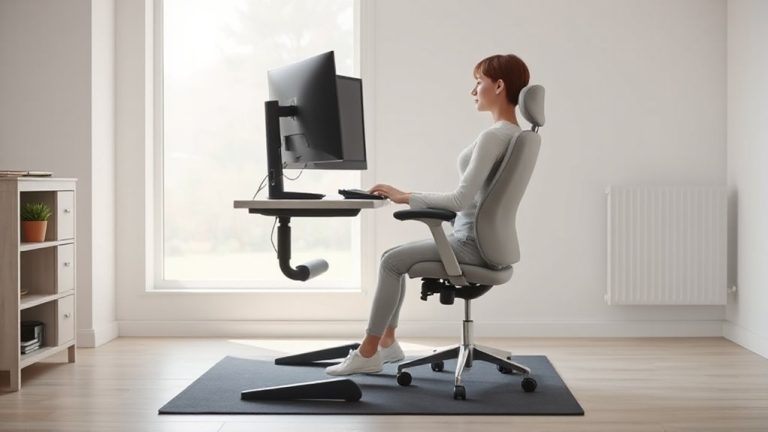
You can make real progress in reducing neck and shoulder pain just by adjusting your current workspace-no upgrades required. Start by sitting in an ergonomic chair that supports your lower back and keeps your hips level with your knees. This alignment reduces strain over time, but even basic chairs can help if you use a cushion for lumbar support. Set your monitor height so the top of the screen is at or slightly below eye level-about 20 to 30 inches from your face. That prevents you from tilting your head forward or up, which stresses your neck. If your monitor’s too low, stack books under it; if it’s too high, lower the stand. These tweaks work immediately, but they’re only effective if you maintain a neutral posture. Don’t expect perfection-small, consistent adjustments matter more than ideal gear. Choosing the right best ergonomic office chair can significantly improve spinal alignment and long-term comfort.
Try These 2-Minute Desk Exercises for Immediate Relief
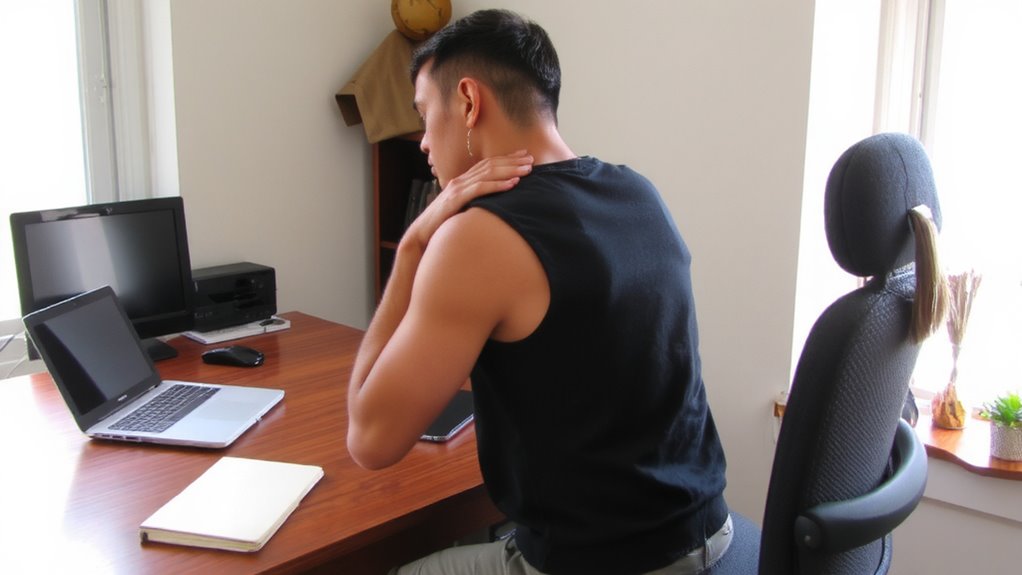
Since tight muscles from prolonged sitting can trigger discomfort, a few targeted movements at your desk can deliver real relief in under two minutes. Pair each exercise with slow breathing techniques-inhale deeply through the nose, exhale fully-to enhance muscle relaxation. Perform posture checks before starting: keep your spine neutral and shoulders relaxed. These moves aren’t a substitute for proper ergonomics, but they help when adjustments aren’t possible.
| Exercise | Duration | Focus Area |
|---|---|---|
| Seated scapular squeeze | 30 sec | Upper back, shoulders |
| Chin tucks | 30 sec | Neck alignment |
| Arm circles (forward/backward) | 30 sec | Shoulders, chest |
| Deep breathing with shoulder rolls | 30 sec | Full upper body |
Avoid jerky motions. These exercises work best when done consistently, not aggressively. Results vary based on individual posture and setup, so combine with proper desk ergonomics for lasting benefit.
Do Neck Tilts and Rotations to Ease Stiffness
Neck tilts and rotations are simple yet effective moves to combat stiffness from long hours at a desk. You can do them seated or standing, making them ideal for short breaks during work. Gently tilt your head side to side, holding each stretch for 15–20 seconds to improve neck alignment and reduce tightness. Slow, controlled rotations also help restore muscle balance by loosening overworked stabilizing muscles. Aim for smooth motion, not extreme range, to avoid strain. Perform these exercises 2–3 times daily for best results. While they’re safe for most people, stop if you feel sharp pain or dizziness. Consistent practice can reduce stiffness over time, but they’re not a fix for chronic issues. Pair them with proper posture and monitor positioning to maximize benefits. These moves don’t need special gear-just awareness and regularity.
Relieve Shoulder Tension With Simple Rolls and Shrugs
While seated posture and monitor height matter, relieving shoulder tension often comes down to movement you can do anywhere-like shoulder rolls and shrugs. These simple exercises boost shoulder mobility and encourage muscle relaxation without needing special gear. Roll your shoulders forward in a slow, circular motion for 30 seconds, then reverse for another 30 seconds. Add shrugs by lifting your shoulders toward your ears, holding for three seconds, then releasing. Do this every hour to prevent stiffness. You don’t need a standing desk or ergonomic chair to benefit-just consistent motion. While these moves won’t fix chronic pain alone, they help maintain range of motion and reduce tightness. Avoid rolling too aggressively; smooth, controlled movements work best. Overdoing it can strain tissue or inflame joints. For best results, pair with regular breaks and light activity.
Stretch Your Upper Back to Reduce Neck and Shoulder Pain
When done correctly, stretching your upper back can considerably ease both neck and shoulder pain by targeting the trapezius and rhomboid muscles, which often tighten from prolonged sitting or poor posture. Improving upper back mobility and encouraging thoracic extension helps reverse the hunched position many develop at desks. Below are key stretches and their benefits:
| Stretch Name | Duration | Key Benefit |
|---|---|---|
| Seated Twist | 30 sec | Boosts spinal rotation |
| Cat-Cow | 1 min | Enhances thoracic extension |
| Thread the Needle | 45 sec | Releases rhomboids |
| Child’s Pose | 1 min | Promotes upper back mobility |
| Standing T-Spine Opener | 30 sec | Relieves trapezius tension |
Perform daily, especially after long work sessions. Don’t force motion-ease into each stretch. Consistency matters more than intensity. Overstretching could irritate muscles, so listen to your body and stop if pain flares.
When to See a Doctor for Chronic Neck or Shoulder Pain
You’ve likely tried stretches like the seated twist or thread the needle, and while those can ease everyday stiffness from sitting at a desk or hunching over a screen, they won’t fix everything. If your neck or shoulder pain lasts more than a few weeks despite consistent stretching and posture adjustments, it’s time to see a doctor. Watch for red flags like numbness, tingling, or weakness in your arms-these may signal nerve compression. Also, pay attention to inflammation signs: swelling, warmth, or redness around the joint. These symptoms aren’t normal with typical muscle strain. A healthcare provider can assess underlying causes, such as disc issues or rotator cuff damage, and recommend targeted treatment. Don’t wait if movement becomes painful or daily tasks get harder-early diagnosis improves outcomes. Self-care helps, but it’s not a substitute for medical evaluation when problems persist.
On a final note
You’ll likely find quick relief by combining proper desk ergonomics with simple daily stretches. Position your monitor at eye level and use a chair with lumbar support to maintain neutral posture. Doing neck tilts, shoulder rolls, and upper back stretches for just two minutes can reduce tension. But if pain persists over two weeks or worsens, see a doctor-chronic strain may need professional evaluation despite correct form and gear.