Neck and Shoulder Tension Reduction Strategies: A Comprehensive Guide to Alleviating Muscle Strain After Hours of Screen Time at Your Desk While Working Remotely
You can ease neck and shoulder tension by combining stretches, posture fixes, and smart breaks. Try chin tucks and shoulder rolls every 30 minutes to maintain mobility. Sit with ears over shoulders and use a lumbar roll if your chair lacks support. Keep elbows at 90 degrees and your desk at elbow height. Swap heat and ice-15 minutes each-to manage stiffness or soreness. Simple changes work, but consistency matters most if you want lasting relief.
Notable Insights
- Perform simple chair-based stretches like chin tucks and head tilts to relieve neck and shoulder stiffness after prolonged screen time.
- Maintain proper posture by aligning ears over shoulders and using lumbar support to reduce strain during remote work.
- Optimize your workspace with an ergonomic chair, proper desk height, and cable management to promote neutral body positioning.
- Take microbreaks every 25–30 minutes to stretch or adjust posture, preventing muscle fatigue and improving focus.
- Use heat for stiffness or ice for sharp pain, applying safely for 10–20 minutes to alleviate discomfort from prolonged desk work.
Try These Stretches for Instant Neck and Shoulder Relief

What if a few minutes of stretching could ease the stiffness from long hours at your desk? You can boost neck mobility and shoulder flexibility with simple, effective moves you do right at your chair. Gently tilting your head side to side loosens tight cervical muscles, while chin tucks help restore natural spinal alignment. For shoulders, try arm-across-chest and overhead triceps stretches-each should be held for 20–30 seconds. These aren’t miracle fixes, but studies show they reduce discomfort when done consistently. You don’t need resistance bands or ergonomic gear-just time and consistency. Overstretching risks strain, so move slowly and stop if pain occurs. Results vary, but most report relief within a week of daily practice. While not a substitute for medical care, these stretches are a low-risk, no-cost way to fight desk-related tightness and improve daily comfort.
Fix Your Posture to Reduce Desk-Related Tension
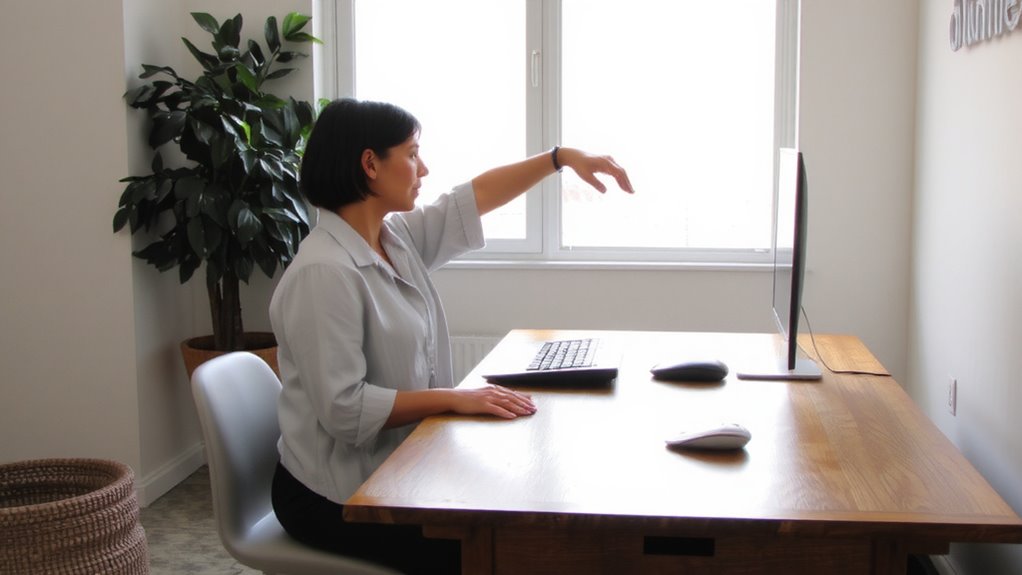
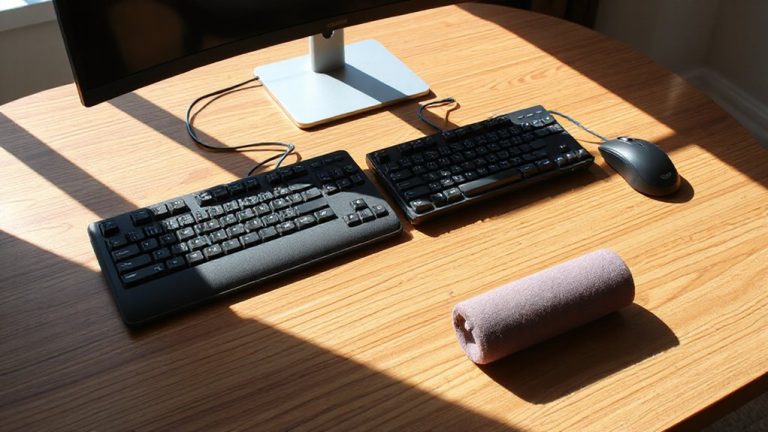
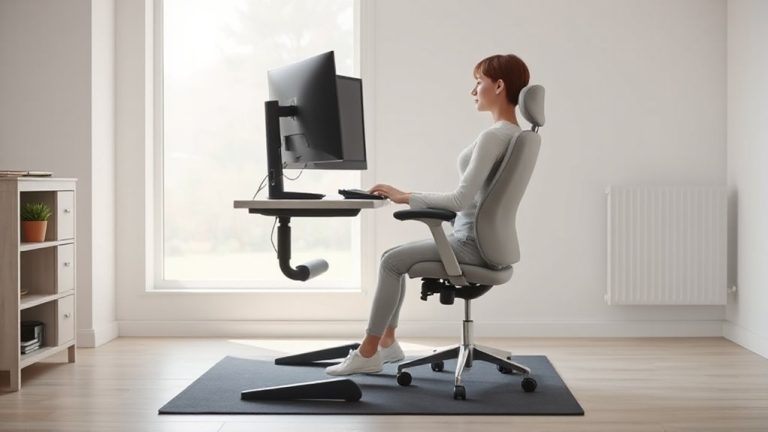
While you might not think about it during the workday, adjusting your posture can make a noticeable difference in reducing neck and shoulder tension caused by long hours at a desk. Proper posture alignment-ears over shoulders, shoulders over hips-keeps your spine support stable and minimizes strain. Sit with your back mostly upright, using a chair that matches your torso length and supports your lower back’s natural curve. Avoid reclining too much or slumping forward, as both disrupt spine support over time. Though ergonomic chairs can help, they’re not always necessary-a cushion or rolled towel behind your lower back works too. You’ll likely feel more alert at first, but maintaining alignment may take effort, especially if you’re used to lounging. Don’t expect immediate fixes; benefits build with consistency. Over time, good posture alignment reduces muscle fatigue, but it requires regular checks and small adjustments throughout the day. Choosing one of the best office chairs for long hours can significantly enhance comfort and support during extended work sessions.
Optimize Your Workspace to Prevent Muscle Strain
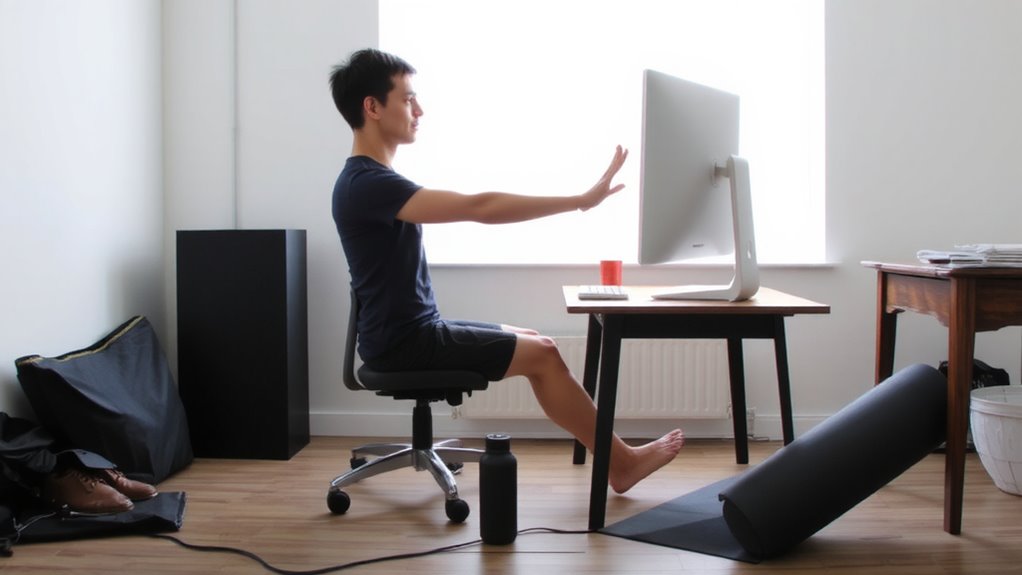
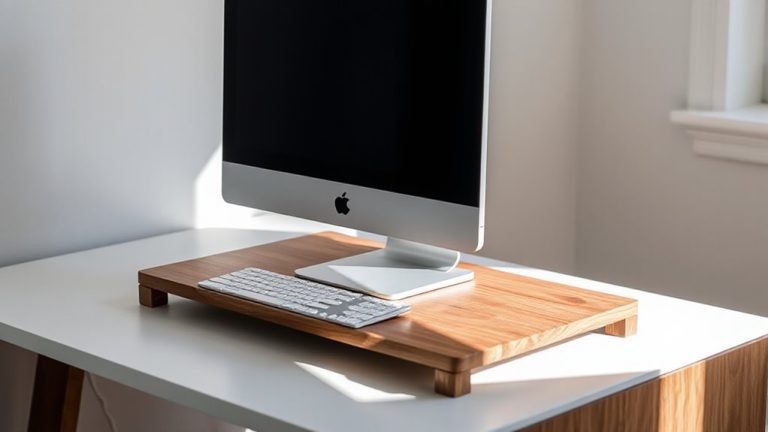
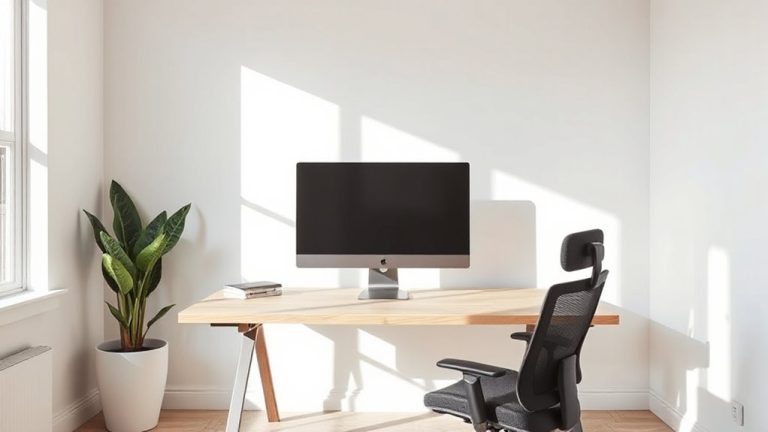
Your desk setup isn’t just about comfort-it’s a key factor in preventing long-term muscle strain. An ergonomic chair with adjustable armrests, lumbar support, and seat depth helps maintain neutral posture, but only if you set it up correctly. Pair it with a desk at elbow height to reduce shoulder tension. Don’t overlook cable management-tangled cords encourage reaching, pulling, and awkward shifts that add up over time. Use clips or sleeves to keep power and data lines secured and out of the way. While these changes improve alignment and efficiency, they aren’t instant fixes: benefits depend on consistent use and proper fit. Some budget chairs claim “ergonomic” design but lack adjustability or durability-check return policies and frame materials. Good workspace design reduces strain, but only if tailored to your body and habits. Choosing from the best ergonomic office chairs can significantly enhance support and comfort throughout the workday.
Move Smarter: Build Breaks Into Your Workday
How often do you actually step away from your desk during the workday? Not enough, most likely. To reduce neck and shoulder tension, you need to move smarter-embedding microbreaks into your routine is essential. Aim for a 30- to 60-second pause every 25 to 30 minutes to stretch or adjust posture. These microbreaks improve movement frequency, preventing stiffness before it starts. Studies show workers who take regular, short breaks report less discomfort and higher focus. Set phone alerts or use a timer app-no special gear needed. You don’t need a standing desk or expensive accessories to benefit. Consistency matters more than tools. But don’t overdo it-too many interruptions can disrupt deep work. Balance is key. Real-world testing suggests 5–6 microbreaks per 4-hour stretch optimizes both comfort and productivity. Your body will feel the difference, even if results build gradually.
Soak, Heat, or Ice? Use the Right Recovery Method
When’s the last time you treated stubborn neck and shoulder tension with something other than a quick rub or shrug? Heat therapy relaxes tight muscles and boosts blood flow-great after hours hunched over your keyboard. Use a microwavable neck wrap or warm shower for 15–20 minutes to ease stiffness. Ice therapy, on the other hand, reduces inflammation and numbs sharp pain-ideal if you’ve overworked your shoulders during a long work sprint. Apply a cold pack wrapped in a thin towel for 10–15 minutes to avoid skin irritation. Don’t guess which works better: try both, but never simultaneously. Avoid extreme temperatures and limit sessions to prevent nerve damage. While heating pads and gel packs are affordable and widely available, check for auto-shutoff features and durable covers for safety. Results vary-listen to your body, not the product claims.
On a final note
You’ll likely see real relief by combining proper posture, smart breaks, and targeted stretches-these methods are proven and cost nothing. While ergonomic chairs or standing desks can help, they’re not magic: results depend on consistent use and correct setup. Heat works well for tight muscles; ice suits acute pain. Most gains come from daily habits, not gear. Don’t expect overnight fixes-real change takes weeks of practice and small, sustainable adjustments.