Understanding How Lighting Affects Sleep Patterns When Working From Home in the Evening
Your evening lighting can delay sleep by suppressing melatonin, especially if you’re using cool-white LEDs or screens after dark. Switch to warm light below 3000K-like a 2700K adjustable lamp-at least 90 minutes before bed to support your body’s rhythm. Dim or floor-level fixtures reduce glare and mimic sunset cues, but even the best bulbs won’t fix poor screen habits or irregular schedules. Pair warm lighting with consistent routines for real results-and see how small changes add up over time.
Notable Insights
- Evening blue-rich light from screens and cool-white LEDs suppresses melatonin, disrupting sleep onset and circadian rhythm.
- Switch to warm lighting (below 3000K) at least 60–90 minutes before bed to support natural melatonin release.
- Use adjustable-color temperature bulbs or smart lamps to gradually shift from cool to warm light post-sunset.
- Position warm-toned, dimmable floor or desk lamps at lower heights to create soothing, indirect evening lighting.
- Even with optimal lighting, sleep quality depends on minimizing screen time and maintaining consistent evening routines.
Why Evening Light Keeps You Awake
Even if you’re winding down after a long workday, the light you’re exposed to at night can still interfere with your ability to fall asleep-especially if it’s rich in blue wavelengths. That evening screen time or overhead LED lighting contributes to circadian disruption by tricking your brain into thinking it’s still daytime. This leads to melatonin suppression, reducing the hormone surge needed for sleep onset. Your body’s internal clock relies on natural light cues, and artificial light after dusk throws it off balance. While dimming lights helps, flipping on cool-white bulbs or scrolling through phones worsens the effect. Ideally, you’d minimize screen use and switch to warmer, lower-intensity lighting post-sunset. But if you must work late, consider adjustable-color temperature bulbs-those that shift from 5000K to 2700K-backed by studies showing reduced melatonin suppression. Still, individual sensitivity varies, so real-world testing matters more than specs alone. For those working from home, investing in the best office lighting can make a significant difference in both productivity and sleep quality.
Blue Light vs. Warm Light: What Helps Sleep?
What kind of light actually helps you sleep better-blue or warm? Warm light does. Blue light disrupts your circadian rhythm by triggering melatonin suppression, making your brain think it’s still daytime. That’s why screens and cool-white LEDs feel jarring at night. Warm light, especially below 3000K on the color temperature scale, mimics sunset tones and supports natural melatonin release. Studies show this shift helps you wind down faster and improves sleep quality. You don’t need special bulbs-many adjustable LED fixtures let you switch to warmer settings manually. But check dimming compatibility and color accuracy ratings (CRI above 80) for reliable performance. Some smart lights allow scheduling, but they’re pricier and not always necessary. There’s a trade-off: warmer light reduces alertness, so avoid it if you’re doing detailed work. For better sleep, though, warm wins. No product is perfect, but understanding light temperature gives you control. Consider using a natural light lamp that offers adjustable settings for balanced exposure throughout the day.
When to Dim and Warm Your Lights
How soon should you start adjusting your lights for sleep? About 60 to 90 minutes before bed, experts suggest dimming your lights and shifting to warmer tones to support melatonin production. This gradual shift in light temperature-moving from cool, bright whites (around 5000K) to warm hues (2700K or lower)-helps signal your body that it’s time to wind down. It also enhances room ambiance, making your space feel cozier and more conducive to relaxation. Smart bulbs or adjustable lamps let you fine-tune brightness and color temperature manually or on a schedule. However, avoid over-dimming if you’re still working-it can strain your eyes. And not all “warm” bulbs are equal; check the packaging for true Kelvin ratings, not just terms like “soft white.” While these changes can improve sleep onset, they work best when combined with consistent routines. Results vary by individual, so test adjustments over several nights to find what suits your rhythm. For those sensitive to light or with irregular schedules, using a light therapy lamp in the morning can help regulate circadian rhythms and improve nighttime sleep quality.
Quick Lighting Hacks to Wind Down
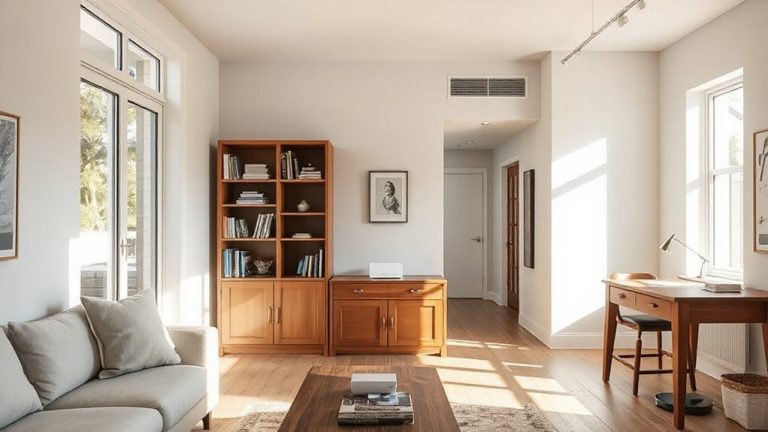
Ever notice how a simple tweak in lighting can shift your mood from alert to relaxed in minutes? Strategic light positioning and bulb placement play key roles in signaling your brain it’s time to wind down. Instead of overhead lights, use floor or desk lamps to create soft, indirect illumination. Place bulbs lower in the room-like at table height-to mimic natural sunset angles. Avoid blue-rich LEDs; aim for warm tones around 2700K. Here’s how three simple changes help:
| Hack | Benefit | Caveat |
|---|---|---|
| Lower bulb placement | Reduces eye strain, feels calming | May limit task visibility |
| Side lighting | Softens shadows, adds warmth | Needs space for lamp setup |
| Dimming 1 hour before bed | Eases melatonin release | Requires dimmable fixtures |
These hacks work best when combined with consistent evening routines.
Best Sleep-Friendly Bulbs and Lamps
Why settle for a bulb that disrupts your sleep when you can switch to one designed to support your circadian rhythm? Choose warm-light LEDs with a color temperature below 3000K-they reduce blue light, helping your body wind down. Brands like Philips and GE offer dimmable bulbs labeled “sleep-friendly” or “warm dim,” which shift to amber hues at night. But check the packaging: not all warm bulbs are equal. Pair low color temperature settings with smart bulb placement-use floor or desk lamps instead of overhead lights to soften exposure. Avoid placing bright lights near eye level in the evening. While these bulbs help, dimming isn’t a fix for excessive screen use. And remember, even the best bulb won’t compensate for poor sleep hygiene. Test options with a 30-day return policy to find what works in your space.
On a final note
Switch to warm, dimmable lighting after sunset to support natural melatonin release, but don’t rely solely on color temperature-brightness and timing matter just as much. Smart bulbs with adjustable Kelvin ratings (2700K or lower) help, though response delays and app complexity can frustrate. Dimming lights by 8 PM aligns with circadian science, yet individual schedules vary. Pair warm lights with consistent screen curfews for best results, but test adjustments gradually to gauge personal sleep response.