Creating Personal Boundaries in Shared Living Spaces to Boost Productivity
You can stay focused in a shared space by setting clear, respectful boundaries that actually work. Use noise-isolating headphones and a “do not disturb” sign during deep work, but don’t rely on gear alone-define quiet hours and stick to them. Choose a consistent spot for focus, even if it’s just a corner with a privacy screen. Talk openly with housemates early on, then adjust as needed. Good boundaries boost productivity without killing the vibe-see how small changes add up over time.
Notable Insights
- Use visual cues like headphones or a “do not disturb” sign to signal focused work time.
- Designate a consistent, private area to train your brain for faster focus in shared spaces.
- Establish shared quiet hours to minimize disruptions from noise during peak work periods.
- Create dedicated focus zones with physical separators like bookshelves or privacy screens.
- Proactively discuss boundaries with housemates and adjust them regularly through mutual agreement.
Stop Letting Roommates Distract You
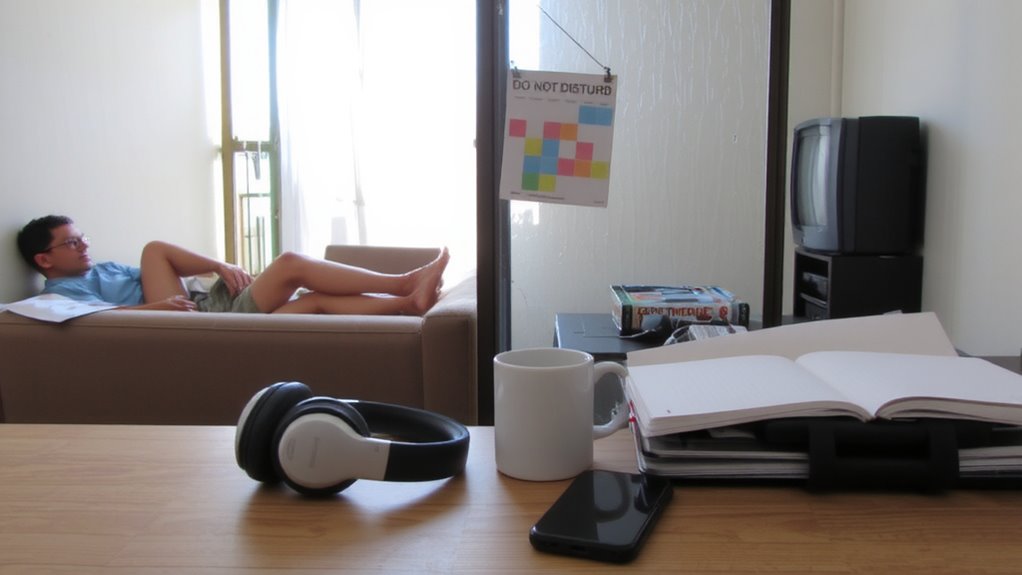
While you might value casual hangouts, letting roommates interrupt your focused time can undermine productivity-especially if you’re using shared spaces as a de facto home office. You need clear boundaries to protect your work rhythm. Address noise complaints proactively by agreeing on quiet hours, not just reacting when distractions pile up. Shared walls mean personal habits-like playing music or hosting guests-can easily spill into your focus time. Set expectations early: use visual cues like headphones or a “do not disturb” sign to signal when you’re working. While noise-canceling earbuds help, they’re not foolproof and won’t fix underlying issues. Relying on gear alone risks false confidence. Real protection comes from mutual respect, not just tech. You’ll gain more from honest conversations than any gadget warranty.
Pinpoint When and Where You Need Focus

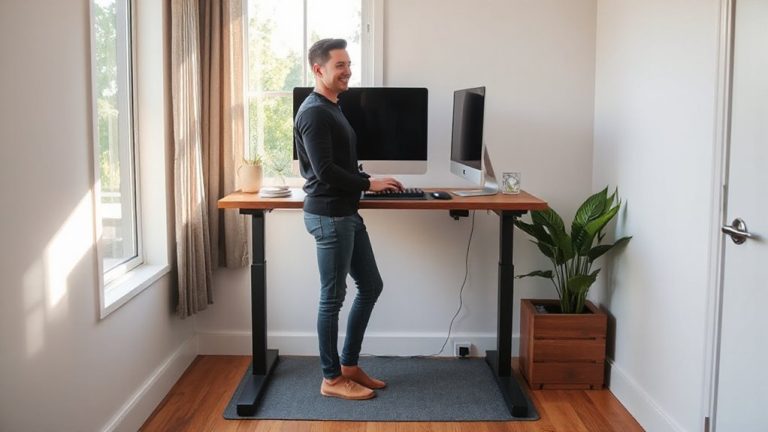
You’ve set the groundwork by limiting distractions, but knowing exactly when and where you need focus takes your strategy further. Identify a designated time each day for deep work-early mornings or late evenings often work best-when housemates are less active. Pair this with a private area, even if it’s just a corner with a room divider, to signal it’s work mode. A consistent spot trains your brain to shift into focus faster. Noise-canceling headphones help, but rely more on timing and location than gadgets. Realistically, not every space allows perfect privacy; shared walls mean compromises. Test different slots and spots over a week, then adjust based on what actually works. This method isn’t about luxury setups-it’s practical, measurable, and adaptable to most living conditions. Adding a Top Desk Privacy Screens can further enhance your designated workspace by minimizing visual distractions and creating a clearer boundary.
Set Quiet Hours Everyone Can Respect
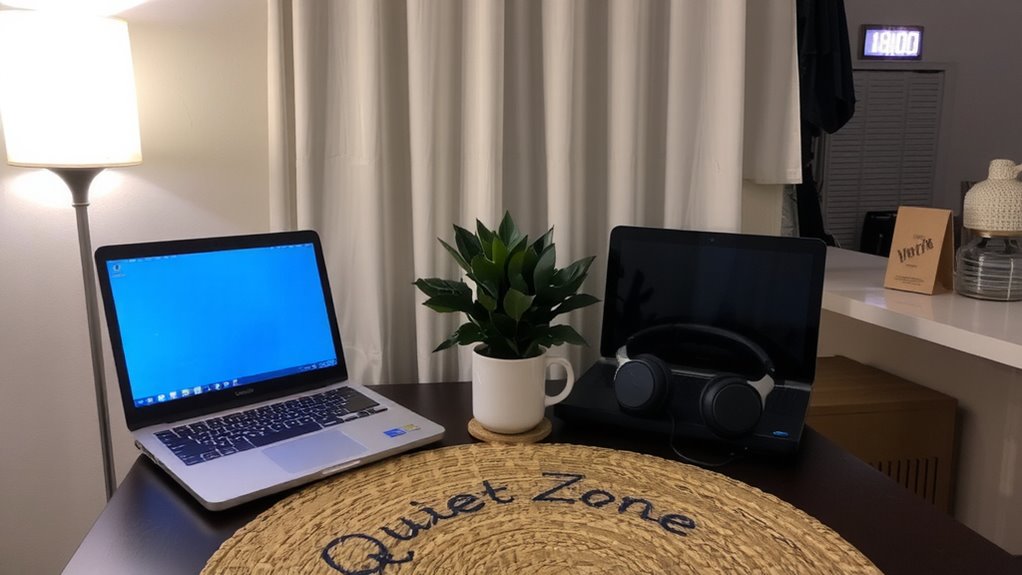
How do you guarantee your focus isn’t constantly derailed by noise in a shared home? You set quiet hours everyone can respect. Establishing a daily quiet time-say, 9–11 a.m. or 7–9 p.m.-gives you protected space to concentrate without constant negotiation. This isn’t about strict silence, but minimizing disruptions like loud music, TV, or video calls. Success hinges on mutual respect: everyone’s needs matter, so schedules should reflect shared input, not just one person’s demands. Use a shared calendar to mark quiet hours and stick to them consistently. You’ll likely see improved focus, but don’t expect perfection-occasional noise will happen. The goal isn’t control, but cooperation. When boundaries are clear and respected, productivity rises without sacrificing household harmony. Quiet time works best when it’s predictable, agreed upon, and flexible enough to adapt to real life.
Create Focus Zones Everyone Respects
Where should you draw the line between communal living and personal productivity? Start by creating designated areas solely for focused work. Choose a quiet corner or spare room where others know not to disturb you during work hours. These zones help enforce noise control-critical when roommates are cooking, chatting, or watching TV. Use furniture like bookshelves or privacy screens to visually separate the space, but skip expensive soundproofing unless tests prove it works. A wired headset with passive noise isolation often helps more than costly active systems. Be clear: focus zones only work if everyone respects them. The trade-off? You might sacrifice some shared space, but the gain in concentration is worth it. Avoid turning these areas into multi-use spots-that weakens the boundary and reduces effectiveness over time. Consider using a best desk privacy screen to enhance visual separation without taking up additional floor space.
Talk to Your Housemates Without Tension
While setting up a quiet workspace helps, nothing sustains focus like clear, respectful communication with your housemates-so start the conversation early, ideally before work hours clash with shared routines. Approach talks with calm honesty, focusing on mutual respect and open communication. You’re not demanding silence-you’re asking for consideration during key hours. To make it easier, use simple signals that show when you’re in deep work mode.
| Your Need | Their View | Compromise Suggestion |
|---|---|---|
| Quiet at 10 AM | Morning podcast time | Use headphones after 9:30 AM |
| Video call focus | Shared kitchen use | Quick kitchen check-ins |
| No distractions | Casual hangouts | Signal with a “do not disturb” sign |
Set shared expectations early, and everyone wins-with less tension and better days.
Stick to It: But Adjust When Necessary
Even the best-laid plans can fall short if you treat your boundaries like unbreakable rules, so stay consistent but build in room to adapt. You need flexible consistency-upholding core limits while allowing shifts when life changes. Maybe your quiet hours worked at first, but a housemate’s new job alters their schedule. That’s where mindful adaptation helps: reassess without resentment. Discuss adjustments clearly, focusing on mutual respect, not compromise for its own sake. Use what you’ve learned from past arrangements to guide updates, like shifting shared kitchen time or redefining workspace access. Productivity thrives on stability, but rigidity breeds tension. Real-world testing shows households that review boundaries every few weeks report better satisfaction. Still, don’t tweak too often-frequent changes confuse expectations. Balance is key: stand by your needs, yet remain open to feedback. Warranties on teamwork aren’t sold in stores, but regular check-ins come close.
On a final note
You should set clear boundaries in shared spaces to boost focus and productivity. Quiet hours and designated focus zones help, especially when everyone agrees upfront. Use simple tools like noise-canceling headphones or room dividers if needed. But be ready to adjust-rigid rules can backfire. Communication matters more than gear, and even the best setup fails without mutual respect. Test what works in your space; results vary.