Noise Pollution: Its Effects on Cognitive Performance in Remote Workspaces
Noise pollution in your home office cuts focus and slows thinking, even at 60 dB-like a loud conversation. Intermittent sounds, from keyboard clicks to distant traffic, reduce concentration by up to 30% and spike mental fatigue. While noise-canceling headphones with 40+ dB reduction help, they can cause ear strain over time. Consider pairing them with acoustic panels or a white noise machine for balanced results. There’s a smarter way to control your sound environment-if you know where to start.
Notable Insights
- Sudden and intermittent noises impair concentration by disrupting brain rhythms and increasing cognitive load.
- Background chatter and unpredictable sounds reduce focus more than steady noise, even at moderate decibel levels.
- Noise exposure above 60 dB, like traffic or loud speech, can decrease cognitive performance by up to 30%.
- Chronic noise pollution contributes to mental fatigue, slower processing, and increased errors during remote work tasks.
- Combining noise-canceling headphones with acoustic modifications improves focus and protects cognitive performance in home offices.
Why Noise Is Ruining Your Home Office Focus
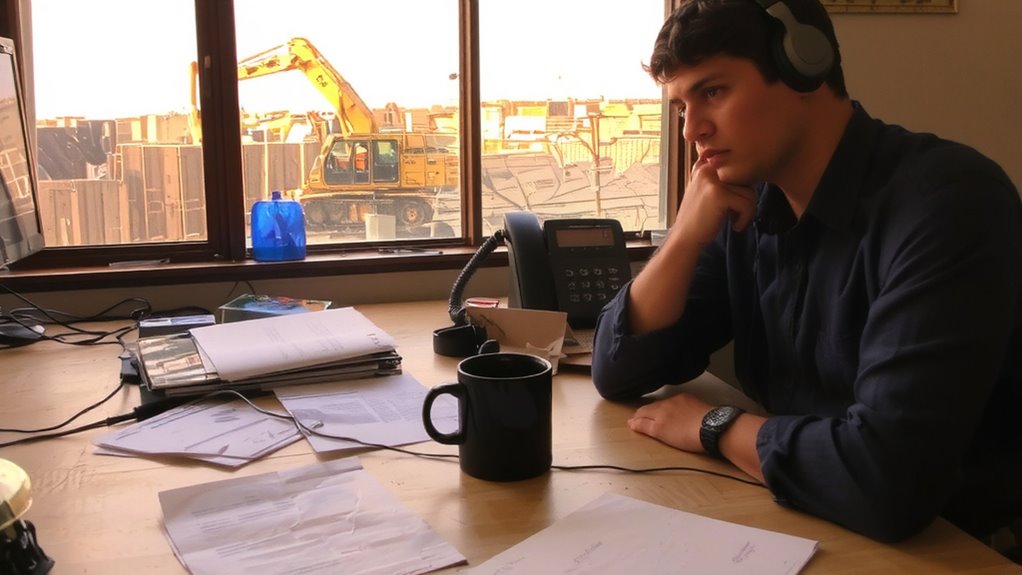
Why does your focus seem to vanish the moment the neighbor’s leaf blower kicks on? Because sudden noise breaks your brain’s rhythm, and without acoustic comfort, even low-level ambient distractions cut deep into concentration. You’re not just annoyed-your working memory and attentional control take measurable hits. Studies show that intermittent sounds, like drilling or shouting, impair task performance more than steady noise. Background chatter or traffic may seem minor, but over hours, they drain mental stamina. Solutions? A well-placed acoustic panel or a white noise machine can help, but don’t expect miracles. Some products overpromise; look for third-party tested decibel reduction, not marketing claims. Soundproofing curtains or foam tiles offer modest gains-good for reducing echo, less so for blocking loud outdoor noise. For real improvement, combine physical barriers with behavioral tweaks. True acoustic comfort requires trade-offs in cost, space, and aesthetics-there’s no one-size-fits-all fix.
What’s Disturbing Remote Workers Most (And How It Happens)
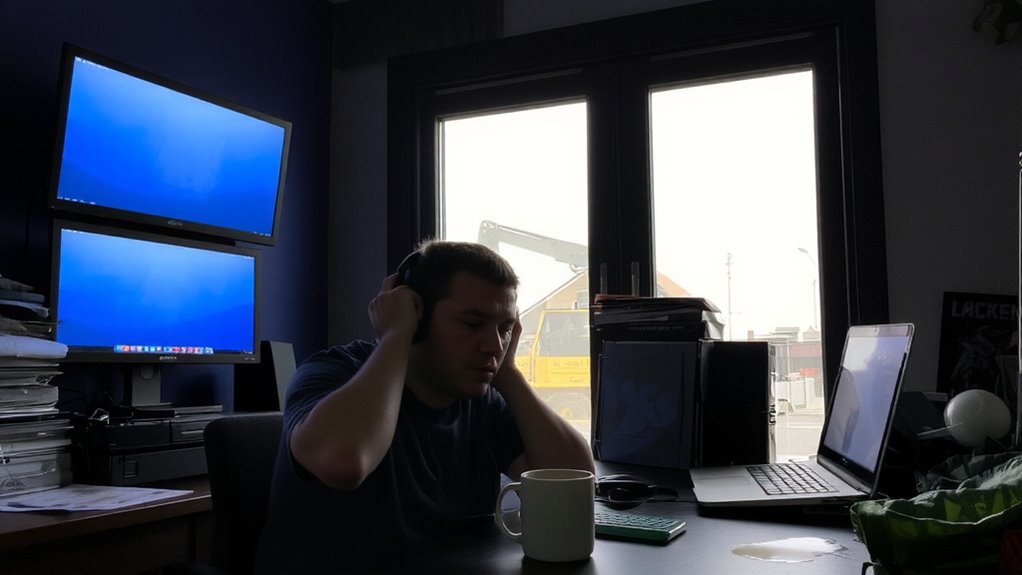
What really undermines your focus while working from home? It’s not just loud noises-it’s the unpredictable ones. Background chatter from roommates or neighbors seeps into your workspace, making it hard to process complex tasks. Your brain can’t ignore speech, especially when it’s partly intelligible, pulling attention away even if you’re not aware. Then come sudden outbursts-kids yelling, dogs barking, construction bangs-sharp spikes in sound that trigger a stress response. These disruptions don’t need to be loud; they just need to be unexpected. Acoustic testing shows that even 60 dB of intermittent noise cuts concentration by up to 30%. While noise-canceling headphones help (especially models with adaptive mics and 40+ dB reduction), they can’t block all sound and may cause ear fatigue over time. Open-floor plans and thin walls make it worse. Top models like those in the best noise-cancelling headphones roundup offer advanced active noise cancellation and adaptive features to better handle such dynamic environments.
How Noise Hurts Your Brain at Work
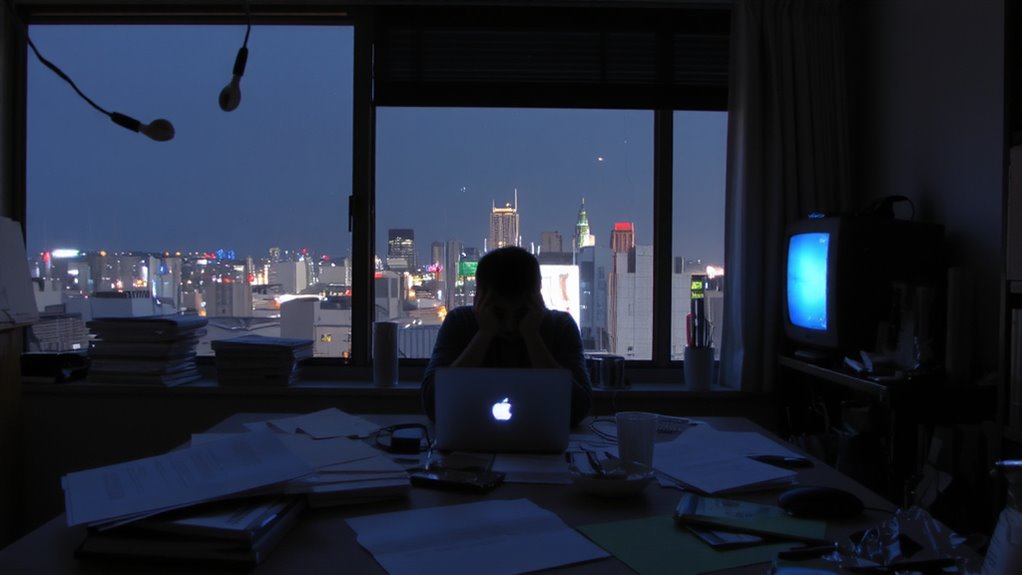
How much does that constant hum or sudden clatter actually degrade your thinking? A lot. Unwanted noise forces your brain to work harder, leading to mental overload and brain fatigue-even if you don’t notice it. Your focus fractures, memory slips, and decision quality drops. Background sounds like traffic, barking, or household noise disrupt attention during complex tasks.
| Noise Type | Decibels (dB) | Cognitive Impact Level |
|---|---|---|
| Traffic hum | 60–70 | High |
| Loud TV | 75 | Severe |
| Barking dog | 80 | Severe |
| Keyboard clicks | 55 | Low to Moderate |
| Sudden door slam | 85+ | Extreme |
Even moderate noise causes distraction. Over hours, this drains mental resources. You might push through, but performance still suffers. Noise doesn’t just annoy-it rewires your concentration. The result? Slower processing, more errors, and quicker exhaustion-all tied to sustained brain fatigue and mental overload.
Silence the Chaos: 5 Proven Noise Fixes for WFH
While cutting out all noise isn’t realistic, you can substantially reduce its impact with a few well-tested fixes that target common home office disruptions. Use sound masking like a white noise machine or fan to cover sudden noises-studies show steady background sound improves focus when speech is unpredictable. Create acoustic zoning by positioning your desk away from kitchens or living areas, adding bookshelves or foam panels to block and absorb sound. Noise-canceling headphones work well but can cause ear fatigue over long sessions. Rearranging furniture reduces echo, and budget acoustic panels cut mid-range noise by up to 30%. Most fixes don’t require rewiring or renovation. Still, effectiveness varies by room shape and neighbor proximity. Results depend on consistency-partial solutions help, but combining sound masking with physical separation delivers the best outcomes for sustained concentration.
Create a Quiet-First Work Routine
Because your brain works best in predictably quiet settings, building a quiet-first work routine means scheduling key tasks around the calmest parts of your day-like early mornings or late evenings-when household activity and outdoor noise typically dip below 45 decibels. Use sound masking strategically: a white noise machine set between 45–50 dB can cover sudden disruptions without overstimulating, backed by studies in *Environmental Health Perspectives*. Pair this with acoustic zoning-designate your workspace away from kitchens or streets, using bookshelves or thick curtains as barriers. Rugs with rubber underlays reduce impact noise by up to 20 dB, according to NIOSH. While noise-canceling headphones help, relying solely on tech risks listener fatigue. A quiet-first schedule isn’t about perfect silence-it’s about predictable sound levels. Test your space with a $30 decibel meter app. Real focus comes from routine, not gadgets.
On a final note
You can substantially boost focus by cutting noise, but it’s not about total silence-it’s about smart control. Acoustic panels reduce echo in most rooms, and a $150 active noise-cancelling headset like the Sony WH-1000XM4 blocks low-frequency droning. White noise machines help too, though they may distract some. Sealing gaps in windows cuts street noise by up to 30%. Just remember: no fix works perfectly in every layout, so test solutions in your actual space.