Neck and Shoulder Muscle Relief Techniques for Daily Work From Home Productivity Boosts
Adjust your chair so your feet rest flat and knees bend at 90 degrees, then position your monitor at eye level an arm’s length away-these small fixes reduce neck and shoulder strain fast. Pair this with hourly neck stretches and a daily posture habit like shoulder blade squeezes. Use a simple cushion or footrest if needed; no expensive gear required. For quicker relief, try heat in the morning and ice if sore. The best gains come from consistency-simple changes, done daily, add up.
Notable Insights
- Adjust chair height so feet rest flat and thighs are parallel to the ground to reduce neck and shoulder strain.
- Position monitor at eye level and an arm’s length away to prevent forward head posture.
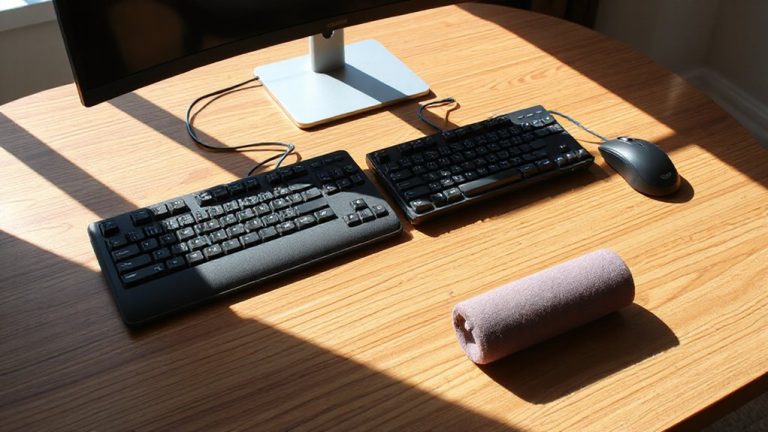
- Keep keyboard and mouse within easy reach, elbows bent at 90 degrees to minimize shoulder tension.
- Take short, frequent breaks to stretch neck and shoulders, improving circulation and reducing muscle fatigue.
- Use a cushion or footrest if needed to maintain proper seated alignment and reduce upper body stress.
Fix Your Home Office Ergonomics in 5 Minutes
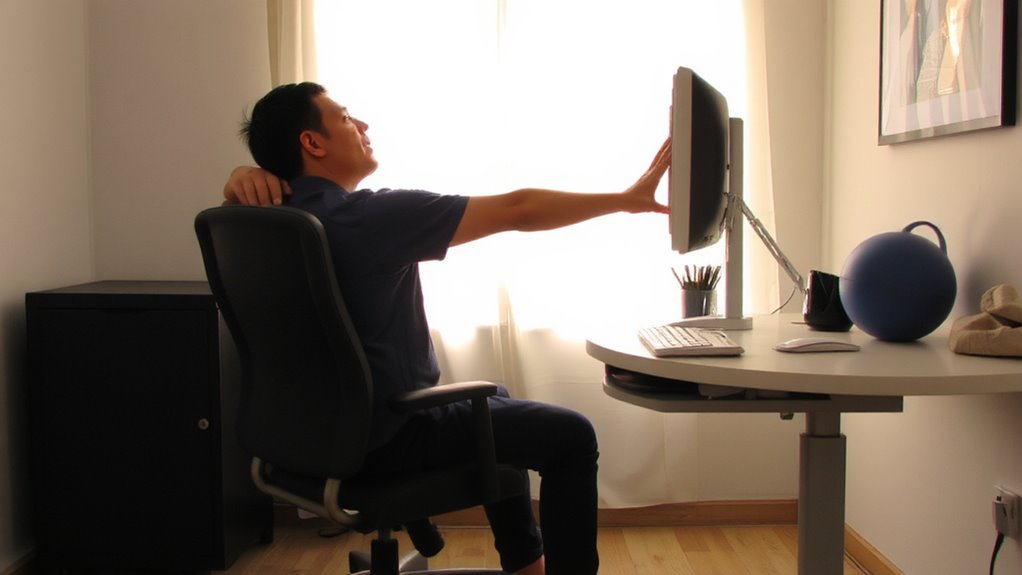
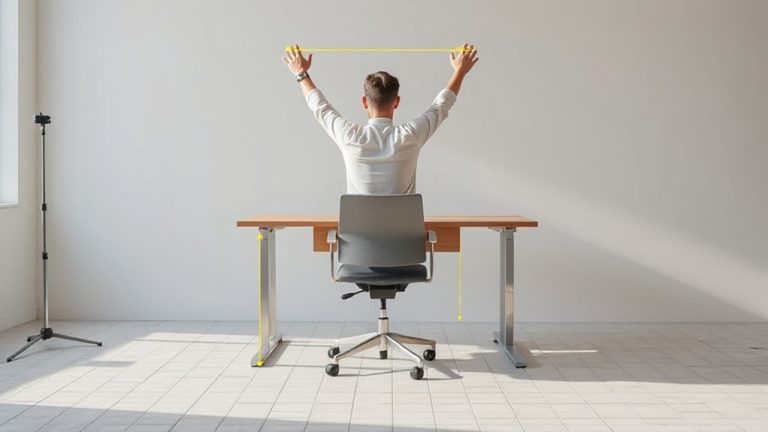
A 5-minute ergonomic fix can make a noticeable difference-if you focus on the right adjustments. Start by checking your chair height: your feet should rest flat on the floor, thighs parallel to the ground, and knees at a 90-degree angle. If your chair lacks height adjustment, a cushion or footrest can help balance posture. Next, evaluate desk alignment-your monitor should sit at eye level, about an arm’s length away, to prevent neck strain. Use books or a monitor riser if needed. Keyboard and mouse must stay within easy reach, elbows close and bent at 90°. These tweaks reduce shoulder tension and improve alignment. But don’t assume more expensive gear guarantees better results-some $300 chairs test poorly next to budget models. Always verify adjustability specs and return policies before buying. Choosing the right ergonomic office chair can significantly enhance support and comfort throughout the workday.
Do These 3 Neck Stretches Every Hour

You’ve adjusted your chair, monitor, and keyboard-good. But without regular movement, your neck still stiffens up. Do these 3 neck stretches every hour to maintain neck mobility and reduce tension: gently tilt your head side to side, forward and back, and rotate ears toward shoulders. Aim for 20–30 seconds per stretch. This stretch frequency combats the stiffness from staring at screens and sitting statically. You’ll feel looser, think clearer, and avoid that end-of-day ache. These moves don’t need space or gear-just consistency. Don’t rush them; poor form can worsen strain. If you feel sharp pain, stop-this isn’t about pushing limits. Results vary, but most notice less tightness within days. It’s not a fix-all, but paired with ergonomics, it’s one of the most effective, no-cost habits you can build.
Use Heat and Ice for Instant Muscle Relief
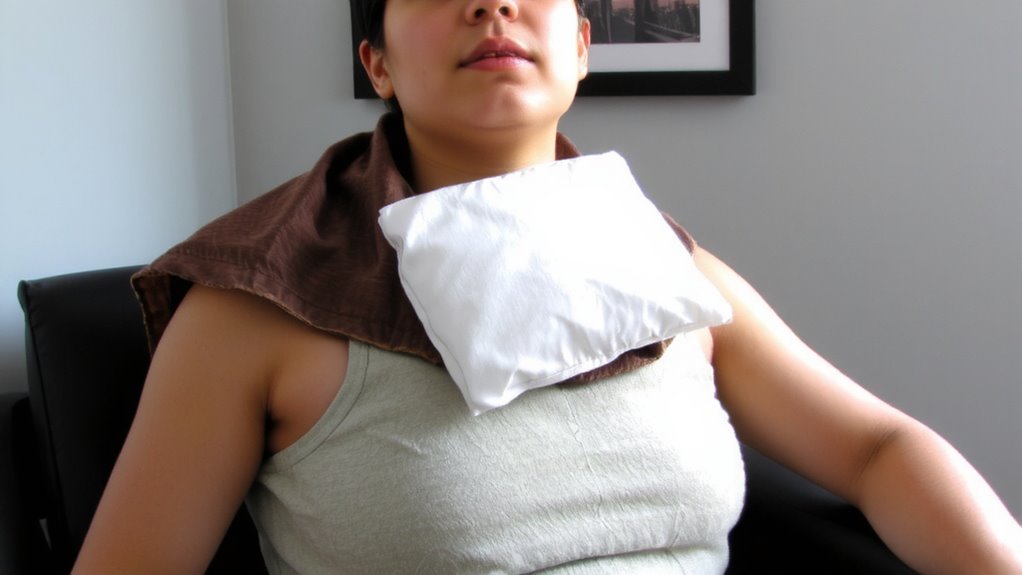
When tension builds in your neck and shoulders, alternating heat and ice can deliver fast, drug-free relief-but knowing when to use each makes all the difference. Use ice therapy first if you’ve overworked muscles or feel sharp pain; it reduces inflammation and numbs sore spots. Apply for 15 minutes with a thin towel to avoid skin irritation. Wait an hour before using heat application, which boosts blood flow and loosens tight tissue. A microwavable pad or heating wrap at 104–110°F works well for 15–20 minutes. Don’t use heat on swollen or bruised areas-it can worsen inflammation. For chronic stiffness, alternate both: 15 minutes ice, then 15 heat. Always limit sessions to prevent skin damage or nerve irritation. Results vary, but most people feel relief within 48 hours of consistent use.
Build a Better Posture With One Daily Habit
How often do you check your posture during the day-especially when you’re hunched over a screen? One daily habit that helps: scheduled posture checks. Set a reminder every hour to assess your alignment-ears over shoulders, shoulders over hips. This small act builds muscle awareness, training your body to catch slouching before it causes tension. You don’t need special gear; it works at any desk, with any chair. Over time, consistent posture checks reduce neck strain and shoulder tightness, supporting long-term comfort. But it’s not instant-expect a few weeks before it feels automatic. Results vary if your workstation is poorly arranged, so pair this habit with proper monitor height and keyboard placement. While apps or wearables exist, they’re not required and may distract more than help. The real tool is your attention. Stay consistent, and you’ll notice a measurable difference in how you sit-and feel.
Try These 3 Tools for Faster Shoulder Relief
While posture habits form the foundation, targeted tools can speed up shoulder relief when tension builds. First, try foam rolling your upper back with a firm 36-inch roller-10 minutes daily reduces tightness by loosening muscle knots near the shoulder blades. Second, use a tennis ball against a wall to apply acupressure therapy; focus on trigger points, holding pressure for 30 seconds until release. Third, invest in a handheld percussive massager with at least three speed settings-look for models tested for over 1,500 RPMs. While effective, these tools require consistent use and proper form. Foam rolling may feel intense at first, and acupressure therapy works best when paired with deep breathing. Always check product warranties-reputable brands offer at least a one-year guarantee. Used wisely, these tools complement posture work and deliver faster, noticeable relief.
On a final note
You’ll see real gains in comfort and focus by fixing your workspace and moving daily. Simple stretches, heat wraps, and posture checks cut tension fast-especially if you sit long hours. A well-placed monitor and an adjustable chair do more than gadgets like pricey massagers. But consistency matters most: no tool helps if unused. Most relief comes from routine, not gear. Free methods work well; spend only if pain persists.