How to Evaluate Cable Flexibility to Predict Lifespan and Failure Points
You should test cable flexibility under real motion, not just rely on specs. Use bend cycling and torsion trials to see how it handles repeated movement. Pick cables with fine-stranded conductors and TPE or PUR jackets-they typically last over 100,000 cycles, versus 50,000 for basic PVC. Always respect the minimum bend radius, usually 7.5–10 times the cable’s diameter, to avoid cracks. Check bend zones regularly for thinning or microfractures; early wear signals it’s time to replace. There’s more to optimizing performance based on material trade-offs and stress points.
Notable Insights
- Assess conductor stranding, as fine-stranded wires enhance flexibility and endure repeated motion better than solid cores.
- Choose jacket materials like PUR or TPE, which offer superior flex life and resist cracking compared to standard PVC.
- Test cables using bend cycling and torsion trials to simulate real-world motion and identify fatigue failure points.
- Ensure installation respects the minimum bend radius to prevent internal damage and extend operational lifespan.
- Inspect high-flex zones regularly for early signs of wear, such as jacket deformation or microfractures, to anticipate failures.
Define Cable Flexibility for Dynamic Applications
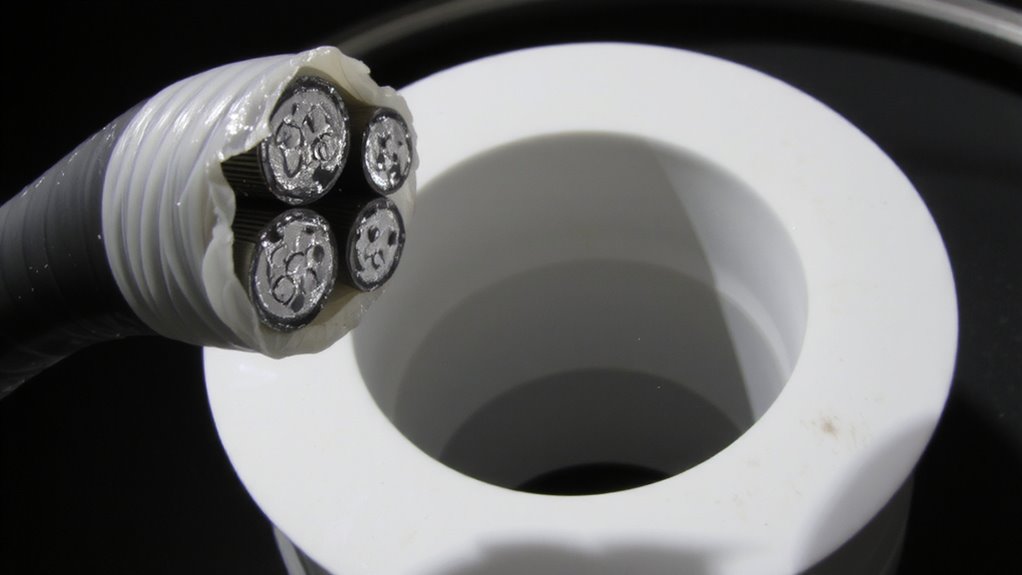
Cable flexibility in dynamic applications isn’t just about how easily a cable bends-it’s about how well it holds up when constantly moving, twisting, or bending in real-world use. You need cables that survive repeated motion without failing, and that depends heavily on cable composition and conductor plating. Stranded conductors with fine wire counts offer better flexibility than solid cores, while high-quality insulation like TPE or PUR resists cracking. Conductor plating, like tin or silver, boosts conductivity and corrosion resistance, especially in moving joints. But don’t assume more flexibility means longer life-overly soft jackets may wear faster. Balance bend radius with durability. In automation or robotics, where cycles matter, choose designs built for motion, not just installability. Always check manufacturer specs for flex ratings, not just material claims. Real-world longevity comes from thoughtful engineering, not just pliability.
Test Cables Under Real-World Flexing
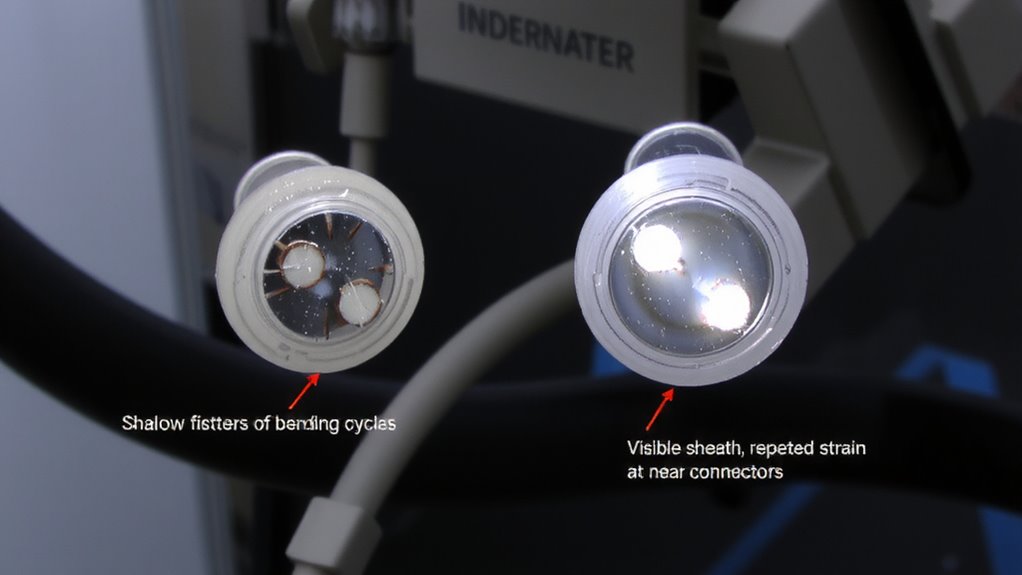
While lab specs can look impressive on paper, you’ll want to test cables under real-world flexing to truly judge their lifespan in dynamic setups. Use motion simulation rigs that mimic actual movement patterns-like robotic arms or automated pull cycles-to identify failure points early. Combine this with load testing to assess performance under expected stress. Realistic trials reveal how materials degrade over time, which specs alone can’t predict.
| Test Type | Purpose |
|---|---|
| Motion Simulation | Replicate continuous movement |
| Load Testing | Apply mechanical stress |
| Bend Cycling | Measure fatigue resistance |
| Torsion Trials | Evaluate twist endurance |
These tests provide concrete data on when and how cables fail. While effective, they require time and proper equipment. Don’t skip them-even high-end cables can underperform if they’re not validated in conditions like yours.
Size Cables by Minimum Bend Radius
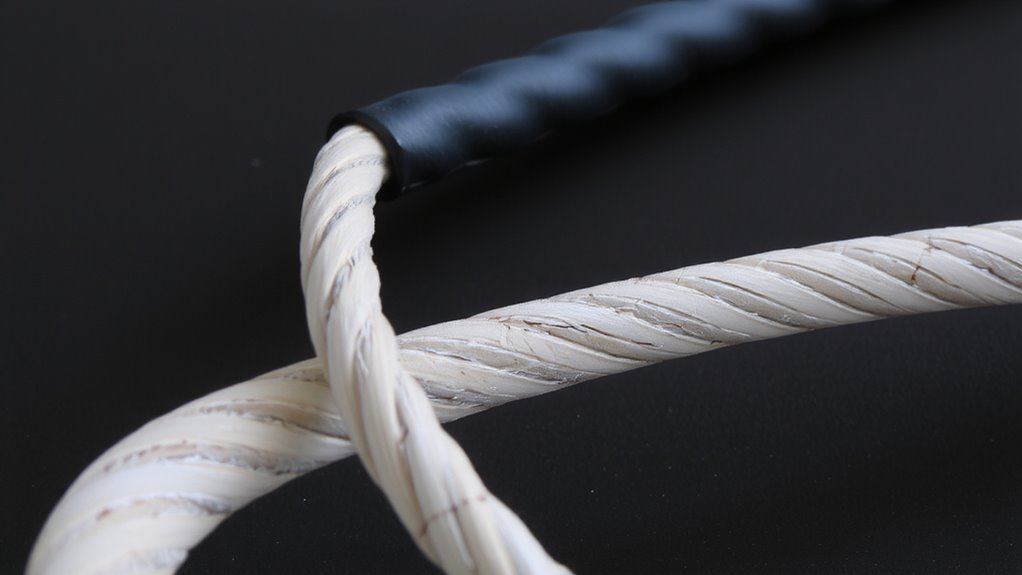
A single misstep in measuring bend radius can cut your cable’s lifespan short, so always size cables according to their specified minimum bend radius (MBR)-typically listed by manufacturers as a multiple of the cable’s outer diameter, like 7.5× or 10×. You need to multiply the MBR factor by the cable diameter to get the smallest safe bend radius. If you ignore this, excessive stress builds up, especially in areas with high material stiffness, leading to cracks or conductor fatigue. Tightly bent cables in moving machinery, for example, fail faster when undersized. While a larger diameter cable may handle more power, it often requires a wider bend radius, making routing tricky in compact spaces. Always check manufacturer specs under real installation conditions. Pushing past the MBR-even once during setup-risks long-term damage. Respecting these limits guarantees reliable operation without premature wear.
Use Flex-Resistant Materials in Dynamic Cables
Many dynamic cables fail prematurely because they’re built with materials that can’t handle constant movement, but you’ll get far better results when you choose ones made with flex-resistant conductors and jackets. Your material selection directly impacts longevity-opt for thermoplastic elastomers or PUR jackets that resist cracking. Pair that with fine conductor stranding, which distributes flex stress more evenly than standard stranding. Below is a quick comparison:
| Material | Flex Cycles (avg.) | Abrasion Resistance |
|---|---|---|
| PVC | 50,000 | Low |
| TPE | 100,000 | Moderate |
| PUR | 150,000+ | High |
Fine-stranded copper improves flexibility but may cost more and require compatible connectors. While PUR delivers top performance, it’s stiffer upfront and sensitive to certain solvents. You’ll trade initial flexibility for long-term reliability, especially in automated machinery or robotics. Don’t overlook jacket thickness-thinner isn’t always better if abrasion is a factor.
Spot Early Signs of Flex-Induced Damage
If you’re running cables in motion applications, catching flex-induced damage early can save you from unexpected downtime and costly repairs. Start by inspecting for wear patterns-look closely at bend zones where repeated movement occurs. Flattening, thinning, or texture changes along the jacket signal stress. These areas often precede crack detection, so mark and monitor them weekly. Use a 10x magnifier to spot microfractures in the outer sheath, especially near connectors or clamps. Cables with stranded conductors and flexible jackets like PUR resist damage longer, but no material eliminates wear. Test cables under real loads and cycles; don’t rely solely on manufacturer flex ratings. Rotate or replace at the first sign of consistent deformation. While regular checks add labor, they extend service life and prevent sudden failure in critical runs.
On a final note
You should pick flexible cables rated for dynamic use if you move devices often, as they resist cracking and last longer under repeated bending. Look for ones with stranded conductors and jacket materials like TPE or PVC that survive 5,000+ flex cycles in testing. Always respect the minimum bend radius-usually 7.5x the cable diameter-to avoid internal damage. Cheaper cables may work short-term but often fail early with fraying or intermittent connections.