Lower Back Pain Solutions: A Comprehensive Guide to Reducing Prolonged Sitting Strain in Your Home Office Environment
You can cut lower back strain by adjusting your chair so your feet rest flat and knees stay at 90°, then setting your desk so elbows bend comfortably at the same angle while typing. Pair this with lumbar support and hourly 2-minute breaks to reset posture and move your spine. Core exercises like planks help long-term, but consistency matters more than gear-results depend on daily habits, not just equipment. Small changes add up faster than you’d expect.
Notable Insights
- Adjust your chair height so feet rest flat on the floor and knees are at a 90-degree angle to reduce lower back strain.
- Set desk height to keep elbows at 90 degrees while typing, ensuring wrists stay straight and shoulders relaxed.
- Use a lumbar support cushion or adjustable chair to maintain the spine’s natural curve and prevent slouching.
- Take a 2-minute movement break every hour with stretches like seated forward bends to relieve spinal pressure.
- Strengthen core muscles daily with planks and abdominal bracing to support spinal alignment during prolonged sitting.
How Sitting Causes Lower Back Pain
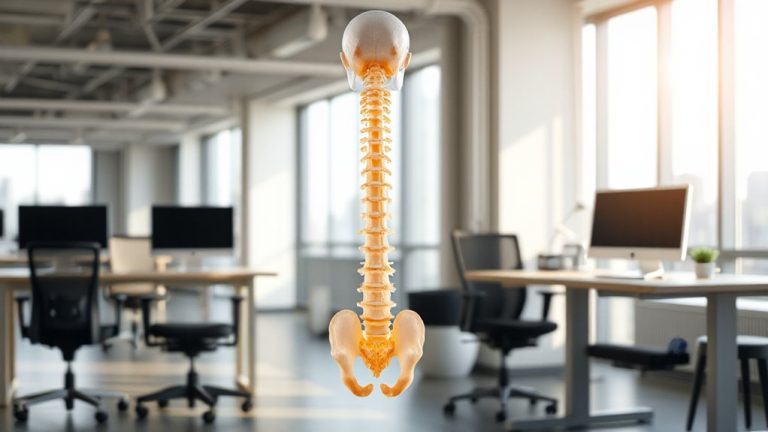
While sitting might seem harmless, it places surprisingly high pressure on your lower back-especially if you’re doing it for hours without proper support. You’re likely increasing spinal compression, which over time can accelerate disc degeneration. When you sit, your lower spine bears up to 90% more pressure than when you stand, particularly if your posture slumps. This sustained load weakens discs, reducing their ability to absorb shock. Though ergonomic chairs claim to help, not all deliver-many overpromise lumbar support with minimal testing to back it up. Real-world studies show only chairs with adjustable depth and firm, contoured support consistently reduce strain. Even then, no chair eliminates risk if you stay still too long. The best approach isn’t a gadget, but habit: shift positions often, limit sitting bouts to 30–45 minutes, and prioritize movement. Relying solely on gear ignores the core issue-prolonged inactivity fuels damage. Some alternative seating solutions, like the best perch seats, encourage active sitting and may help reduce lower back strain by promoting better posture and minimizing spinal compression.
Set Up Your Chair and Desk for Back Health
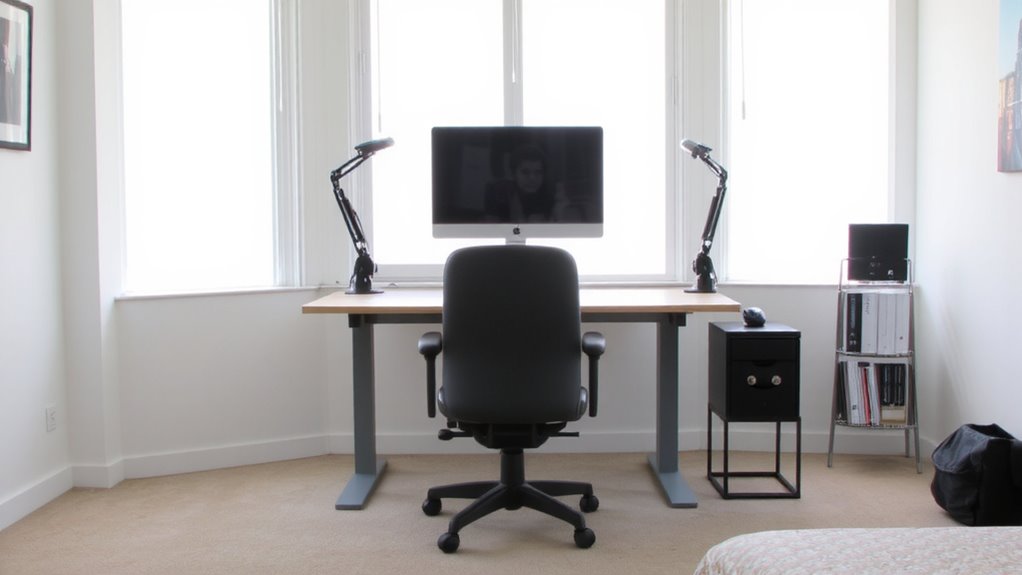
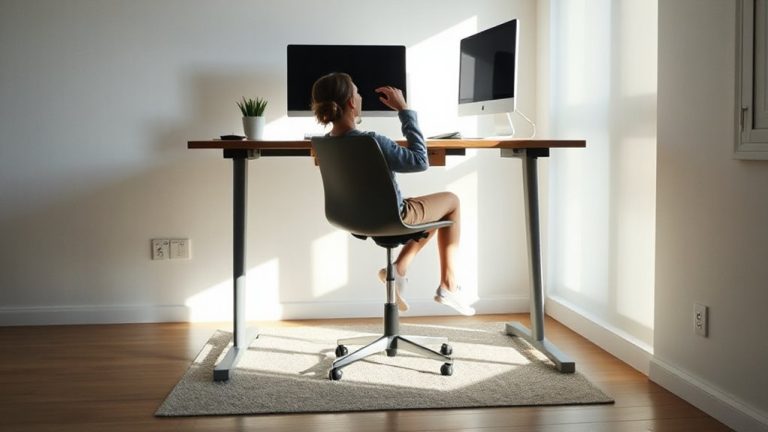
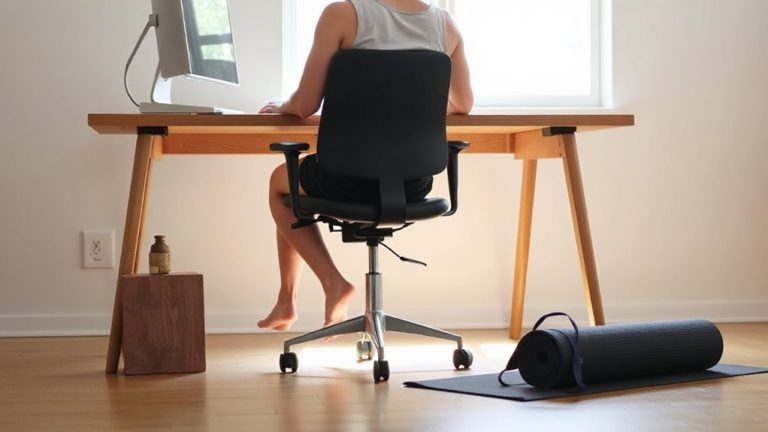
If you want to protect your lower back, setting up your chair and desk correctly is one of the most effective steps you can take-though even the best setup won’t fix the harm of sitting all day without breaks. Start with chair height: your feet should rest flat on the floor, thighs parallel to the ground, and knees at a 90-degree angle. A seat that’s too high or too low strains your hips and spine. For desk alignment, your elbows should bend at 90 degrees when typing, with wrists straight and shoulders relaxed. The desk surface should sit at forearm height when seated. Use adjustable furniture to achieve this-fixed-height desks or chairs often force compromise. Even a well-designed space requires movement, so prioritize frequent position changes over perfect ergonomics. Standing for long periods can also contribute to discomfort, so consider using a supportive floor mat for standing desks to reduce strain on your legs and lower back.
Adopt a Spine-Friendly Sitting Posture
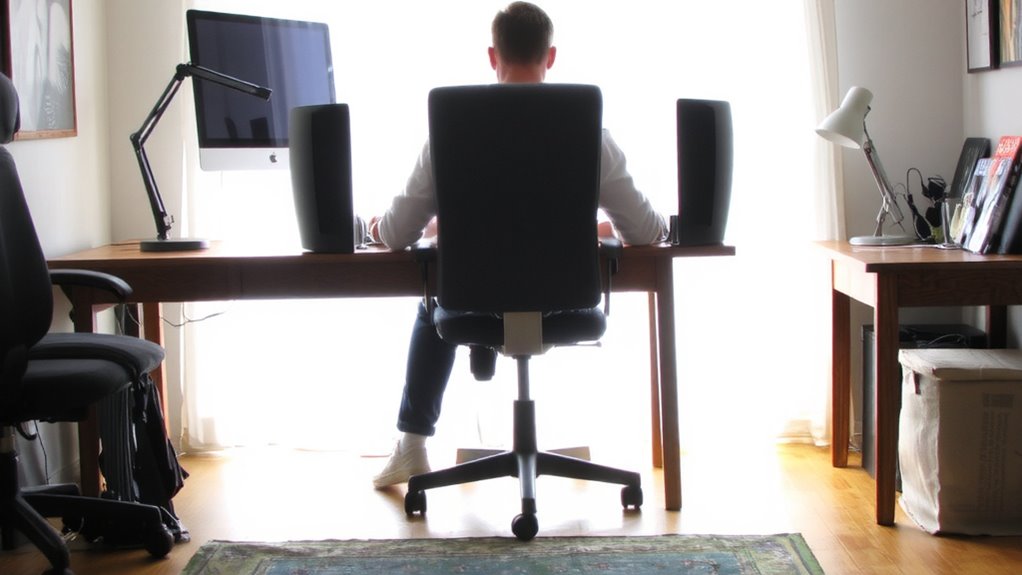
How often do you check your posture when settling into your chair? Proper spinal alignment starts with a neutral pelvis-avoid excessive pelvic tilt, which strains your lower back. Sit with feet flat, knees at 90°, and lower back supported to maintain the spine’s natural curve. Adjust your chair height and lumbar support to meet these needs, but remember: no gear replaces mindful positioning.
| Feature | Benefit |
|---|---|
| Lumbar support | Reduces strain on lower spine |
| Seat depth | Helps maintain pelvic tilt control |
| Armrest height | Prevents shoulder hunching |
| Backrest angle | Supports natural spinal alignment |
| Seat material | Balances comfort and posture |
Even the best chair won’t fix poor habits. Choose adjustable, tested models with strong warranties, but focus on form. Real-world use shows mixed results-what works for one may not work for you.
Take 2-Minute Movement Breaks Every Hour
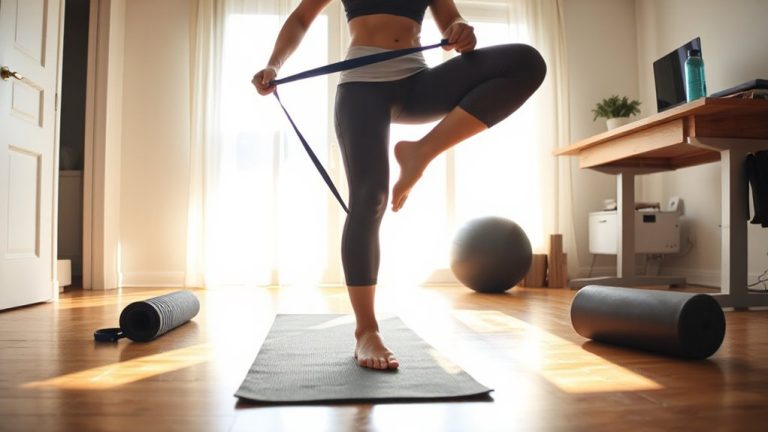
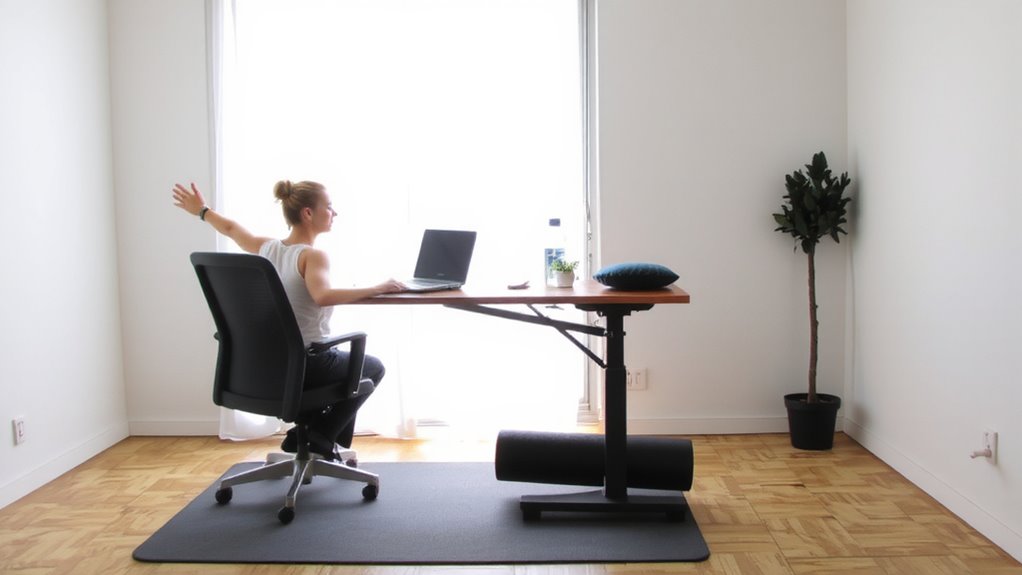
Because sitting for long stretches stiffens your spine and limits circulation, taking a 2-minute movement break every hour can help maintain lower back health-but only if the movements are purposeful and consistent. You don’t need special gear or apps, but using simple stretch routines-like seated forward bends or standing torso twists-keeps muscles active and joints mobile. Pair each break with a quick posture check: roll your shoulders back, align your ears over your spine, and reset your pelvis if slouching. These mini-sessions add up to 20 minutes of movement daily, which studies link to reduced disc pressure. While timers or smartwatches can remind you, they’re not essential-consistency matters more than tools. Skipping breaks even one day can bring back stiffness, so treat them like calendar appointments. Results vary, but most notice less tightness within a week. No claims about curing pain-just smarter maintenance.
Strengthen Your Core to Support Your Back
Think of your core as the body’s built-in support belt-it’s not just about six-pack abs, but the deep layers of muscle that stabilize your spine and reduce strain on your lower back. You don’t need equipment to start; simple daily habits like abdominal bracing and plank exercises build foundational strength. These moves train your transverse abdominis and obliques to work with your back muscles, improving posture during long work sessions. Incorporating a core-engaging chair can further enhance this postural support by encouraging active sitting throughout the day.
| Exercise | Recommended Duration |
|---|---|
| Plank | 20–30 seconds |
| Side plank (each side) | 15–20 seconds |
| Abdominal bracing | 5 seconds, 10 reps |
| Forearm plank | 3 sets daily |
| Modified plank | As needed for form |
Consistency matters more than intensity-start light, focus on form, and increase duration gradually to avoid strain.
Use Simple Ergonomic Aids at Home
A well-designed workspace can make a real difference in easing lower back discomfort, especially when you’re spending hours at home. You don’t need expensive gear-simple ergonomic aids like lumbar support cushions and proper footrest usage help maintain spinal alignment. A contoured lumbar pillow supports your lower back’s natural curve, reducing slouching; look for memory foam with a breathable cover and adjustable strap to stay in place. A footrest keeps your knees at or below hip level, easing pressure on your discs-use a stable model with a non-slip surface and adjustable height. While studies show these tools reduce discomfort in prolonged sitting, results vary by individual. They’re affordable and portable but won’t fix poor overall posture or an ill-fitting chair. Choose designs tested for comfort over days, not just hours, and check return policies in case adjustments are needed.
Follow a Daily Routine to Prevent Pain
Sticking to a consistent daily routine can go a long way in keeping lower back pain at bay, even if you’ve already set up your workspace with lumbar cushions or a footrest. You should build in stretch routines every 60–90 minutes-think seated spinal twists or standing hamstring releases-to ease tension and boost circulation. Pair these with subtle posture cues, like setting a reminder to check if your shoulders are relaxed and your lower back is supported. Over time, these habits reduce strain more reliably than gear alone. While standing desks or ergonomic chairs help, they’re not magic fixes-movement matters more. Some find timers or wearable nudges useful, but they require adjustment to avoid distraction. Results vary, so test what timing and cues fit your workflow. Consistency beats intensity; short, frequent breaks beat one long stretch at day’s end. Real relief comes from discipline, not just equipment.
On a final note
You’ll likely reduce lower back pain with better posture and movement, especially by adjusting your chair height and desk setup to keep wrists level and feet flat. Core exercises help, but they take weeks to show results. A sit-stand desk or lumbar cushion can offer quick relief-look for ones with a 30-day trial and solid warranty. Still, no gear replaces frequent breaks; standing too long causes new issues.