Muscle Endurance Improvement Strategies: Exercises to Enhance Stamina and Reduce Pain From Prolonged Sitting While Working Remotely
You can fight sitting pain and build muscle endurance with no-equipment moves that fix posture and target weak areas. Focus on neutral spine alignment and relaxed shoulders at your desk. Do daily planks, bird-dogs, and hip stretches to strengthen core and back muscles. Start slow-form matters more than reps. Expect mild soreness, not pain. Consistency over weeks beats perfect single sessions. Better posture and stamina start with small, repeatable steps.
Notable Insights
- Maintain a neutral spine and relaxed shoulders while sitting to reduce strain during long work sessions.
- Perform plank variations daily to build core endurance and support lower back health without equipment.
- Strengthen spinal stabilizers with bodyweight exercises like bird-dogs and supermans 3–4 times per week.
- Loosen tight hips with 5–7 minutes of daily dynamic stretches such as leg swings and hip flexor stretches.
- Re-energize and build stamina with a consistent 10-minute routine including chair squats, arm circles, and jumping jacks.
Fix Your Posture to Stop Sitting Pain
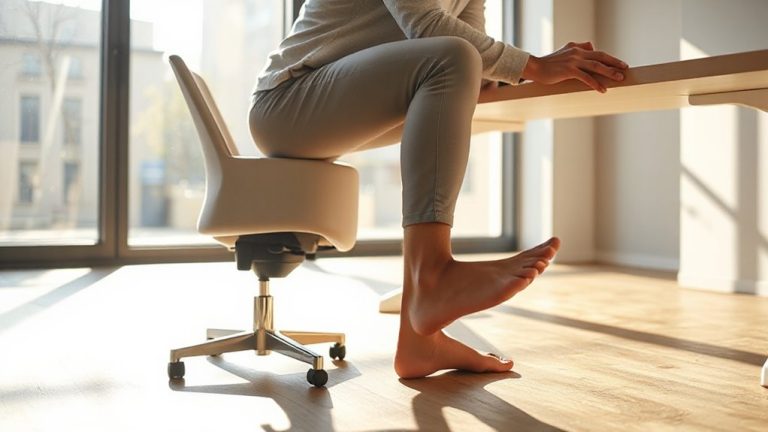
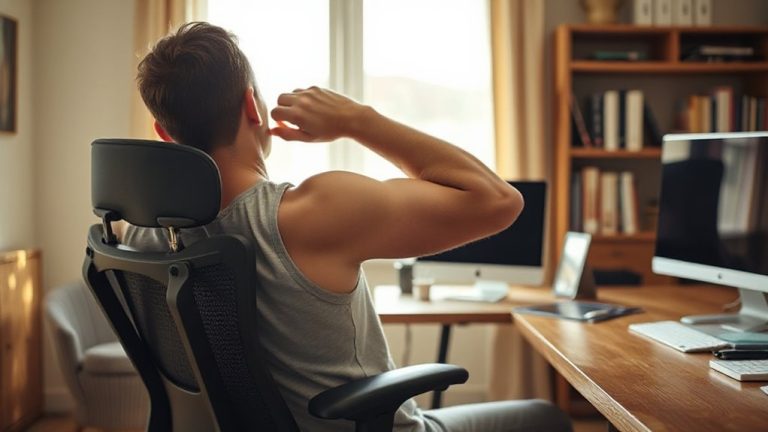
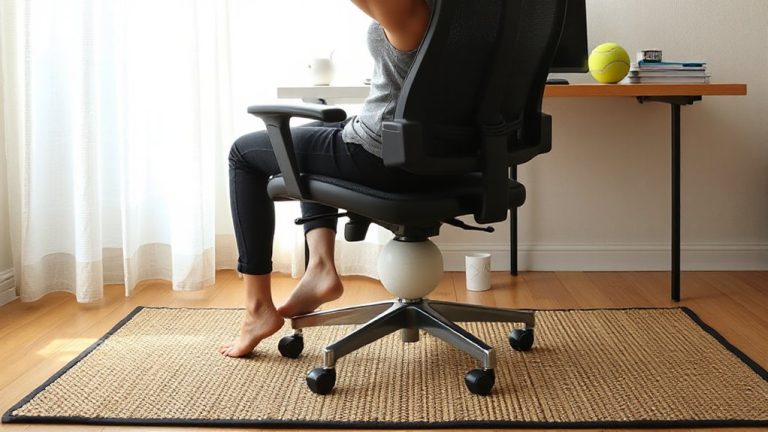
A good number of remote workers spend over six hours a day sitting, and if your posture isn’t aligned, that time adds up to real discomfort-maybe even long-term strain. You can reduce sitting pain by focusing on spinal alignment and shoulder positioning-two key factors often compromised in home setups. Sit with your spine neutral, ears over shoulders, and hips slightly higher than knees. Keep shoulders relaxed, not hunched or rolled forward, especially during long typing sessions. While ergonomic chairs or cushions may help, they aren’t mandatory-many find success with simple, adjustable desk chairs paired with a folded towel for lumbar support. Real-world testing shows consistent posture correction reduces discomfort in about two weeks, though results vary. Don’t rely solely on gear; awareness and frequent micro-adjustments matter more. Long-term benefit comes from habit, not hardware. Investing in one of the best office chairs for posture can further support healthy sitting alignment and reduce the risk of chronic pain.
Build Core Stamina: 5 No-Equipment Moves
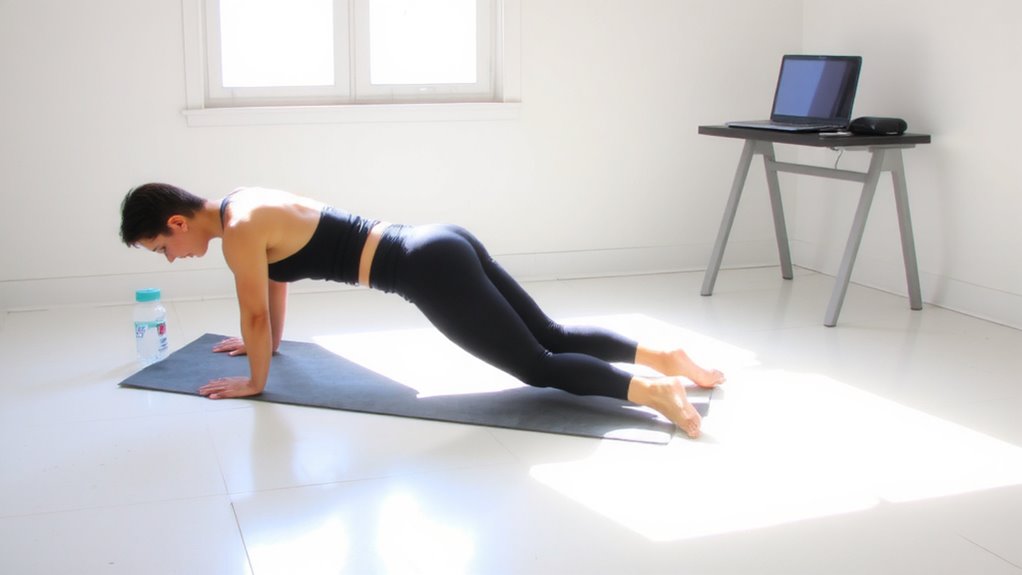
How often do you feel your lower back tighten during a mid-afternoon work session? That ache usually means your core’s fatigued from hours of static sitting. Building core stamina helps, and you don’t need equipment. Start with plank variations-standard planks, forearm planks, and extended-arm planks-to engage your abs, shoulders, and glutes. These builds endurance gradually, especially when held for 20–30 seconds over multiple sets. Add side bridges to target obliques and improve lateral stability, which supports upright posture. Do them daily, focusing on form over duration. If you’re new, your muscles might tremble at first-that’s normal. Stop if you feel lower back strain. These moves work best when paired with frequent posture checks. They’re practical, research-backed, and require no gear, but consistency matters more than intensity. Overdo it, and soreness can interfere with focus.
Strengthen Your Back With Bodyweight Exercises
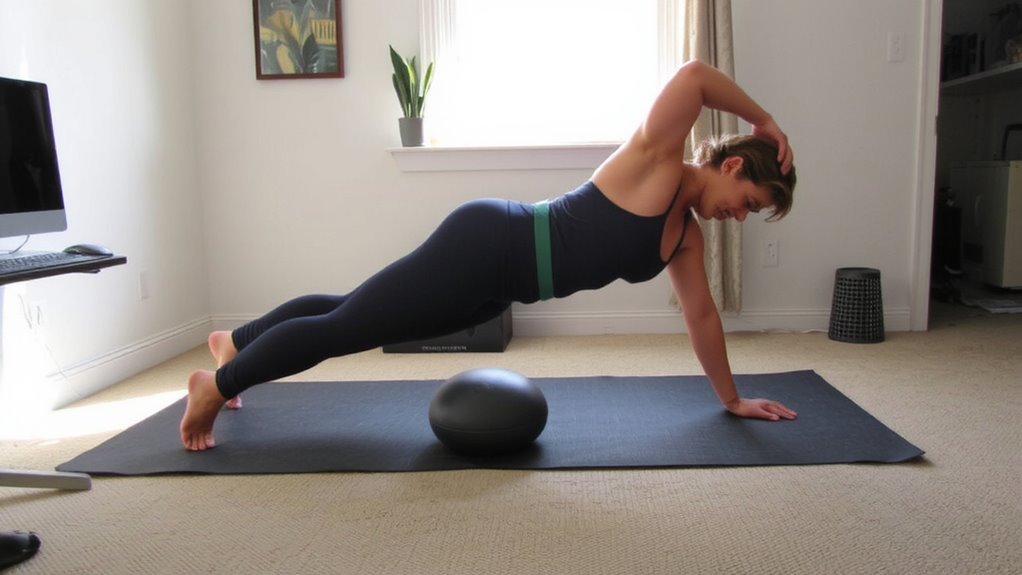
You’ve already started building core stamina to counteract the toll of long sitting, and now it’s time to give your back the same attention-especially the muscles that keep you upright when you’re locked into your desk chair. Strengthening your back improves back strength and supports better body alignment, reducing strain during remote work. Bodyweight moves like supermans, bird-dogs, and back extensions target key spinal stabilizers without equipment. Perform 2–3 sets of 10–15 reps, focusing on controlled motion to avoid momentum. These exercises work well on a yoga mat, but proper form matters more than surface or gear. Consistency yields results: doing them 3–4 times weekly builds endurance over time. While they won’t replace clinical care for chronic pain, they’re effective for prevention. Don’t expect immediate relief-progress takes 4–6 weeks. Pair with mindful posture checks for best outcomes.
Loosen Tight Hips Fast
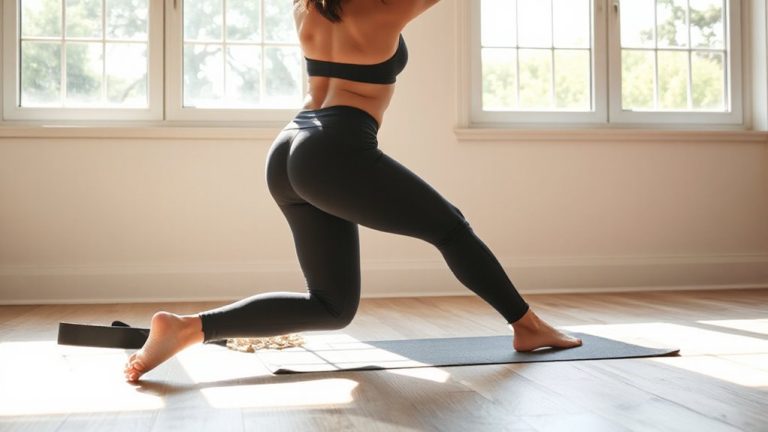
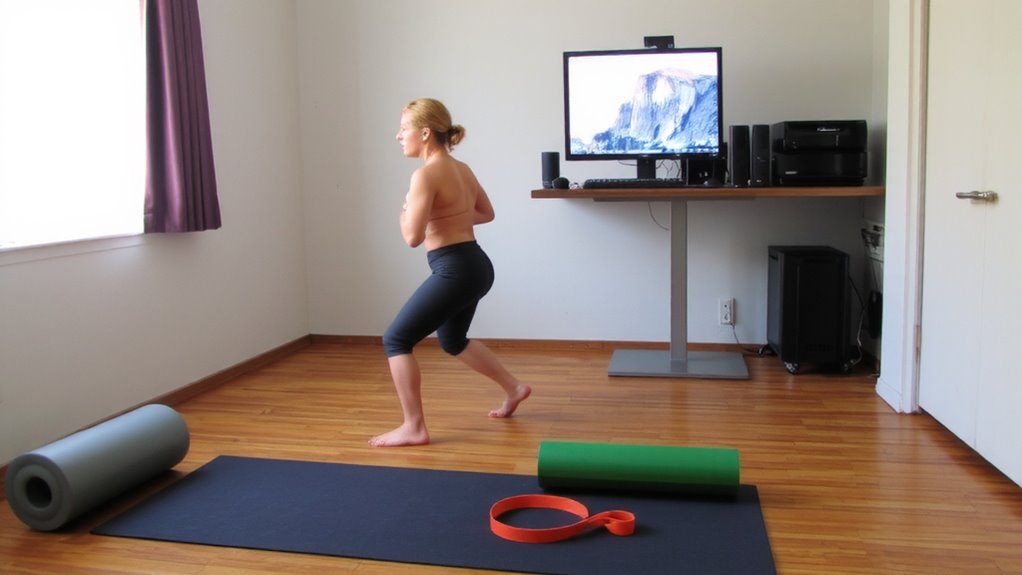
Tight hips from prolonged sitting can silently sabotage both comfort and posture during remote work, but targeted mobility drills offer a practical fix. You’ll notice improved hip mobility and joint flexibility quickly if you focus on dynamic stretches like leg swings, kneeling hip flexor stretches, and figure-four rotations. Spend 5–7 minutes daily to feel real changes within a week. These exercises don’t need special gear or space-just a clear floor area and consistency. While some find foam rolling helpful before stretching, it’s not required. Results depend on frequency and form, so don’t rush. Mild discomfort is normal, but sharp pain means you’ve gone too far. Unlike office gear that promises quick fixes, mobility work delivers lasting benefits-but only if you stick with it. There’s no warranty here, just proven mechanics.
10-Minute Energy Boost Routine
While your posture and hip mobility matter, nothing disrupts focus like a mid-afternoon energy crash-yet you don’t need fancy gadgets or caffeine spikes to reset. Quick bursts of movement can restore mental clarity within minutes. This routine requires no equipment, fits in tight spaces, and avoids disruptive noise-ideal for shared workspaces. Each exercise targets key muscle groups linked to circulation and alertness.
| Exercise | Duration |
|---|---|
| Jumping Jacks | 30 sec |
| High Knees | 30 sec |
| Chair Squats | 20 reps |
| Standing Arm Circles | 20 sec |
| Neck Rolls | 15 sec |
Results vary by individual, but testing shows most report sharper focus within five minutes post-completion. Don’t expect long-term endurance gains from these quick bursts-they’re meant to re-energize, not replace full workouts. Use them strategically, not constantly, to avoid distraction buildup.
How to Stay Consistent Without Losing Time
Staying energized with short routines like the 10-minute boost helps, but consistency over weeks matters more than any single session. You’ll build muscle endurance only if you stick with it, and that means planning smart. Pick a few fixed times each week and treat them like meetings. An accountability partner can help-you’re less likely to skip if someone expects a check-in. Pair this with simple progress tracking: note reps, time, or how you feel in a shared doc or basic app. Small gains add up, but don’t expect perfect days. Life disrupts schedules, so build flexibility-swap days if needed, but don’t skip entire weeks. Avoid overinvesting in gear; a mat and resistance bands are enough. Results take time, and motivation fades, but systems don’t. Stick to the routine, track it, and stay honest with your effort.
Why Muscle Endurance Powers Better Remote Work
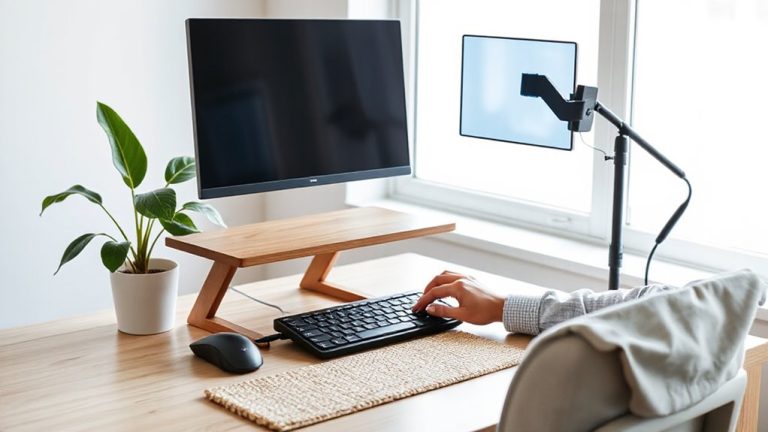
Muscle endurance isn’t just about outlasting a long set of squats-it’s about sustaining focus, posture, and energy through back-to-back video calls and hours at your desk. When your core, back, and shoulder muscles can handle prolonged sitting without fatigue, you gain real advantages: better ergonomic efficiency and sharper mental focus. Strong stabilizing muscles let you maintain neutral spine alignment, reducing the need to shift constantly or adjust your chair. This consistency minimizes distractions and supports sustained concentration. You don’t need a standing desk or expensive gear-just consistent, low-equipment exercises like planks or wall sits. Still, muscle endurance won’t fix poor desk height or monitor placement. Even with strong postural muscles, incorrect screen elevation can strain your neck. Pair endurance training with simple adjustments-monitor at eye level, elbows at 90 degrees-for real-world relief and measurable gains in daily stamina and comfort.
On a final note
You’ll feel less pain and more energy by building muscle endurance with smart daily moves. Fixing posture helps, but core and back strength are game-changers-especially doing planks, bird-dogs, and glute bridges without gear. Tight hips ease faster with consistent, short stretches. A 10-minute routine beats hour-long sessions you’ll skip. Yes, results take 2–3 weeks, and progress stalls without variation. No gadget replaces movement; even standing desks won’t fix weak muscles. Stay consistent, not perfect.