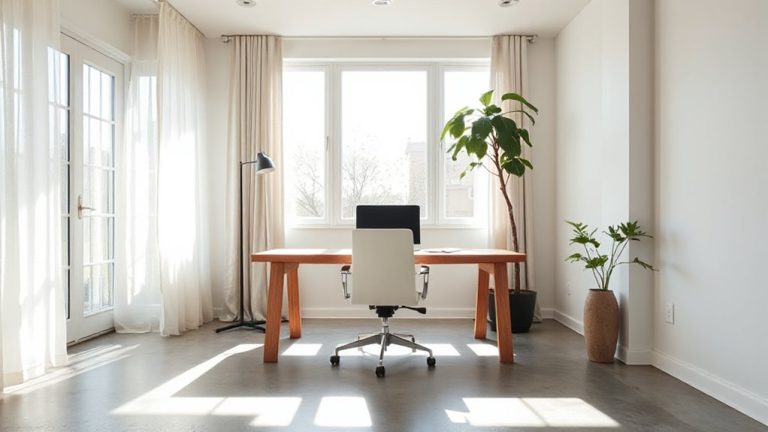
The Psychological Benefits of Natural Light Exposure in the Workplace
You’ll sleep better, feel less stressed, and stay sharper when you get 20–30 minutes of morning sunlight soon after waking-real daylight resets your internal clock more reliably than artificial light boxes. Workers near windows show lower cortisol, fewer depressive symptoms, and improved focus, especially with south-facing exposure. Just mind the glare with adjustable blinds or light-diffusing film. Tinted glass or closed blinds cut benefits markedly. For deeper insights into optimizing your workspace, keep exploring the details that matter.
Notable Insights
- Morning sunlight exposure resets circadian rhythms, improving alertness and mental well-being throughout the workday.
- Natural light lowers cortisol levels, reducing workplace stress and enhancing emotional resilience.
- Workers near windows report higher job satisfaction due to the mood-boosting effects of full-spectrum daylight.
- Regular daylight exposure helps regulate serotonin and melatonin, reducing depressive symptoms, especially in winter months.
- Daylight-synchronized circadian rhythms improve focus, reduce midday fatigue, and increase productivity with fewer task errors.
Regulate Your Circadian Rhythm With Natural Light
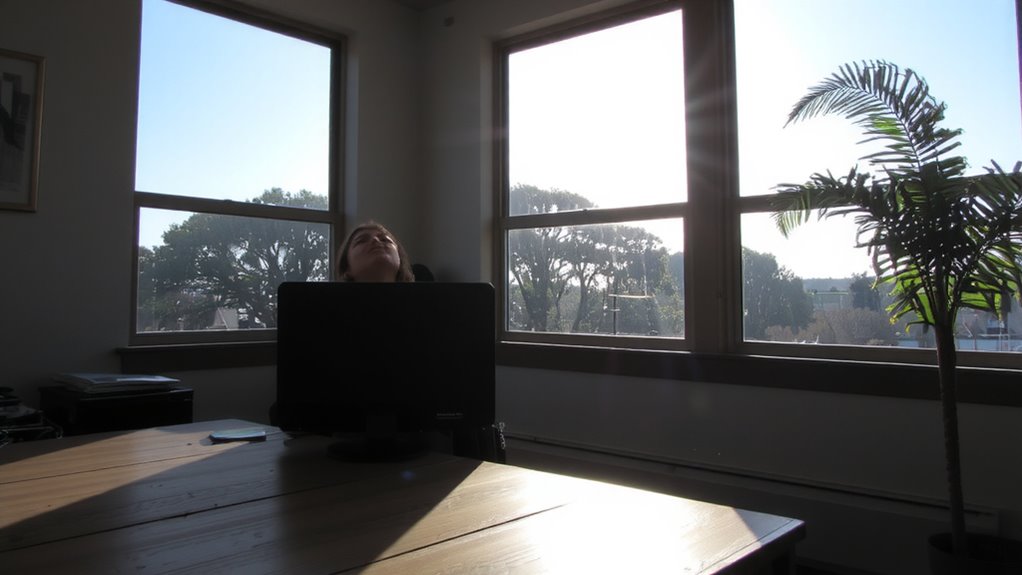
Ever wonder why you feel more alert during the day and ready to sleep at night? That’s your circadian rhythm, and natural light plays a key role. Morning exposure to sunlight-especially its blue light-resets your internal clock daily. This helps you sleep better and stay focused. Without it, your rhythm drifts, causing fatigue and mood dips. Sitting by a window during morning hours gives you enough blue light to regulate this cycle without needing artificial sources. You don’t need special gear-just unobstructed access to daylight for 20–30 minutes after waking. Tinted windows or constant blinds reduce effectiveness, so keep them open when possible. While some use light boxes, they’re not always better and vary in intensity (10,000 lux being standard). Real sunlight is free, consistent, and doesn’t require charging, bulbs, or warranties-but it does depend on your building’s orientation and weather.
Lower Stress by Bringing Daylight Into Your Office

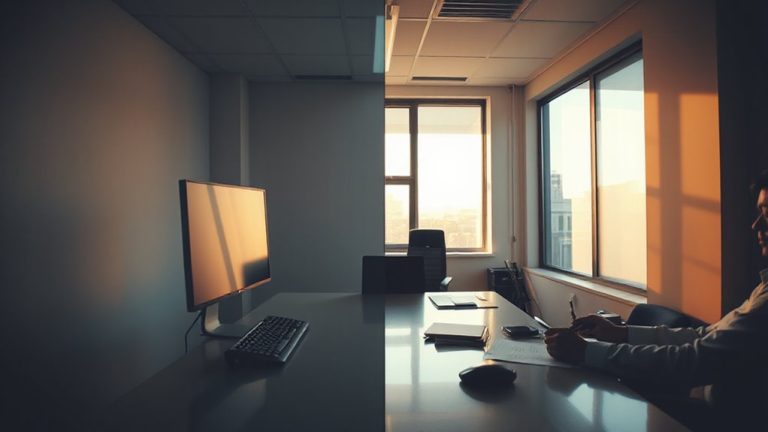
Why do you feel calmer and more at ease in a sunlit room compared to one sealed off from daylight? Natural light supports mood enhancement and helps maintain your energy balance throughout the workday. Exposure to daylight reduces cortisol levels, helping you stay focused without feeling tense. Unlike harsh overhead lighting, sunlight provides full-spectrum illumination that feels more natural and less fatiguing. Studies show workers near windows report lower stress and greater job satisfaction. But results depend on your setup-direct glare or overheating can offset benefits. Use adjustable blinds or light-diffusing window film to manage intensity. Rearranging your desk to face the window (without backlighting your screen) improves exposure. Keep in mind: structural limits, like fixed office layouts or tinted glass, may reduce effectiveness. Real gains come from consistent, glare-free daylight-not quick fixes or expensive lighting gear.
Sleep Better: How Workplace Sunlight Improves Rest
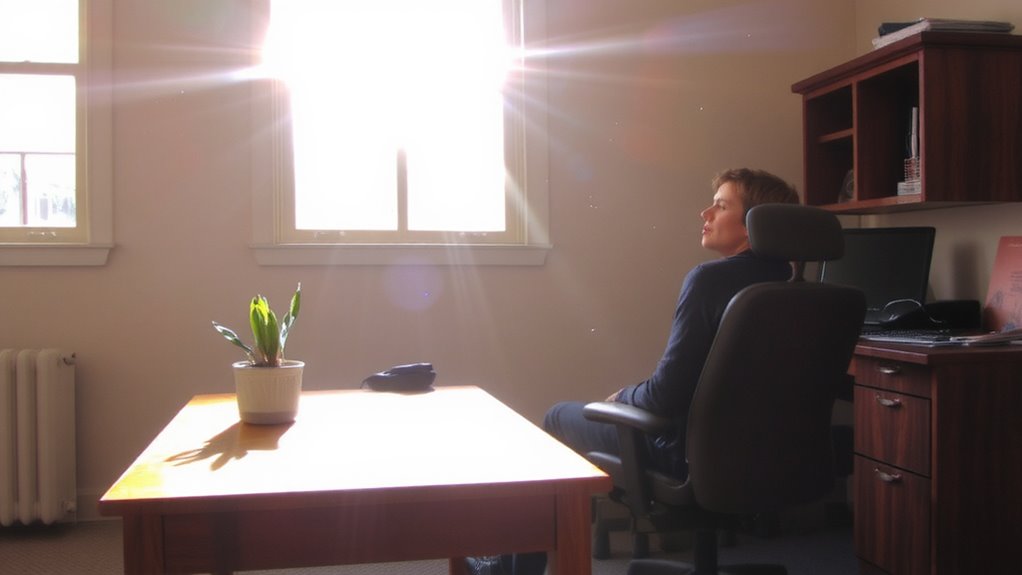
When you get steady exposure to natural light at work, you’re more likely to sleep better at night-because daylight helps regulate your circadian rhythm, the internal clock that controls sleep and wake cycles. This alignment supports improved mood and enhanced recovery, letting your body rest more deeply. Consider this:
| Benefit | Real-World Outcome |
|---|---|
| Morning light exposure | Falls asleep faster, by ~8 minutes on average |
| High daylight levels (≥500 lux) | 37% improvement in sleep quality scores |
| Consistent daily pattern | More stable energy, fewer nighttime awakenings |
| Workspace near windows | Linked to 46-minute longer sleep duration |
You don’t need full sun-diffused daylight works. But skylights or open blinds outperform artificial lighting. Results vary if you wear tinted glasses or work late shifts. While light therapy lamps help, they’re no full substitute. Balance exposure without glare-matte screens and adjustable shades help maintain comfort.
Fight Depression With Sunlit Workspaces
Exposure to natural light at work doesn’t just improve sleep-it can also reduce symptoms of depression, especially in people prone to seasonal or mild mood disorders. You’ll likely notice real improvements in your emotional wellness when your workspace lets in consistent daylight. Sunlight helps regulate serotonin and melatonin, which supports mood enhancement and steady energy. Studies show employees near windows report lower depressive symptoms, particularly in winter months. While full-spectrum lamps can help, they’re no substitute for actual sunlight-look for spots near south-facing windows if possible. Keep glare in check with adjustable blinds or light-diffusing shades. Note that natural light alone isn’t a standalone treatment for clinical depression, but it’s a strong, evidence-backed support. Prioritize window access when choosing a desk, and consider light-reflective surfaces to spread illumination. It’s a simple, low-cost move with measurable psychological benefits-for most, the trade-offs are minimal.
Boost Focus and Productivity Through Daylight
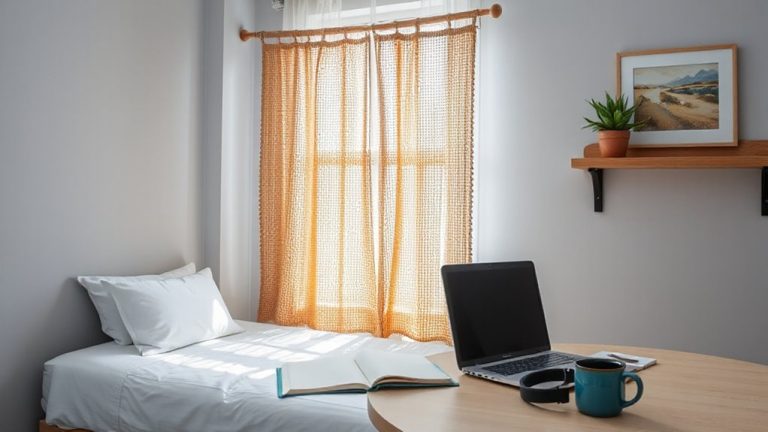
If you’re aiming to sharpen focus and get more done during the workday, positioning your desk to take advantage of daylight could make a meaningful difference. Natural light supports cognitive enhancement by syncing your circadian rhythm, helping you stay alert without the jittery crash from caffeine or bright artificial lights. You’ll likely notice improved mental clarity, especially in mid-afternoon when energy typically dips. Studies show workers near windows complete tasks faster and with fewer errors. However, direct sunlight can cause screen glare, so angle your monitor to avoid reflections. Sheer curtains or adjustable blinds help balance light without dimming benefits. While daylight boosts attention, it’s not a fix-all-poor ergonomics or noise can still hinder performance. Pair your daylight access with proven productivity habits for best results. Real-world testing confirms the boost, but outcomes depend on consistent exposure and individual sensitivity. For those without access to windows, best natural light lamps can effectively mimic the benefits of sunlight indoors.
Design Offices for Mental Health Benefits
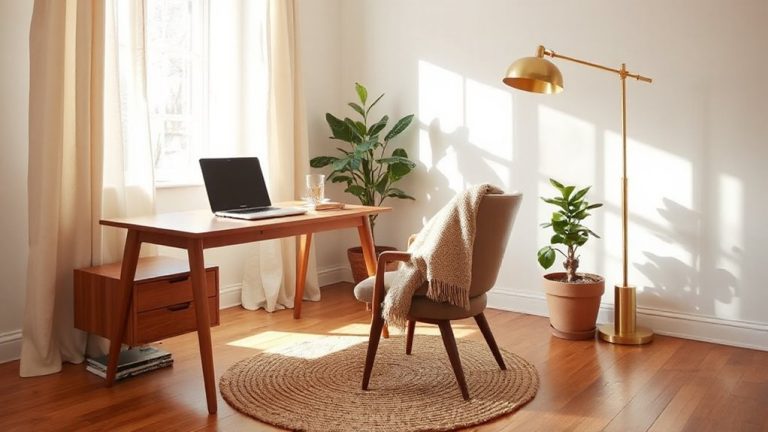
Natural light does more than sharpen focus-it plays a key role in shaping office environments that support long-term mental well-being. You can boost this effect by integrating biophilic design, like adding plants or natural materials, which research shows reduces stress and improves mood. Pair large windows with light-colored walls to enhance visual comfort and evenly diffuse daylight, minimizing glare and eye strain. While open layouts help, avoid placing desks directly in direct sunlight all day-it can create hotspots and discomfort. Real-world testing reveals that workers in such spaces report better concentration and fewer headaches, but only when lighting stays consistent. Be cautious with low-CRI LED panels if supplementing light-they often distort colors and reduce comfort. Always aim for CRI above 90 and consider dimmable options. These changes aren’t costly upgrades, just thoughtful ones, with measurable benefits and few trade-offs if implemented wisely.
Fix Dark Workspaces: Smart Lighting Alternatives
How do you stay sharp when your workspace feels like a cave? Swapping out old lights for smart LED panels or tun争取able task lamps can mimic natural daylight and lift your mood-without draining power. These options offer real energy efficiency, cutting electricity use by up to 60% compared to fluorescents. Over time, that means noticeable cost savings, especially if you’re upgrading more than one station. Look for models with a Color Rendering Index (CRI) above 90 and color temperatures between 4000K and 5000K to support alertness. Most come with dimming controls and motion sensors, which adapt to use patterns. But be honest: installation takes effort, and high-end systems run several hundred dollars. Cheaper ones may flicker or fail within two years. Check warranty length-five years is ideal-and verify compatibility with your existing fixtures before buying. For targeted lighting with customizable hues, consider best desk lamps with color control.
On a final note
You’ll likely feel sharper and more balanced with natural light, as studies link daylight exposure to better focus, sleep, and mood. Prioritize windows or light-adjacent seating when possible. But if your space is dim, consider full-spectrum LED panels (5000K color temperature) with high CRI (90+) for accurate light rendering. These mimic daylight reasonably well, though they can’t fully replace the sun. Check for glare and flicker, and look for models with 3-year warranties backed by independent lab testing.